
Find Flips Faster: Best Retail Arbitrage App 2026
A retail arbitrage app is a tool that helps resellers instantly judge an item's profit potential by checking sold prices and calculating fees. In practice, profitable thrift and estate-sale sourcing usually means chasing at least $3.00 net profit per item and more than 50% ROI, and sellers often need to scan about five items to find one that clears that bar.
That's the main problem in a thrift aisle. You're holding a pair of untagged boots, a weird vintage windbreaker, or a collectible with no box, and the old barcode-only workflow falls apart. By the time you've bounced between eBay, Poshmark, Mercari, and a notes app to do fee math, somebody else has already put the item in their cart.
Most guides still act like retail arbitrage starts and ends with UPC scanning. That's outdated if you source where the best secondhand inventory lives. In thrift stores, estate sales, and garage sales, the edge comes from recognizing items without codes, checking real sold comps fast, and making a clean buy-or-pass call before hesitation costs you the deal.
Table of Contents
- What Is a Retail Arbitrage App
- How These Sourcing Apps Actually Work
- Must-Have Features for Modern Resellers
- How to Evaluate a Retail Arbitrage App
- Common Sourcing Pitfalls an App Can Prevent
- A Real-World Workflow Using ScanFlip AI
- Frequently Asked Questions About Reselling Apps
- Are price comps actually accurate enough to trust
- Are these apps worth paying for
- Can a retail arbitrage app guarantee profit
- What's the difference between a retail arbitrage app and an inventory app
- Should beginners rely on barcode scanning or visual recognition
- What's the best habit to build with one of these apps
What Is a Retail Arbitrage App
A retail arbitrage app helps you identify an item, check what comparable pieces have sold for, and estimate whether the resale margin still holds after fees, shipping, and your buy cost. In practice, that matters most when the item in your hand does not give you an easy search path.
That distinction gets missed in a lot of reseller advice. Big-box sourcing starts with a barcode. Thrift stores, estate sales, flea markets, and auction lots often start with a guess. A practical overview of the model itself is covered in this guide to what retail arbitrage means, but the app side is really about speeding up good buying decisions in messy sourcing environments.
Why barcode-only sourcing breaks down
Barcode scanning still has a place for new, sealed inventory. It falls apart fast once you move into used goods, vintage pieces, replacement parts, and estate-sale categories where tags are missing, worn out, or too generic to trust.
That is why visual recognition matters.
A useful retail arbitrage app can work from a photo first, then narrow the item down by brand, style, era, material, and similar sold listings. For thrift-store sourcing, that workflow is often the whole ballgame. If the tool needs a clean UPC before it can help, it will sit idle during some of the best buying opportunities you find in the field.
What the app is really replacing
Before photo recognition got good enough to trust, the process was slower and sloppier:
- Search marketplaces manually: Bounce between apps and hope your keywords match how other sellers described the item.
- Guess at identification: Common problem with shoes, jackets, ceramics, handbags, and loose collectibles.
- Estimate profit in your head: Easy way to miss shipping weight, marketplace fees, or a return risk tied to condition.
Experienced resellers know that the actual cost is not just time. Manual lookup changes your buying behavior. You pass on items that need too much research in a crowded aisle. You also overpay for pieces that look expensive but have weak sell-through once you check sold comps instead of active listings.
A strong retail arbitrage app cuts that friction. It helps answer three practical questions on the spot. What is this? What has it sold for? What do I keep after costs?
For thrift and estate-sale work, that photo-first decision support is the difference between educated sourcing and expensive guessing.
How These Sourcing Apps Actually Work
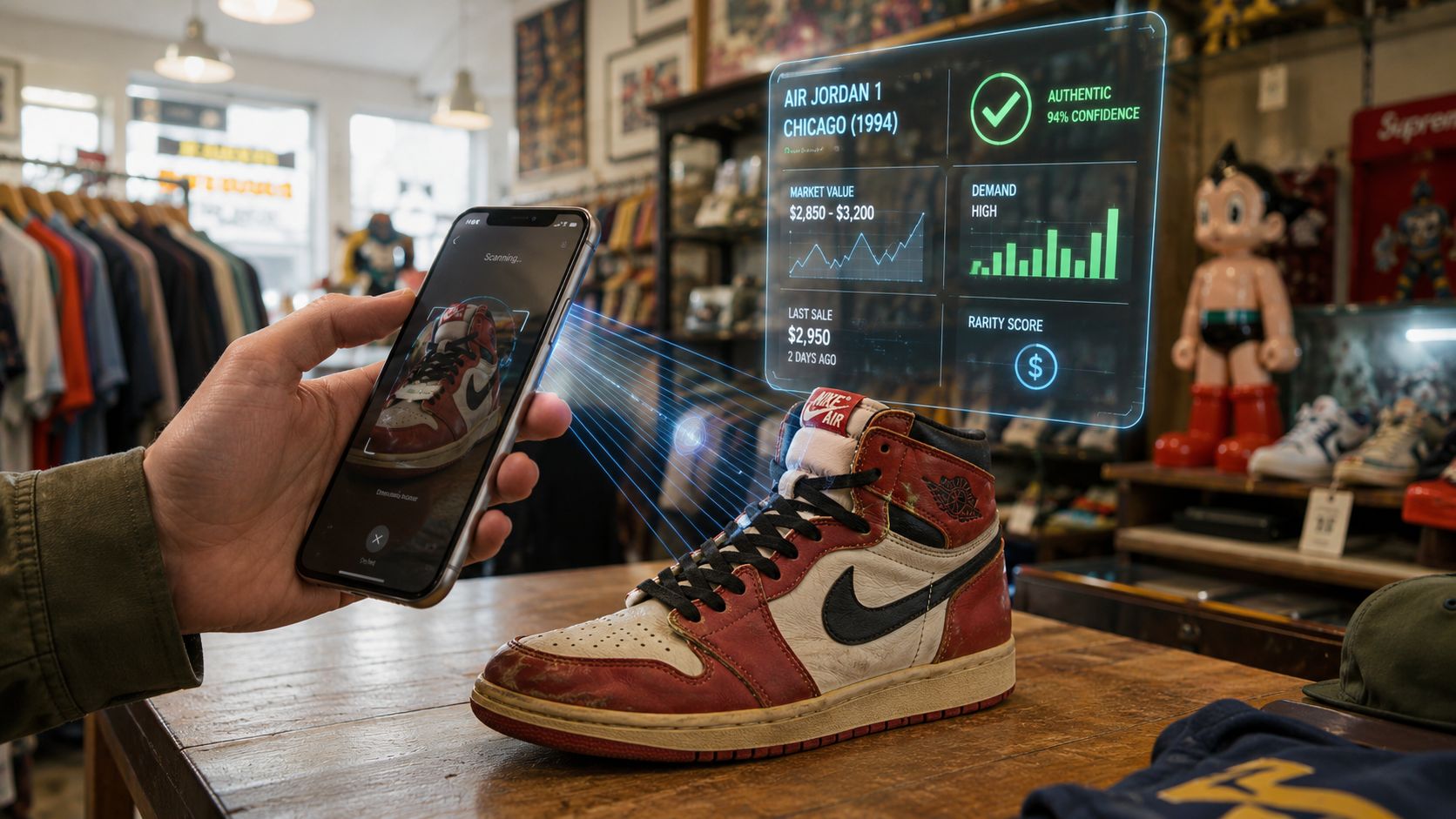
You are in a thrift aisle with a cart in one hand and your phone in the other. A pair of older leather boots has no box, no UPC, and no model tag you can read without squatting in bad light. A useful sourcing app has to help right there, from a photo, before someone else grabs them.
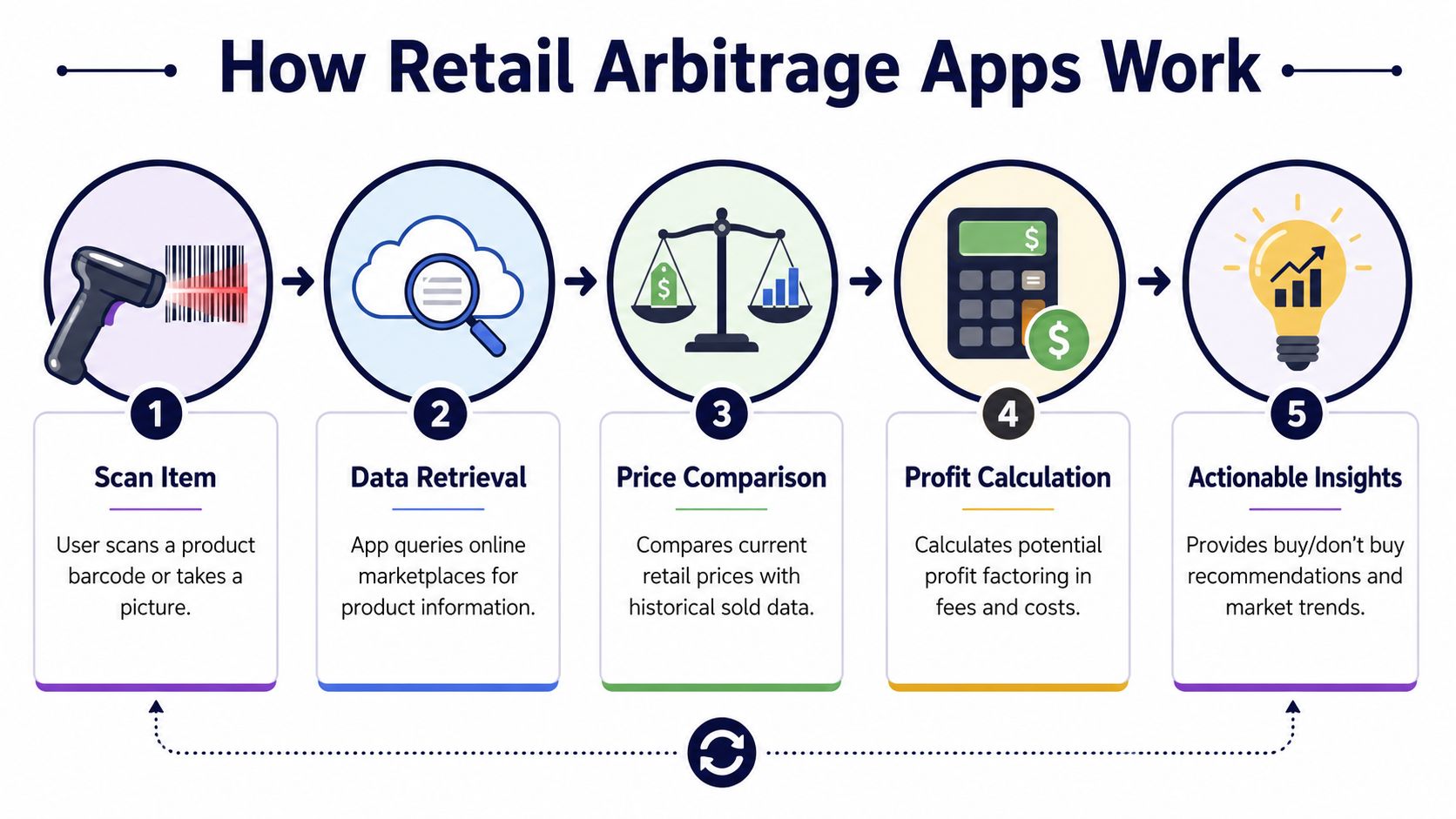
The workflow is simple on the surface. Underneath, the app is doing three separate jobs fast enough to support a buying decision in the field.
The three core jobs
Identify the item
The first step is recognition. Sometimes that starts with a barcode, but secondhand sourcing often starts with a photo. The app looks at shape, brand marks, labels, materials, patterns, and other visual cues to narrow the item to the right product family or a close match.Pull sold comparables
Once it has a likely match, the app checks sold listings across resale marketplaces. That matters more than active listings because asking prices are cheap talk. Sold history shows what buyers paid, how often similar items move, and whether the market is healthy enough to justify the buy.Estimate your take-home profit
A good app then layers in the math that sellers routinely miss in a rush. Fees, shipping, promoted listing costs, and the margin hit from condition all change the outcome. If you want a better framework for that part, this guide on how to price items for resale covers the cost side in more detail.
What happens in practice
For thrift stores and estate sales, visual recognition is the part that separates a useful sourcing app from a barcode scanner with better marketing.
A sealed retail item is easy. Scan the code, pull comps, make the call. Real secondhand inventory is messier. You find unbranded pottery, vintage outerwear with faded tags, handbags with partial style numbers, and shoes with worn size labels. In those situations, the app has to start with the image, then help you confirm the match by comparing details like stitching, hardware, logo placement, outsole pattern, fabric content, or era-specific design cues.
That confirmation step matters. Photo recognition gets you close. The seller still needs to sanity-check the result against the item in hand.
Why speed matters in the field
Manual lookup breaks down when the room is crowded and the inventory is irregular. Opening three marketplaces, guessing keywords, and sorting through weak matches is slow work. It is also how good pieces get left behind.
Sourcing apps save time by collapsing that process into one screen. You capture the item, review likely matches, check sold comps, enter buy cost, and get to a yes, no, or maybe. The speed is useful, but the bigger gain is consistency. Fast research helps you apply the same standard to a pair of boots, a wool jacket, or a piece of studio pottery instead of buying on instinct.
Good sourcing apps reduce hesitation. They do not remove judgment.
What the workflow looks like in the aisle
A practical sourcing flow usually looks like this:
| Step | What you do | What the app does |
|---|---|---|
| Identify | Take a photo or scan a code | Matches the item to likely comps |
| Compare | Review sold results | Surfaces recent market behavior |
| Price | Enter your buy cost | Applies fees and shipping logic |
| Decide | Check the result | Shows whether margin is worth the risk |
The biggest mistake is stopping at the first match. Experienced sellers use the app to get close fast, then verify condition, size, authenticity signals, and sell-through before they buy.
What works and what doesn't
What works:
- Photo-first identification for barcode-free items: Better fit for thrift stores, estate sales, and vintage-heavy sourcing
- Cross-platform sold data: More reliable for apparel, shoes, collectibles, and one-off finds
- Built-in profit math: Helps prevent bad buys that look good only at gross sale price
- Fast confirmation on one screen: Useful when you need to make a decision before the item disappears
What doesn't:
- Amazon-only lookup for non-Amazon inventory
- Apps that rely too heavily on active listings
- Keyword-only research for hard-to-identify secondhand items
- Doing fee and shipping math in your head while standing in a crowded aisle
The best sourcing apps are not just search tools. For secondhand sellers, they are field tools built around visual recognition, quick comp checking, and disciplined buy decisions.
Must-Have Features for Modern Resellers
You are three tables into an estate sale, holding an unmarked ceramic lamp base in one hand and a single vintage boot in the other. No barcode. No model number. No time to stand there guessing while the next buyer reaches for the same pile.
That is the true test of a sourcing app.
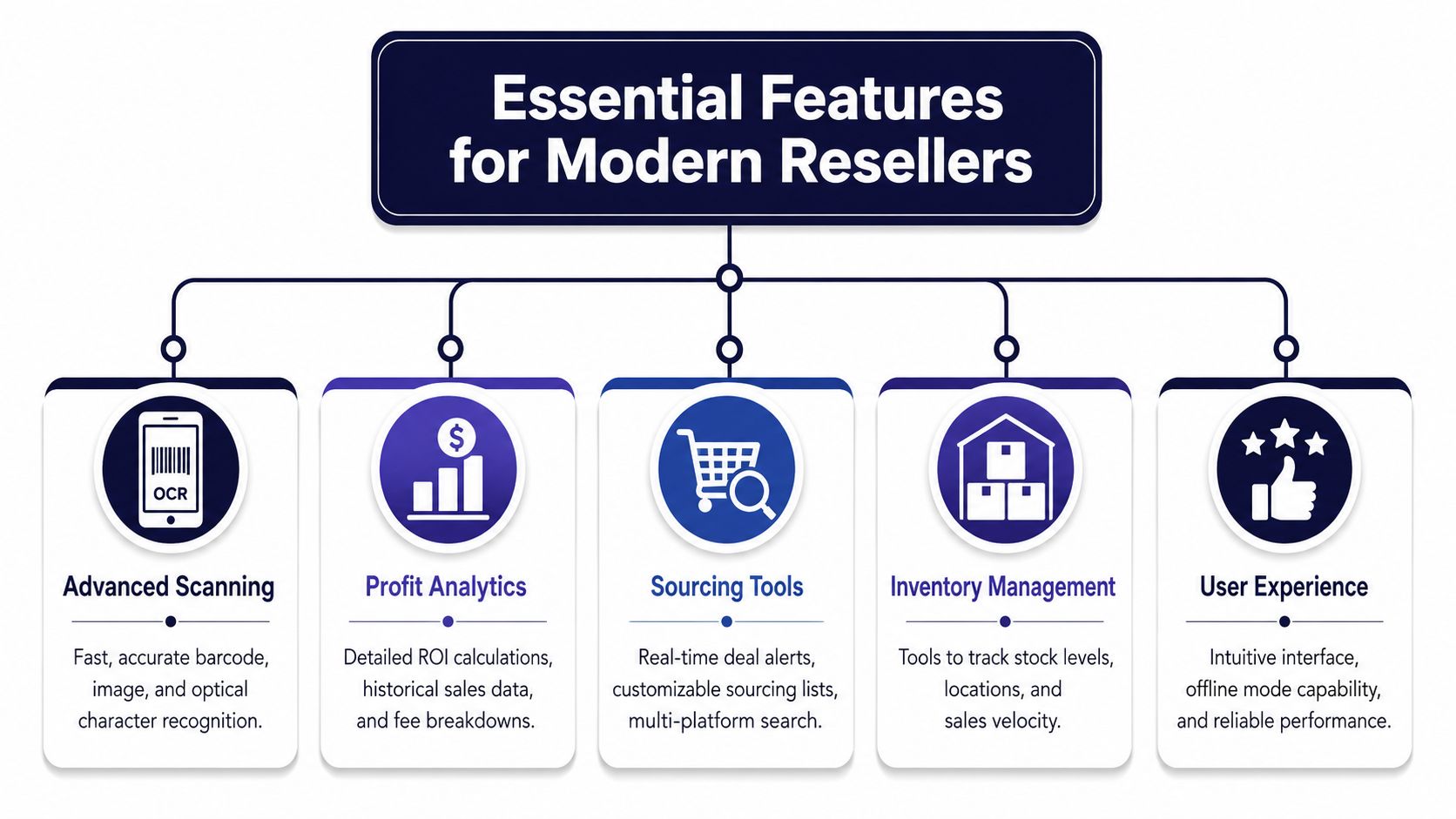
Visual recognition comes first
For thrift stores, flea markets, and estate sales, visual search is the feature that decides whether an app helps or slows you down. Barcode scanning matters in retail clearance. Photo-based identification matters in secondhand sourcing, where tags are missing, packaging is gone, and brand labels are half worn off.
A good app should let you snap a quick photo and get likely matches fast enough to make a buy decision on the spot. That includes messy real-world items such as framed art, untagged jackets, obscure kitchenware, replacement parts, and single shoes. If visual ID breaks down every time the item is used, incomplete, or slightly unusual, the rest of the feature list does not matter much.
Sold comps from more than one marketplace
Secondhand demand is scattered. A blazer that sits on one platform can move quickly on another. The same goes for vintage toys, niche home decor, and specialty footwear.
The app should show:
- Recent sold listings: Closed sales, not seller wish prices
- Marketplace range: Useful for categories that perform differently across platforms
- Comparable item quality: Enough detail to separate a clean comp from a bad match
- Sell-through clues: A way to spot items that look expensive but do not move
This matters most with one-off inventory. Big-box arbitrage often deals with standard products and tighter pricing. Thrift and estate-sale sourcing deals with condition swings, incomplete sets, odd variations, and brands that only experienced resellers recognize on sight.
Profit math that reflects the item in your hand
Gross resale price is not a buying signal. Net profit is.
The app should let you enter buy cost, account for marketplace fees, and estimate shipping before you commit. Heavier jackets, boots, glassware, and bundled lots can look strong until shipping wipes out the margin. If you want a better framework for that part of the decision, this guide on how to price items for resale covers the logic behind fee, shipping, and margin planning.
I also look for flexibility here. A serious sourcing app should handle offers, promoted listing costs, and different shipping assumptions well enough that you can pressure-test a marginal buy instead of talking yourself into it.
Scan history and sourcing memory
Saved scans do more than keep a record. They sharpen your eye over time.
When an app stores photos, matches, and your past decisions, you can review what happened after the trip. That helps you spot patterns you will miss in the field. Maybe one church thrift keeps producing profitable men's shoes. Maybe a certain pottery brand gets lots of attention online but sells slowly in your store. Maybe you keep passing over military surplus, fountain pens, or old audio gear because you have not built confidence there yet.
That kind of sourcing memory turns scattered wins into a repeatable process.
Condition-aware matching
This feature gets overlooked, but it matters in secondhand categories. A useful match is not just the same brand or similar shape. It should be close on material, era, size, model details, and condition.
Used inventory creates bad matches fast. A modern reissue can get confused with an older original. A damaged set can get compared to a complete one. A similar-looking boot from the same brand can hide a big value gap because of leather type or outsole. The better apps help narrow that down instead of pushing you toward the first visual match.
Features I would rank lower
Some app extras look good in a demo and do very little on a live sourcing trip. Leaderboards, flashy dashboards, and broad retail catalog tools are easy to sell and easy to outgrow.
For thrift-store and estate-sale buying, the core stack stays the same. Fast visual recognition, accurate sold comps, item-level profit math, condition-aware matching, and saved scan history. Get those right, and the app earns a place in your sourcing routine.
How to Evaluate a Retail Arbitrage App
Choosing a retail arbitrage app is a subscription decision, but more than that, it's a sourcing decision. A weak app doesn't just waste a monthly fee. It changes what you buy, what you skip, and how often you tie up cash in inventory that looked better on-screen than it did in the market.
Start with your sourcing reality
Apps are often tested on easy items. That's a mistake. Test them on the inventory you buy.
If you source thrift and estate-sale goods, use your trial period on:
- Untagged shoes
- Vintage apparel
- Loose collectibles
- Items with weird brand labeling
- Products where active listings look inflated
For broader comparisons, this guide to reseller apps helps frame what category of tool you're even evaluating.
The numbers that matter
A practical benchmark is straightforward. Successful sellers usually want at least $3.00 net profit per unit and more than 50% ROI after all fees, and they often find only one qualifying item for every five they scan. That's the standard your app should help you hit in real time.
If it doesn't calculate take-home profit, it's forcing you to fill the gap manually. That's exactly where rushed mistakes happen.
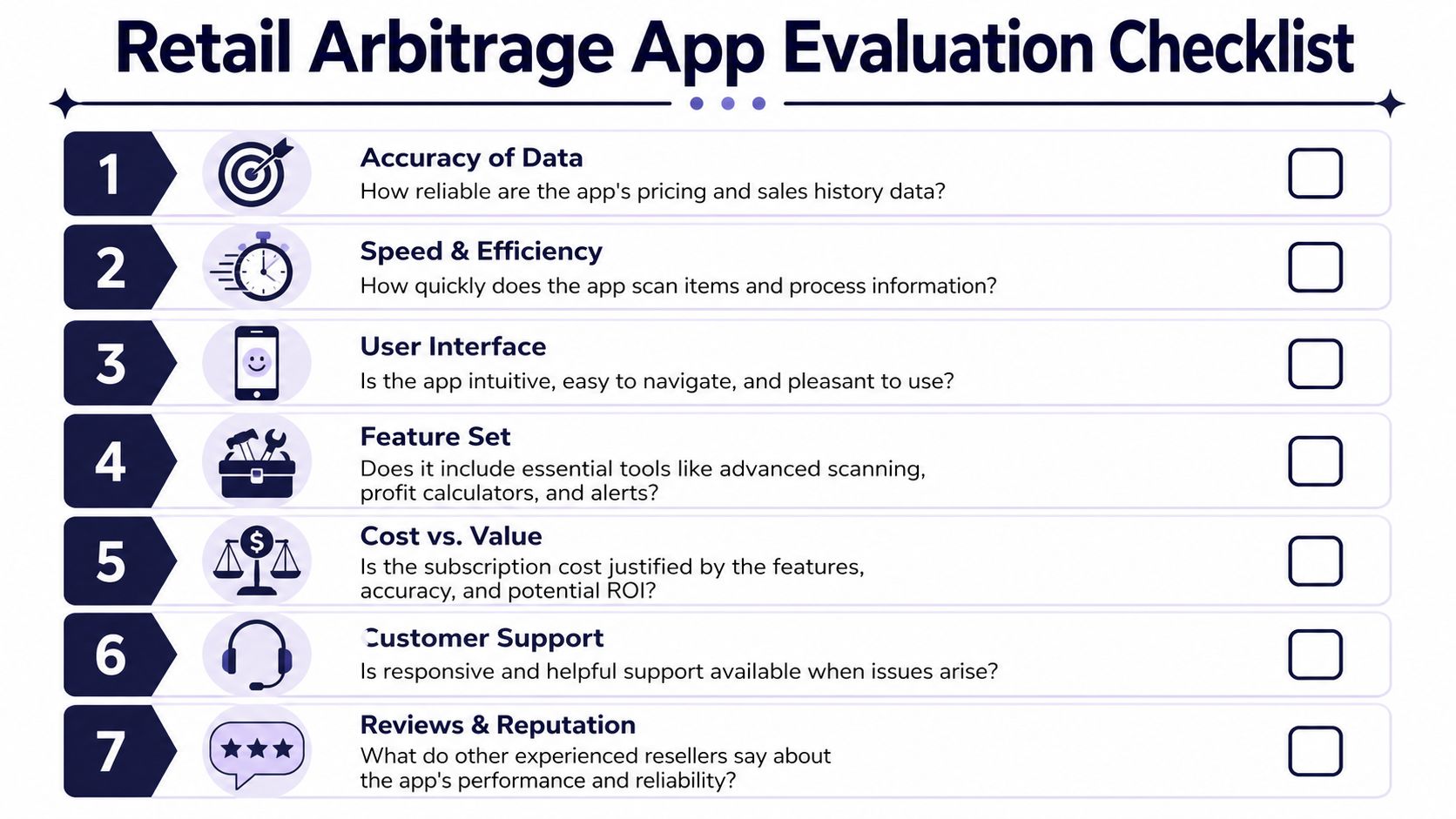
Five checks before you trust it
I'd judge any app on these five points.
Comps coverage
Does it pull sold results from the marketplaces that matter for your categories? A tool can be excellent for Amazon retail shelves and weak for estate-sale apparel.Fee accuracy
You should be able to enter a buy cost and get a believable net outcome. If the fee logic feels vague, the verdict is vague too.Decision speed
In real sourcing, the app has to move quickly enough that you'll use it every time. If it's clunky, you'll start “eyeballing” purchases again.History and reviewability
Saved scans matter because your best sourcing lessons often show up after the trip, not during it.Interface under pressure
The test isn't whether it looks nice on the couch. The test is whether you can use it one-handed in a cramped aisle with poor lighting and bad signal.
Don't ask whether an app looks powerful. Ask whether you'd still use it on item number forty-three of a tiring sourcing trip.
A simple field test
Here's a practical way to evaluate one fast:
| Test item | What to check | Pass sign |
|---|---|---|
| Untagged shoes | Can it identify visually? | Useful likely matches appear quickly |
| Vintage jacket | Are sold comps believable? | Results reflect real secondhand demand |
| Small collectible | Does net profit feel clear? | Fee-adjusted output is easy to trust |
| Heavy item | Does shipping change the verdict? | The app doesn't ignore fulfillment reality |
An app passes when it makes your decisions cleaner, faster, and more disciplined. If it only gives you more screens to stare at, keep looking.
Common Sourcing Pitfalls an App Can Prevent
Every reseller eventually buys a “winner” that wasn't a winner. Usually the mistake wasn't random. It came from one of the same predictable sourcing errors.
Believing active listings instead of sold reality
This is the classic trap. You find a jacket, search it, and see high asking prices. That feels validating. Then you list it and discover buyers were never paying those numbers.
A good app steers you back to sold comps. That one shift protects you from fantasy pricing faster than any pep talk about discipline.
Forgetting the real deductions
A lot of flips look healthy before the deductions start stacking up. Fees, shipping, packaging assumptions, and platform differences can turn a “good spread” into a bad buy.
The protection here is simple. Let the app do the take-home math before you buy. If you have to mentally patch together the numbers, you'll eventually talk yourself into inventory that doesn't deserve your cash.
Moving too slowly on uncertain items
Thrift and estate-sale sourcing rewards speed, but not blind speed. The best purchases usually happen when you can confirm value without freezing.
That's where the app acts like a brake and an accelerator at the same time. It slows down bad intuition and speeds up good decisions.
Most bad buys don't come from being too aggressive. They come from being uncertain and filling the gap with guesswork.
Losing your own research mid-trip
Long sourcing runs get messy. You set items aside, compare a few categories, circle back, then forget why something looked good in the first place.
Apps with persistent scan history solve that operational mess. They give you a trail of what you checked, what looked promising, and what didn't. That matters when you're making end-of-trip decisions with a cart full of maybes.
The bigger shift
What separates professionals from hobby sellers isn't that they never make mistakes. It's that they build a workflow that catches common mistakes early.
A strong retail arbitrage app won't guarantee every item flips well. What it does is remove the avoidable errors: fake comps, weak margin math, indecision, and lost context. Those are the leaks that steadily drain a reselling business.
A Real-World Workflow Using ScanFlip AI
An estate sale is where weak sourcing workflows fall apart fast. A pair of untagged leather boots sits under a hall table with no box, no label, and no clean keyword to search. You have about 30 seconds before another picker grabs them.
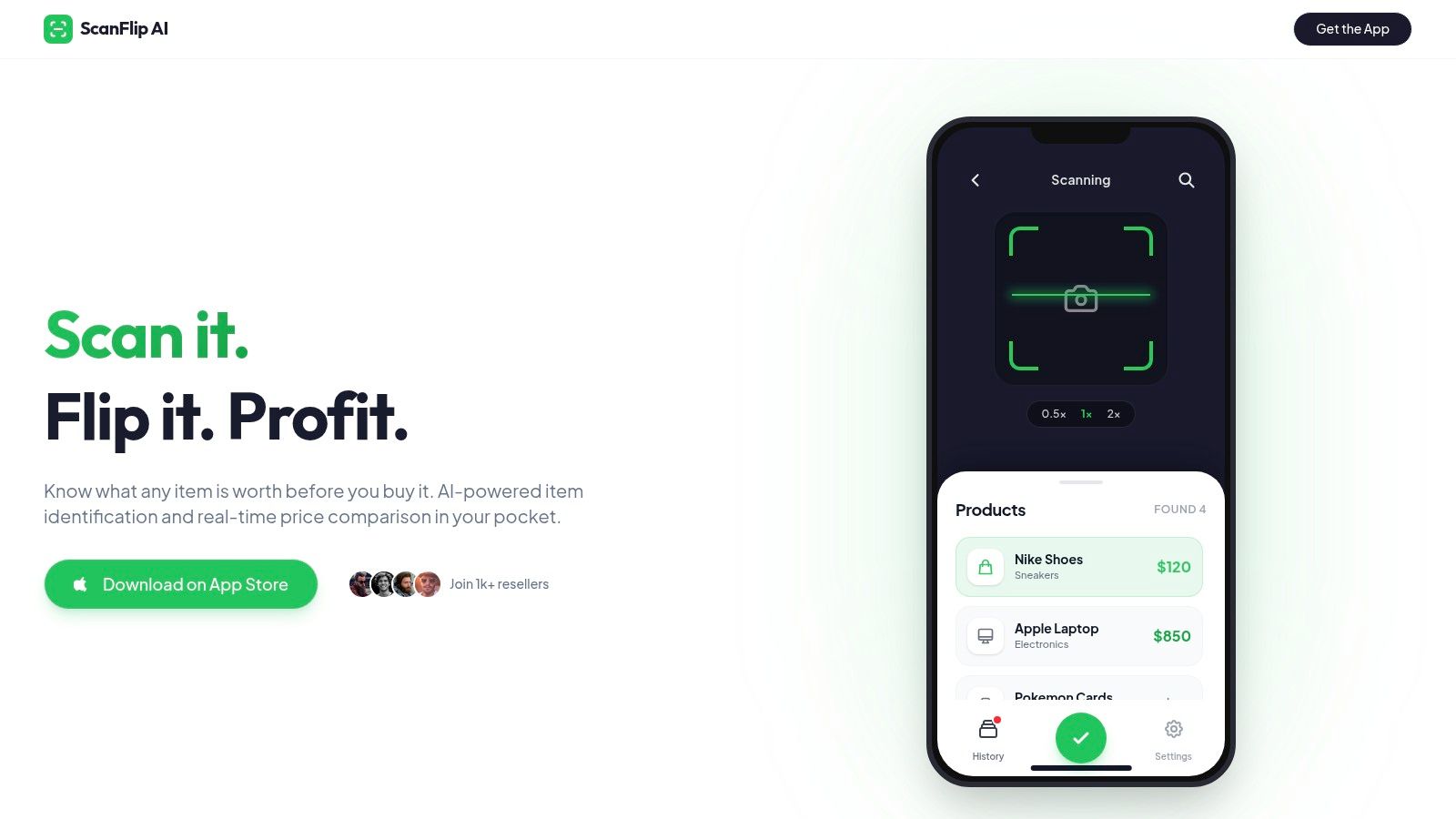
The practical in-field sequence
For thrift stores, garage sales, and estate sales, the first job is visual recognition. Barcode scanning helps with boxed retail. It does very little for worn shoes, loose kitchenware, vintage electronics, art glass, or jackets missing tags.
A usable field workflow looks like this:
- Take a clear photo of the item: Get the shape, label area, and any distinctive details in frame.
- Review the likely match: Brand, model, era, and material clues help cut down bad comp searches.
- Check sold comps across marketplaces: Secondhand demand shifts a lot by category and by platform.
- Enter your buy cost: Now you can judge the item against your margin target, not against hope.
- Read the net result: That tells you whether to buy, leave it, or set it aside for a second look.
That sequence matters because untagged inventory creates a different sourcing problem than shelf clearance. In a thrift store, the challenge usually is not finding a listed SKU. The challenge is figuring out what the object is, whether the app matched it correctly, and which marketplace gives it the best exit.
Why this matters for secondhand sellers
Secondhand inventory is rarely uniform. One vintage pan might sell well on eBay because buyers search by maker and handle style. A fashion piece might move better on Poshmark because the buyer cares more about look and brand than exact model number. A small collectible can look dead on Amazon and still have healthy demand in a niche resale channel.
Identifying the item is only step one. The profitable decision comes from matching that item to the marketplace where buyers for that category already shop.
That is the gap in a lot of retail arbitrage app advice. Many guides are built around new inventory with barcodes, sealed packaging, and standard catalog data. Thrift and estate-sale sourcing runs on photos, pattern recognition, and quick judgment calls on imperfect items.
What this workflow fixes
Here's how the process changes in the field:
| Problem in the wild | Manual approach | App-driven approach |
|---|---|---|
| No barcode or missing tag | Guess with broad keywords | Visual recognition from a photo |
| Similar items with very different values | Open multiple tabs and compare by hand | Faster matching to likely sold comps |
| Unclear resale channel | Check each marketplace separately | Compare marketplace options in one workflow |
| Unclear take-home profit | Rough mental math | Net estimate tied to your buy cost |
The biggest benefit is speed with discipline. You can work through more oddball inventory without buying on instinct alone.
For thrift and estate-sale sourcing, visual recognition is the front end of the decision process, not an extra feature.
When that process is tight, untagged items stop being automatic passes. They become researchable inventory. That opens up a large part of the secondhand market that barcode-first tools barely touch.
Frequently Asked Questions About Reselling Apps
Are price comps actually accurate enough to trust
They're useful when the app emphasizes sold comparables, not inflated active listings. Accuracy also depends on whether the tool checks the marketplaces where your category sells. For thrift-store sourcing, broad cross-platform visibility matters more than a narrow Amazon-only view.
Are these apps worth paying for
They're worth paying for if they prevent bad buys and speed up good ones. The critical question isn't the subscription price. It's whether the app helps you source with enough consistency that you stop wasting money on weak inventory and stop missing good inventory because research takes too long.
Can a retail arbitrage app guarantee profit
No. Apps improve decision quality. They don't remove risk.
Condition mistakes, authenticity issues, hidden damage, seasonality, bad photos in your eventual listing, and changing buyer demand can still hurt a flip. The app helps most at the sourcing stage, where fast and disciplined screening matters most.
What's the difference between a retail arbitrage app and an inventory app
A retail arbitrage app helps you decide whether to buy an item. An inventory app helps you manage what you already own, list, store, and sell. Some tools overlap a little, but they solve different business problems.
Should beginners rely on barcode scanning or visual recognition
If you're mostly buying new boxed retail products, barcode scanning is fine. If you're sourcing thrift stores, estate sales, or garage sales, visual recognition is the better starting point because so much of the good inventory doesn't have a usable code.
What's the best habit to build with one of these apps
Use it on borderline items, not just obvious ones. Easy flips usually reveal themselves. The app earns its place on the pieces where your eye sees potential but the market needs to confirm it.
If you source untagged shoes, vintage apparel, collectibles, or estate-sale odds and ends, ScanFlip AI is built for that exact workflow. It helps resellers identify items from photos, pull sold comps across major marketplaces, and calculate expected net profit fast enough to make real in-aisle buy-or-pass decisions.