
The 10 Best Reseller Apps for Profit in 2026
Your Ultimate Guide to the Best Reseller Apps
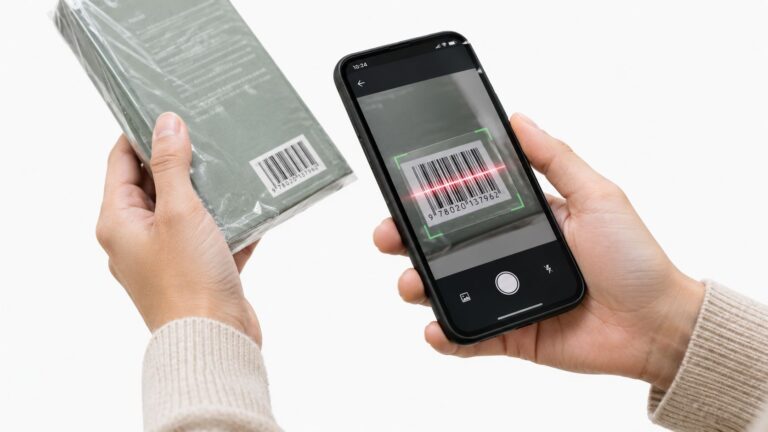
You're probably juggling the same mess most resellers do. One app for sold comps, another for Amazon checks, another for cross-listing, and then a notes app or spreadsheet to remember what you paid. That works for a while, but once you start sourcing seriously, the friction adds up fast.
The best reseller apps don't replace judgment. They remove the slow, repetitive steps that kill momentum. In a thrift aisle, at a garage sale, or during a late-night listing session, the right app helps you decide faster and make fewer bad buys. That's the difference between a fun side hustle and a business you can scale.
This guide is built around workflow, not hype. Some tools are best for sourcing. Some are better for research. Others earn their place when it's time to list, cross-post, and keep inventory straight. That's how experienced resellers use software.
You'll find ten tools here that fit different business models, from thrift flipping and estate sale hunting to Amazon arbitrage and multi-platform clothing resale. The goal isn't to download everything. It's to build a stack that matches how you buy and sell.
Table of Contents
- 1. ScanFlip AI
- 2. SellerAmp SAS
- 3. InventoryLab (Stratify + Scoutify)
- 4. Tactical Arbitrage
- 5. Keepa
- 6. ScoutIQ
- 7. Vendoo
- 8. List Perfectly
- 9. BrickSeek
- 10. PriceCharting
- Top 10 Reseller Apps: Side-by-Side Comparison
- How to Build Your Perfect Reseller App Stack
1. ScanFlip AI
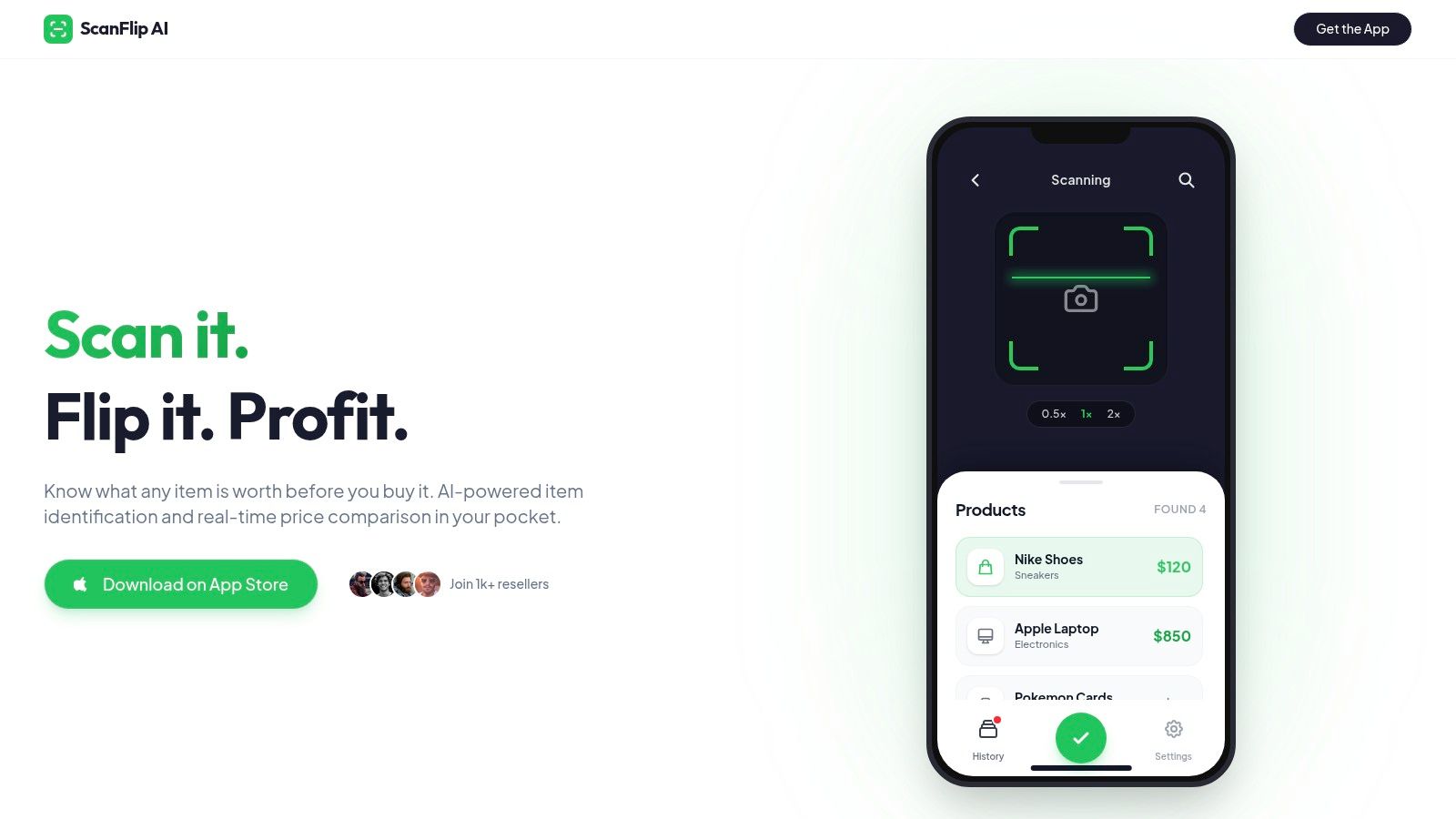
You are in a thrift aisle holding a pair of older sneakers with no box, no barcode, and no obvious model name. A standard scanner app is useless in that situation. ScanFlip AI is built for this part of the sourcing workflow.
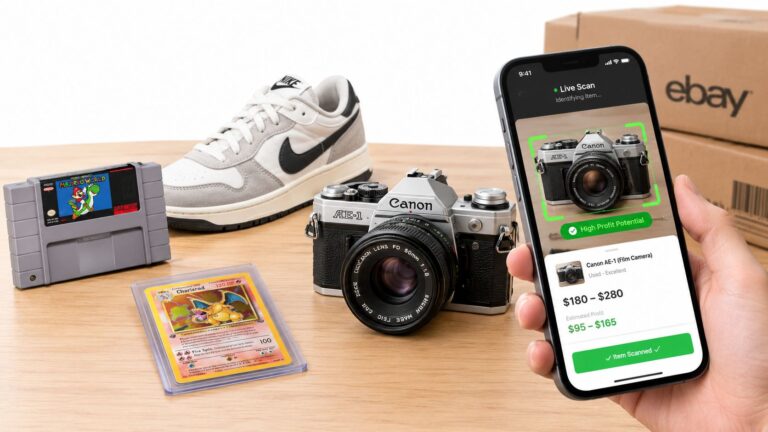
Instead of relying on UPC data, it uses visual identification to recognize items from your phone camera and pull sold comps from marketplaces such as eBay, Poshmark, Mercari, Depop, Amazon, Whatnot, and TikTok Shop. For secondhand sellers, that matters because a lot of profitable inventory is messy. Tags are missing, packaging is gone, and the value depends on finding the right match fast enough to make a buying decision before someone else grabs it.
Why it stands out in the field
ScanFlip AI earns its place at the sourcing stage, not the listing stage. That distinction matters. Its job is to help you answer a simple question in real time: should this item go in your cart or stay on the shelf?
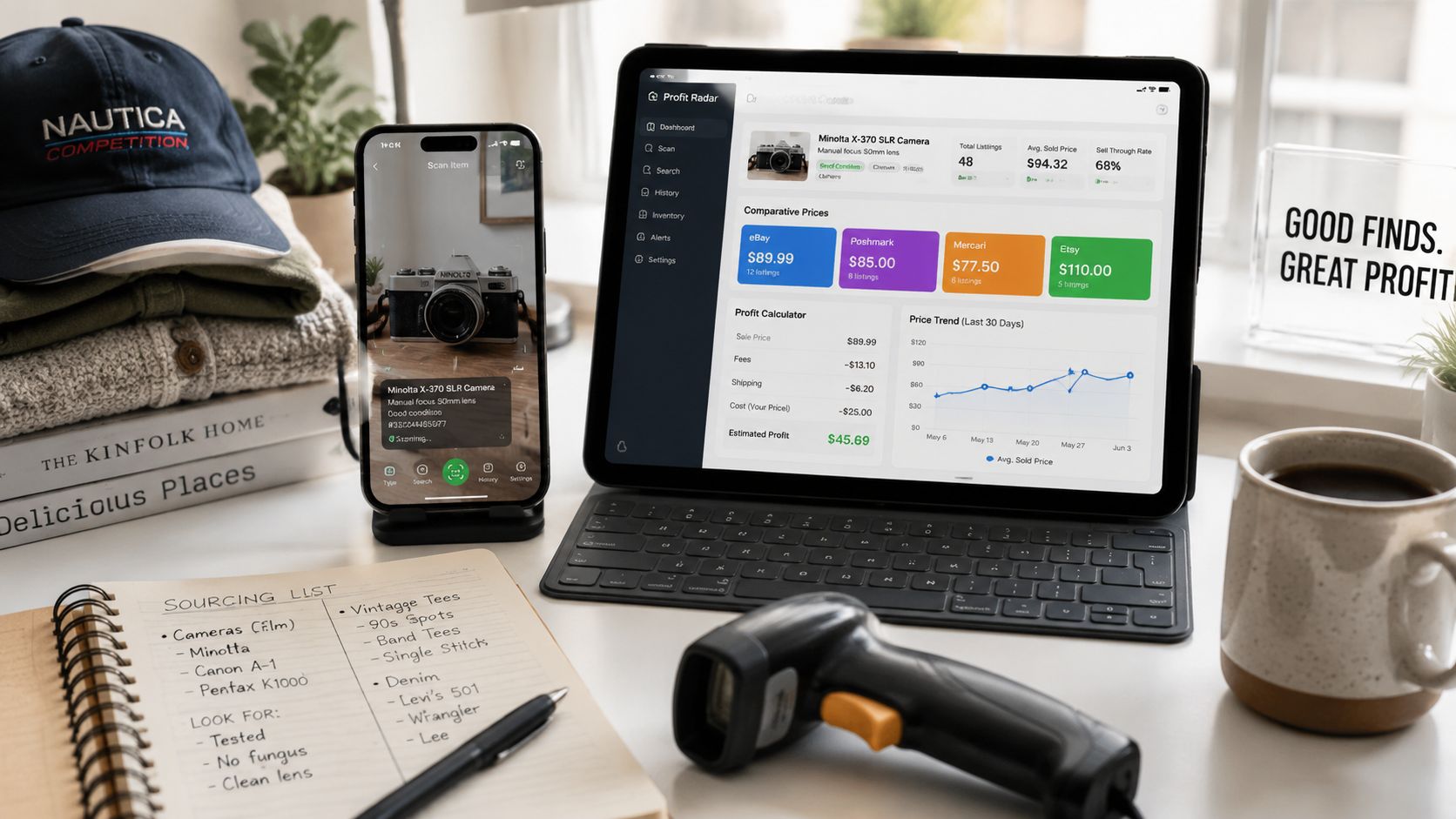
The useful part is not just the comp search. It also estimates fees and shipping so you can judge take-home profit instead of getting fooled by a high sale price. That is a better fit for thrift flipping than raw price checks, especially in categories where condition, size, and platform choice can swing margins.
It also saves scan history with photos, timestamps, and location data. Sellers who revisit the same thrift chains, estate sale companies, or flea markets can use that history to see what stores are worth their time.
Practical rule: If your inventory usually comes from one-off, untagged, or hard-to-identify items, visual search is faster than barcode lookup and more useful.
A reseller-focused workflow guide highlights how much speed matters when you are making sourcing decisions on the fly, especially if your process includes automatic profit math and fast capture from the sales floor (FlipperHelper reseller workflow guide). That is the lane ScanFlip AI fits.
It is especially useful for broad secondhand sourcing, including categories like the best items to resell for profit where brand, style, condition, and marketplace fit all affect resale value.
Best fit and trade-offs
ScanFlip AI makes the most sense for sellers whose workflow starts in thrift stores, estate sales, consignment shops, garage sales, and flea markets. It is a strong first app in the stack if you buy inventory that does not map neatly to a retailer listing or an Amazon catalog page.
What it does well:
- Strong for secondhand sourcing: Better suited to untagged, vintage, and non-barcoded items than UPC-first apps.
- Useful for cross-market decisions: You can compare resale potential across multiple platforms instead of assuming every item belongs on eBay or Amazon.
- Fast for buy-pass calls: Profit estimates help cut down on mental math in the aisle.
Trade-offs:
- iPhone only right now: That will rule it out for some sellers.
- It is not a listing tool: You will still need something else for cross-posting, inventory control, or full listing management.
- Comps still need judgment: Visual matching, fees, and shipping estimates help, but condition and listing quality still decide the final sale price.
For thrift flippers and mixed-category secondhand sellers, ScanFlip AI is the kind of app you put at the very front of the workflow. It helps you source faster, reject bad buys earlier, and build a stack around the actual bottleneck. Finding profitable inventory in the wild.
2. SellerAmp SAS
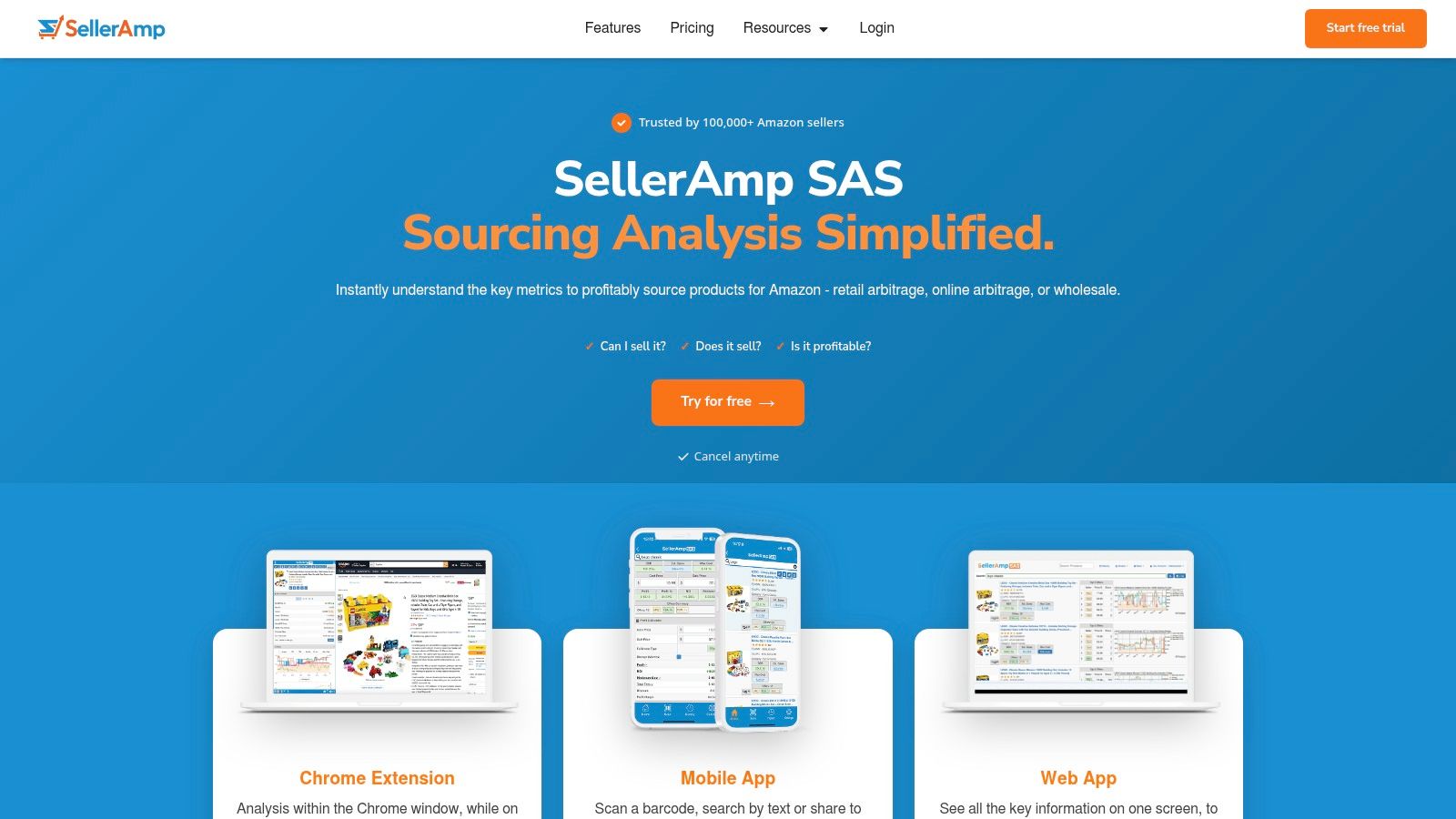
SellerAmp SAS is the app I'd point most Amazon arbitrage sellers toward first. It's built for buy-pass clarity on Amazon, and it doesn't try to be anything else. That focus is why it works.
Open a retailer page or scan in-store, and you can quickly check gating, fee impact, competition, estimated sales, and whether the item still makes sense after fulfillment. For retail arbitrage and online arbitrage, that single-screen verdict is the whole game.
Where SellerAmp earns its spot
SellerAmp is strongest when your sourcing flow starts with products that already exist in Amazon's catalog. It pairs especially well with stores, clearance aisles, and online retail pages where the item match is straightforward. The mobile app and browser extensions make it flexible enough for both in-person and desk-based sourcing.
What I like most is that it cuts out second-guessing. If an item is restricted, crowded, or too thin after fees, you know quickly. That's exactly what a good Amazon sourcing app should do.
SellerAmp is for sellers who want speed inside the Amazon ecosystem, not sellers comparing Poshmark, eBay, and Mercari on the same item.
Trade-offs are clear:
- Strongest for Amazon-only workflows: Great if Amazon is your main channel, weak if you need cross-market comps.
- Useful for fee-aware decisions: FBA and FBM math is front and center.
- Less useful for one-off thrift finds: If the item has no clear catalog match, the workflow breaks down.
If you run retail arbitrage, online arbitrage, or wholesale-style replenishable sourcing, SellerAmp SAS belongs near the top of your stack.
3. InventoryLab (Stratify + Scoutify)
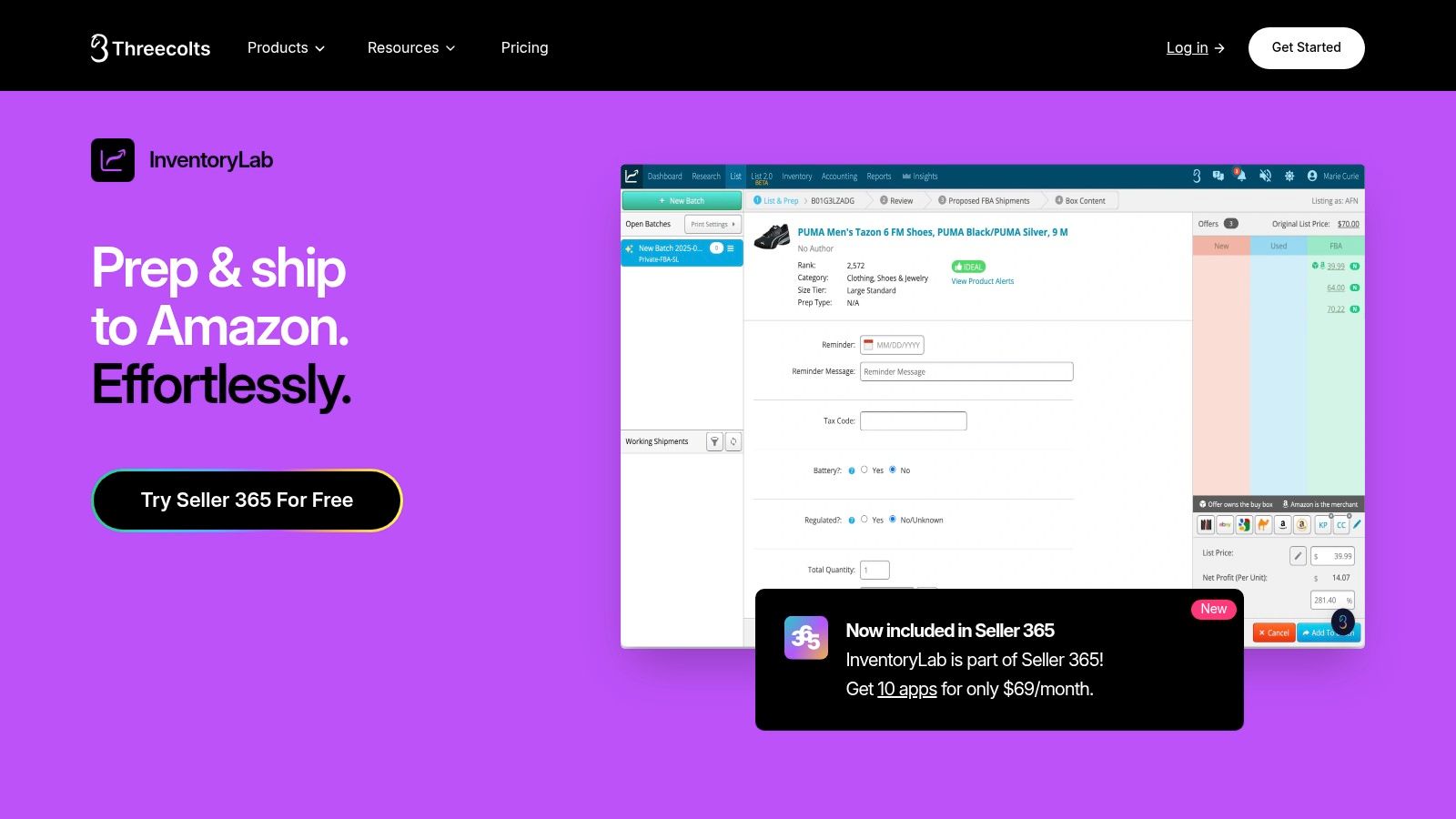
InventoryLab earns its value after the buy decision. A lot of Amazon sellers don't struggle with finding products. They struggle with the grind that comes after. Listing, labeling, shipment creation, profitability tracking, and accounting can turn into a pile of disconnected steps if you're patching things together manually.
That's where InventoryLab is useful. Stratify handles FBA prep workflows, while Scoutify covers mobile sourcing. Together, they create a cleaner scan-to-ship pipeline than most spreadsheet-heavy setups.
Best for Amazon sellers who need one workflow
This is the tool for sellers who want sourcing tied directly into listing and reporting. If you're scanning with Scoutify and then moving that inventory straight into a listing, labeling, and shipment process, the handoff is smoother than using separate tools that don't talk to each other.
It's also helpful for sellers who care about profitability reporting without building their own system. Some resellers love spreadsheets. Others eventually get tired of maintaining them. InventoryLab is for the second group.
A few honest limitations:
- Amazon-focused: It doesn't help much if you're cross-listing apparel to Poshmark or eBay.
- Best for FBA operators: Merchant-fulfilled sellers may not use the full workflow.
- Subscription required after trial: You have to decide whether the tighter workflow saves enough time to justify it.
If your business is mostly Amazon and you want fewer moving parts between sourcing and shipment, InventoryLab is one of the more practical picks.
4. Tactical Arbitrage
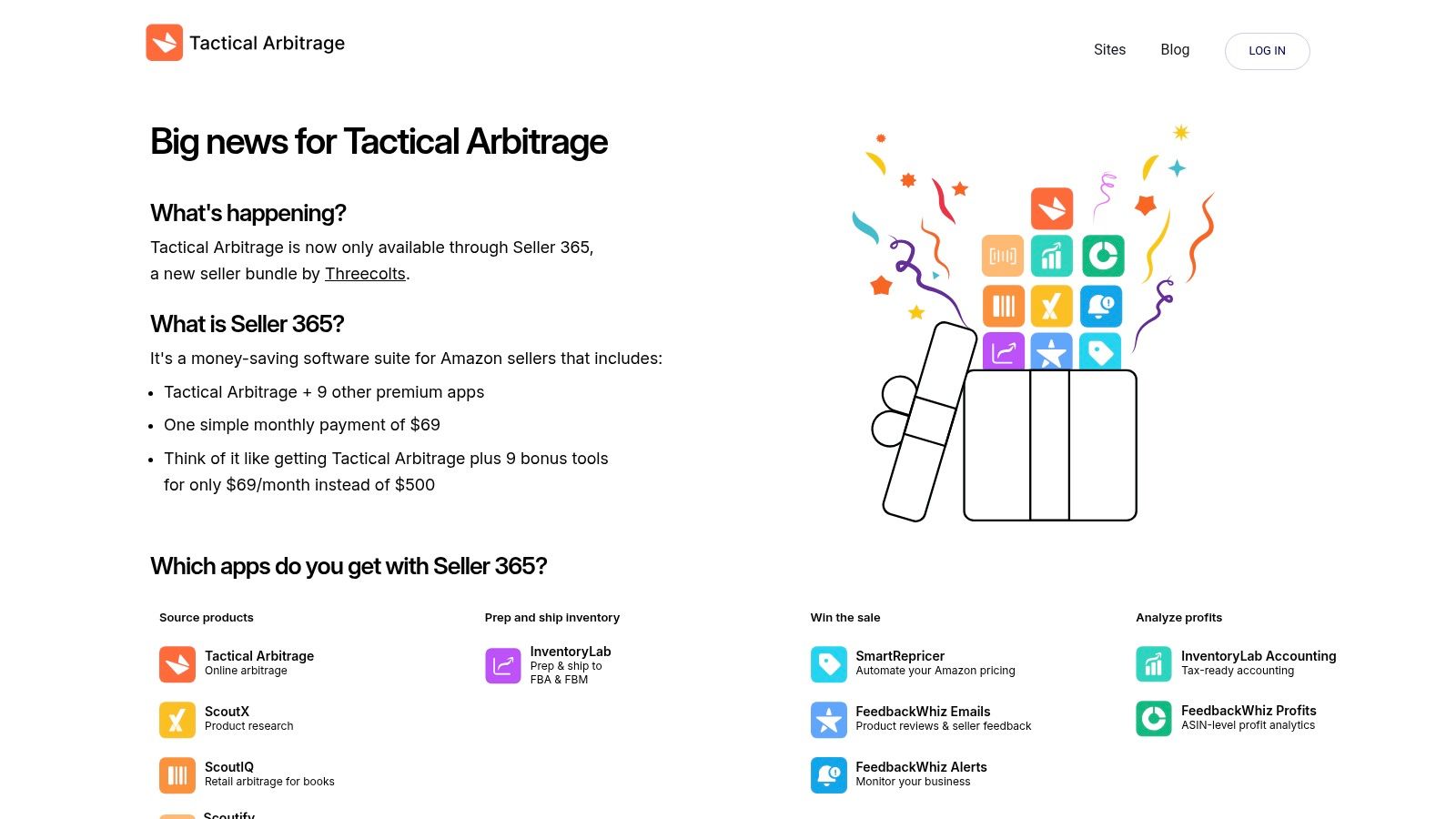
Tactical Arbitrage is not a beginner-friendly app, and that's fine. It wasn't built for casual store runs. It was built for sellers who want machines doing the hunting.
The appeal is obvious. It scans a very large pool of retail sites, lets you filter aggressively, and helps generate lead lists for Amazon resale. If you're doing online arbitrage at scale, manual searching doesn't hold up for long.
Who should actually use it
This is the tool for sellers who treat sourcing like a data operation. You set filters, look for profitable matches, account for discounts or cashback, and work from a system instead of gut feeling. If that sounds appealing, Tactical Arbitrage can save serious time.
It's especially relevant if you've already outgrown one-by-one product hunting and want broader coverage in your retail arbitrage workflow. The reverse search and library-style modules are also useful when you want to work backward from proven demand rather than blindly scan retail catalogs.
What I'd watch:
- Learning curve: New users often drown in settings before they get value.
- Lead overlap: Popular leads rarely stay secret.
- Best for disciplined operators: If you don't enjoy filtering and validation, it will feel like work.
Marketplace decisions have become much more data-driven. One guide notes that eBay's Terapeak gives sellers 90 days of sales data, sell-through rates, and average selling prices. Tactical Arbitrage belongs in that same mindset. You're not guessing. You're building a sourcing process around recent market signals.
For high-volume online arbitrage and Amazon-focused lead generation, Tactical Arbitrage is one of the strongest specialist tools available.
5. Keepa
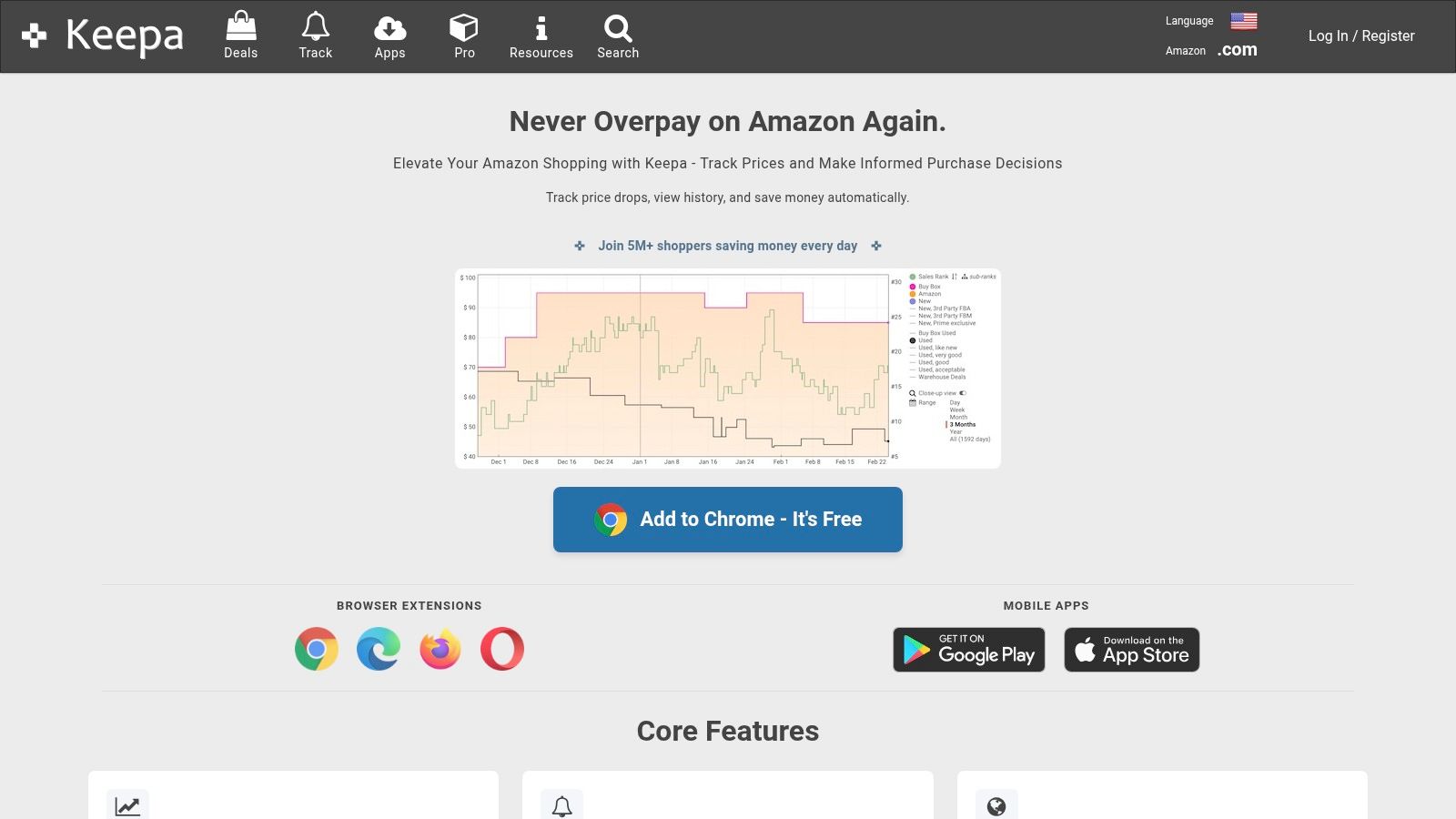
Keepa is the app sellers use when they've learned the hard way that today's price isn't the whole story. A product can look profitable in the moment and still be a bad buy if the price is temporarily inflated, the Buy Box is unstable, or the sales pattern is too erratic.
That's why Keepa matters. It gives historical context. For Amazon sellers, that context often decides whether a lead is real or just temporarily attractive.
What Keepa does better than quick analyzers
Quick analyzers tell you if a product works right now. Keepa helps you judge whether that “right now” is trustworthy. If a price spike is seasonal, short-lived, or tied to a stockout, the chart usually exposes it.
I think of Keepa as a filter for false confidence. Before committing deeper capital to a product, the chart can save you from buying into a collapsing listing or chasing a margin that won't exist by the time your inventory arrives.
Useful situations include:
- Checking price stability: Helps you avoid buying on a temporary peak.
- Watching Buy Box behavior: Important when competition gets aggressive.
- Tracking stock patterns: Helpful for replenishable items and restock timing.
Most bad Amazon buys don't look bad on the first screen. They look bad once you pull the chart.
The trade-off is simple. Keepa is Amazon-only. If you're a thrift reseller comparing eBay solds and Poshmark comps, it's the wrong tool. But for Amazon research, Keepa still belongs in the core toolkit.
6. ScoutIQ
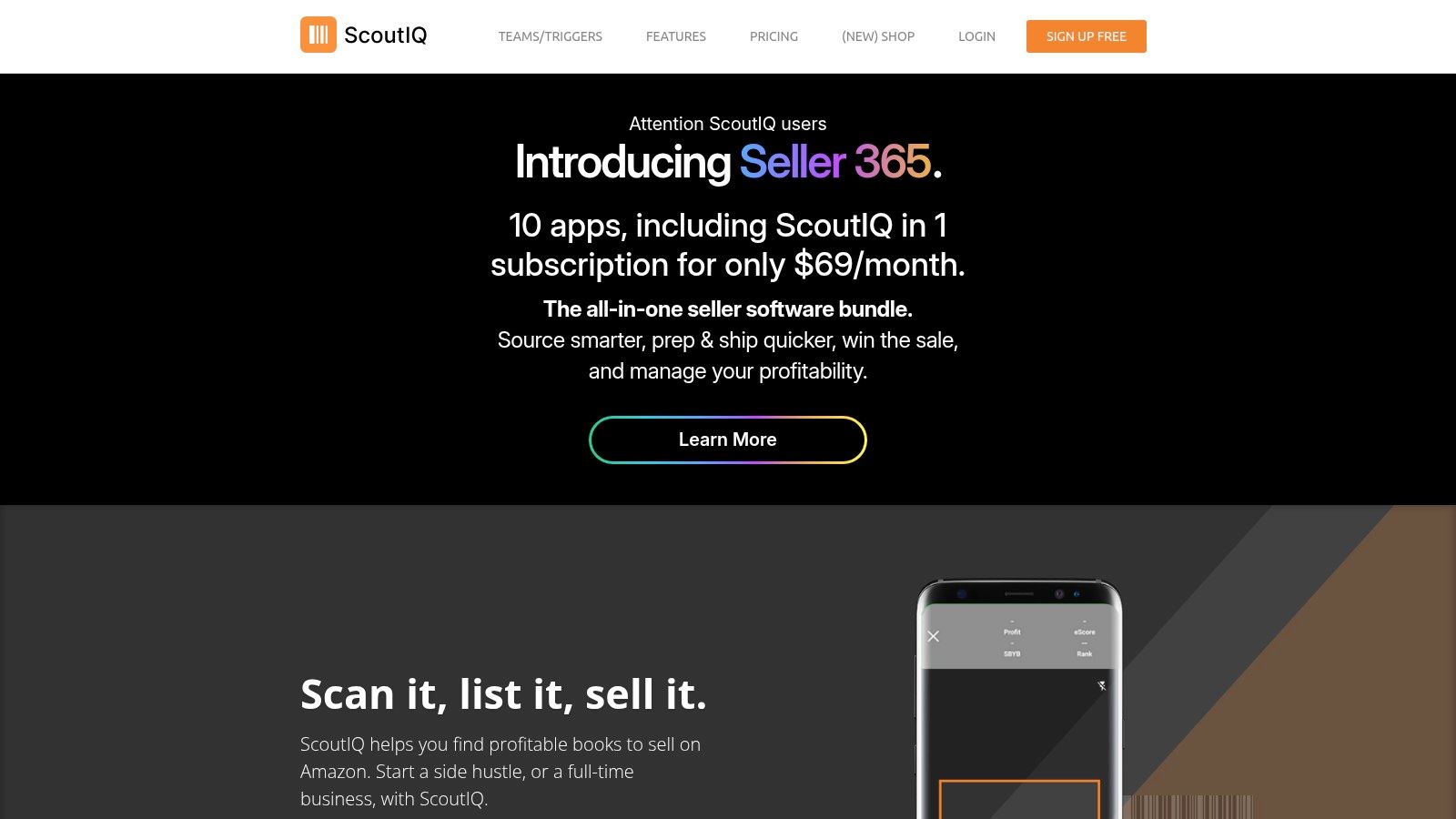
ScoutIQ is what happens when an app is built around a single sourcing environment and does that one job well. In this case, the environment is books and media. If you've ever scanned shelves in a library sale, used book store, or estate cleanout with weak signal, you know why that matters.
The offline database mode is the feature that changes the workflow. Instead of standing around waiting for lookups, you keep moving.
Why book sellers still rely on it
Books are a volume game for many resellers. You don't want a slow decision on each title. You want a fast accept-reject process with custom triggers that match your profit rules. ScoutIQ gives you that.
It also works well for teams. If more than one person is scouting, having a standardized decision setup keeps everyone aligned on what counts as a buy.
Its best use cases are narrow, but very strong:
- Great for books and media: Fast verdicts beat general-purpose apps here.
- Strong in poor signal locations: Offline database access matters in the field.
- Less useful outside its lane: It's not the tool for shoes, apparel, or random thrift hard goods.
If your main niche is used books, ScoutIQ is one of the best reseller apps you can carry. And if you're deciding between book-specific tools, this deeper look at the best book scouting app options helps clarify where category-specific scanners win.
7. Vendoo

Vendoo is the app I'd recommend to most multi-platform resellers before I'd recommend almost anything else in listing software. Not because it does everything, but because cross-listing is where a lot of sellers waste the most time.
If you list the same item on eBay, Poshmark, Mercari, Depop, Etsy, or another marketplace, repeating the same listing work by hand gets old fast. Vendoo centralizes that process and makes one catalog feed several channels.
Where Vendoo saves the most time
Its biggest practical benefit is sale detection and delisting. That alone can prevent double-selling headaches, especially if your inventory moves across multiple marketplaces and you're not glued to every app all day.
For clothing and shoes, Vendoo is often the easiest recommendation because those categories translate well across platforms. If your inventory is one-of-one and style-driven, broader exposure usually helps.
What works:
- Best for sellers on several marketplaces: The time savings compound fast.
- Helpful for centralized inventory: One catalog is easier to manage than scattered drafts.
- Useful for templates and repetitive listing work: Good fit for consistent categories.
What doesn't:
- You still need marketplace accounts in good standing: Cross-listing software doesn't solve account health.
- Occasional sync hiccups can happen: That's true of most tools that sit between platforms.
One industry guide describes eBay as having over 130 million active buyers and calls it the backbone of most reselling businesses. That's exactly why I like Vendoo for multi-platform sellers. eBay stays central, but you don't leave other channels untouched.
If your business depends on getting the same inventory in front of different buyer pools, Vendoo is a strong default choice.
8. List Perfectly
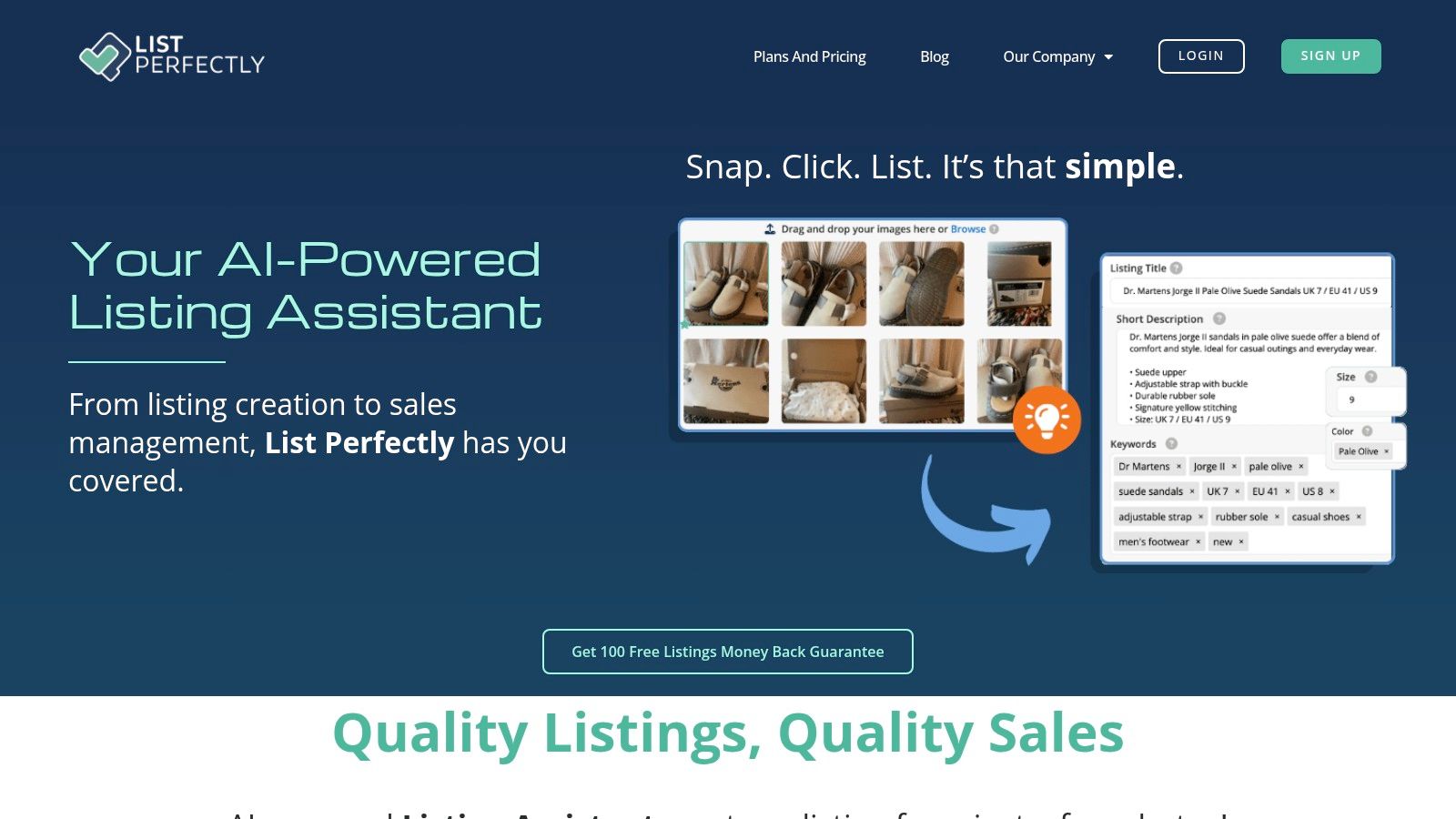
List Perfectly overlaps with Vendoo on paper, but in practice the fit feels different. Vendoo is often the easier pick for broad multi-platform selling. List Perfectly tends to appeal more to power users who want control, bulk edits, and a desktop-oriented workflow.
If your catalog is getting large, that difference matters. At some point, listing software isn't just about cross-posting. It's about revising titles, swapping photos, changing prices, and keeping a lot of inventory consistent without touching each listing one by one.
Best for bulk editing and larger catalogs
That's where List Perfectly shines. Bulk revision tools and templates make it useful for sellers who process inventory in batches. Clothing resellers, sneaker sellers, and mixed hard-goods sellers with established systems usually get the most from it.
I'd choose it over lighter cross-listing tools when:
- You batch list and batch revise: Bulk control matters more than a simple interface.
- You want deeper template workflows: Good for repetitive categories and team use.
- You work mostly on desktop: The setup leans that way.
The downside is that it asks more from you up front. Template setup and workflow customization take effort. If you only list casually, it may feel heavier than necessary.
For higher-volume sellers who want stronger editing control across marketplaces, List Perfectly is a serious option.
9. BrickSeek
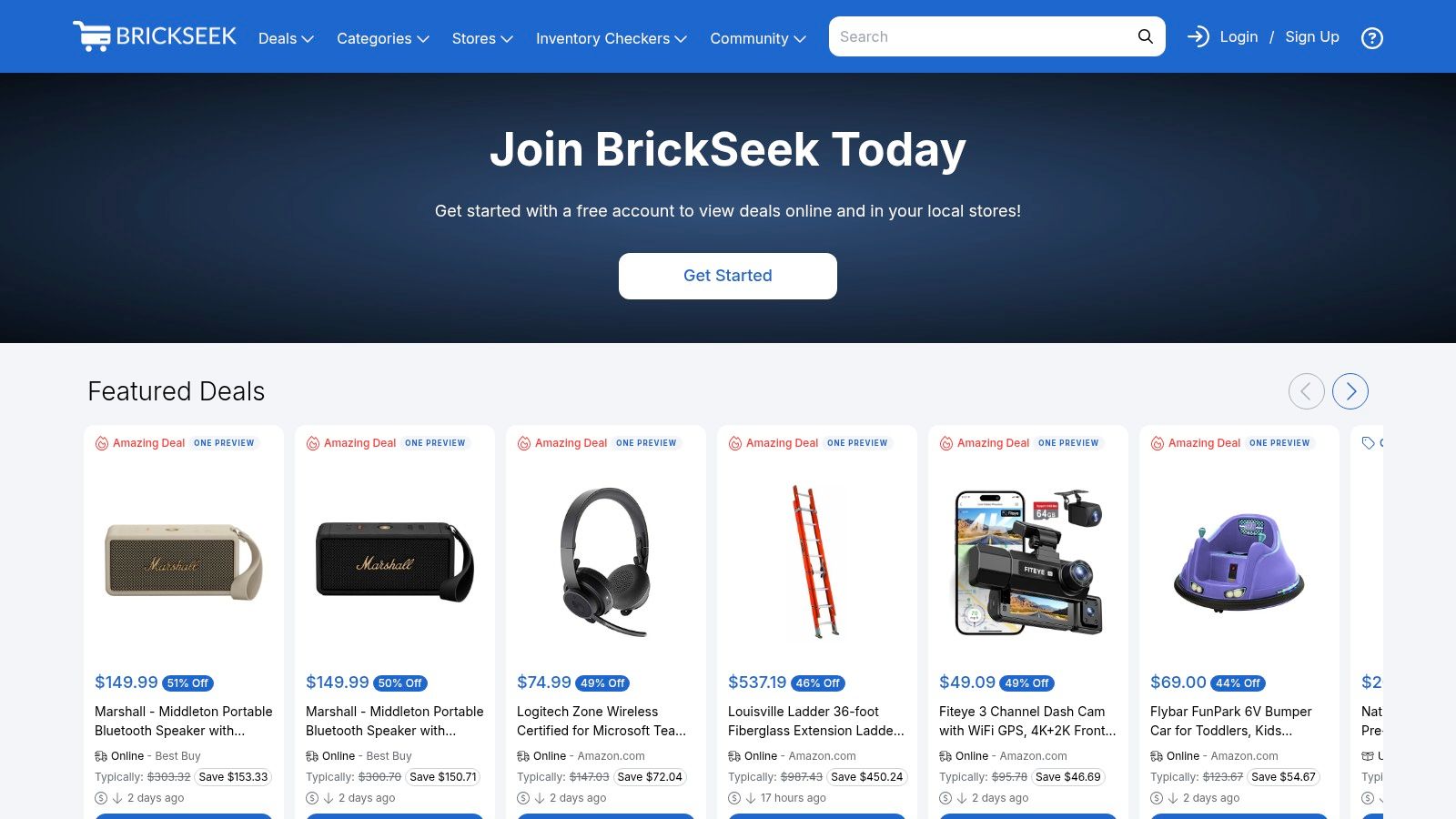
BrickSeek is less about analyzing one item and more about planning where to go. That's a useful distinction. Some apps answer, “Is this product profitable?” BrickSeek helps answer, “Which stores are worth checking today?”
For retail arbitrage sellers, that route-planning angle can save a lot of dead-end trips.
When it helps and when it doesn't
The markdown and local inventory tracking features are the main draw. If you monitor store-level deal movement and use alerts well, you can catch clearance opportunities earlier and make smarter runs.
BrickSeek provides the most help in these areas:
- Planning store routes: Better than driving blind.
- Watching markdown timing: Useful for sellers who know their local retailers.
- Spotting online and local deal opportunities: Helpful as a lead source, not a final decision-maker.
The biggest issue is retailer inventory accuracy. If you've done enough RA, you already know store systems can be wrong. That means BrickSeek is best used as a lead generator, not proof that inventory will definitely be waiting on the shelf.
Treat BrickSeek as a map, not a promise.
If you source from major retailers and want to spend less time guessing where the good markdowns are, BrickSeek can earn a place in your sourcing stack.
10. PriceCharting
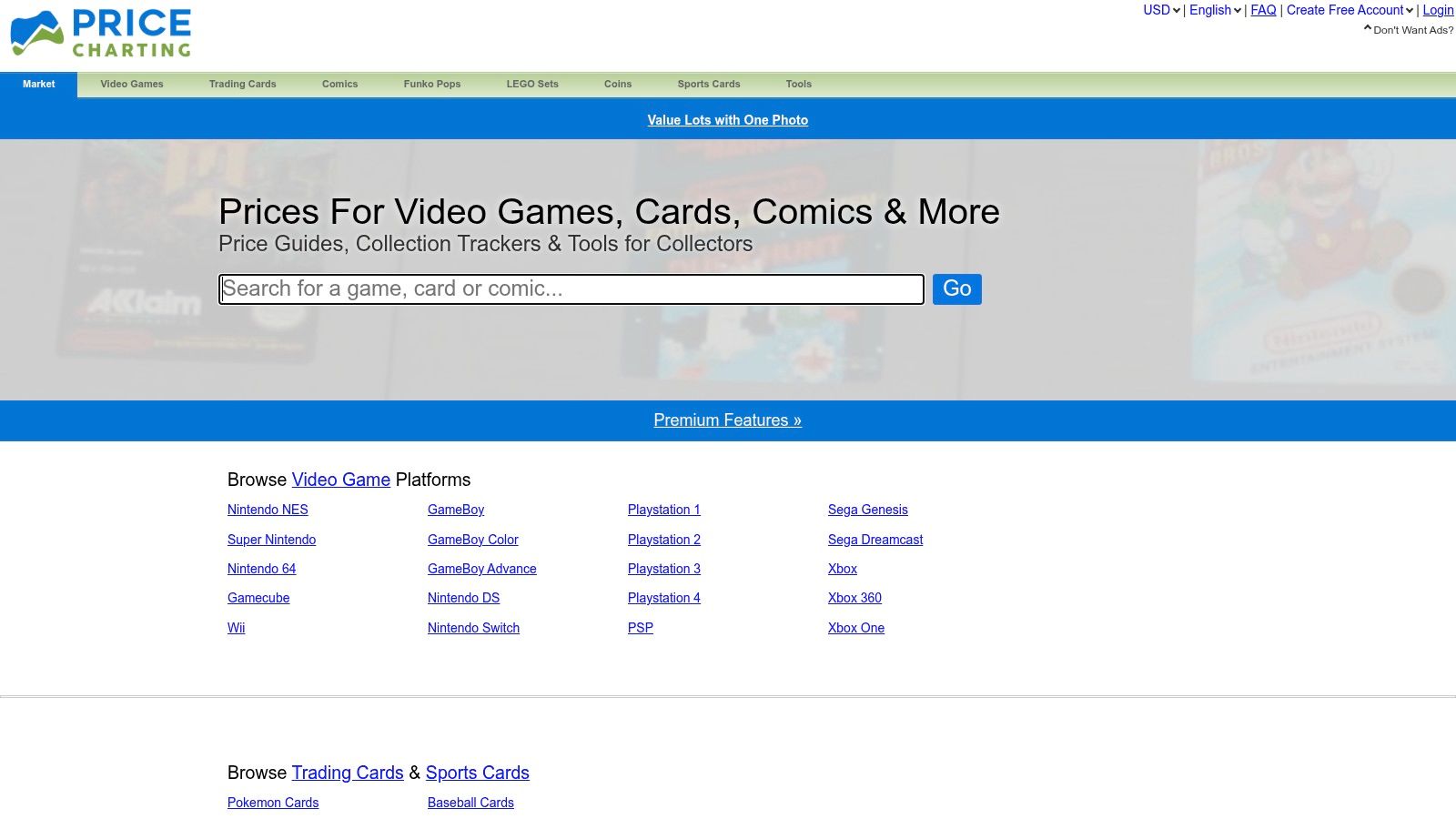
PriceCharting is a niche app, and that's exactly why it's useful. If you sell video games, trading cards, or comics, general resale tools often feel too broad. You don't need a generic answer. You need category-specific comps that reflect how collectors buy.
This is especially true at garage sales and estate sales, where lots, loose cartridges, mixed card boxes, and incomplete sets can be hard to value quickly.
Why niche sellers keep it open
PriceCharting gives those sellers a more direct pricing reference than broad marketplace search alone. The lot calculators, collection tools, and category-specific charts make it easier to estimate value without rebuilding the same manual process every weekend.
I like it for sellers who stay inside collectible categories and don't want to reinvent pricing every time they hit a pile of games or cards.
Where it fits best:
- Video game resellers: Good for quick historical context and current value checks.
- TCG and comics sellers: Better than generic sold search when you know the niche.
- Collectors who also resell: Useful for cataloging and buying decisions together.
The limitation is obvious. Outside games, TCG, and comics, it's not the right tool. But inside those lanes, PriceCharting is one of the most practical specialist apps you can use.
Top 10 Reseller Apps: Side-by-Side Comparison
| Product | Core features | UX & quality | Value proposition | Target audience & Price |
|---|---|---|---|---|
| ScanFlip AI | Camera-first visual ID (no barcode); cross-market sold comps (eBay, Poshmark, Mercari, Depop, Amazon, Whatnot, TikTok Shop); profit calc with fees & shipping; flip-or-pass verdict; scan history with geo/photos | In-aisle speed; red/green verdict; stores scans for audit; 1k+ resellers cited | Instant net-profit decisions; consolidates comps; avoids manual fee math and app switching | Thrift/estate/garage resellers; iOS only; 10 free scans starter; full pricing not publicly listed |
| SellerAmp SAS | Mobile + Chrome/Edge extensions; FBA/FBM fee & ROI calc; gating/eligibility checks; Keepa integration | Very fast one-screen buy/pass clarity; 14-day free trial | Quick Amazon-specific sourcing and OA/wholesale checks | Amazon resellers and OA buyers; tiered subscriptions with trial |
| InventoryLab (Stratify + Scoutify) | Listing, labeling, shipment workflows; profitability & accounting dashboards; Scoutify mobile sourcing; restock insights | Tight scan-to-ship pipeline; replaces spreadsheets; 30-day trial | End-to-end FBA workflow tying sourcing to accounting | Amazon FBA sellers; subscription after trial |
| Tactical Arbitrage | Mass scanning of 1,400+ retailers; reverse ASIN & library modules; ROI, cashback and pack handling | Generates daily lead lists; deep filters; steep learning curve | High-volume automation for large-scale OA/RA sourcing | High-volume online arbitrage pros; paid plans (site) |
| Keepa | Historical price & sales-rank charts; Buy Box & stock tracking; deal alerts | Gold-standard Amazon history; essential context; premium features behind paywall | Prevents buying into temporary/seasonal price spikes | Research-focused Amazon sellers; free basics, Keepa Premium for full features |
| ScoutIQ | Live & offline database scanning; custom net/ROI triggers; team mode; downloadable DB | Very fast "beep-to-verdict"; works offline in low-signal areas | Optimized for high-speed book/media scouting in offline environments | Book and media resellers; subscription required (US/UK DB) |
| Vendoo | Cross-post to 10+ marketplaces; sale detection & auto-delist; listing templates | Saves multi-platform listing time; free plan available; some service interruptions reported | Centralized cross-listing to reduce duplicate work and double-sells | Multi-platform sellers; free tier + scalable paid plans |
| List Perfectly | One-to-many listings; bulk edit (price/title/photo); templates; team workflows | Robust bulk workflows for power listers; desktop-first | Manage large catalogs across many marketplaces efficiently | High-volume listers and teams; subscription required |
| BrickSeek | Local/online inventory & price alerts; "Markdowns by Store" feeds; larger search radius on paid tiers | Useful for planning RA store runs; inventory accuracy varies | Early visibility into in-store clearance and markdowns | Retail-arbitrage planners; free + premium features |
| PriceCharting | Real-time & historical comps for games/TCG/comics; eBay deal scanner; lot calculator; exports/API on higher tiers | Fast, category-specific comps; retailer-grade exports for pro users | Niche market price history and deal scanning for games/TCG/comics | Niche collectors/resellers; free basic, paid Collector/Legendary tiers |
How to Build Your Perfect Reseller App Stack
No single app handles sourcing, research, listing, and inventory management equally well. The best reseller apps work as a stack. The right combination depends on what you sell, where you source, and how many marketplaces you use.
For thrift flipping, I'd keep it simple. Use ScanFlip AI to identify and evaluate one-off items in the field, then pair it with Vendoo if you sell across eBay, Poshmark, Mercari, or Depop. That stack is strong because each tool handles a different bottleneck. ScanFlip helps you buy better. Vendoo helps you get that inventory in front of more buyers without duplicating listing work.
Amazon sellers need a different setup. SellerAmp SAS is better for fast arbitrage checks, especially when the item already exists in Amazon's catalog and you need a quick profitability read. InventoryLab makes more sense once the challenge becomes FBA prep, shipment creation, and keeping the accounting side from turning into a mess. If your sourcing gets more automated and more data-heavy, Tactical Arbitrage and Keepa become stronger additions than broad secondhand tools.
For category specialists, use narrower apps on purpose. ScoutIQ beats general scanners if books are your business. PriceCharting beats broad comp tools if you mainly buy games, trading cards, or comics. BrickSeek is best as a route-planning add-on for retail arbitrage sellers, not as the center of the whole workflow.
When ScanFlip AI Outperforms Alternatives
ScanFlip AI wins when the item doesn't fit a neat barcode-driven workflow. That's common in thrift stores, garage sales, estate sales, and mixed secondhand environments where inventory is messy and speed matters.
A vintage leather jacket is a good example. Barcode-based sourcing apps won't help much if there's no UPC and the tag is unclear. ScanFlip AI is built for that kind of situation because the workflow starts with the camera, not the barcode. The same thing applies to mixed collectible lots, old electronics accessories, handbags, and odd home goods where manual searching usually slows you down.
It also outperforms alternatives when you sell across more than one marketplace and want profit context, not just top-line sale prices. Seeing a product's likely take-home value after estimated fees and shipping is more useful than seeing a high comp and hoping the math works later.
The smartest move is to start with the tool that removes your biggest point of friction. If bad buys are the problem, improve sourcing first. If your death by a thousand cuts is listing the same item in five places, fix cross-listing next. Build the stack around the work that keeps stalling your business.
If you source inventory in thrift stores, estate sales, garage sales, or anywhere items show up without clean barcodes, ScanFlip AI is worth trying first. It's built for the exact moment when you need to identify an item fast, check sold comps across marketplaces, and decide whether the flip still works after fees and shipping. For resellers who make money on one-off finds, that's a practical edge.