
Best Items to Resell for Profit in 2026: Your Guide
You're in a thrift store aisle holding a jacket that looks expensive. The tag price seems low enough. The brand is familiar, but not familiar enough. You're trying to answer five questions before someone else grabs it.
Is it real demand, or just a nice-looking item? What does it really sell for, not what someone listed it for? How long will it sit? What will fees and shipping take out of it? And the hardest question of all. Is this a buy, or are you about to pay for a lesson?
That moment is where most resellers make or lose money. Not on the listing. Not on the photo setup. In the aisle, at the rack, at the estate sale table, under time pressure.
The people who consistently find the best items to resell for profit don't rely on luck or “good eye” alone. They use a repeatable filter. They know what categories deserve attention, what trade-offs kill margin, and how to estimate net profit fast enough to make a confident decision before the opportunity disappears.
Table of Contents
- The Reseller's Dilemma Finding Profit in a Sea of Stuff
- The Four Pillars of a Profitable Flip
- High-Margin Categories to Source in 2026
- Sourcing Tactics and In-Aisle Decision Rules
- Example The Anatomy of a Profitable Flip
- Accelerate Decisions with ScanFlip AI
- Stop Hunting for Treasure Start Building a Business
The Reseller's Dilemma Finding Profit in a Sea of Stuff
A lot of beginners think the hard part is finding valuable things. It isn't. Thrift stores, estate sales, garage sales, and clearance aisles are full of items that look promising. The hard part is separating a profitable flip from a future return, dead listing, or low-margin grind.
One day it's a pair of Nike sneakers with worn insoles. The next it's a Carhartt jacket with solid branding but a stain near the cuff. Then it's a vintage camera that looks expensive because it feels heavy and old. Each one creates the same trap. You start filling in the blanks with hope.
Hope is expensive in resale.
Experienced sellers don't ask only, “What can this sell for?” They ask, “What can I realistically realize from this item, from this sourcing channel, in this condition, after all costs?” That shift is where steady profit starts.
Buyers don't pay you for what an item could be worth in perfect condition on the best day of the market. They pay for the item in front of them, listed by you, with your turnaround and your costs.
The mistake I see most often is treating resale like a treasure hunt instead of a decision business. Treasure hunters chase stories. Decision-focused resellers chase spread. They want enough room between buy cost and take-home profit to survive fees, slow sell-through, and the occasional bad buy.
The real problem isn't finding items
Most stores have inventory. Most estate sales have overlooked corners. Most garage sales have underpriced pieces. The issue is speed and clarity.
You rarely get twenty minutes to research one item. You get a short window, weak signal, and competing buyers. That's why a working system matters more than a broad list of “hot products.”
A useful system does three things:
- Identifies demand quickly: It helps you tell the difference between a known mover and a random branded item.
- Estimates true margin: It forces fees, shipping, and cleanup costs into the decision before you buy.
- Protects capital: It keeps you from tying up money in items that might sell eventually but don't belong in a repeatable business.
Why generic advice falls short
“Buy low, sell high” isn't advice. It's the result everyone wants.
The best items to resell for profit aren't just popular categories. They're the items that fit your sourcing environment, your budget, your shipping ability, and your sales channels. A good flip for a local pickup seller can be a bad flip for someone who ships everything. A good liquidation buy can be a bad thrift buy if local pricing is already too efficient.
That's why smart resellers build around rules, not excitement.
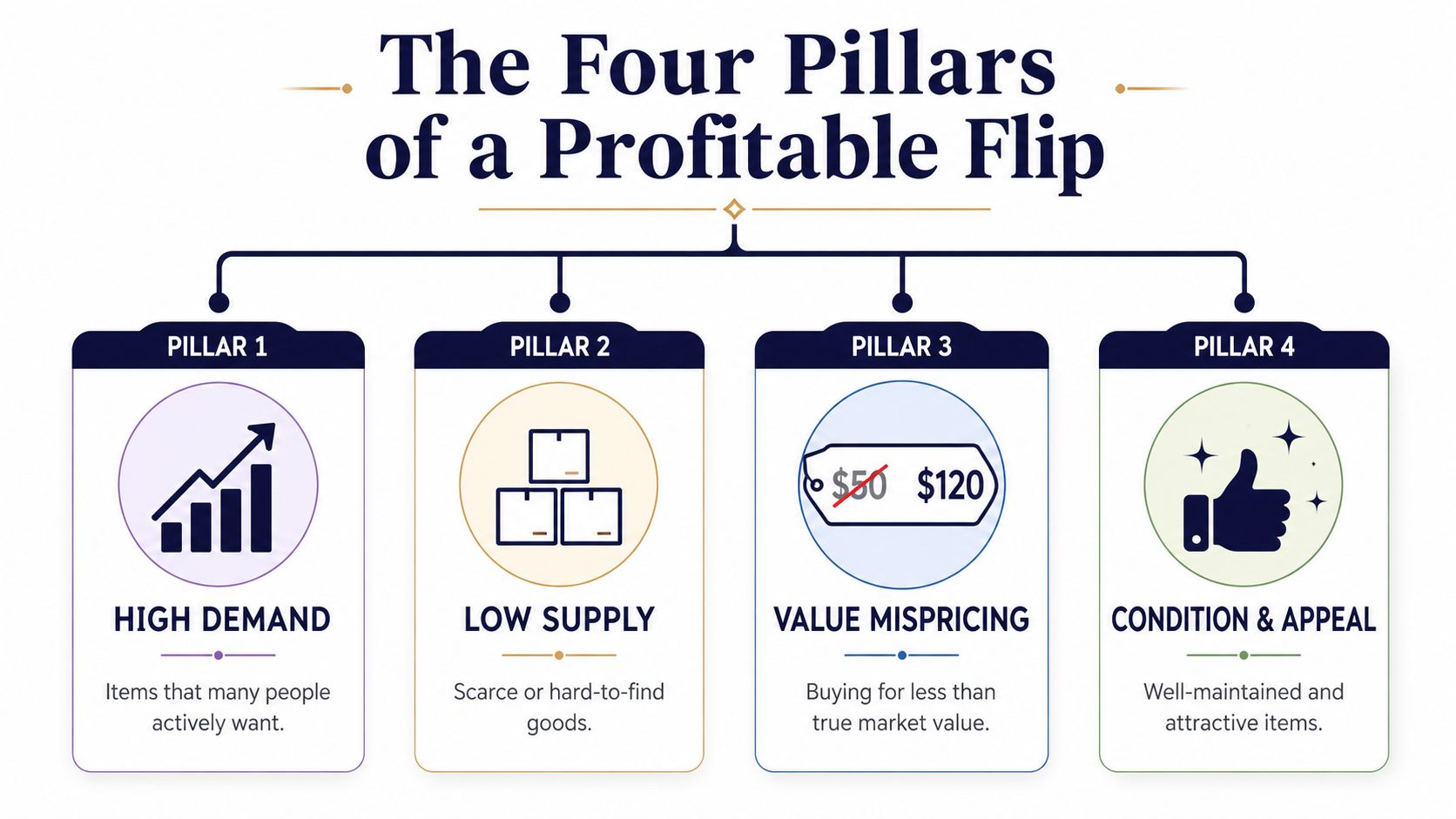
The Four Pillars of a Profitable Flip
Every profitable flip stands on four checks. If an item fails one badly enough, I pass even if the brand looks good. You don't need a complicated spreadsheet in the aisle. You need a clear mental framework.
Demand beats personal taste
A lot of items are attractive. Far fewer are liquid.
Demand means buyers are actively searching for that exact thing, or a close variation of it. Brand matters. Model matters. Era matters. Size matters in apparel and shoes. A plain leather jacket can sit. A recognizable Levi's trucker jacket in the right wash can move.
Ask yourself:
- Would a buyer search for this on purpose: Branded outdoor wear, named sneaker models, and known collectible lines usually pass this test.
- Is the style still current enough to sell: Some older items are vintage gold. Others are just outdated.
- Can I describe it clearly in a listing: If you can't identify it well, pricing it correctly gets harder fast.
Margin has to survive reality
Gross spread is not profit. It's potential.
A jacket bought cheaply can still become a weak flip if it needs stain treatment, lint removal, better buttons, careful packaging, and a marketplace with heavy fees. Good resellers think in net terms from the start.
Use a short cost stack every time:
| Cost area | What to include |
|---|---|
| Buy cost | What you paid at the source |
| Prep | Cleaning, replacement parts, basic repair supplies |
| Selling costs | Marketplace fees and payment deductions |
| Fulfillment | Packaging and shipping |
| Risk buffer | Condition surprises, returns, slower sale than expected |
If the spread only works in the best-case scenario, it doesn't work.
Turnover protects your cash
A lower-margin item that sells quickly can outperform a prettier, slower item. Cash tied up in inventory can't buy the next deal. Turnover is what keeps the machine running.
That's where many beginners get stuck. They celebrate high asking prices and ignore how long inventory sits. A stack of “good deals” that won't move is still a cash problem.
Practical rule: Favor items that are easy to identify, easy to list, and easy to ship. Complexity slows cash conversion.
Seasonality changes the risk
Some categories sell all year. Others need timing. Winter outerwear, holiday decor, and certain sports gear can be great buys at the right moment and bad holds at the wrong one.
This doesn't mean avoid seasonal items. It means buy them with awareness.
Keep seasonality in your decision:
- In-season demand: Easier pricing, faster movement.
- Off-season sourcing: Often better buy prices, but longer holding time.
- Storage burden: Bulky seasonal goods eat space and patience.
The strongest flips usually combine real demand, healthy margin, decent turnover, and timing that doesn't force you into a long wait.
High-Margin Categories to Source in 2026
You're in a thrift aisle with ten minutes before the good carts get picked over. One pair of sneakers has a recognizable logo. A jacket looks old enough to matter. A shelf of random electronics is priced low. The profitable move is not grabbing the most items. It's knowing which categories give you enough margin after fees, shipping, prep, and returns to make a fast, defensible buy.

Brand and scarcity do the heavy lifting
The best categories are usually brand-led, easy to verify, and supported by an active buyer base. They give you pricing power before you even touch the listing. Generic products can still flip, but they leave less room for mistakes, slower sell-through, or condition surprises.
One resale guide described high-end sneakers from Nike, Jordan, Adidas, and New Balance as a dominant category, with limited drops able to generate 2–5x profits and typical margins of 40–200% (https://closo.co/blogs/data-driven-insights-market-analytics/the-25-best-items-to-resell-for-profit-in-2025-detailed-list). The same guide said vintage clothing such as thrifted Levi's, Carhartt jackets, and band T-shirts can produce 50–300% margins.
That fits what good resellers see every week. Buyers pay up for items that are hard to replace, easy to identify, and tied to a brand, era, or subculture they already search for by name.
Categories worth repeated attention
Some categories earn a permanent place in the rotation because they combine margin, demand, and fast identification.
High-end sneakers: Limited releases, collaborations, and proven models can sell fast. The upside is real, but so is counterfeit risk. Condition grading has to be tight, and cleaning only fixes so much. A strong pair of Jordans often beats a cart full of forgettable mall-brand shoes.
Vintage workwear and denim: Levi's, Carhartt, and older branded outerwear keep producing because buyers trust the fit, fabric, and look. Wear can help if it reads as authentic. Torn cuffs, bad stains, or repairs in obvious areas can cut value fast.
Band tees and graphic apparel: This category rewards knowledge, not guessing. The print, tag, copyright, size, and artist matter more than age alone. Plenty of old shirts are still low-value shirts.
Niche electronics: The money is in specific models with known resale demand and simple testing. The bad buys are missing cords, battery corrosion, cracked housings, or items that become return magnets once shipped.
Recognizable collectibles: Categories with clear versioning, model numbers, set names, or release markers can be strong. Collectors buy specifics. Broad “vintage decor” thinking usually leads to overbuying junk.
What usually weakens the deal
Low-end housewares, generic decor, and bulky unbranded furniture fool a lot of newer sellers because the asking price looks high enough to support profit. The problem shows up later. These items are slower to list, harder to store, more annoying to ship, and often attract price-sensitive buyers.
They can still work if the buy price is low enough and the resale path is obvious.
That is the filter I use across every category. A good category is not just profitable once. It is repeatable. You should be able to spot it fast, estimate net profit without talking yourself into the buy, and list it without creating extra work that eats the margin. That's how a category becomes part of a system instead of a lucky score.
Sourcing Tactics and In-Aisle Decision Rules
You are five minutes into a thrift run. Cart in one hand, phone in the other, and three decent-looking items staring back at you. It is here that margin gets made or lost. The reseller who wins is not the one who spots the most interesting item. It is the one who can estimate net profit fast, account for the sourcing channel, and pass on anything that needs too much optimism.
That is the core sourcing skill. Category knowledge helps, but in-aisle decision speed is what keeps bad inventory out of your cart.
Where good inventory actually shows up
Every sourcing channel rewards a different style of buying.
Thrift stores favor repetition. The same stores teach you who overprices jackets, which locations miss electronics, and what day the better donations hit the floor. Estate sales are different. Early entry matters if you are chasing recognizable brands or small collectibles. Late entry matters if you are buying leftovers at a steep discount. Garage sales reward clean offers and quick reads. Clearance aisles reward restraint, because retail packaging can make mediocre resale inventory look better than it is.
Channel matters because liquidity changes by source. One resale guide notes that 68% of resellers fail due to mispricing caused by ignoring channel-specific liquidity (https://closo.co/blogs/beginner-guides-how-tos/most-profitable-items-to-resell-what-to-source-right-now). That lines up with what shows up in practice. A good item bought from the wrong source at the wrong price can still be a bad flip if sell-through is slower than your estimate.
I price estate-sale and local oddball finds more conservatively than identical items sourced from channels with stronger resale velocity. The mistake is treating every comp like it has the same path to sale.
A fast red-green buying filter
I use a simple filter because complicated systems fall apart in the aisle.
1. Identify the item cleanly
Brand, model, size, era, material, or version should be clear enough that sold comps mean something. If the ID is fuzzy, the margin estimate is fuzzy too.
2. Check whether demand is specific
Generic interest is not enough. “People buy cameras” means nothing. “This Canon point-and-shoot model sells regularly in used condition” is useful.
3. Look for friction
Missing remotes, cracked battery doors, stains near the collar, chipped corners, odd odors, and incomplete sets all add work or returns. Small flaws are fine if the discount covers them. Hidden problems are where profit disappears.
4. Run the net, not the sale price
I want a rough take-home number before the item goes in the cart. Buy cost, platform fees, shipping, supplies, cleaning, and return risk all count. Fast math beats wishful thinking.
5. Adjust for the channel
Slow local inventory gets a tougher buy threshold. Easy-to-ship items with strong online demand get more flexibility.
Here is the shortest version:
- Green light: Clear ID, proven demand, manageable condition, solid net after fees and shipping
- Yellow light: One issue to solve, such as weak comps, extra prep, or incomplete information
- Red light: Generic item, fragile margin, ugly shipping math, or multiple unanswered questions
Bad buys usually happen when a seller fills in too many blanks with hope.
Tactics that improve your hit rate
Better sourcing comes from habits, not heroic luck.
- Repeat the same route. Familiar stores get easier to read over time. You learn pricing patterns, restock timing, and which departments deserve the first pass.
- Start with sections other buyers skip. End caps, locked cases, bottom shelves, incomplete sets, and mislabeled racks often produce better margins than the obvious displays.
- Use small tests. If a category is new, buy one or two strong examples first. Learn sell-through, returns, and prep time before scaling.
- Set a floor for net profit. A minimum target keeps you from filling your space with low-return inventory that still takes photos, listings, storage, and shipping supplies.
- Carry a pass list. Mine includes bulky breakables, generic decor, and electronics that need too much troubleshooting. A pass list saves more money than a wish list.
The goal is not to buy more. The goal is to buy cleaner.
That is why in-aisle tools matter. If you can check comps, estimate fees, and get to a realistic net before someone else grabs the item, you make better decisions with less hesitation. That speed compounds across hundreds of sourcing trips, and it is one of the clearest differences between casual picking and a resale business.
Example The Anatomy of a Profitable Flip
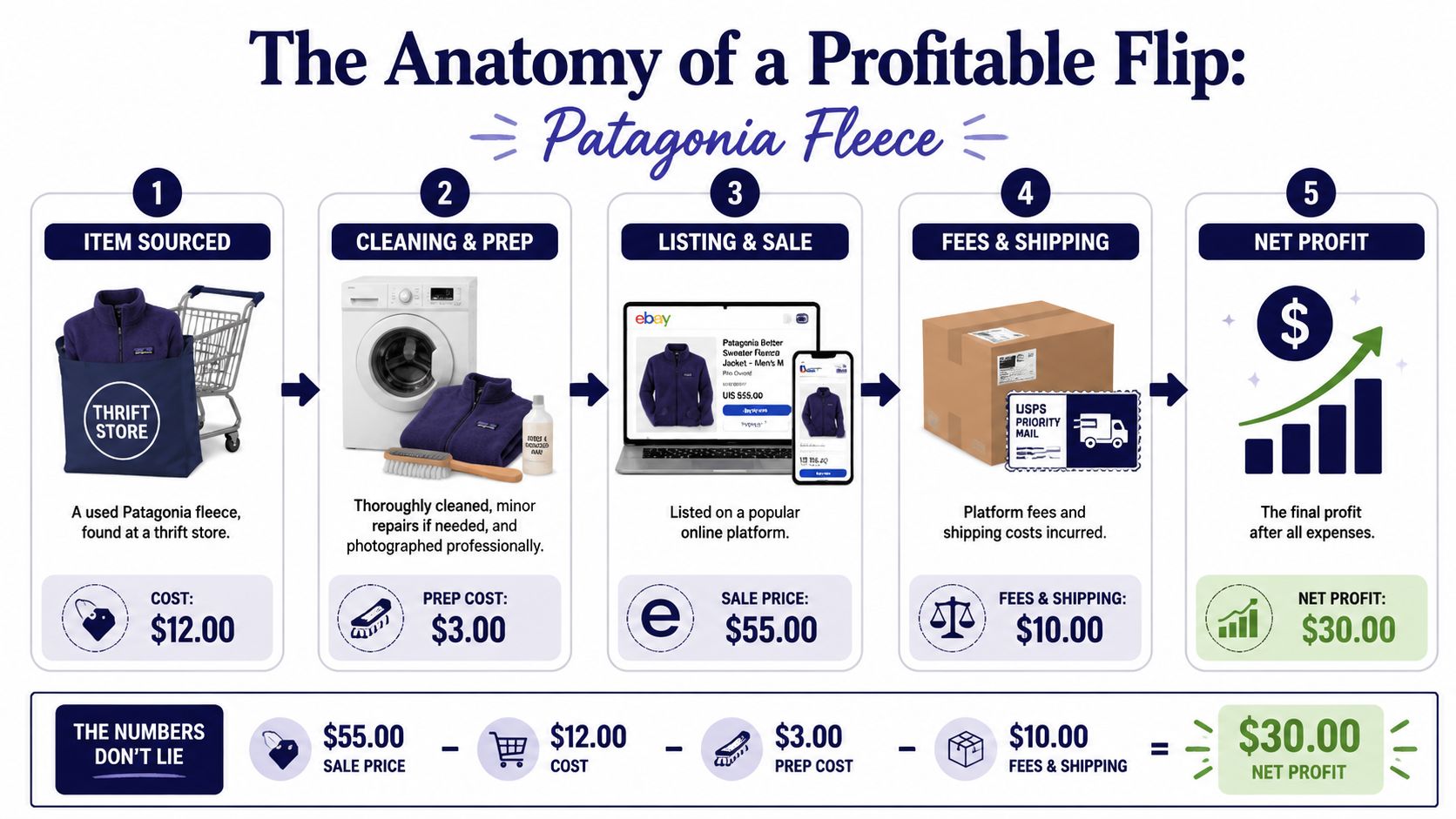
You are standing in a thrift aisle with ten minutes before someone else grabs the good stuff. A Patagonia fleece is priced at $12. The question is not whether Patagonia sells. The question is whether this specific unit leaves enough money after every predictable cost.
A soft-goods flip that makes sense
Here is the full math on a straightforward apparel flip:
- Item sourced: Patagonia fleece bought for $12.00
- Cleaning and prep: $3.00
- Sale price: $55.00
- Fees and shipping: $10.00
- Net profit: $30.00
This is the kind of buy I want more of. The brand has demand, the item is easy to identify, photos are simple, and shipping stays controlled. Nothing about it needs heroics. It just needs disciplined math.
That matters because consistency beats exciting inventory. A $30 net on an easy-to-list fleece is often better business than a bigger item that eats time, space, packing material, and return risk.
Why this works better than many “higher ticket” items
New resellers get pulled toward pieces that look expensive. Furniture, framed art, oversized decor, and other bulky items can show attractive sale prices, but the profit often falls apart once shipping and handling enter the picture.
A source on flipping inventory notes that 42% of resellers attempting to sell furniture or large art fail to break even because they underestimate shipping costs by 30-50% (https://bizee.com/start-a-business/ideas/best-items-to-flip). That matches what happens in practice. Dimensional weight, awkward packaging, local-only demand, and damage claims can wipe out what looked like a strong flip.
Small, recognizable soft goods avoid a lot of those problems.
Where beginners misread profit
The common mistake is using gross sale price as the decision point. I see a lot of buyers find a $55 comp, subtract the $12 purchase price in their head, and call it a win. That shortcut produces bad inventory.
Use a tighter check:
| Profit check | What to ask |
|---|---|
| Purchase | Is the buy cost low enough to leave room after fees and shipping |
| Condition | Will cleaning, stain treatment, or repair stay minor |
| Listing quality | Can I show brand, size, fabric, and flaws clearly |
| Fulfillment | Can I store, pack, and ship this without added hassle |
| Net result | After every likely cost, is the take-home still worth my time |
A profitable flip is not the item with the highest sale price. It is the item that gets to a clear net profit fast, with low friction and few surprises.
That is the anatomy of a good flip. The item matters, but the system matters more. Fast identification, realistic comps, fee awareness, and honest net math are what turn a thrift store find into repeatable profit.
Accelerate Decisions with ScanFlip AI
The biggest bottleneck in resale isn't usually sourcing access. It's decision speed. Resellers often can find interesting items. They can't verify them fast enough, price them accurately enough, or estimate net profit clearly enough while standing in the aisle.
Why manual comp checking breaks down
The traditional workflow is clumsy. You search one marketplace, then another. You compare active listings instead of sold comps by accident. You guess at fees. You estimate shipping in your head. Then you either pass on a good item because you're unsure, or buy a weak item because the gross number looked exciting.
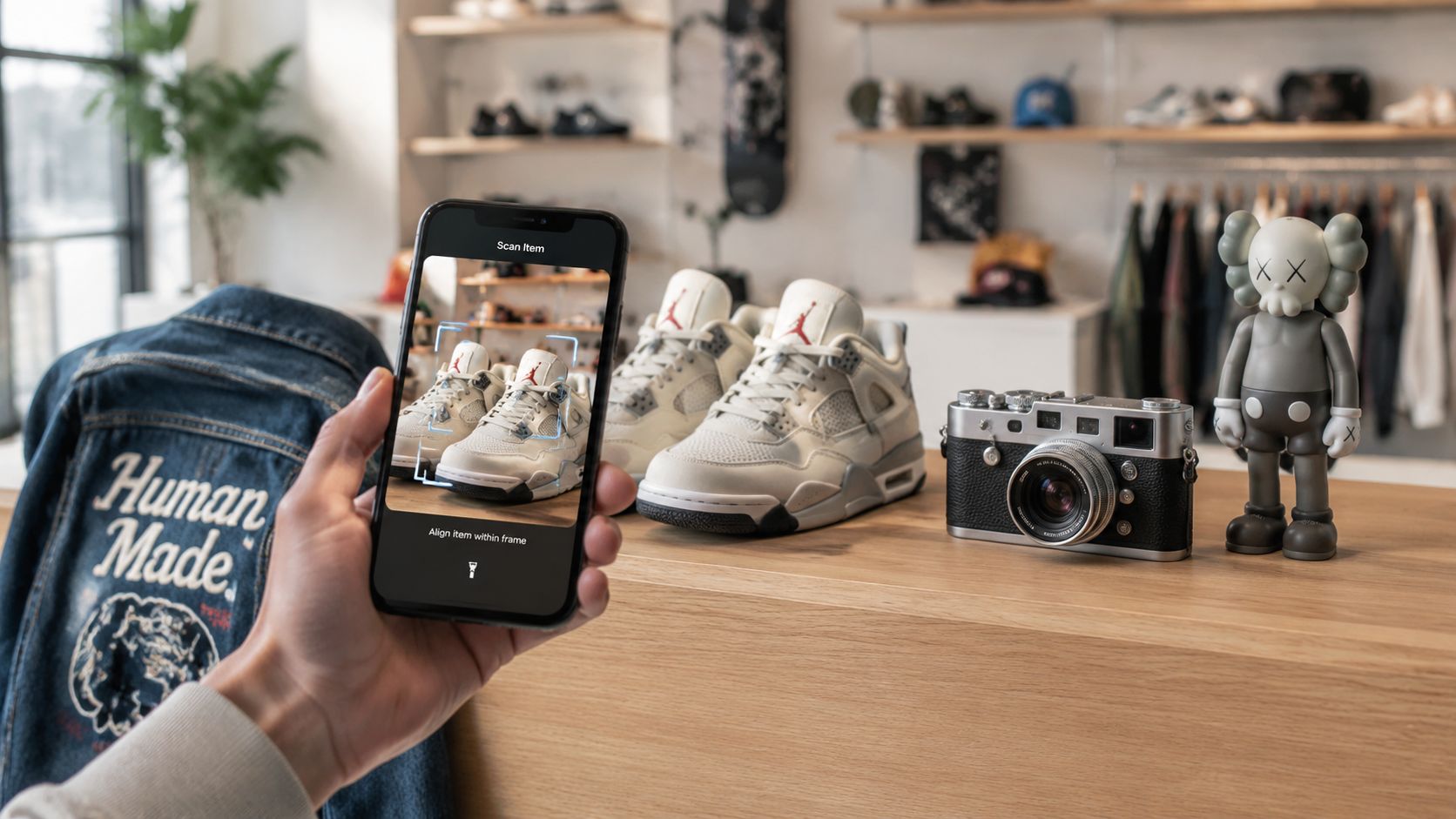
That workflow gets worse with items that don't have barcodes. Vintage jackets, used sneakers, collectibles, accessories, and older electronics often require visual identification first. If you can't identify the exact thing quickly, your comp research is shaky from the start.
What a faster sourcing workflow looks like
A sourcing tool should do four jobs at once:
- Identify the item visually: Especially when there's no barcode or clean SKU path.
- Pull sold comps across marketplaces: Looking at one platform in isolation can distort the complete picture.
- Estimate take-home profit: Gross sale price is only part of the decision.
- Give a clean verdict: Buy, pass, or dig deeper.
That's the practical appeal of ScanFlip AI. It's built for secondhand and retail arbitrage sourcing, not generic price lookup. Instead of making you bounce between marketplace apps, it identifies items from photos, surfaces sold comparables across major marketplaces, and calculates expected net after fees and shipping based on your buy cost.
That matters most in the exact moments where resellers usually hesitate. You find a pair of shoes with no box. A vintage outerwear piece with no barcode. A collectible accessory with enough signals to be interesting, but not enough certainty to trust your gut. A good tool closes that gap by turning a slow research task into a quick buy-or-pass decision.
The strongest part of the workflow is the net-profit focus. It doesn't stop at “this item sells.” It pushes the question that matters. “After the marketplace takes its cut, after shipping, after your buy cost, is this worth it?”
That's the discipline experienced resellers already use. The difference is speed.
Stop Hunting for Treasure Start Building a Business
The best items to resell for profit aren't hidden in some secret category. They're sitting in the same stores, sales, and clearance aisles everyone else visits. The difference is how you evaluate them.
Profitable resellers use a system. They check demand before excitement. They care about net profit, not just sale price. They respect turnover, shipping complexity, and sourcing-channel reality. And they make those calls fast enough to win good inventory without filling their shelves with expensive mistakes.
That's how resale stops feeling random.
Once you stop chasing one-off scores and start applying repeatable rules, your sourcing gets calmer, your buying gets sharper, and your business gets easier to grow.
If you want a faster way to make those buy-or-pass calls in real time, ScanFlip AI is built for exactly that. It helps resellers identify items from photos, pull sold comps across major marketplaces, and calculate expected net profit before they buy. That means less guessing in the aisle, fewer bad purchases, and a more consistent sourcing process.