
Action Figure Value Guide: Your 2026 Reseller’s Playbook
You're standing in a Goodwill aisle or at an estate sale table, and there it is, a dusty tote full of Star Wars, G.I. Joe, and He-Man figures. The question hits fast, is this a $50 lot, or did somebody leave hundreds on the shelf? If you've ever stared at a loose figure with no box, no card, and a pile of accessories, you already know the old book-value game doesn't help much anymore.
What works now is a faster, cleaner action figure value guide workflow built on sold comps, exact identification, condition checks, and an accurate net profit calculation. The market got structured enough to support multi-volume references like Tomart's Encyclopedia & Price Guide to Action Figure Collectibles, and today that same idea has moved into data-driven pricing, with databases like ActionFigure411 tracking 167K+ vintage toy values and relying on recent sold comps, condition, and variant matching for the accurate number The Spruce Crafts.
Table of Contents
- That Box of Action Figures You Just Found
- How to Identify the Figure and Spot Variants
- Assessing Condition and Completeness
- Researching Sold Comps Across Marketplaces
- Calculating Your Net Profit Before You Buy
- Making the Final Flip or Pass Decision
That Box of Action Figures You Just Found
A tote bin on the bottom shelf looks promising, but the first instinct is usually wrong. A collector sees nostalgia, a reseller sees potential, and a flipper sees the primary question, which items will sell fast enough to leave room for profit, and which ones are just cheap plastic that will sit in the death pile.
What the box is really telling you
The old habit is to reach for a price guide and hope the answer falls out. That wastes time in a mixed lot. The faster workflow is precise identification, recent sold comps, and a quick condition check, because those three things tell you whether a figure is worth buying before you tie up cash or shelf space.
If you've got an estate-sale box in front of you, do not price the whole lot as if every piece has the same value. One clean variant can carry the deal while the commons are only filler. That is why experienced toy flippers ask a narrower question, what sold recently, in this condition, and for this exact version.
Practical rule: treat the tote like inventory until a figure proves otherwise. One rare piece can justify a lot purchase, but the rest still need to clear your net profit threshold.
Open the box, sort fast, and identify the obvious line first. Star Wars, G.I. Joe, WWF, He-Man, and Marvel all price differently, and a mixed lot can hide a BOLO piece under commons that look the same from across the aisle. If the figure is still a mystery, use a quick item identifier app to narrow the line before you spend time on a full search. If you are still guessing at this stage, you are not pricing, you are gambling.
How to Identify the Figure and Spot Variants
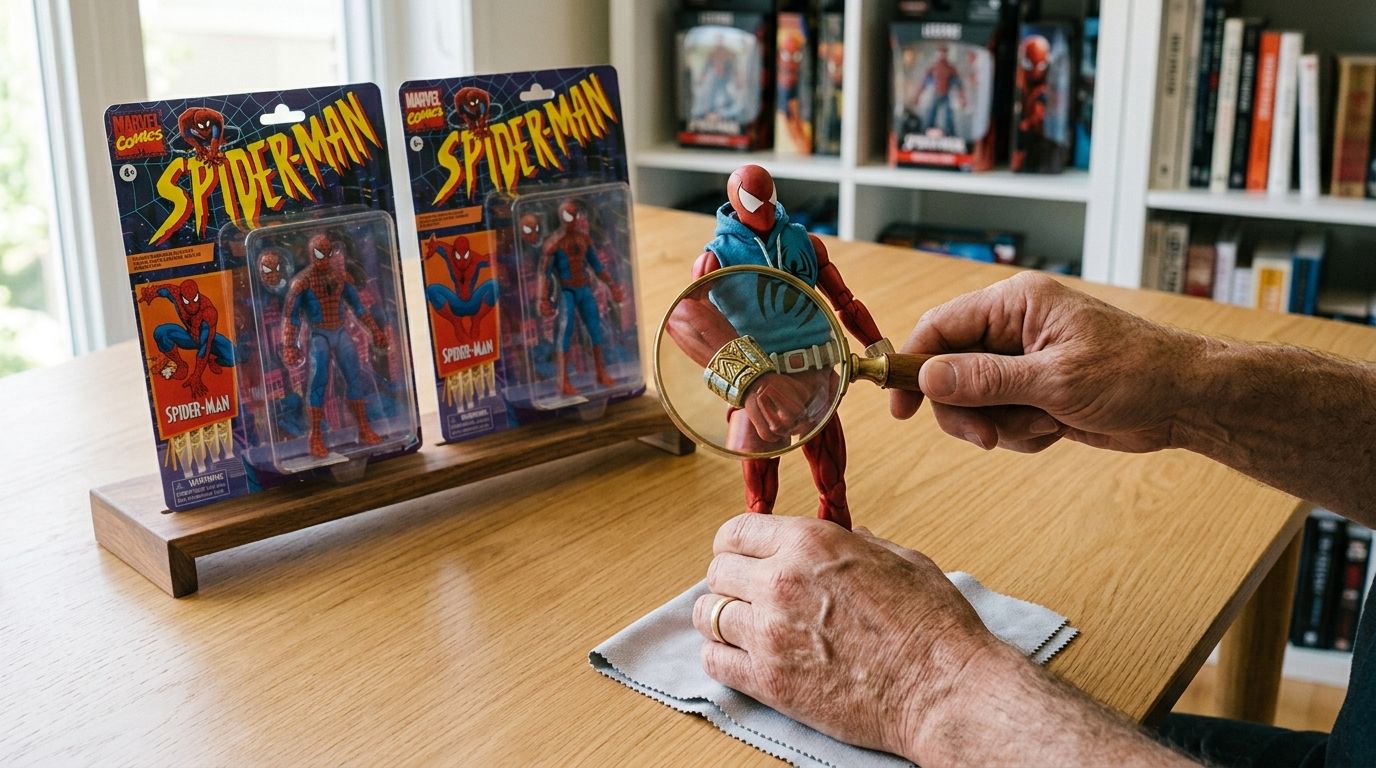
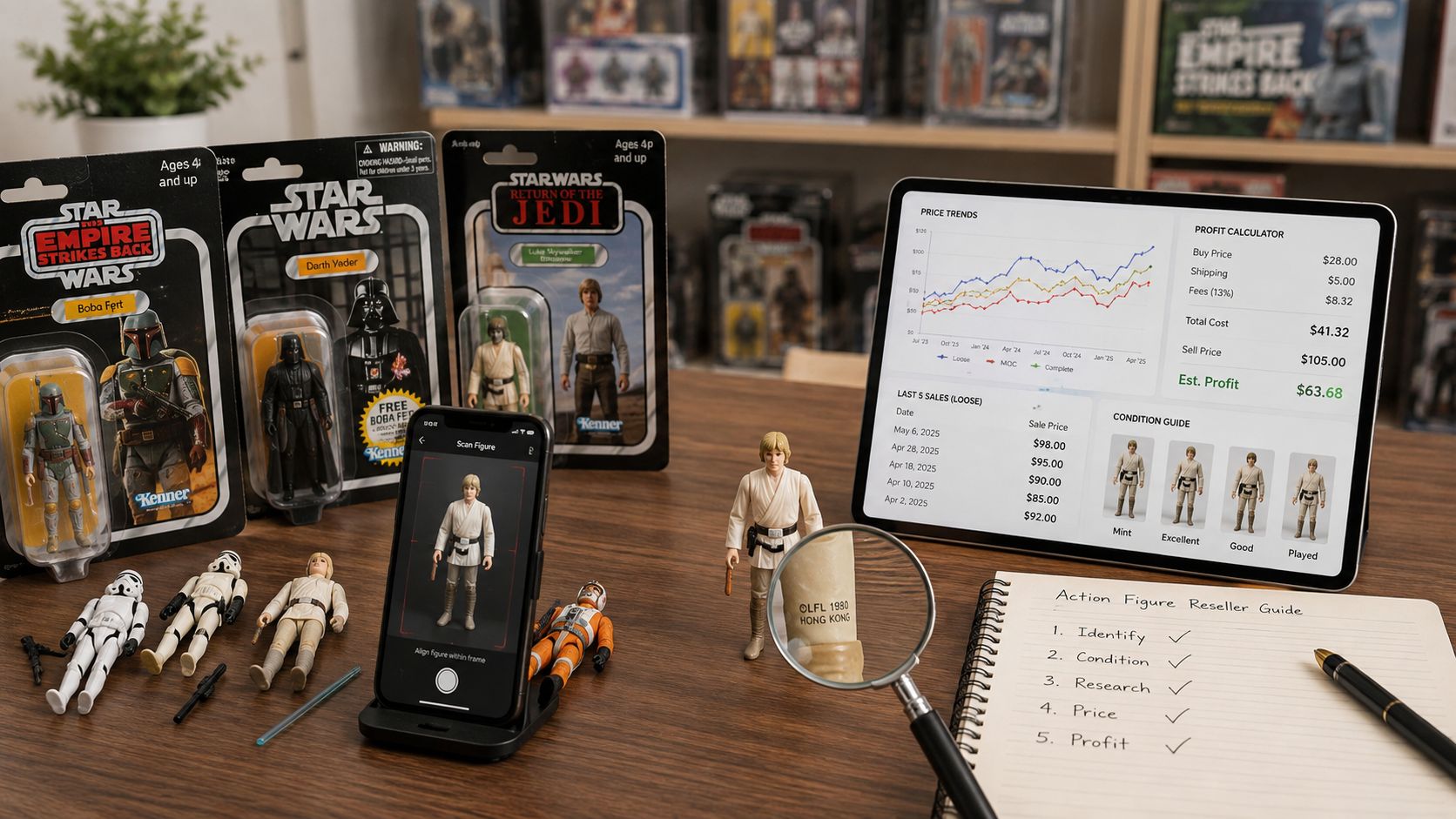
Start with the stamp. The copyright date, manufacturer name, or mold mark is usually on a foot, inner thigh, or back, and it tells you what you're holding before you waste time searching the wrong line. “Spider-Man figure” is too broad to help, but a year, manufacturer, and line name can turn a blind search into a useful sold-comp search.
Match the figure before you match the price
A standard release and a variant can live in completely different price bands, so the details matter. Look for paint differences, altered accessories, sculpt changes, and packaging language. A missing cape, a different blaster, or a shifted color scheme might be the difference between a common piece and a real pickup.
The field check also has to include authenticity. Collector guidance increasingly stresses provenance, retail stickers, and macro photos of seals and copyright marks, because a repaint, reproduction, reseal, or parts-matched piece can collapse value fast CollectorOps. In other words, rare plus decent condition still doesn't matter if the figure isn't original.
Field note: if the figure feels “off,” stop and inspect the seams, paint edges, and accessory fit before you start chasing sold prices.
For fast identification, I like to check the mark first, then the accessories, then the paint application. If a cape is wrong, a weapon is repro, or the cardback sticker doesn't fit the era, I downgrade the item in my head before I even open the app. That keeps me from overpaying on a piece that only looks good at a glance.
Use this item-identifier workflow when you're not sure what you found
Assessing Condition and Completeness
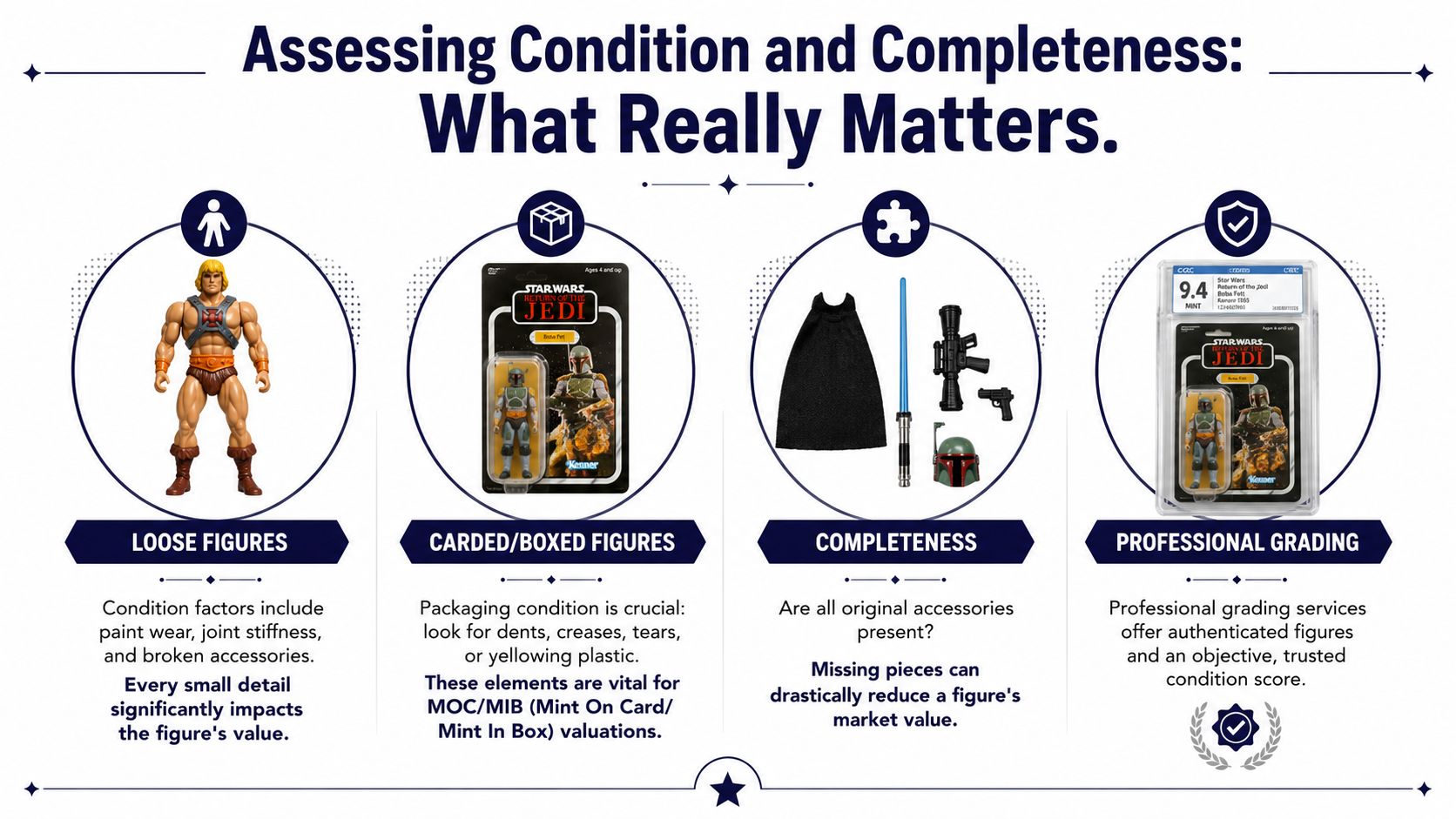
A figure can look like a solid buy and still fail the profit test once you factor in condition. Two pieces from the same character, same line, and same year can land in very different price bands because one is sealed, complete, and clean, while the other is loose, missing gear, or has damaged packaging. For a reseller, that difference decides whether the flip is worth the cash and the time.
Loose figures lose value fast
For loose pieces, I check the paint, joints, and every accessory before I even think about sold comps. Missing accessories can cut value sharply, and grading services like AFA use a 100-point scale for toy and action-figure condition, with encapsulation often bringing a premium CollectiblesAuthority. On a shelf, that may sound like a small detail. In a buy-sell decision, it can turn a promising lot into dead inventory.
Packaging changes the math even more. A common loose Star Wars figure may sell for $10 to $30, while the same figure on its original card can reach $100 to $500, and for rare figures the spread can climb to over $25,000 CollectiblesAuthority. That is why cardback condition, bubble clarity, and seal integrity matter before you decide what to offer. If those parts are rough, I price for the worst likely exit, not the best case.
For boxed or carded pieces, I look for creases, bends, price sticker residue, yellowing, and cracks in the bubble. For loose figures, I check whether the original blaster, cape, helmet, or other key part is present. Missing one small part can push a figure from “worth a look” to “pass and keep moving.”
Clean packaging changes the buyer pool. Carded buyers and loose buyers are often two different markets.
G.I. Joe shows the trade-off clearly. Older figures and vehicles tend to do better complete in the box, while missing the box or accessories can drop value hard, and many figures still sit in the ordinary $15 to $50 range SubZero Comics. When I am standing at a garage sale, I do not just ask whether the figure is real. I ask whether it is complete enough to leave room for profit after fees, cleaning, and the time it will take to sell.
See the practical condition checklist for collectible pricing
Researching Sold Comps Across Marketplaces
Walk into a thrift store with asking prices in your head and you will overpay. I start with sold comps, because that shows what a buyer paid. That is the number that decides whether a figure gets a buy or stays on the shelf.
Use recent sales, not old hopes
A solid comp search starts with sold listings from the last 6 months to 1 year, and you want at least five listings that match condition and completeness. If you only find one sale, you do not have a market, you have a single data point. A small set of matched sales shows whether the figure moves cleanly or only looks valuable on paper YouTube pricing walkthrough.
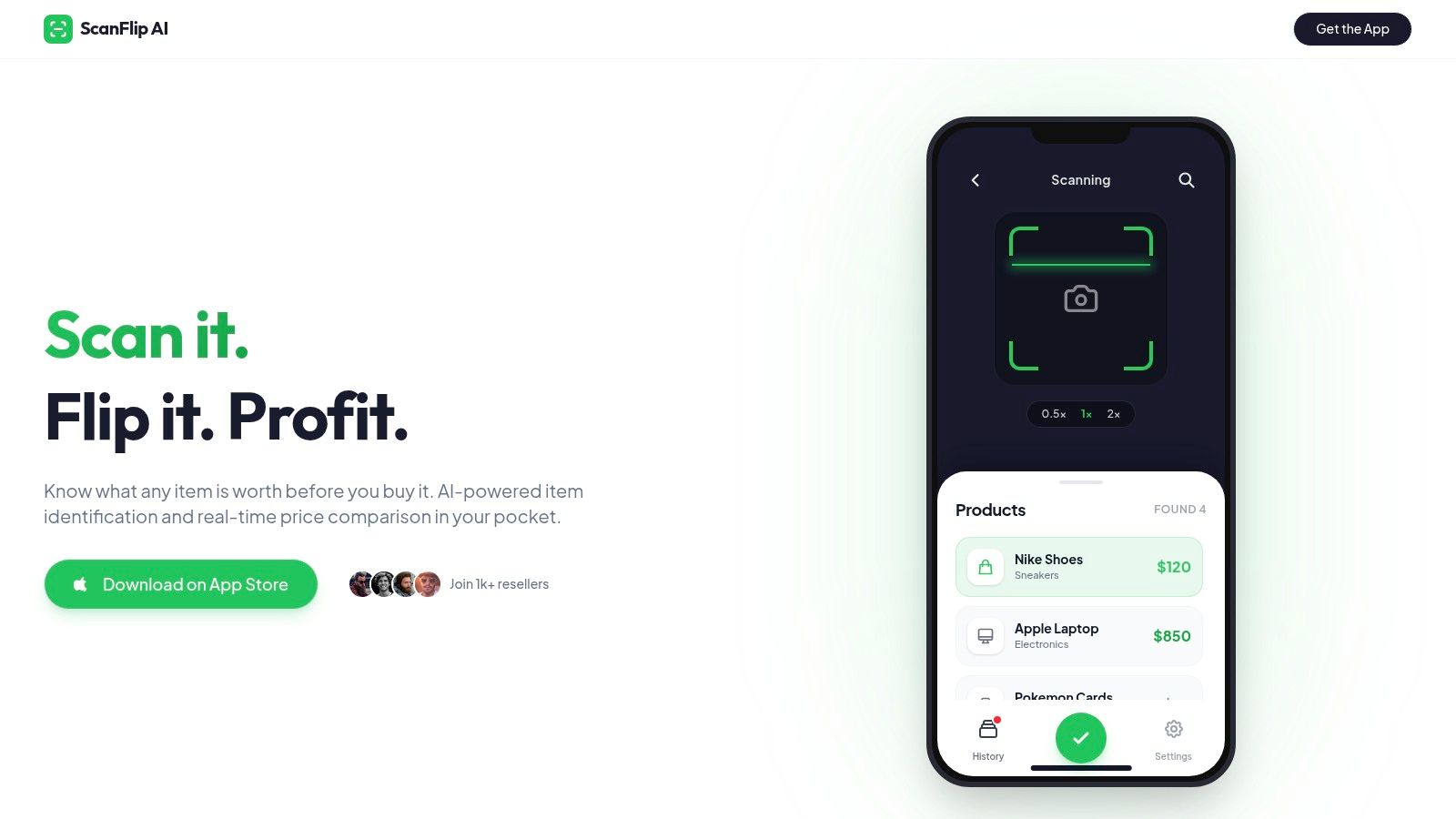
The same comp logic applies across platforms. A figure might sell on eBay, Mercari, Whatnot, or another marketplace, and the price can shift based on the audience and the condition filter. The annoying part is switching between apps while holding a cart in a store or standing next to a shaky folding table at an estate sale. ScanFlip AI uses AI photo scan, barcode scan, or text search, and pulls sold comps from major marketplaces in one search.
What a clean comp search looks like
A good comp set lines up on three things, line, condition, and completeness. If your figure is loose with no weapon, do not compare it to a carded example just because it is the same character. That mismatch is how newer resellers overpay.
Comp rule: if the sold listings do not look like your item, they are not comps. They are distractions.
Common figures can fool you too. Many loose items sell for just $8 to $12 plus shipping, which leaves very little room if your buy cost is already too high. I have passed on bins that looked full of “inventory” because the numbers only worked if I ignored fees, shipping, and time YouTube pricing walkthrough.
Check the recent sold-price workflow here
Calculating Your Net Profit Before You Buy
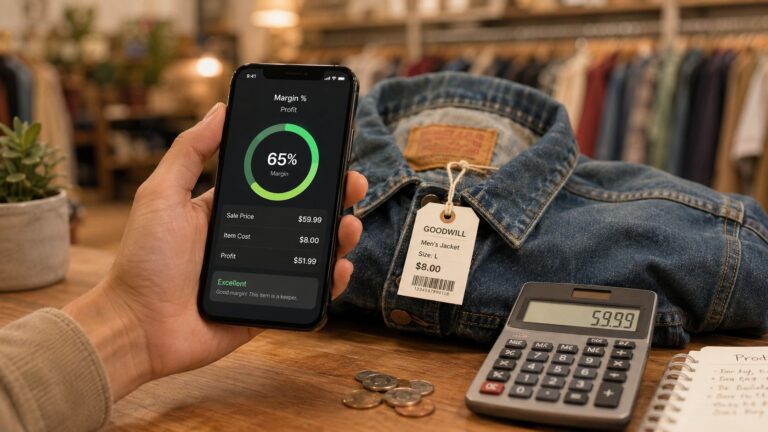
A $30 sold price is not a $30 win. If you do not subtract fees, shipping, and your cost of goods before you buy, you are just making busywork for yourself. Gross sale price is a vanity metric, net profit is the only number that pays you.
The Flip Math That Matters
Here's the math I use in the field. Say a figure should sell for $30 based on solid comps. Take off about $4 for marketplace fees, about $5 for shipping, and $5 for cost of goods, and you are left with $16 net profit Geekslop. That might be worth it, or it might be too thin if the item needs cleaning, photos, and extra packing.
Now flip the math the other way. If the same figure only sells for $15, the leftover can shrink to around $1.50 after fees, shipping, and buy cost. That is not a flip, that is a pass.
Why platform mix changes the answer
The margin changes again depending on where the buyer is and what the platform takes. Marketplaces like eBay, Mercari, and Whatnot do not all hit your payout the same way, so two figures with similar sold prices can leave very different take-home amounts. That is why I never buy on gross alone.
Practical rule: if you cannot see a clean path to real margin before checkout, pass. A cheap item that traps your time is still expensive.
At the aisle level, this means asking one question, “Will I still like this deal after fees and shipping?” If the answer is fuzzy, the item goes back. If the answer is obvious and the comps are tight, I buy faster and move on to the next tote.
Making the Final Flip or Pass Decision
By the time you've identified the figure, checked the condition, and looked at sold comps, the decision should be quick. Good sourcing isn't about being right on every item, it's about making enough clean calls that the profitable finds carry the weak ones you passed on. That's how the hustle stays lean.
A simple decision filter
I use three questions. First, is there a real BOLO here, meaning a rare variant, a sealed piece, or a complete vintage figure that clearly stands out? Second, do the sold comps support enough net profit to justify the work? Third, does the item move fast enough that I'm not tying money up in a slow seller?
A common loose figure with thin margins usually gets a pass. A rare carded piece with strong condition and clean sold comps gets a closer look, even if the buy-in is higher. A mid-tier item with mediocre completeness often gets ignored because the time cost eats the margin.
Buy examples and pass examples
A buy looks like this, a complete vintage piece, solid packaging or clean loose condition, enough recent sold comps to support the price, and a net return that still feels worth the cleanup and shipping. A pass looks like this, a loose common figure with missing gear, weak sold comps, or a sale price that only works if you pretend fees and shipping don't exist.
The best resellers I know don't chase every toy. They move quickly, they use a repeatable process, and they leave behind the junk that looks busy but doesn't pay.
If you want to make faster flip-or-pass calls in the aisle, use ScanFlip AI to identify the figure, pull sold comps across major marketplaces, and see net profit after fees and shipping before you buy. It's a practical way to price action figures without juggling apps, and it fits the same sourcing workflow you already use with your other tools.