
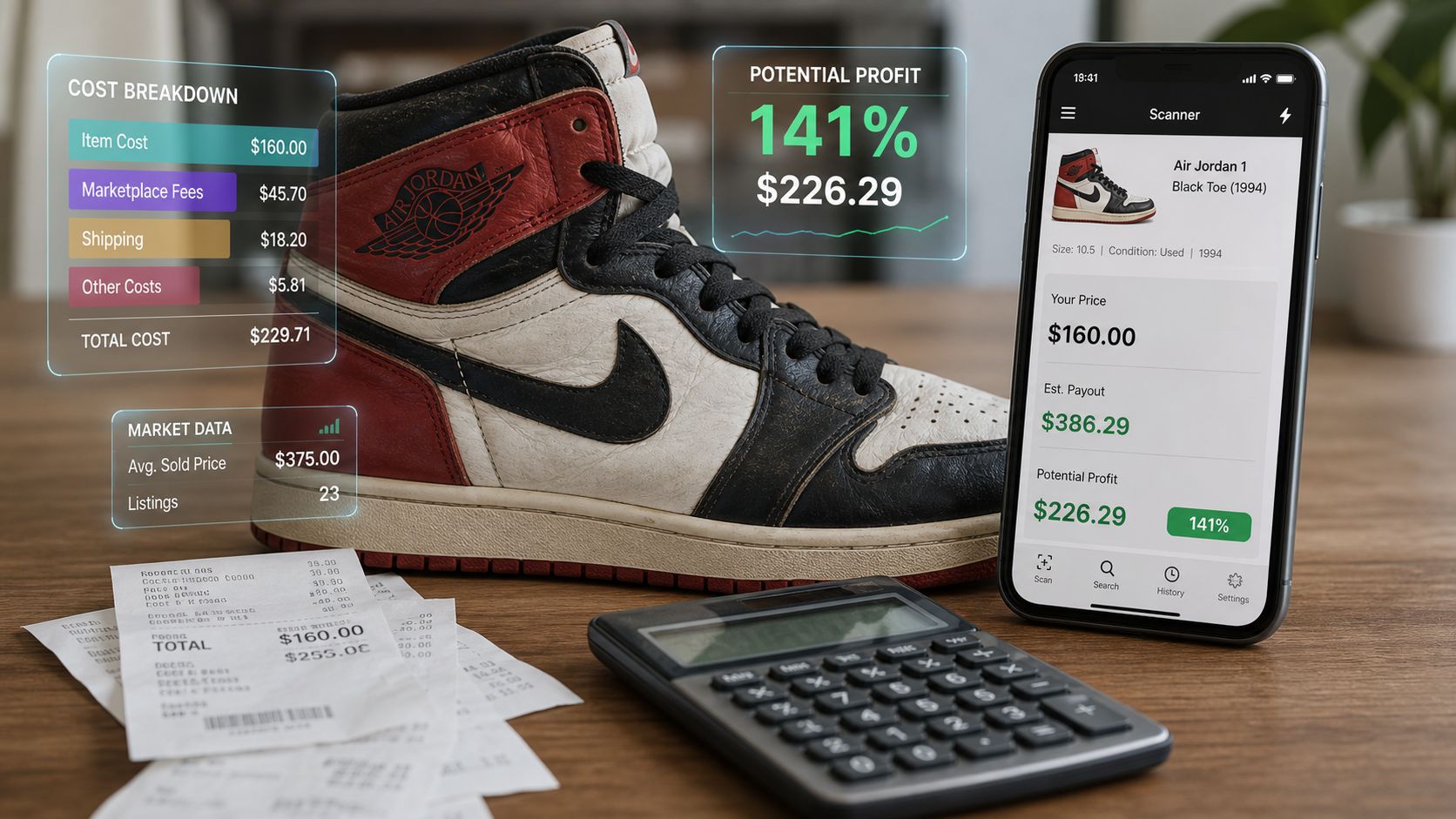

Arbitrage Profit Calculator: How to Price Flips Accurately
You're standing in a thrift store with a vintage jacket in one hand and a phone in the other. The comps look clean, the math feels easy, and the deal seems like a no-brainer until shipping, platform fees, and a slow-moving listing turn that “easy win” into a thin, annoying return. That's where an arbitrage profit calculator earns its keep, because the number that matters isn't the gross spread on the tag, it's the money left after every real-world friction gets paid.
Table of Contents
- Why Most Resellers Misjudge Profit in the Aisles
- Essential Inputs for Accurate Arbitrage Calculations
- Step-by-Step Example Calculation
- Common Pitfalls That Erase Expected Gains
- Why Real-Time Aggregation Beats Manual Lookups
- How ScanFlip AI Transforms In-Aisle Sourcing
Why Most Resellers Misjudge Profit in the Aisles
You pick up a vintage jacket, see an $80 sold comp, and spot a $15 buy price. In your head, that's a quick $65 spread, maybe even a $50-plus profit if you're feeling conservative. Then the full ledger shows up, and the deal has to survive platform fees, shipping, returns, and the time it sits before it sells.
Gross spread is not the same as take-home
That mistake happens constantly in the aisle because the eye naturally grabs the visible gap between buy price and sold price. The problem is that the visible gap is only the starting point. A proper arbitrage profit calculator has to strip away every execution cost before you decide whether the item deserves a slot in your cart.
A seller-friendly calculator should work the way seasoned resellers think after a few hundred bad lessons. It should treat the purchase price as just one line, then subtract platform fees, shipping, and any fixed transfer or withdrawal cost before you even consider the margin acceptable. That logic matches the way execution frictions change the outcome in practice, because a trade that looks profitable on quoted prices can flip negative once both legs' costs are included, especially when cash has to move between venues and the window may close before the transfer clears, as described in PariFlow's net-edge calculator notes.
Practical rule: If you can't explain the net number after fees and shipping in one breath, you probably don't know your real margin yet.
The aisle rewards fast math, not hopeful math
This is why the calculator matters for thrift stores, estate sales, and garage sales. You don't have the luxury of opening five apps, checking a dozen fee pages, and rebuilding the same estimate by hand while another shopper grabs the item. The faster you can go from “looks good” to net profit, the fewer bad buys you carry home.
The practical side of this is simple. Items with a nice-looking spread but weak net after fees tend to be the ones that linger, get relisted, or force markdowns later. An arbitrage profit calculator doesn't create the deal, it tells you whether the deal survives contact with reality. For a broader retail-arbitrage framework, see what retail arbitrage means in practice.
Essential Inputs for Accurate Arbitrage Calculations
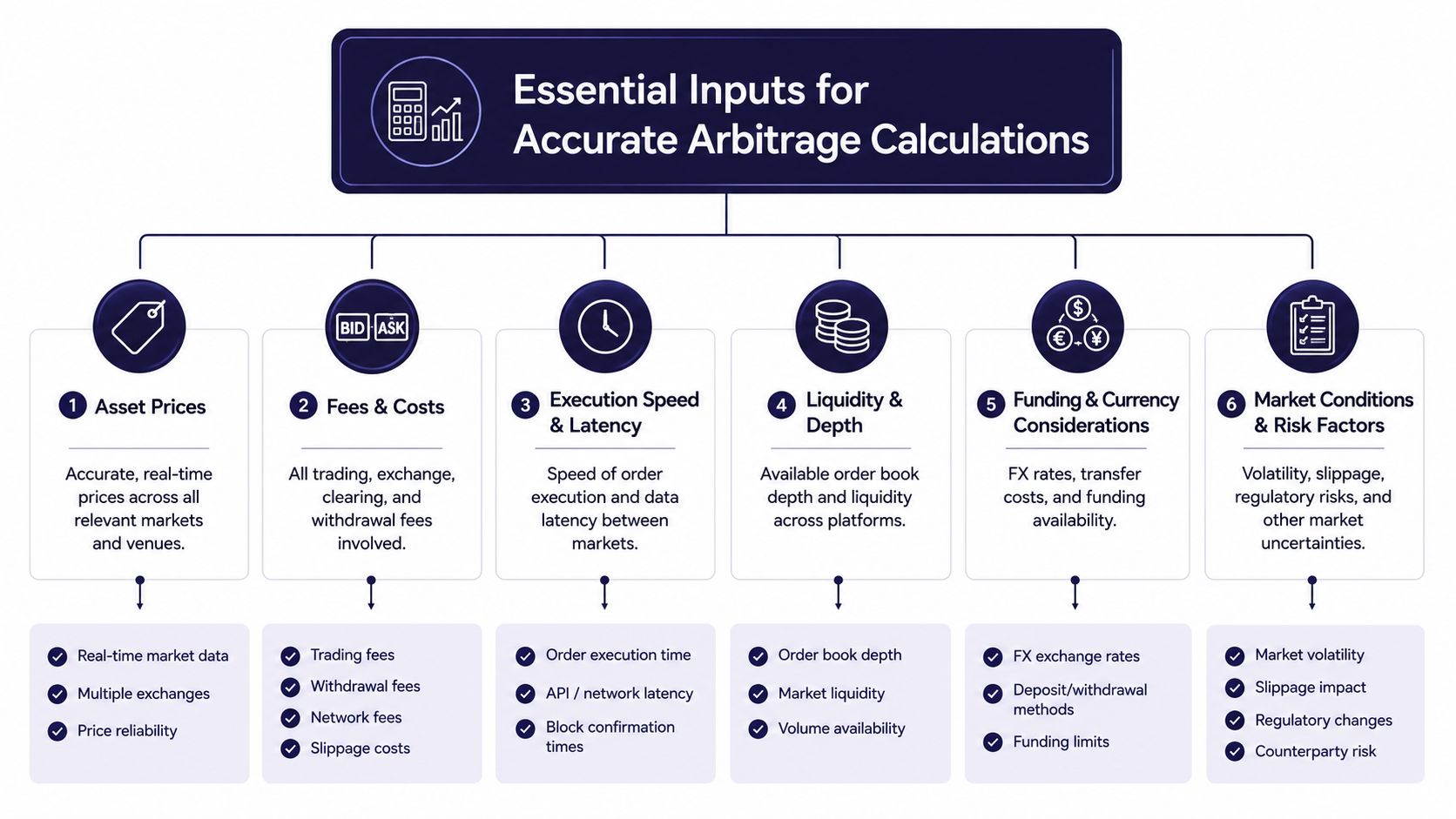
A calculator is only as good as the inputs you feed it. If you leave out a cost, or use the wrong price source, the output looks polished and still leads you straight into a bad buy. The best way to think about an arbitrage profit calculator is as a net-profit engine, not a comp lookup tool.
Start with the cost to acquire the item
The first input is the buy cost, the amount you pay at the register, in a booth, or at an estate sale. That number seems obvious, but resellers still blur it with estimated savings, bundle pricing, or wishful thinking. If the cash left your hand, it belongs in the calculation.
Next come the marketplace costs. These can include listing fees, final value fees, payment processing, and other platform-specific deductions. If you sell across more than one channel, those fees won't line up neatly, so the calculator has to apply the right structure for the right marketplace. A simple example from resale pricing workflows is a calculator that uses final sale amount, seller fee, shipping, and cost of goods to decide whether a flip is profitable, which is the kind of discipline outlined in how to price items for resale.
Shipping and taxes change the answer more than people expect
Shipping isn't a rounding error. Weight, package size, distance, and service level all change the number, and those changes can erase a deal that looked comfortable before postage. Taxes matter too, especially when you're collecting and remitting them, because a calculator that ignores them gives you a nicer story than the actual P&L.
Sold comps are the final piece, and they need to be sold prices, not asking prices. Active listings can sit too high for too long, while sold comps show what buyers paid. That distinction matters more in categories with uneven demand, where a high ask can trick you into thinking your item has more room than it really does.
Use sold comps to anchor the sale side, use your actual acquisition price to anchor the buy side, and let everything else push the number downward from there.
Step-by-Step Example Calculation
A pair of vintage Nike sneakers shows up at an estate sale for $20. A quick comp check says the median sold price on eBay is $85, and that spread looks strong enough to justify a fast buy. The useful question isn't whether the spread exists, it's how much of it survives once the item is sold.
Build the net profit line by line
Using the numbers provided in the brief, the calculation starts with $85 gross revenue and subtracts the known costs.
- Buy cost: $20
- eBay final value fee: about 13% of the sale price
- Payment processing: 2.35% + $0.30
- Shipping: $12
- Taxes: apply if relevant in your workflow
That structure produces a net profit of $38.50 and an actual margin of 48%, using the example inputs from the brief. The value of the calculator is that it makes the deductions visible instead of hiding them inside a vague “should be fine” estimate. The same shoe can look solid at the comp stage and still deserve a pass if your margin threshold is tighter than the remaining take-home.
Here's a practical comparison of how the same pair can land on different marketplaces.
| Marketplace | Gross Revenue | Platform Fees | Shipping | Net Profit | Margin |
|---|---|---|---|---|---|
| eBay | $85 | about 13% plus payment processing | $12 | $38.50 | 48% |
| Poshmark | $85 | 20% flat fee | varies by shipment | lower than the eBay example | lower than the eBay example |
Poshmark's flat 20% fee changes the picture quickly, which is exactly why platform choice matters as much as the item itself. The point isn't that one marketplace is always better, it's that the calculator has to reflect the venue you'll use. If the fee structure is different, the profit is different.
Read the output like a reseller, not like a gambler
A good calculator doesn't just spit out a green number. It tells you whether the item clears your real floor after fees, shipping, and any other take-home reductions. If you're sourcing dozens of items in a day, that discipline keeps your cart filled with inventory that can pay for itself.
Common Pitfalls That Erase Expected Gains
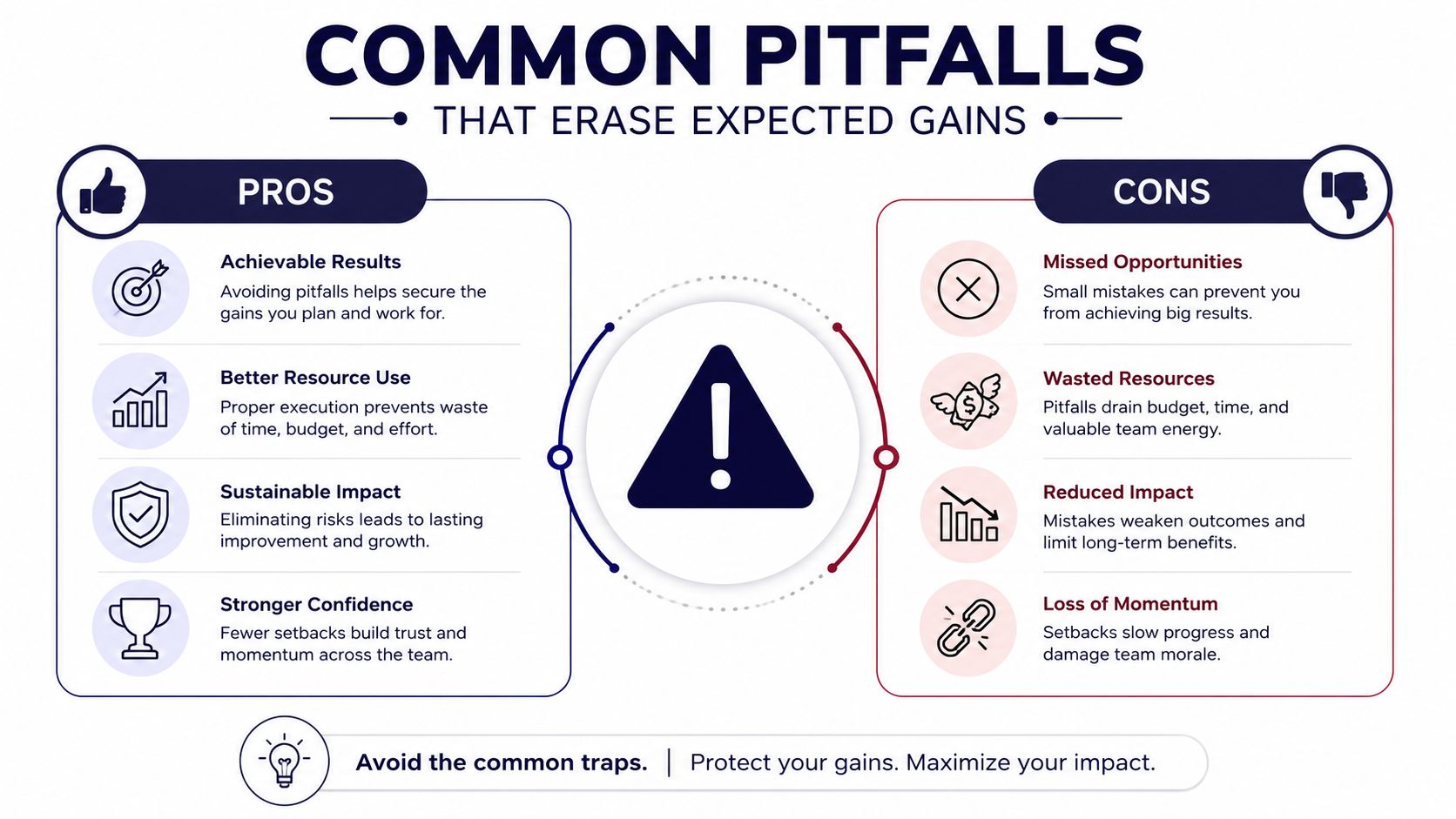
Thin margins are where bad assumptions hurt most. In many published examples, arbitrage margins are often 0.5% to 5%, with 1% to 2% common, so even a small execution miss can wipe out the edge, as noted in The Rundown's arbitrage calculator guidance. That's why the core problem isn't the formula, it's all the ways the formula gets wrecked in the field.
Small frictions stack faster than people expect
Slippage is the first trap. The item that looked right on the screen may no longer be there at that price by the time you check out, or the comparable sold data may shift before your listing goes live. Timing risk works the same way, because the window between scan and sale is never as stable as it feels while you're standing in the aisle.
Cancellation risk and disputes are uglier because they arrive after the deal looked finished. Returns, claims, and buyer issues don't show up in the glossy part of the calculation, but they still consume time and cash. A trade that looked profitable on quoted prices can become unprofitable once both legs' execution costs are included, which is why calculators that only use the headline spread tend to flatter deals that aren't safe.
Safety buffers beat optimism
The cleanest habit is to build a buffer into your minimum acceptable spread. One calculator guidance note explicitly warns to use real-time orderbook depth plus a 1–2% safety buffer for unexpected costs, and that same logic translates neatly to resale pricing. If your expected edge only exists on a perfect day, it's not an edge you can count on.
Don't buy for the spreadsheet version of the item. Buy for the version that survives fees, postage, timing, and a little bad luck.
That doesn't mean passing on everything with a thin spread. It means understanding which deals have enough room to absorb real friction and which ones only work when nothing goes wrong. The smaller the margin, the more brutal the execution math becomes.
Why Real-Time Aggregation Beats Manual Lookups
You find a jacket on the rack, the tag looks strong, and the spread seems wide enough to matter. Manual lookups make that deal feel safe until you start checking fees, shipping, and sold comps across different tabs. By then, the item can be gone, the comp can be stale, or your profit math can be off by enough to turn a decent buy into a weak one. Real-time aggregation keeps the decision anchored to what you can still source and resell.
Fee schedules and sold data don't stay still
Marketplace fees shift, promotions end, and saved assumptions age fast if they aren't refreshed. A calculator that reflects current fee schedules does more than save time, it protects the logic behind your buy decisions. A platform fee you forgot to update can turn a good buy into a mediocre one before the listing even goes live.
Top-of-book quotes have the same flaw in a different form. They show the best visible number, not the amount you can realistically transact at that number. In resale terms, active listings can mislead you if you treat them like guaranteed sale prices, especially when demand is thin or the item is niche.
The key question is whether the price is executable
The practical standard is simpler than many workflows assume. Use the best evidence you can get on what items sold for, then check whether your costs still leave room after fees and shipping. That same logic is why orderbook depth matters in other arbitrage settings, because profit depends on the quantity you can trade at the displayed spread rather than the prettiest quote on the screen, as described in the CalcuCoin arbitrage calculator notes.
For resale sourcing, the parallel is obvious. If you can only move one unit at the comp you found, but you bought three because the listing looked strong, the extra units may come back with weaker pricing than expected. Real-time aggregation helps you see demand in context, not just the headline number.
A fast scan is useful only if the result is current enough to act on before the aisle changes.
How ScanFlip AI Transforms In-Aisle Sourcing

The cleanest workflow is the one that keeps you from app-switching while somebody else reaches the shelf first. ScanFlip AI identifies items from camera photos without needing a barcode, pulls sold comparables across major marketplaces, and calculates expected net profit with platform fees, shipping estimates, and your buy cost folded in. For sellers working thrift stores, estate sales, and garage sales, that scan-to-decision flow cuts out the part where you do five minutes of mental gymnastics over a jacket that won't stay in your hands forever. See also how scan-to-buy works in practice.
What matters at the point of sourcing
The strongest part of this workflow is speed with context. You're not just asking what an item is, you're asking what it last sold for, where it sold, and what the take-home looks like after the platform takes its cut. The app's configurable flip-or-pass verdict gives you a simple red or green signal based on the minimum profit or margin you set, which is exactly what helps when your cart is full and your time is limited.
The persistent scan history matters too. Photos, location, timestamps, and comps turn scattered finds into a record you can review later, which is useful when you're spotting patterns in neighborhoods, store types, or sourcing routes. For seasoned resellers, that kind of history becomes the difference between random luck and repeatable sourcing judgment.
A practical way to use the tool
I'd treat a tool like ScanFlip AI as the front-end filter, not the whole business. Use it to reject weak buys fast, confirm the ones that deserve a deeper look, and keep your attention on items with enough net room to justify the work. That's how a reseller protects margin in the aisle instead of discovering the problem after the receipt is already printed.
The point of the calculator never changes. You want the number that survives fees, shipping, and timing. If you want a sourcing workflow that does that in real time, visit ScanFlip AI and use it to check items before the aisle beats you to the decision.