
10 Vintage Collectibles Worth Money in 2026
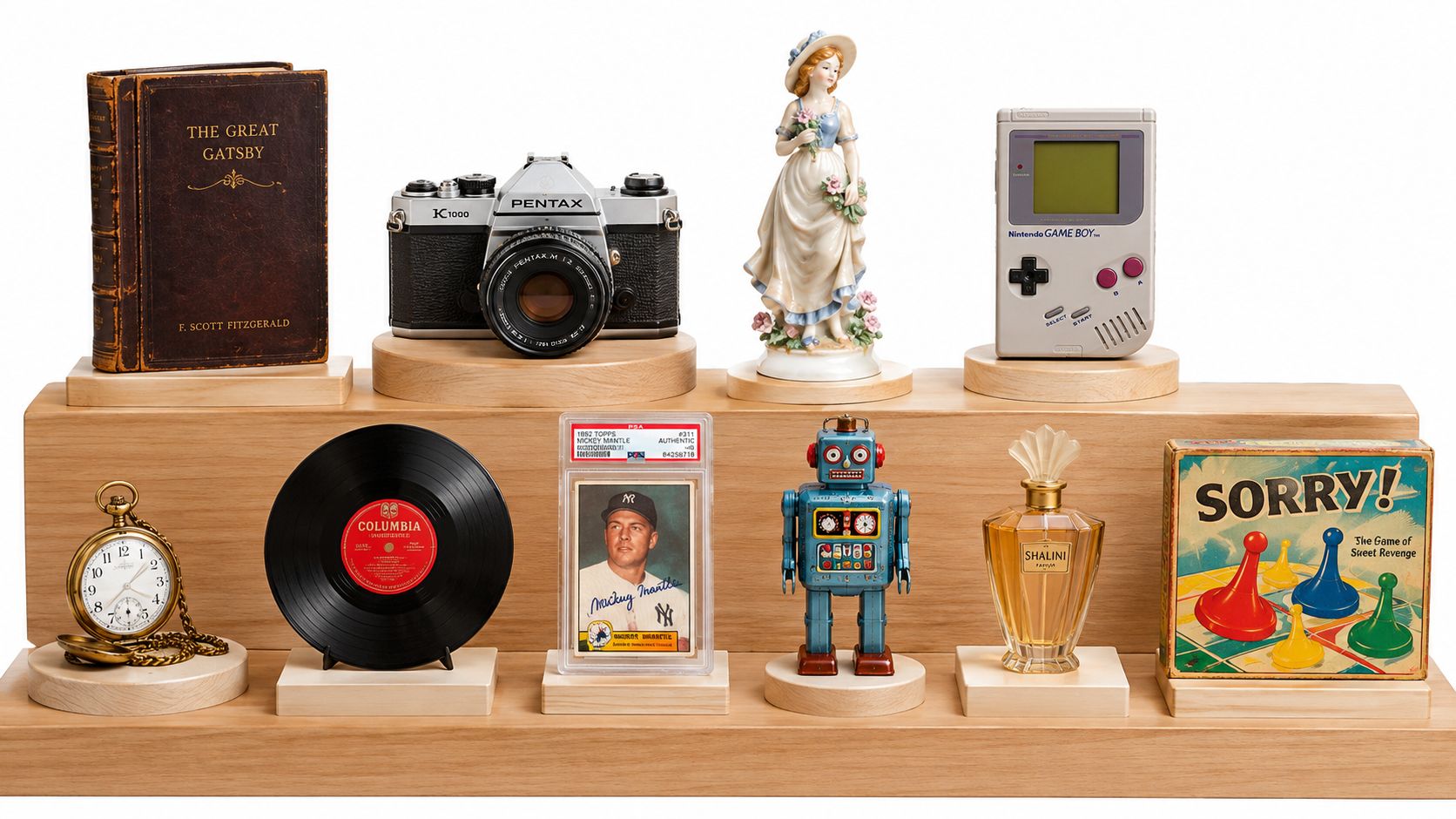
You're standing in a Goodwill aisle with a dusty box in one hand and another picker reaching for the same shelf. The item looks old, but old doesn't automatically mean valuable. Edition, authenticity, condition, completeness, and recent sold comps decide whether that collectible belongs in your cart or stays behind.
That's the practical problem with finding vintage collectibles worth money. A recognizable brand can still be a poor buy if it's incomplete, damaged, hard to ship, or slow to sell. A less impressive-looking variant can be the better flip when collectors want that exact pressing, rookie card, tag, or original package.
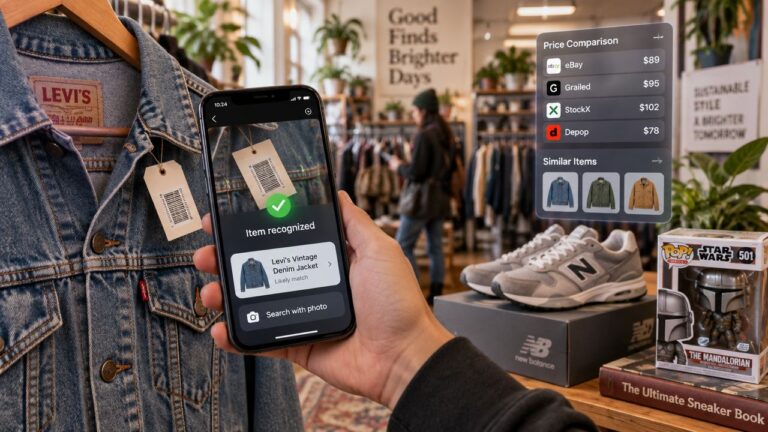
The ten categories below focus on fast identification and real buying decisions. You'll see where condition creates the spread, when bulk lots work, and why gross sale price means little after fees, shipping, and cost of goods. For unclear items, ScanFlip AI offers three ways to research in the aisle, an AI photo scan with no barcode needed, barcode scanning, and text search. It aggregates sold comps across eBay, Poshmark, Mercari, Depop, Amazon, Whatnot, ThredUp, Facebook Marketplace, and TikTok Shop, then shows expected net profit with a red or green flip-or-pass verdict.
Table of Contents
- 1. Vintage Sports Cards From the 1980s Through the 1990s
- 2. Vintage Sports Cards From the 1980s Through the 1990s
- 3. Vintage Board Games From the 1960s Through the 1980s
- 4. Vintage Board Games From the 1960s Through the 1980s
- 5. Vintage Vinyl Records From the 1960s Through the 1980s
- 6. Vintage Vinyl Records From the 1960s Through the 1980s
- 7. Vintage Designer Handbags From the 1990s Through the 2000s
- 8. Vintage Designer Handbags From the 1990s Through the 2000s
- 9. Vintage Denim From Levi's, Lee, and Wrangler
- 10. Vintage Denim From Levi's, Lee, and Wrangler
- Vintage Collectibles: 10-Item Value & Resale Comparison
- Buy the Evidence, Not the Story
1. Vintage Sports Cards From the 1980s Through the 1990s
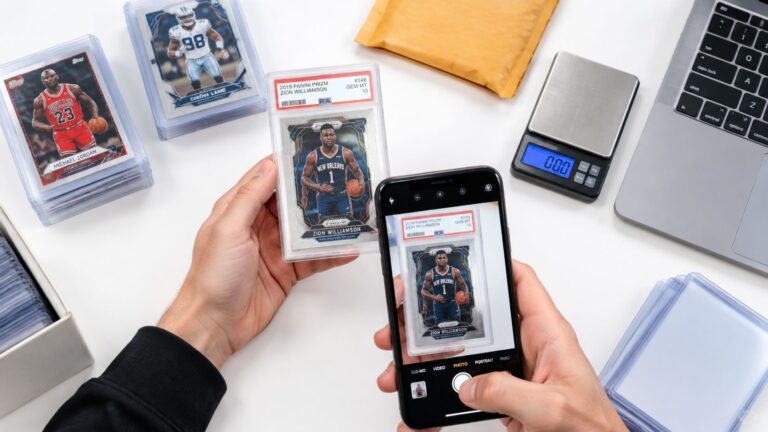
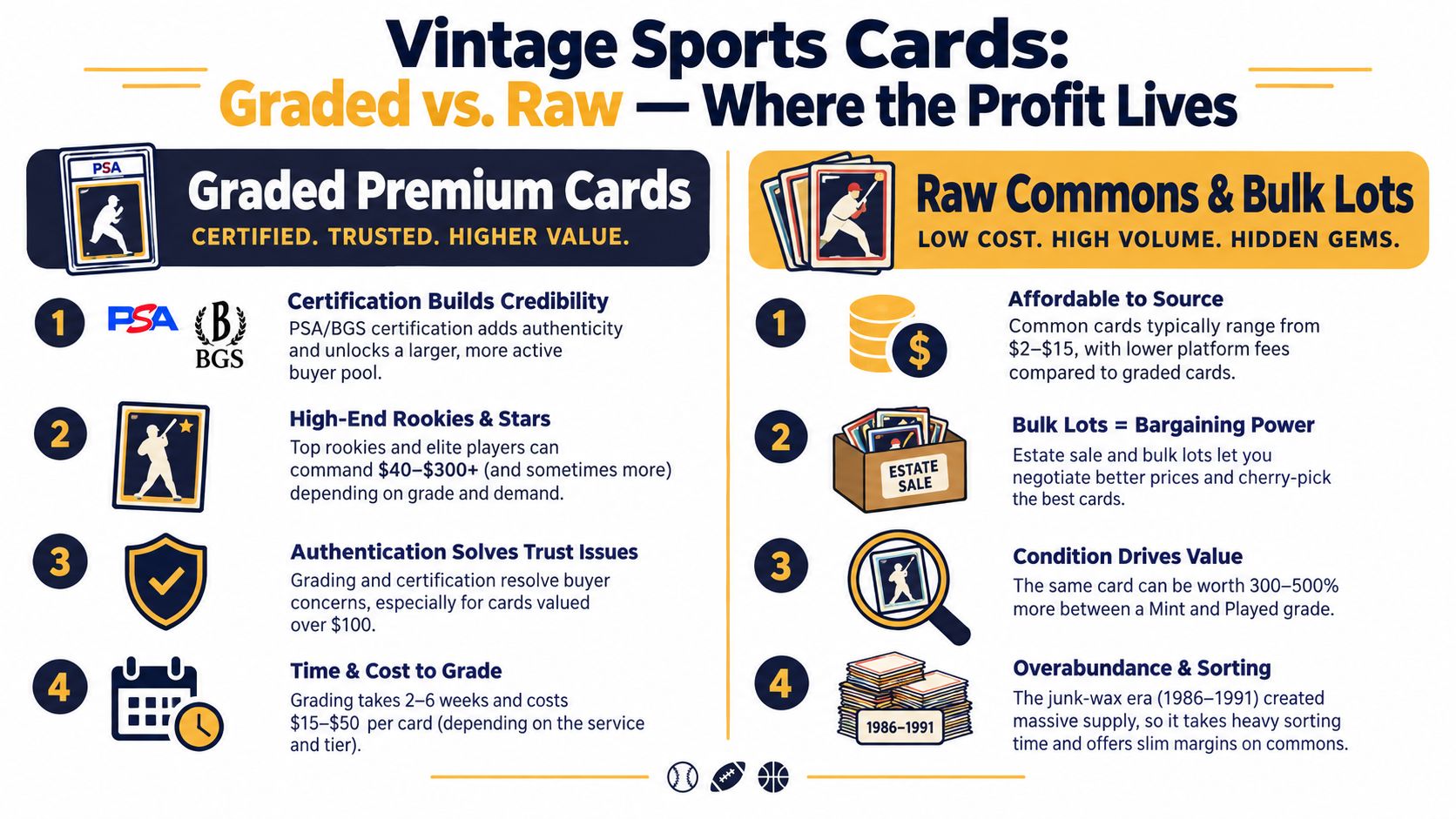
Pre-2000 sports cards remain a practical BOLO category because estate sales, attic cleanouts, and bulk collections still put them in front of resellers. Basketball, baseball, and football cards from the 1986 to 1995 window can produce good flips, but the category splits sharply between graded stars, promising raw cards, and common junk-wax bulk.
A card's age is only the starting point. Look for rookie cards, major stars, scarce variations, and recognizable sets. Then inspect centering, corners, edges, surface, stains, creases, and print defects. A raw card that looks strong under poor thrift-store lighting may not justify grading once you account for the grading fee, turnaround time, and the risk of receiving a lower grade than expected.
The high end can be dramatic. A 1952 Topps Mickey Mantle card sold for USD 12.6 million in 2022, a record for the most expensive sports collectible sold at auction, according to collectibles industry statistics covering the auction result. That result doesn't mean every old card is a jackpot. It does show why exact identification and condition matter before you pay up.
2. Vintage Sports Cards From the 1980s Through the 1990s
A mixed card box requires a different strategy from a single high-end card. At an estate sale, a 30-card mixed 1987 Fleer lot bought for $8 total produced an $85 net profit after fees and grading after three cards were graded and the rest sold raw. That kind of result comes from sorting discipline, not from treating every card as worth grading.
A Goodwill bin can work too. One PSA 8 common found inside a $5 bulk lot sold for $18 on eBay. In another Facebook Marketplace buy, 500 sports cards cost $20. Twelve key cards sold for more than $120, and the remaining 488 were bundled for $35, leaving $95 net after fees.
Use a simple card workflow:
- Identify the exact card: Confirm the year, set, player, card number, variation, and whether it's a rookie card.
- Grade thoroughly: Learn the PSA scale from 1 through 10 before deciding whether a submission is justified.
- Separate the bulk: Bundle common cards into themed or player lots instead of letting them occupy your death pile.
- Document condition: Photograph corners, surfaces, and backs, then use protective packaging and tracking for condition-sensitive orders.
Practical rule: Grade selectively. A strong-looking star or rookie card may justify the expense, while low-value commons usually need a raw sale or a bundle.
For an unfamiliar baseball card, this guide to baseball card values can support quick research alongside sold comps. ScanFlip AI's photo scan is useful when the card has no barcode and the print is difficult to read.
3. Vintage Board Games From the 1960s Through the 1980s
Vintage board games sell because collectors want original editions, historians want period examples, and completionists need missing titles or components. Avalon Hill, early Parker Brothers, Milton Bradley, and the 3M bookshelf series are useful names to recognize while sourcing.
The box often tells you more than the game title. Compare the cover art, publisher mark, copyright details, board design, and rulebook against sold examples. A later reissue of a familiar game may have little resale spread, while an early edition with the original artwork can attract a much stronger buyer.
Completeness is the main filter. Open the box before buying whenever the venue allows it. Check the board, cards, money, tokens, dice, player pieces, inserts, and rules. A game with one missing proprietary piece may be difficult to sell as complete, even if the box looks clean.
A $3 estate-sale game can flip for $25 to $60 if it's complete and original, but that range applies only when the exact edition and condition support those sold prices. Use it as a research prompt, not as an automatic buy threshold. A water-damaged box, musty paper, mold, or a missing board can turn an attractive game into a parts lot.
4. Vintage Board Games From the 1960s Through the 1980s
Board games reward the reseller who inspects instead of guessing. An estate liquidation produced a 40-game mixed purchase for $30. The higher-value wargames sold individually, incomplete games were bundled, and the final net profit after fees was $340. The key decision was not buying every game. It was separating the winners from the shelf-fillers.
A thrift-store 1972 Risk game bought for $2 sold for $28 on Etsy. That sale depended on identifying the year, checking the components, and presenting the item to buyers who specifically shop for vintage games. In contrast, five incomplete games sold as a crafter's lot for $15 on Facebook Marketplace, which recovered space and avoided a long, low-value listing process.
Prioritize:
- Intact packaging: Clean boxes and original inserts make inspection and shipping easier.
- Rulebooks: A surviving rulebook helps establish the edition and supports a complete sale.
- Specialized titles: Wargames and unusual strategy releases often deserve individual research.
- Bundle potential: Group incomplete classics, wargames, or family games to move slow inventory.
Etsy can make sense for vintage buyers who value presentation, while Facebook Marketplace is useful for bulky lots where shipping would consume the margin. Don't buy moldy or water-damaged games because cleaning paper components rarely restores collector-grade condition.
5. Vintage Vinyl Records From the 1960s Through the 1980s
The valuable record in a Goodwill bin usually isn't valuable because it's old. It's valuable because the pressing, label, country, matrix, genre, and condition line up with collector demand. Original first pressings, foreign pressings, and niche genres such as jazz, funk, soul, progressive rock, and krautrock deserve closer inspection.
A familiar album can have several resale outcomes. An original pressing may attract serious buyers, while a later reissue remains common. Label design, catalog number, country of manufacture, sleeve style, and gatefold construction help narrow the version. Inserts, lyric sheets, posters, and original inner sleeves can matter too.
Condition has to be judged separately for the record and the jacket. Look for warps, scratches, groove wear, writing, seam splits, water damage, and musty odors. A glossy cover doesn't guarantee a clean playing surface, and a visually clean record may still have audible damage.
A $1 record is only a BOLO after you confirm the pressing and condition. The title alone isn't enough.
The broader market gives vintage categories meaningful commercial context. The antiques and collectibles market was valued at USD 150.2 billion in 2025 and is projected to reach USD 229.7 billion by 2035, with a 4.4% CAGR over that forecast period, according to the antiques and collectibles market analysis. That backdrop supports demand, but it doesn't rescue a common, damaged record.
6. Vintage Vinyl Records From the 1960s Through the 1980s
Discogs is essential for pressing identification, but the sold comps still need to match the exact release. Check the label and catalog number first, then inspect the dead-wax markings near the center. Those etched or stamped identifiers can separate a desirable pressing from an ordinary reissue.
A Goodwill find illustrates the upside. A 1975 German Kraftwerk pressing bought for $1 sold for $52 on Discogs. At an estate sale, a 50-record bundle cost $20. Five higher-value records were cherry-picked, the commons were bundled, and the lot produced $140 net profit after shipping. An unvetted 200-record Facebook Marketplace lot cost $40 and produced $95 net profit after sorting and selling.
The trade-off is labor. Records need careful grading, cleaning only when you understand the process, and protective shipping. Use media mail where appropriate, but model the full postage and packaging cost before buying a large lot. A cheap box of commons can become a storage problem faster than it becomes cash.
- Research the release: Use Discogs and the catalog number, not just the album name.
- Inspect the surface: Don't call a record VG+ if scratches, warps, or groove wear undermine playback.
- Sell the rare individually: Bundle ordinary copies, but give scarce pressings their own listing and photos.
- Grade conservatively: Accurate descriptions reduce returns and protect your seller reputation.
7. Vintage Designer Handbags From the 1990s Through the 2000s
Authenticated vintage designer handbags can offer strong gross prices, but they also carry serious downside risk. Prada, Gucci, Louis Vuitton, and Fendi are recognizable brands, which makes them attractive to both collectors and counterfeiters. A reseller who can't authenticate confidently may buy a return, a platform dispute, or a damaged account reputation.
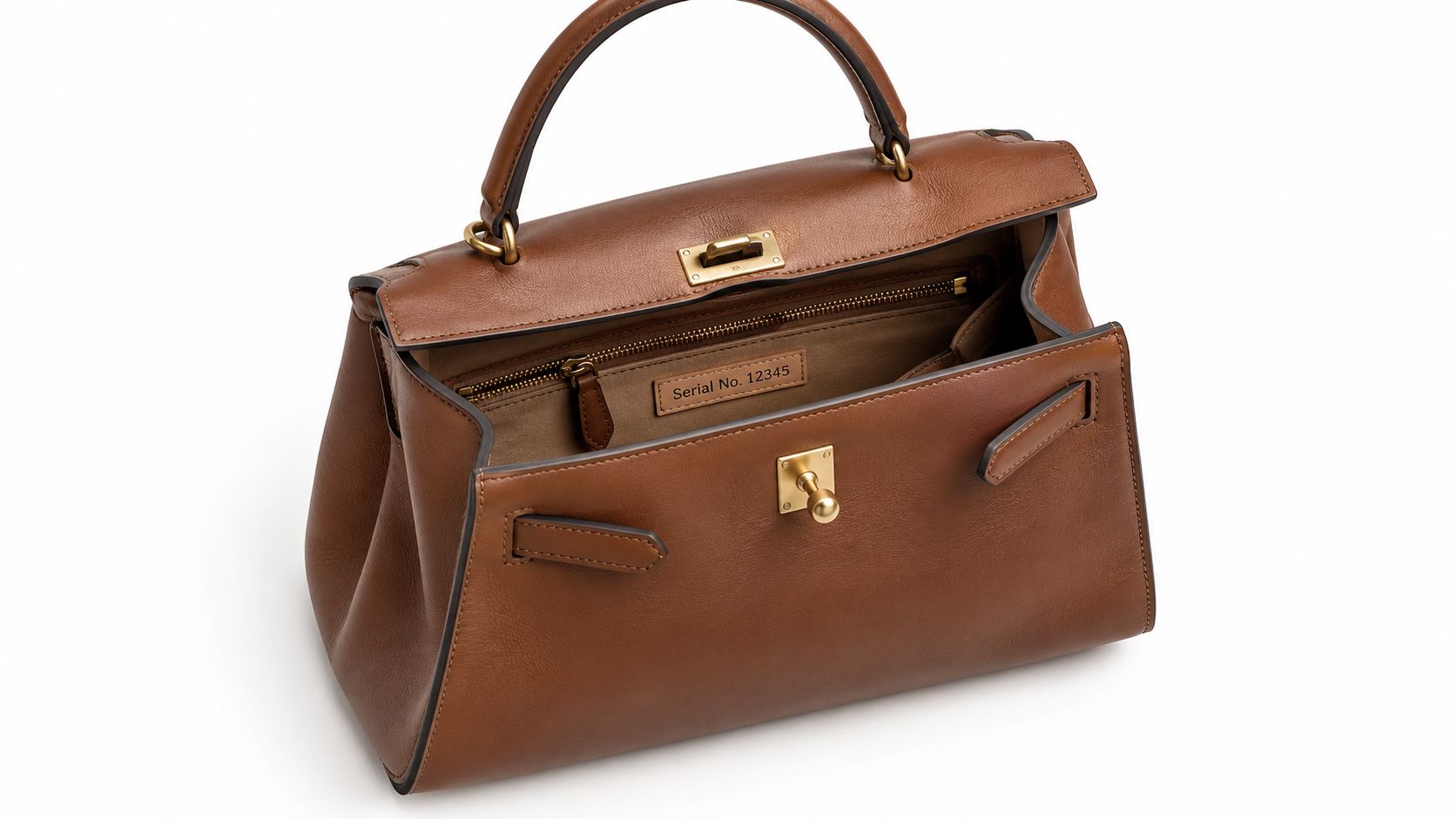
Start with a small group of brands and learn their construction details. Examine stitching, hardware, lining, date or serial markings, logo placement, zipper pulls, materials, and country-of-origin details. No single stamp proves authenticity by itself. Compare the complete bag against reliable references and use an authentication service when the potential margin justifies it.
Condition also changes the decision. Check for peeling interiors, sticky coatings, odor, stains, corner wear, broken hardware, strap damage, and unauthorized repairs. A bag can be authentic and still be a poor flip if restoration costs absorb the spread.
A consignment find shows the type of opportunity resellers look for. A Prada nylon shoulder bag bought for $25 sold for $185 on Poshmark, producing approximately $145 net profit. That result depends on authenticity, condition, accurate photos, platform fees, and a buyer willing to pay for that exact model.
8. Vintage Designer Handbags From the 1990s Through the 2000s
Bag flipping works best when the buying process is more cautious than the selling process. An estate lot of eight bags bought for $40 was sold individually and netted $240 after fees. A $50 luxury bag lot from Facebook Marketplace became several sales totaling $515, with approximately $380 net profit.
Those examples don't justify buying an unverified designer lot. They show why lot sourcing can work when the purchase price is low enough to absorb misses and the seller can separate authentic, sellable pieces from damaged or questionable inventory.
Photograph the areas buyers inspect most closely:
- Hardware: Show scratches, engravings, closures, and color changes.
- Serial or date markings: Photograph them clearly, but don't present a marking as proof by itself.
- Interior condition: Include peeling, stains, odors, and lining wear.
- Measurements: Give strap drop, width, height, and depth so buyers can compare models.
Poshmark can be convenient for the audience, while Vestiaire Collective may fit certain authenticated luxury pieces. Before buying, calculate the fee structure and return exposure with this comparison of Poshmark and eBay fees. Bundling a scarf or belt with a bag can improve the order value, but only if the accessories are authentic and relevant.
9. Vintage Denim From Levi's, Lee, and Wrangler
Vintage denim is a tag-reading and measuring category. Levi's 501s from the 1950s through the 1980s, Lee 101s, and Wrangler 13MWZ heritage pieces can attract collectors, especially when the jeans show authentic construction, desirable fades, and uncommon measured dimensions.
The tag size isn't reliable enough for a listing. Shrinkage, tailoring, washing, and decades of wear can make the actual waist and inseam very different from the printed size. Measure the waistband, rise, inseam, thigh, knee, and leg opening, then photograph the tape measure in place.
Authenticity markers matter because reproductions borrow familiar details. Inspect stitching, rivets, buttons, pocket shape, patch design, tag fonts, and hem construction. A single feature shouldn't decide the result. Compare the full set of details with sold examples and specialist references. A vintage clothing price guide can help organize that research before you commit to a higher buy cost.
The best pair isn't always the oldest. Strong fade patterns, wearable measurements, intact hardware, and a clean, honest condition profile can matter more than a vague “vintage” label. Repairs, crotch blowouts, severe stains, cut hems, and brittle denim reduce the number of buyers willing to pay collector prices.
10. Vintage Denim From Levi's, Lee, and Wrangler
An estate-sale 1970s Levi's 501 bought for $2 sold for $120 after fees because the listing included accurate measurements and detailed condition photos. A Lee workwear jacket bought for $3 sold to a collector for $85. The work happened before listing, while the garment was still in hand.
Mixed denim lots can be useful when you separate the strongest pieces. One six-pair vintage denim bundle cost $20. Three better pairs sold individually, while the remainder moved as a “vintage workwear lot” for faster turnover. That approach protects cash flow and keeps ordinary pieces from joining the death pile.
Use a consistent inspection routine:
- Measure every garment: Record actual dimensions rather than relying on the tag.
- Check era details: Study tag fonts, stitching, rivets, buttons, and hems for the target decade.
- Inspect wear points: Photograph stains, repairs, holes, fading, and weakened fabric.
- Choose the audience: Grailed, Etsy, and specialty forums can reach buyers who understand heritage denim.
Price to the measured garment and condition, not the label alone. Conservative descriptions reduce returns, especially when buyers expect vintage denim to show wear but disagree about whether that wear is desirable.
Vintage Collectibles: 10-Item Value & Resale Comparison
| Category | Implementation complexity | Resource requirements | Expected outcomes | Ideal use cases | Key advantages |
|---|---|---|---|---|---|
| Vintage Sports Cards (1980s–1990s) | Moderate, grading knowledge and heavy sorting for junk‑wax lots | Low capital for commons; grading fees ($15–$50), storage, shipping | Variable, low-margin quick flips on commons; high-margin after grading for key rookies | Estate-sale bulk sourcing, live sales (Whatnot), grading select finds | Large buyer base, steady demand, grading provides exit for high-end |
| Vintage Board Games (1960s–1980s) | Low–Moderate, hands‑on inspection and piece counting required | Time to open/inspect, storage space, protective shipping materials | Steady mid-range profits for complete editions; slow for obscure titles | Thrift/estate finds with complete sets; Etsy and collector listings | Completeness-driven value, low shipping weight, evergreen collector market |
| Vintage Vinyl Records (1960s–1980s) | Moderate, pressing/label ID and condition grading skills needed | Discogs access, playback/visual inspection, careful packaging (media mail) | High margins for first/foreign pressings; higher return/dispute risk on condition | Niche genres, first pressings, Discogs sales, cherry-picking bulk lots | Undervalued thrift finds, active niche marketplaces, low shipping costs |
| Vintage Designer Handbags (1990s–2000s) | High, brand authentication and provenance verification essential | Higher capital per item, authentication tools/services, quality photography, secure storage | High-ticket sales with strong margins per item but higher return/liability risk | Estate/consignment luxury finds, Poshmark/Vestiaire listings, curated boutiques | Large per-item profit, repeat buyers, strong secondhand luxury demand |
| Vintage Denim (Levi's, Lee, Wrangler) | Moderate, requires measuring, era authentication, and fade assessment | Time for measurements/photos, knowledge of stitching/rivet markers, targeted marketplaces | Solid mid-range returns for authentic pieces; size mismatches increase returns | Niche collector markets, Grailed/Etsy, estate/thrift sourcing for rare sizes | Passionate niche community, relatively lightweight shipping, predictable once learned |
Buy the Evidence, Not the Story
A collectible becomes a buy only after the evidence supports it. Start by identifying the exact edition, model, pressing, card variation, tag, or release. “Vintage,” “rare,” and “estate find” are sourcing clues, not valuation evidence.
Next, inspect condition and completeness before you fall in love with the possible upside. Check lids, pieces, packaging, rulebooks, inserts, hardware, tags, signatures, surfaces, and repairs. Cracks, repairs, refinishing, or missing parts can reduce value by 50% to 90%, and refinishing can halve value, according to this collectible pricing guide. Provenance can add a 10% to 100% premium, but only when the history is credible and relevant.
Sold comps are the next gate. Compare at least three to five recent sales in comparable condition, edition, and completeness. Auction-result databases are useful because they track hammer prices rather than asking prices. Kovels' antiques and collectibles database says it contains more than 1,000,000 prices for items sold in the United States, Canada, and Europe, while another searchable auction-results database includes results dating back to 1999 and is updated daily. Use those records to understand what buyers paid, not what sellers hope to receive.
Some items have narrow thresholds where exact identification changes everything. A 1909-S VDB Lincoln cent in Good condition is cited at $700 to $900, while a boxed, good-condition NES Mega Man 4 game is cited at up to $5,000, compared with a $50 original release price, in this collectible valuation guide. Those examples are reminders to verify the exact version before paying for a familiar title.
Then calculate the flip:
- Gross sold price: Use a realistic sold-comp range, not the highest outlier.
- Marketplace fees: Apply the fee for the platform where you expect to sell.
- Shipping and packing: Include postage, mailers, boxes, sleeves, bubble wrap, and insurance when needed.
- Cost of goods: Add the purchase price and any lot allocation.
- Labor and risk: Account for grading, cleaning, authentication, restoration, returns, and storage.
- Minimum threshold: Set your required net profit before you buy, then honor it.
Sell-through rate helps you judge speed. eBay demand data from August 2026 estimated 562,001 vintage items sold in the last 30 days, representing $24.6 million, with an average sold price of $43.77 and a 13.6% sell-through rate against 4,137,074 live listings, according to the eBay vintage-items demand report. That combination points to active turnover but margin sensitivity. A modest average sale price means fees, shipping, and buy cost can erase the apparent spread.
For an unclear item in a Goodwill aisle or estate-sale room, run a fast scan before another buyer takes it. ScanFlip AI can use an AI photo scan with no barcode needed, barcode scanning, or text search. It brings sold comps together and calculates net profit after fees and shipping. Vendoo and List Perfectly can remain part of your later workflow, but they solve a different problem. ScanFlip supports the sourcing decision, while those complementary tools handle later listing workflows.
The broader market is large, but broad demand doesn't make every subtype liquid. The global collectibles market was valued at USD 321.24 billion in 2025 and is projected to grow at a 5.5% CAGR through 2032, with vintage collectibles representing 39.9% of industry revenue in 2025, according to the global collectibles market report. Category winners still contain item-level losers. Complete sets can move while incomplete pieces sit, authenticated examples can command premiums while uncertain ones create risk, and clean original condition can outperform a heavily restored version.
Pass when authenticity is questionable, sell-through is weak, condition is damaged, or the margin disappears after fees and shipping. The best vintage collectibles worth money aren't the ones with the most exciting story. They're the ones you can identify, validate, buy correctly, and turn into cash without letting the details eat the profit.
ScanFlip AI gives resellers three fast ways to research vintage collectibles in the aisle, AI photo identification with no barcode needed, barcode scanning, and text search. It pulls sold comps across major marketplaces, factors in fees, shipping, and buy cost, and returns a red or green flip-or-pass verdict. Visit ScanFlip AI before your next thrift, garage-sale, or estate-sale sourcing run.