
Baseball Card Values: A Flipper’s Field Guide
You're standing at an estate sale with a $40 shoebox of baseball cards in your hands. The seller says the cards belonged to a lifelong fan, another picker is circling the table, and you've got minutes to decide whether the box is inventory or a future death pile.
Most of the stack may come from the junk wax era, when annual card production at the early 1990s peak was estimated to exceed 80 billion cards. Yet one overlooked rookie, autograph, scarce parallel, or high-grade vintage card can change the economics of the entire buy. Baseball card values are wildly non-intuitive, and the difference between a card worth a few dollars and one worth four figures often isn't obvious from the image on the front.
The profitable approach is to identify the exact player, year, set, condition, and rarity, then calculate the net after grading, shipping, marketplace fees, and time. Most cards aren't worth flipping. The job is knowing why before you pay.
Table of Contents
- Why That Estate Sale Card Stack Is a Coin Flip
- The Five Factors That Drive Baseball Card Values
- How to Judge Condition Before You Buy
- When Grading a Card Kills Your Profit
- Finding Real Sold Comps Across Marketplaces
- Fast Flip-or-Pass Decisions in the Aisle
- Your Buy-or-Pass Framework for Baseball Cards
Why That Estate Sale Card Stack Is a Coin Flip
You have minutes at the estate-sale table, a shoebox priced at $40, and another buyer watching. The top cards show familiar names from the late 1980s and early 1990s, plus enough rookie cards to make the seller confident. That visual impression is a poor valuation method. The production flood of that period left many releases with abundant supply, and the historical overview of the sports-card market explains why many late-1980s and early-1990s rookie cards sold for far less than their popularity suggested.
A famous player does not make the box a buy. A common base card of a Hall of Famer may be difficult to sell at a useful margin. A true rookie, autograph, serial-numbered parallel, or unusually high-grade copy can change the result, but only after you account for grading fees, shipping, marketplace fees, and the time your cash stays tied up.
A $40 box isn't valuable because it contains famous players. It's valuable only if the exact cards inside have buyers at profitable sold prices.
Use this triage order before committing money:
- Player: Is the card tied to a star, Hall of Famer, iconic rookie, or historically significant figure?
- Year and issue: Is it the player's first card, a recognized rookie issue, or a later base card?
- Set and version: Is it base, parallel, insert, autograph, buyback, or a reprint?
- Condition: Do the corners, edges, centering, and surface support a grade that leaves room for profit?
- Rarity: How many comparable copies exist, particularly in the grade you might receive?
Then run the net-profit check. Compare realistic sold prices, subtract the purchase allocation, grading and shipping costs, marketplace fees, and the value of waiting through the turnaround. If the remaining spread depends on a perfect grade or a buyer paying above recent comps, pass. A lower-profile card with limited supply and steady demand can deserve more attention than the star on top of the stack.
The high end shows how much these details matter. A PSA 9 1952 Topps Jackie Robinson card sold for $960,000 in May 2021, while an autographed PSA PR 1 (Auto 8) 1948 Leaf Jackie Robinson rookie sold for $1.86 million on July 24, 2026, as reported by Sports Illustrated's account of the sales week. Those cards shared a player, but the issue, autograph, grade, and historical importance produced very different outcomes.
You will not find that record sale in an ordinary estate-sale stack. Look for the same mechanics at a smaller scale: identify the exact issue, inspect it, check sold comps, and calculate the net. If the math fails before you buy, leave the shoebox for someone else.
The Five Factors That Drive Baseball Card Values
Baseball card values depend on several details lining up. Player popularity matters, but a famous name alone is a weak buying signal. For a reseller standing at an estate sale table, the useful question is whether the player, issue, version, condition, and buyer demand can support a profitable sale after grading, shipping, and marketplace fees.
Player and year establish demand
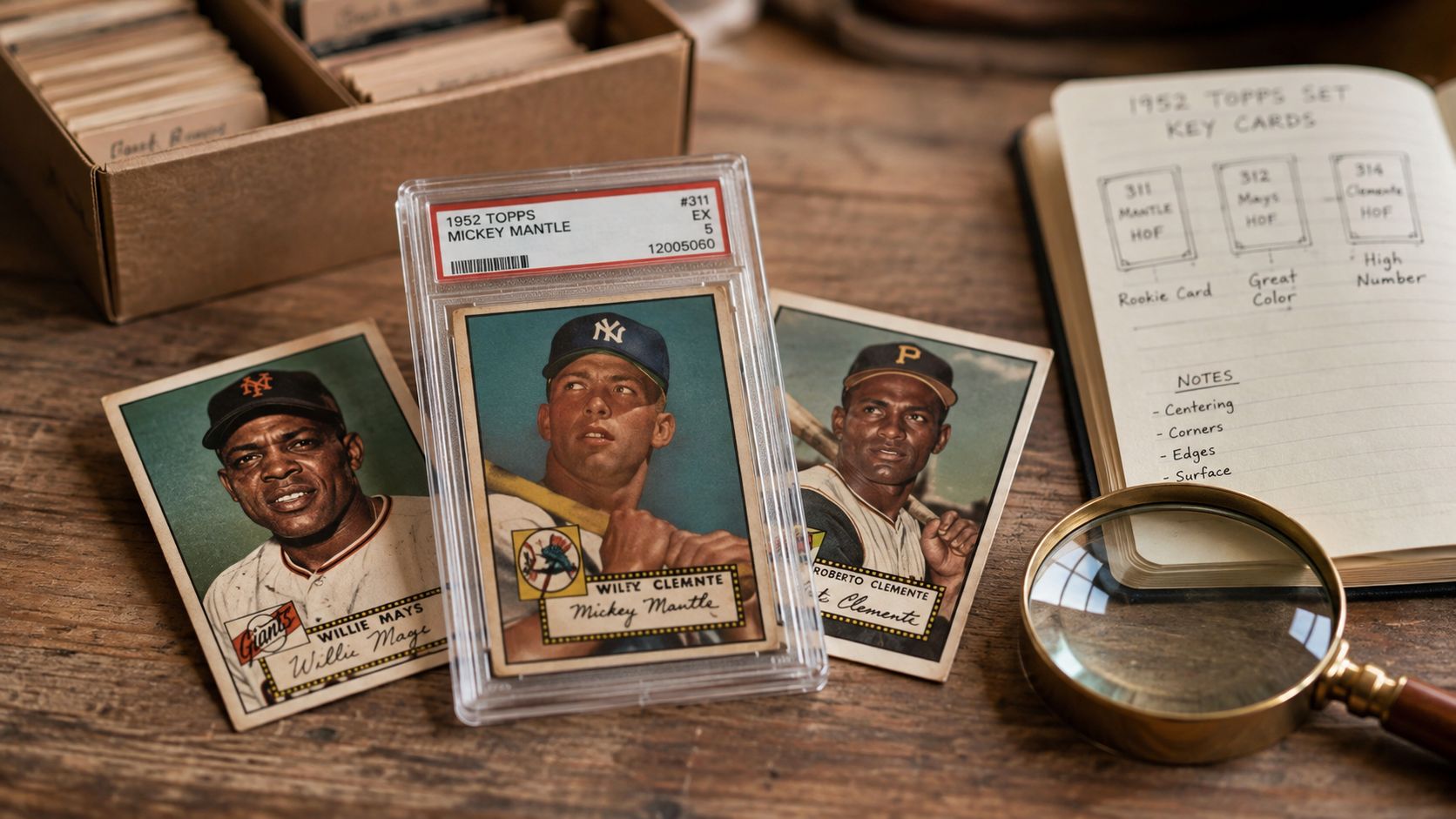
A star's rookie card usually draws the strongest collector interest for that player. BBC Emporium's baseball card guide defines a rookie card as the first card issued for a player and notes that it typically becomes the most valuable card in that player's run. A second-year card may show the same name and a similar photograph, yet sell for only a fraction of comparable rookie cards.
That distinction matters in a garage-sale box. Confirm the player's first issue, the release year, and whether you are holding a base card or a scarcer variant. Then check actual sold listings, not asking prices.
Set and version change the result
The set name forms part of the card's identity. A flagship base card, short-printed insert, autograph, buyback, and serial-numbered parallel are separate products, even when they feature the same player and year. Their supply, collector audience, and likely sale price can differ sharply.
A one-of-one 2008 Fleer Buyback Michael Jordan autograph sold for $504,000 during the same 2026 sales week covered by Sports Illustrated. It is not a baseball comp, but it shows why apparent similarity is not enough. Scarcity and star power can produce a completely different result.
Before paying a premium, identify the exact release, parallel, autograph or buyback status, and numbering. If the card's version cannot be confirmed at the table, value it as the common version or pass.
Supply determines replacement difficulty
The late-1980s and early-1990s production flood remains the standard warning. Widely available cards face heavy competition from other sellers. Lower-supply cards have fewer comparable copies, although scarcity alone does not guarantee a quick sale.
The 1989 Upper Deck baseball set helped establish the premium-card concept, but premium design does not make every card scarce. Check the exact release and print availability. Historical production was extremely high during the junk-wax era, so a familiar vintage-looking card may have little resale spread after fees.
Condition sets the grade ceiling
The right player and issue can still be a poor buy if the corners are soft, the surface is scratched, or the centering is visibly off. PSA grades run from 1 to 10, and collector guidance says a PSA 10 or BGS 9.5 can increase value by 3x or more in some situations, as summarized in Public's grading guide. Treat that multiplier as a possibility, not a forecast. Grading fees, shipping, turnaround time, and marketplace fees come out of the spread before you realize any profit.
Rarity and demand must meet
An old card is not automatically scarce, and a scarce card is not automatically liquid. A low-population card with no active buyer base can sit unsold. A popular rookie with a low population may attract aggressive bidding, but only recent sold comps show whether that demand is still usable.
For a fast aisle decision, separate likely research cards from bulk inventory. Check exact rookies, autos, parallels, low-population grades, and historically important issues. Leave common base cards, obvious reprints, and heavily produced junk wax material unless the lot is cheap enough to support bulk resale or a few standout finds.
Use this sports memorabilia pricing guide for a broader way to organize comparable sales. Price the exact item, then subtract every expected cost. If the remaining spread depends on a perfect grade, a fast turnaround, or a buyer paying above recent comps, pass.
How to Judge Condition Before You Buy
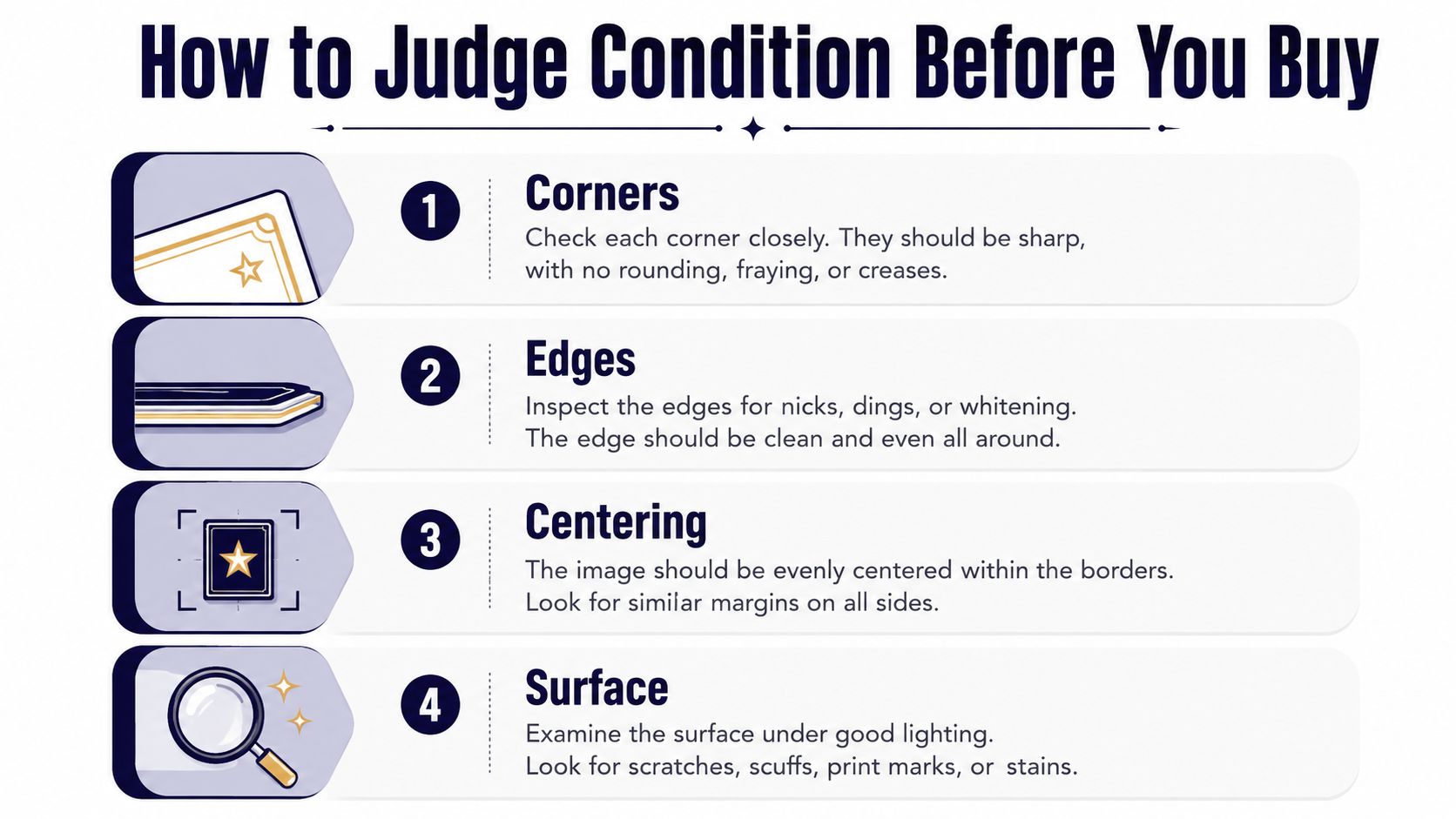
A card that looks clean in a penny sleeve can still have a low grade ceiling. Inspect it in your hand before comparing baseball card values. Bright, angled light matters more than a loupe during the first pass. Reject cards that only look sharp from arm's length.
Start with the four grading buckets
Corners deserve the first check. Turn the card and inspect all four, front and back. Look for whitening, soft points, bends, and crushed tips. A tiny white fleck may leave the card attractive, but it can separate a strong grade from an ordinary one.
Edges require the same scrutiny. Scan the long and short sides for chipping, rough cuts, dents, and whitening. Modern cards can also carry print or factory defects that disappear during a straight-on glance. Rotate the card instead of relying on the front design.
Centering causes many bad aisle buys. Beckett's grading guidance describes a pristine target of 50/50 centering on the front and 55/45 or better on the back, alongside perfect marks in the other categories. PSA standards may allow roughly 55/45 to 60/40 on the front and 70/30 on the reverse, as explained in the grading comparison. Small border differences can lower the grade ceiling even when the card feels sharp.
Surface is the final inspection. Tilt the card under available light and check for scratches, print lines, dents, dimples, stains, and wax residue. Chrome and glossy finishes expose flaws quickly because damaged areas catch the light.
Use a repeatable aisle routine
Hold the card by its edges and work through the same sequence:
- Front corners: Check for whitening, bends, and soft points.
- Back corners: Look for damage hidden by the front design.
- Long edges: Scan for chipping and rough cuts.
- Short edges: Check the top and bottom for dents.
- Front centering: Compare the left and right borders, then top and bottom.
- Back centering: Repeat the comparison on the reverse.
- Angled surface: Tilt the card under available light.
- Print defects: Look for lines, spots, and registration problems.
- Alteration clues: Reject cards that appear trimmed, chemically cleaned, or otherwise changed.
- Grade ceiling: Decide whether the condition supports the grade used in your sold-comp estimate.
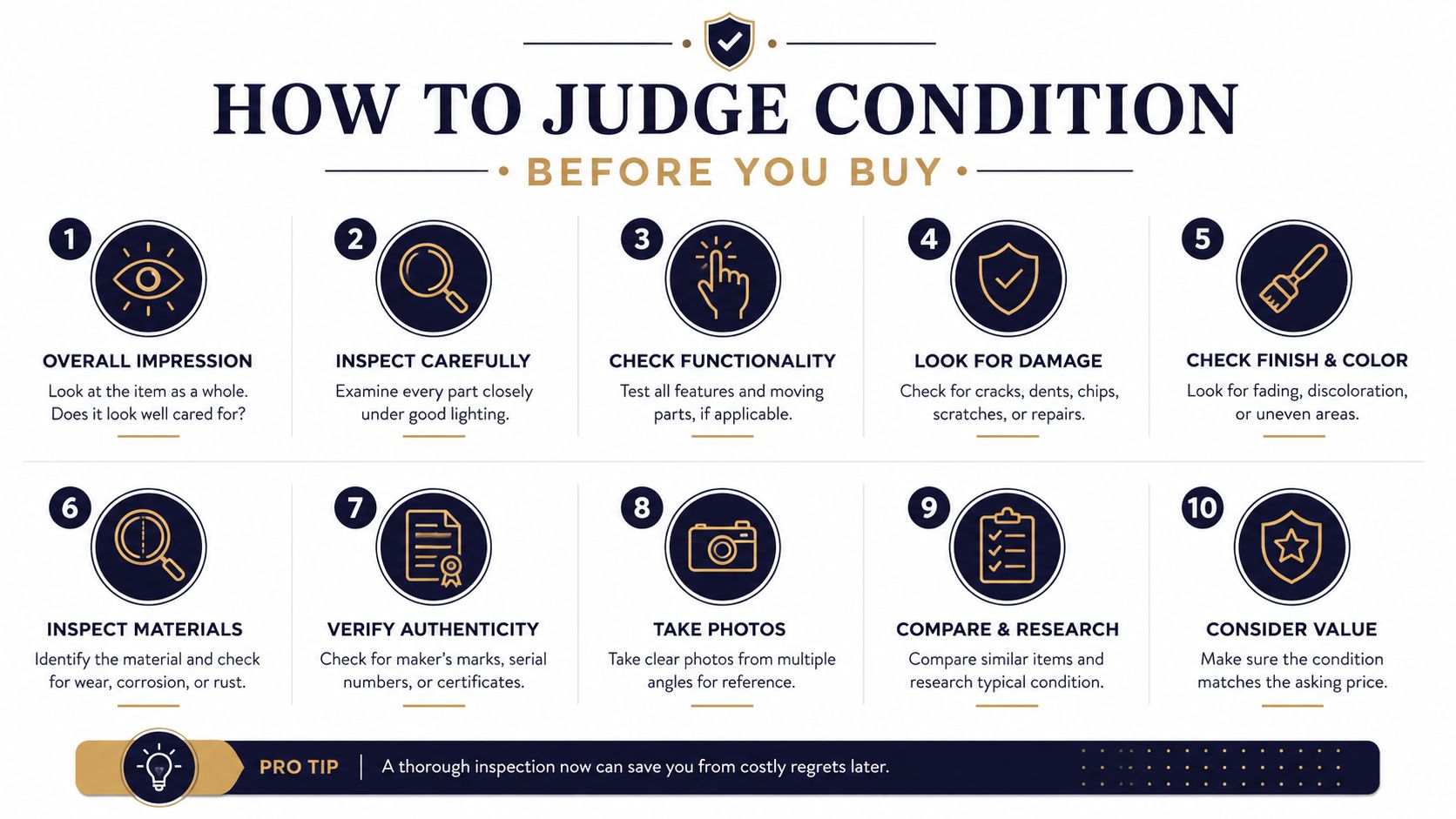
The useful question is not whether the card looks nice. Ask what grade you can defend after a buyer examines it under magnification.
Condition often matters more than player recognition on vintage material. A small grade improvement can create a wide price gap, while grading fees, turnaround time, shipping, and marketplace fees reduce the spread before sale. Independent guidance also treats pre-1980 cards in PSA 7 or better as rare, so a raw vintage card with clean corners and strong centering deserves more attention than a famous modern card with abundant supply. That point appears in Public's PSA and Beckett grading overview.
If the card fails two or more inspection points, value it as a lower-grade raw card or pass. Do not use the highest possible grade to justify the buy price. A borderline card must still leave room for fees and a slow sale.
When Grading a Card Kills Your Profit
A $40 graded sale can still be a losing buy. Before submitting a raw card, calculate the amount left after the purchase price, grading fee, shipping, insurance, supplies, marketplace fees, and the time your cash stays tied up. A strong graded comp is only useful if the net result beats a raw sale.
PSA bulk grading for cards and TCG was consolidated and raised to $24.99 per card with a 50-card minimum, while several lower-tier grading prices increased by about $5 per card and turnaround times extended for some tiers, according to Sports Illustrated's coverage of PSA grading changes. A borderline card has less room for mistakes under those terms.
Run the break-even math before submission
Suppose exact raw sold comps sit near $40. Buy the card for $10 and the raw spread is $30 before selling fees, shipping, and labor. Submit through a bulk tier and the grading fee alone is $24.99. Add outbound and return shipping, supplies, insurance, and marketplace fees, and the visible spread falls to roughly $5.01 before the sale even happens. That is not a net-profit figure.
For an aisle decision, compare two outcomes:
- Sell raw and collect the lower price sooner.
- Grade only if the likely graded sale leaves enough after every cost to justify the delay and failure risk.
If the graded copy does not command a meaningful premium over the raw version, pass on grading. A genuine high-grade vintage rookie can justify different math because condition, authentication, and scarcity may support a substantially higher sale price. The target is not an impressive slab. It is a profitable post-fee exit.
Check the population before paying up
A pop report records how many times a grading company has assigned each grade to that exact card. Topps' explanation of population reports describes how collectors use this information to assess scarcity within a grade.
A low population can support a premium for a sought-after rookie or insert, but it may also reflect limited submissions rather than genuine scarcity. Compare the population with buyer demand, recent sold comps, and your card's likely grade. A seller's headline sale is not enough reason to pay up.
Turnaround time is another cost. While the card is in grading, you cannot sell it, and demand may soften before it returns. Longer processing also delays cash conversion. For a reseller, that delay belongs in the buy-or-pass calculation even when it never appears on the receipt.
Finding Real Sold Comps Across Marketplaces
Asking prices show seller intent. Sold prices are evidence. An ordinary base card can sit at an aggressive list price for months without proving anything about baseball card values or what your copy will bring.
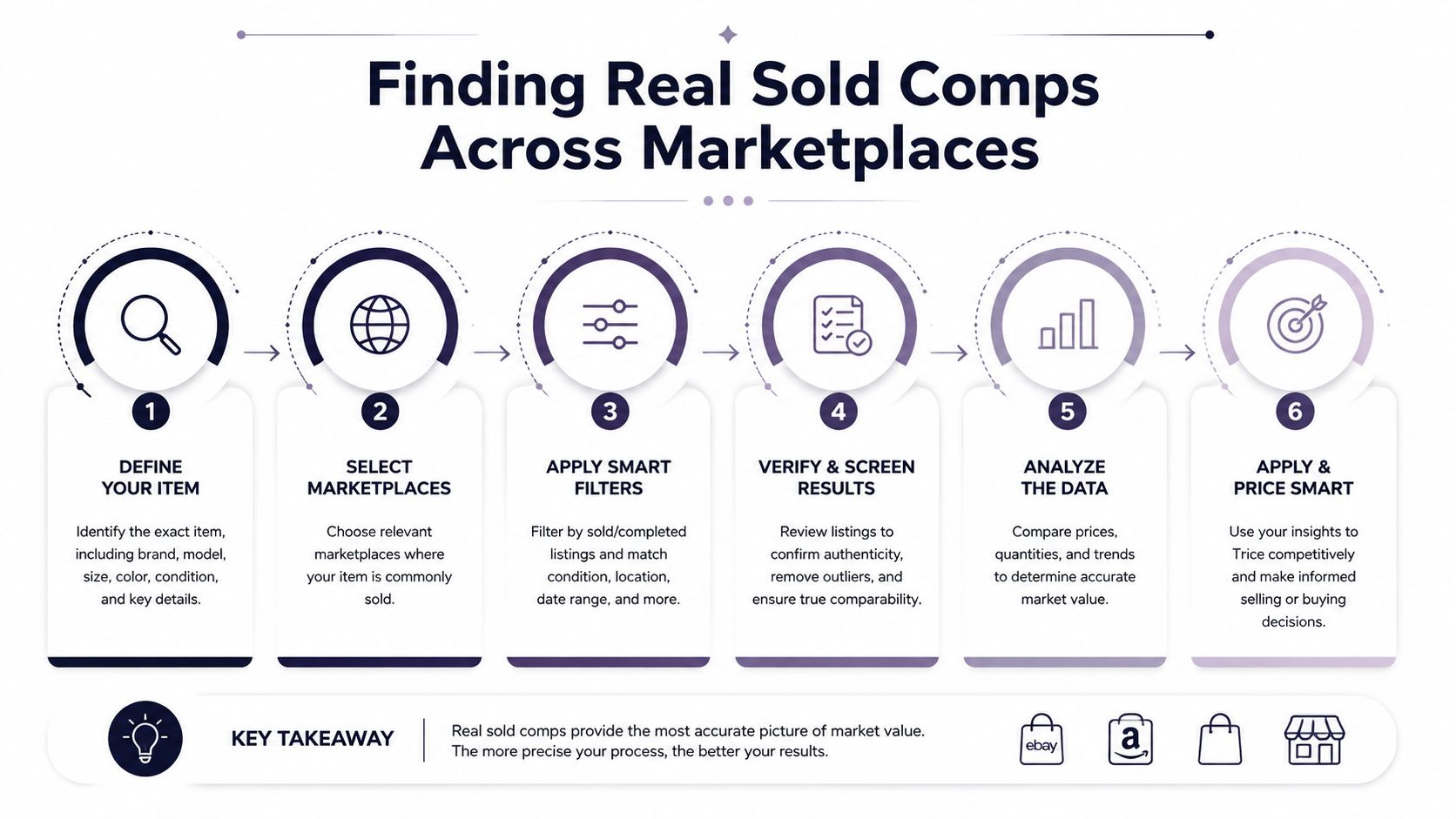
Identify the exact card before comparing prices. Record the player, year, manufacturer, set, card number, rookie status, parallel or insert name, autograph status, serial number, and grade. Search that combination on eBay with sold listings enabled. Match the version and condition closely. A sale for the same player is useless if it is a reprint, different parallel, or higher grade.
Build a five-minute comp range
Search broadly enough to locate the card, then narrow the results hard. Exclude reprints, lots, damaged copies, authenticated-only listings, and other parallels. For a raw card, start with raw sales. Check graded results only to estimate whether the premium could cover grading, turnaround time, selling fees, shipping, and the risk that the card receives a weaker grade than expected.
Use other marketplaces as supporting evidence. Whatnot and Facebook Marketplace can reveal raw lots and live-break inventory. Mercari may show casual sellers pricing below established market levels. eBay often offers the deepest reference point for graded vintage. Treat one unusually high sale as an outlier, not a target. Build a range from relevant transactions and use the lower realistic result for your buy decision.
| Marketplace | Best For | Watch Out For |
|---|---|---|
| eBay | Graded vintage, established card issues, exact-card searches | Wrong grades, reprints, optimistic asking prices |
| Whatnot | Raw lots, live breaks, fast-moving collector inventory | Auction energy and incomplete condition details |
| Facebook Marketplace | Local raw lots, estate-sale boxes, collection buys | Sparse descriptions, uncertain authenticity, inconsistent demand |
| Mercari | Casual sellers and possible underpriced raw cards | Misidentified versions and weak condition disclosure |
| Poshmark | Cross-market reference for collectibles and buyer behavior | Limited card-specific depth and inconsistent comp quality |
The raw-to-graded spread matters only if your condition estimate is realistic. Centering, edges, corners, and surface flaws can push the final grade below the level used in your profit estimate. A wide possible grade range means wider downside.
For the eBay process, follow this guide to find sold prices on eBay. Keep the card details visible while searching so the wrong parallel does not set your expected sale price.
Record the numbers that affect your offer
Write down the conservative sale price, marketplace fees, shipping, cost of goods, grading cost, and a return or condition-dispute buffer. Subtract those costs from the expected sale price. The remainder is your maximum buy price, not the gross comp.
If the version is still unclear after five minutes, price that uncertainty into the offer. A familiar player name can hide a reprint or low-value base issue. If the likely net profit cannot justify the research, grading delay, and selling work, pass.
Fast Flip-or-Pass Decisions in the Aisle
At an estate sale, a mixed shoebox can contain one profitable card and dozens that only look promising. Manual comping across several apps may take 10 to 15 minutes per card, too slow when another buyer is working through the same stack. The issue is opportunity cost. Time spent researching one uncertain card can cost you the next identifiable deal.
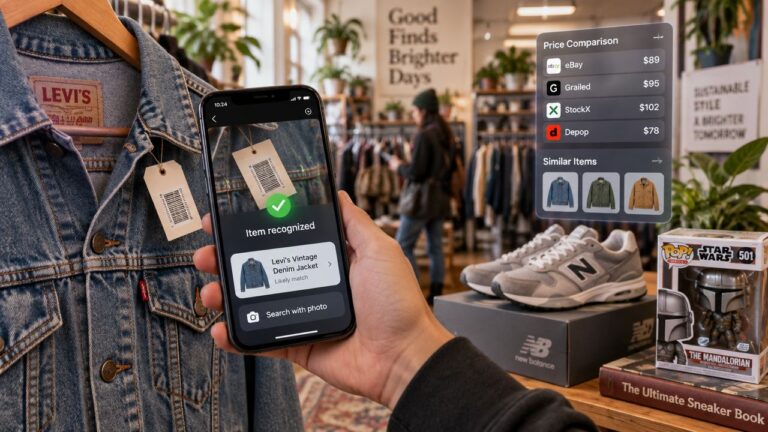
A quick scan works for triage when identification is the bottleneck. ScanFlip AI provides an AI photo scan without a barcode, barcode scanning for boxed products, and text search when photographing or scanning is impractical. It aggregates sold comps across eBay, Poshmark, Mercari, Depop, Amazon, Whatnot, ThredUp, Facebook Marketplace, and TikTok Shop, then estimates net profit after fees and shipping with a red or green flip-or-pass result. You can use ScanFlip AI while sourcing, before committing cash or sending a card to grading.
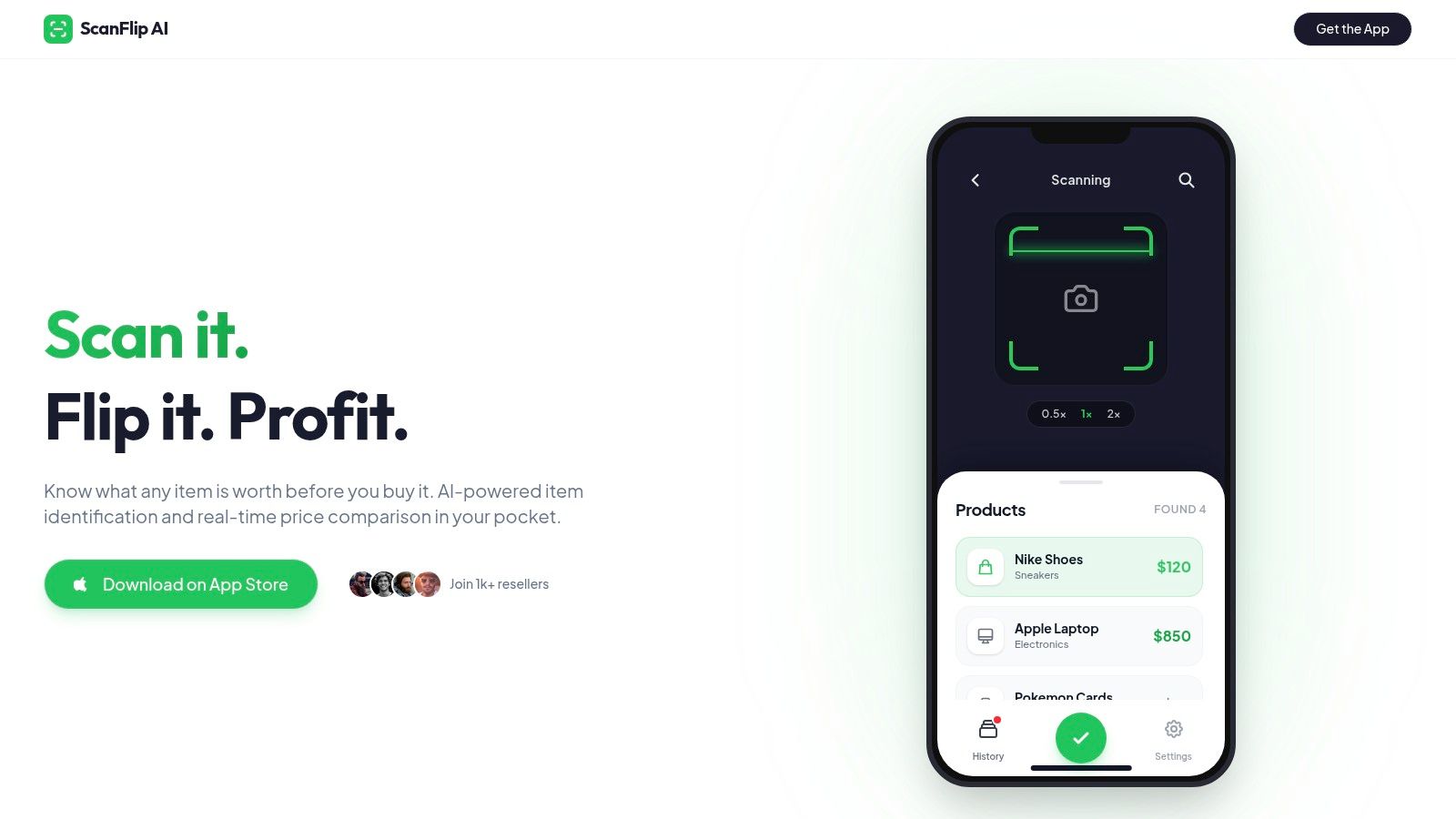
Manual research versus rapid screening
Manual research gives you control over edge cases. Check the card number, distinguish a parallel from the base issue, compare the same PSA grade, and reject a misleading comp. That extra control takes time, while a database cannot correct a poor photo or an incorrect identification.
Use a scan tool for triage. It can show whether a card deserves a closer inspection, especially when a seller has priced a mixed lot and you need to find potential BOLO cards quickly. The verdict is only a starting point. Condition, grading fees, turnaround time, marketplace fees, and the expected sale price still determine whether the card produces cash profit.
A card with an attractive gross comp can become a pass after grading and selling costs. Run the scan, verify the exact issue, then calculate the amount left after fees, shipping, grading, and the value of waiting for inventory to return. For a sourcing process based on verifiable evidence, use this evidence-based purchasing guide. Crosslisting tools such as Vendoo and List Perfectly belong later in the workflow. They do not replace the net-profit check before purchase.
Your Buy-or-Pass Framework for Baseball Cards
At the estate-sale table, make the buy-or-pass call in this order:
- Identify the exact card. Confirm player, year, set, card number, rookie status, parallel, insert, autograph, and serial number.
- Check condition. Inspect corners, edges, centering, and surface. Estimate the grade conservatively.
- Pull sold comps. Match the exact card and grade. Ignore asking prices, reprints, wrong parallels, and mismatched grades.
- Calculate net profit. Subtract the purchase cost, marketplace fees, shipping, grading, submission shipping, insurance, and the value of waiting for the card to return.
- Set a hard offer. Buy only when the conservative net leaves your required profit after every cost.
- Pass on weak demand. Mass-produced base cards and common older issues can stay cheap despite their age.
The hobby has shown that hot categories can reset. Baseball card values peaked in the early 1990s and then fell by roughly 10% to 30% over the following years, according to Dean's Cards' market history. Treat past demand as context, not protection for your cash.
Start with rookies and scarce versions, then check the four condition points and verify exact sold comps. If the standout cards cannot cover the purchase after grading, selling, and shipping costs, leave the box behind. A pass protects cash from becoming a slow-moving death pile.
Use ScanFlip AI to identify cards by photo, barcode, or text and compare sold comps across major marketplaces. Its estimated net profit after fees and shipping can support screening, but the final buy decision still depends on your condition estimate, grading turnaround, and actual marketplace costs.