
Dark Silver Heels: How to Source and Price for Reselling
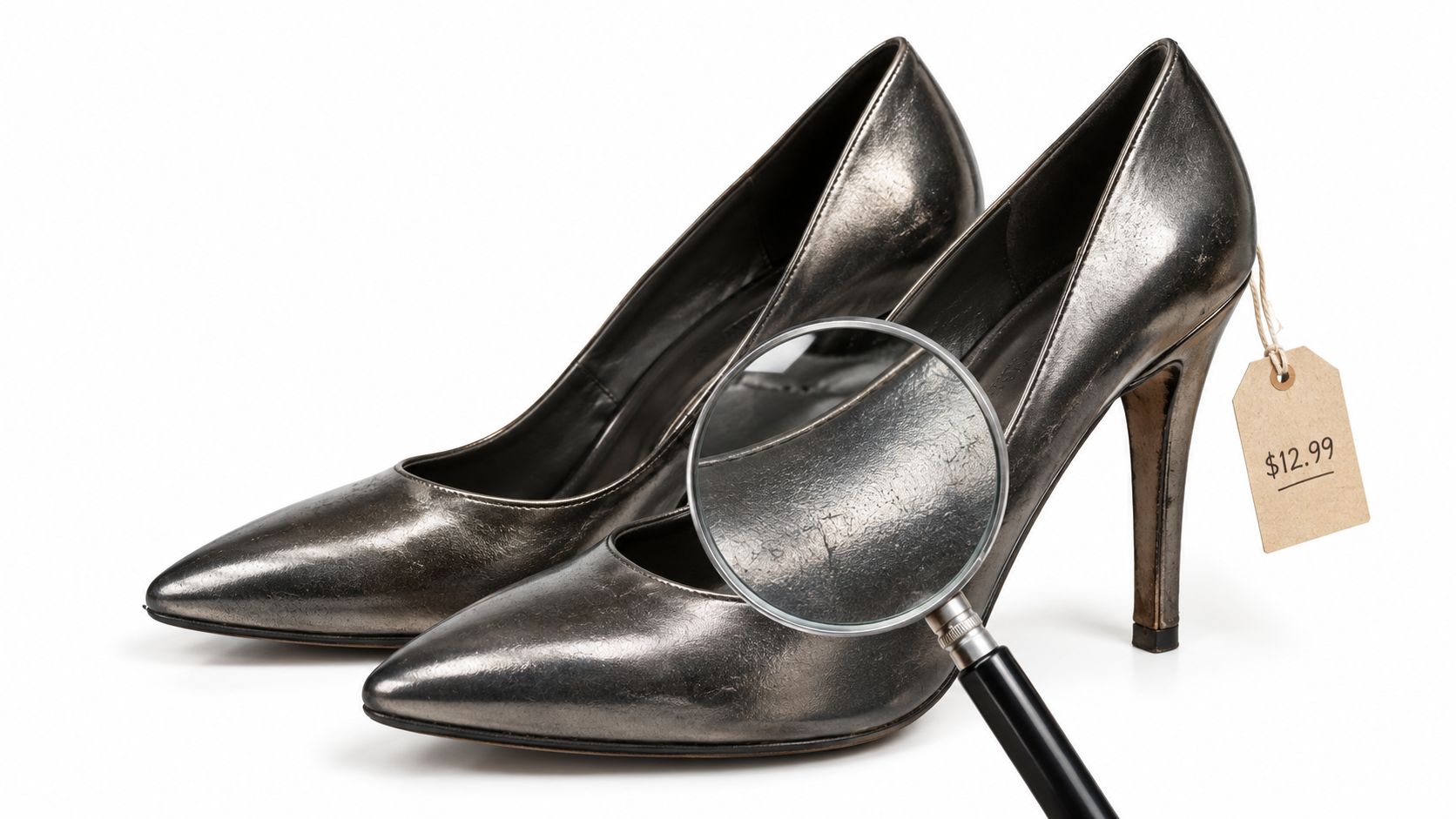
A $9.99 pair of dark silver pumps can be a clean $40 flip, or it can sit in your death pile until the finish starts peeling. The difference usually shows up before you ever check sold comps. In a Goodwill aisle, I'm looking first at the tone, heel structure, material, outsole, and the kind of damage that photographs badly.
Dark silver heels deserve a closer look because the category has moved beyond one-night formalwear. Fashion coverage from ELLE describes silver heels appearing across runways, streets, and market appointments, with styling that includes denim, well-cut trousers, and everyday separates. That broader demand helps pewter, gunmetal, and charcoal metallics, but it doesn't rescue a weak brand, damaged coating, or fragile construction.
Table of Contents
- Spotting a Dark Silver Heels Flip in the Wild
- Reading the Finish, Material, and Construction
- Naming Heel Height and Structure the Way Buyers Search
- Grading Condition on Metallic and Dark Silver Uppers
- Pulling Sold Comps and Running the Net Profit Math
- Where Dark Silver Heels Sell Best by Marketplace
- A 60-Second Aisle Workflow and When to Walk Away
Spotting a Dark Silver Heels Flip in the Wild
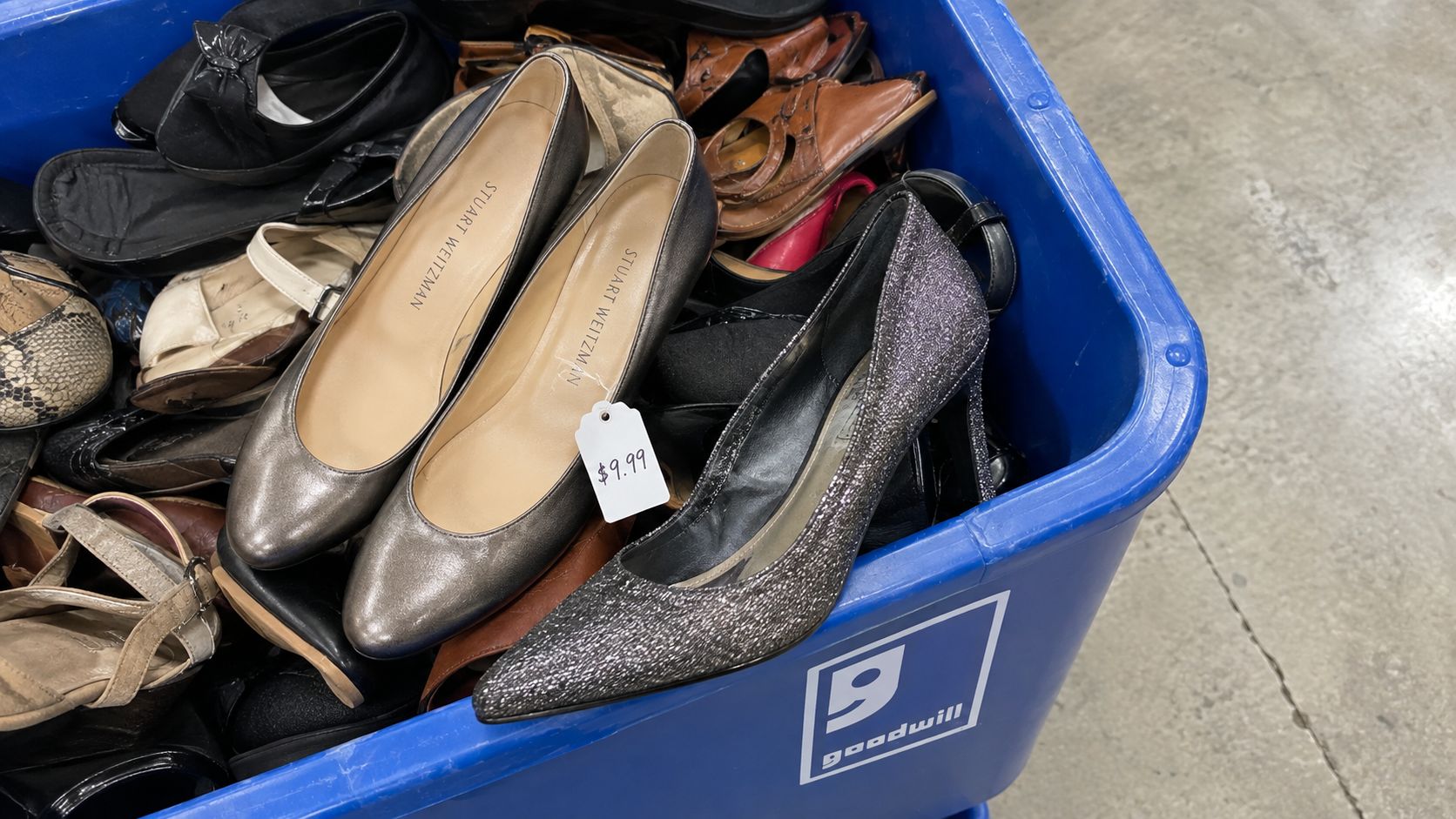
The first pair is a good example of what earns cart space. I found pewter leather Stuart Weitzman pumps in a Goodwill bin marked $9.99. Similar-size eBay sold comps had reached $42 shipped, and the shoes looked presentable at arm's length. The finish had depth rather than a flat glitter effect, the pump shape was classic, and the outsole showed scuffing without looking worn through.
The second pair was sitting two bins over. It was a glittery charcoal platform from a fast-fashion label, priced at $7.50. The last comparable sale was $11, with roughly $9 in fees, so the gross price barely covered the transaction. That pair was a pass before I bothered checking the size.
The quick visual filter
You don't need a ten-minute inspection to decide whether dark silver heels deserve a deeper check. Give the pair a fast visual filter:
- Color depth: Pewter, gunmetal, and brushed silver usually look more intentional than thin gray paint or loose craft glitter.
- Heel shape: A clean pump, block heel, or stable platform gives you a wider buyer pool than an awkward novelty silhouette.
- Hardware weight: Buckles, ankle straps, and decorative metal should feel secure rather than hollow, bent, or cheaply plated.
- Outsole scuffing: Surface marks are negotiable. Deep wear at the ball, toe tap, or heel edge is a margin problem.
- High-contact zones: Look at the toe box, heel counter, and heel tips before you study the insole branding.
Yellowed soles, flaking metallic coating, and crushed heel tips can kill an otherwise attractive pair. A strong brand name doesn't make peeling foil desirable, and a low buy cost doesn't compensate for a heel cap that needs immediate repair.
Aisle rule: If the finish and structure don't look healthy from a quick inspection, don't let a familiar logo talk you into buying the problem.
Silver footwear is now treated as a distinct retail color category, not merely a variation of gray. Nordstrom's metallic silver heel filter reflects that separate merchandising language. For resellers, that means buyers may search specifically for silver, pewter, gunmetal, or metallic heels, but they still expect the pair to look clean and wearable.
Reading the Finish, Material, and Construction
Dark silver heels can look almost identical in a thrift-store display while carrying very different resale risk. Start with the upper, then move inward, down to the heel, and finally across the outsole. That order keeps you from getting distracted by a brand stamp before you know whether the shoe can survive normal wear.
Start with the upper
A gunmetal foil over leather, brushed metallic patent, painted suede, and sprayed fabric don't age the same way. Metallic leather may soften and crease while keeping its color, but the coating can wear through at the toe break. Patent-like finishes catch attention quickly, yet mirrored surfaces make every scratch more visible. Suede may hide small marks, while sprayed fabric can show bald patches where the finish has rubbed away.
Check the toe box under direct light. Flex the shoe gently at the vamp, where the foot bends, and watch for cracking, cloudy patches, or a different base color showing through. A dark silver upper should have a reasonably consistent tone across both shoes.
The interior gives you useful brand and quality clues. Leather lining often supports a more substantial dress shoe, while a thin textile interior is common in lower-cost construction. Neither automatically decides value, but it helps separate a genuine leather pump from a synthetic pair using a similar color name.
Check the heel and outsole
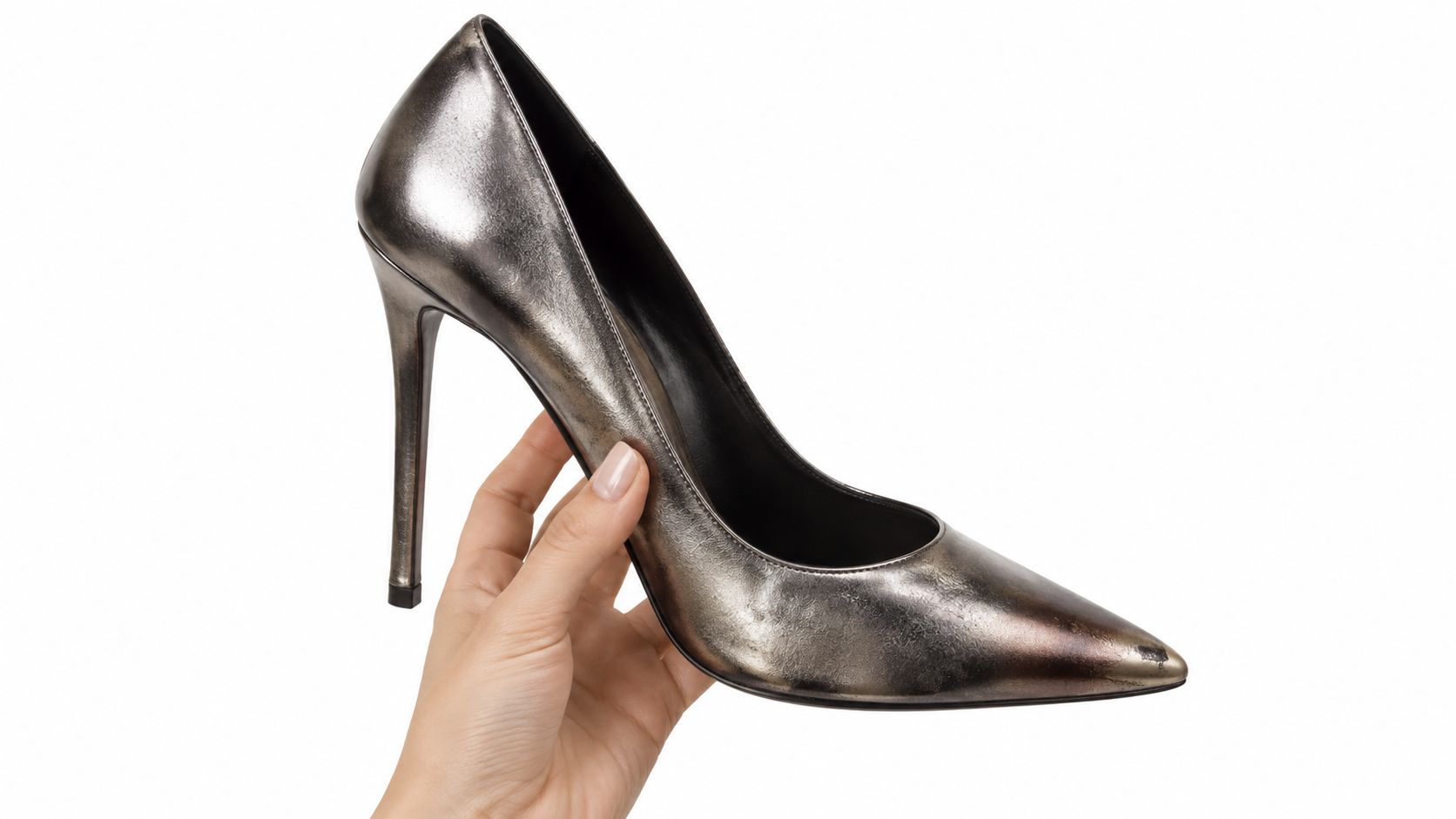
Grip the heel and inspect the join between the heel and the shoe. A firm shank and a rubber tap-top cap suggest a more practical dress heel. On stilettos above 3.5 inches, a plastic heel cap deserves extra caution because it can split, loosen, or wear down quickly.
The outsole tells you how the pair will behave on hard floors. Dark silver heels commonly use metallic-coated uppers with rubber, polyurethane, PVC, or leather outsoles. Footwear friction research identifies rubber as a preferred slip-resistant material, while polyurethane is common in formal shoes because it balances light weight, durability, and pressure distribution.
Look for a stamped logo, deep gouges, separation, and whether the heel tap is still intact. A hard decorative plastic sole may photograph well but offer less practical grip than a rubberized or PU outsole.
Three metallic-specific failure modes deserve a place in your mental checklist:
- Oxidation: Bright silver can develop a greenish or uneven cast.
- Plating wear: The silver layer may disappear at the toe break, edges, or strap holes.
- Glitter shedding: Loose glitter can transfer onto socks, hosiery, or clothing.
Clean gently and store dry. Guidance on metallic heel finish care also points to the difference between reflective finishes, which reveal scuffs quickly, and matte or brushed finishes, which tend to disguise wear more effectively.
Naming Heel Height and Structure the Way Buyers Search
“Silver heels” is too broad for a useful resale description. Buyers often have a specific comfort level and silhouette in mind, so your terminology should identify both the metallic tone and the construction.
DSW's heel classification separates women's heels into flat, low at 1 to 2 inches, mid at 2¼ to 3 inches, high at 3¼ to 4 inches, and ultra-high at 4¼ inches or more. Use those bands as a consistent internal reference, then translate them into the words shoppers type.
A low pewter pump should not be buried under “women's silver dress shoes.” If it has a kitten heel, say kitten heel. If it has a stable base, say block heel. If the shoe has a raised forefoot, include platform, because platform buyers aren't searching the same way as buyers seeking a narrow stiletto.
| Heel Height | Structure Terms | Buyer Search Phrases | Typical Resale Price |
|---|---|---|---|
| Under 1 inch | Kitten, flat dress heel | “low heel silver pump,” “pewter kitten heel” | Under $25 |
| 1 to 2 inches | Low block, low pump | “low dark silver heels,” “metallic low heel” | Under $25 |
| 2 to 3 inches | Mid pump, slingback, modest block | “mid heel metallic heel,” “pewter pump” | $25 to $45 |
| 3 to 4 inches | Dress stiletto, high pump, ankle strap | “high heel silver stiletto,” “gunmetal dress pumps” | $40 to $90 |
| 4 inches or more | Sky-high, platform, towering stiletto | “silver platform heels,” “dark metallic platform” | Higher or more variable |
These are working resale bands, not guarantees. Brand, condition, size, finish, and season can move a pair outside them. A clean designer kitten heel may outperform a damaged high stiletto, while a recognizable platform can command more interest than a plain pump.
Use the structure in the title and attributes, not only in the description. “Pewter leather Stuart Weitzman pump, 2.5-inch mid heel” gives a buyer far more to work with than “pretty silver shoes.”
Grading Condition on Metallic and Dark Silver Uppers
Metallic shoes punish vague condition grading. A small color shift that might disappear on black leather can stand out immediately on pewter or gunmetal. Buyers looking for silver-toned footwear usually want both shoes to match, so inspect them together under natural or strong neutral light.
Inspect four zones in the same order
Toe box: Check for dulling, oxidation patches, and fine scratches. The toe takes the most visible contact during walking, and micro-scratches can make a reflective finish look cloudy.
Vamp and throat: Press the upper gently at the flex point. Look for plating that has worn through, creases that have cracked, or a sprayed finish that has become uneven. Glitter should stay attached rather than dusting your fingers.
Heel counter: Examine the back and top edge for cracking, peeling, and dye transfer. Metallic leather can split where the foot repeatedly rubs against the counter, while darker linings may leave marks inside the shoe.
Outsole: Study the ball, toe tap, and heel cap. Compressed sole material, deep abrasion, or a tap worn through to the stacking should pull the pair down to fair condition.
For a repeatable routine, this condition-description guide is useful when you need to turn what you see into clear buyer-facing language.
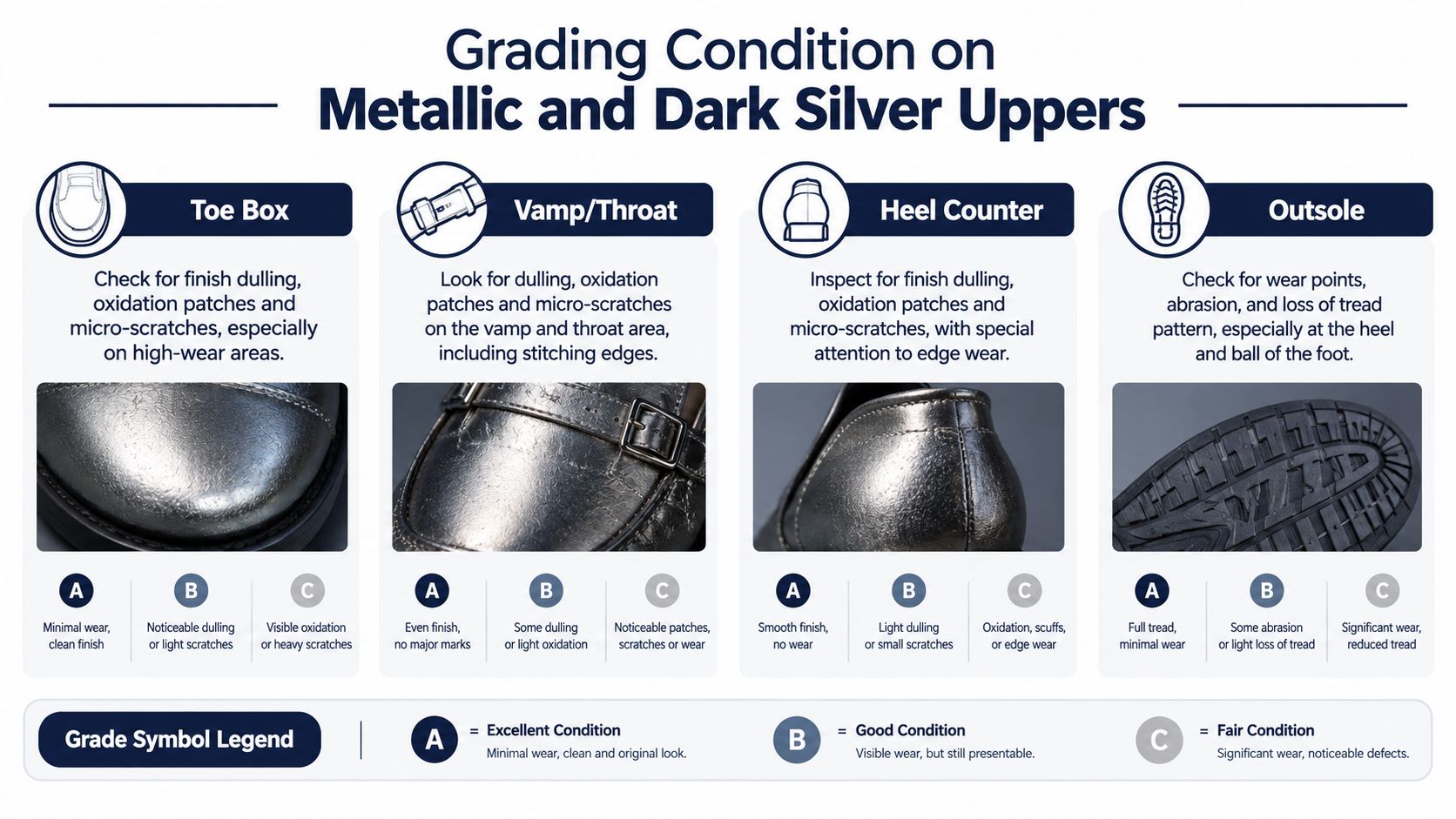
Grade for the defect that buyers will notice first
A pair can have a clean outsole and still be a weak flip if the toe finish is visibly damaged. Conversely, light sole wear may be acceptable when the upper is even, the heel tips are intact, and the shoes present well in photos.
I use a practical order of severity:
- Like new: Uniform finish, minimal evidence of wear, clean interior, and intact heel caps.
- Good: Light outsole use or minor marks that don't interrupt the metallic surface.
- Acceptable: Noticeable dulling, small finish shifts, interior transfer, or moderate sole wear.
- Fair: Worn-through taps, compressed sole structure, broad peeling, or cracking across visible areas.
Soles with compressed cell structure or a worn-through tap typically belong in fair condition and can price 40% to 60% below good condition. That range is a grading rule of thumb for the resale decision, not a promise about any particular sale.
Photograph each zone in natural light. Disclose small finish changes rather than hoping they disappear in a studio image. A buyer who receives a pair with cloudy toes or mismatched silver is more likely to return it, and a return can erase the margin you thought you had.
Pulling Sold Comps and Running the Net Profit Math
Don't comp dark silver heels against every silver shoe you can find. Build a narrow comparison set from sold listings on eBay, Poshmark, and Mercari, then match the details that affect buyer intent:
- Brand: Steve Madden isn't the same resale proposition as Stuart Weitzman.
- Structure: Compare a stiletto with stilettos, not block heels.
- Height band: A mid pump serves a different buyer than an ultra-high platform.
- Finish: Search dark silver, gunmetal, pewter, charcoal metallic, and mirrored silver.
- Condition: Remove pairs with a sealed box or pristine finish if yours has visible wear.
I prefer 8 to 10 sold comps before setting a price. Drop the highest and lowest outlier, then recalculate the median from the remaining results. A single unusually high sale can make a mediocre thrift find look profitable when it isn't.
A worked Steve Madden example
Suppose you find dark silver Steve Madden stiletto pumps at Goodwill for $12. The comparable sold prices run from $30 to $58, with a median of $42. Treat the median as a planning figure, not a guaranteed outcome, because size, photos, season, and condition still affect the final sale.
For an eBay-style calculation, assume a 13.25% final value fee, a $0.30 payment-processing amount, and $8 for shipping supplies. On a $42 sale, the rough calculation is:
- Sale price: $42
- Final value fee at 13.25%: $5.57
- Payment-processing amount: $0.30
- Shipping supplies: $8
- Cost of goods: $12
- Approximate net profit: $16.13
That calculation uses the supplied fee assumptions for the example. It also excludes labor, returns, taxes, storage, and any shipping charge you absorb beyond the stated supplies amount.
On Poshmark, a 20% commission on a sale over $15 leaves $33.60 from a $42 sale before shipping-related deductions. Subtract the $12 buy cost and your net is approximately $21.60 under this simplified example. The platform may handle the buyer's shipping differently, so check the current terms before using the number as a final business figure.
| Marketplace | Sale Price | Fees | Shipping Cost | Net Profit |
|---|---|---|---|---|
| eBay example | $42 | $5.57 fee plus $0.30 processing | $8 supplies | $16.13 after $12 COGS |
| Poshmark example | $42 | $8.40 commission | Shipping treatment varies | $21.60 before shipping-related deductions |
Use this resale pricing framework to keep gross sale price separate from actual take-home. My own pass line is simple: if the estimated net doesn't reach twice the source cost after fees, I usually leave the pair unless the brand has unusual prestige, the condition is excellent, or the item has a strong seasonal reason to sell.
Net-profit check: A $42 sold price isn't a $42 win. Subtract the platform costs, shipping inputs, source cost, and the risk of a return before you decide.
Where Dark Silver Heels Sell Best by Marketplace
The same pair can make sense on one marketplace and fail on another. Match the platform to the price band, brand familiarity, and finish rather than sending every shoe to the same audience.
| Price Band | Typical Brands | Best Marketplace | Why It Wins |
|---|---|---|---|
| $35 to $80 | Steve Madden, Sam Edelman, Chinese Laundry | eBay | Broad search demand and a useful buyer pool for metallic occasion styles |
| $20 to $45 | Betsey Johnson, Katy Perry, Aldo | Poshmark | Trend-driven shoppers, bundles, and social discovery fit the category |
| $15 to $30 | Target, INC, Forever 21 | Mercari | Lower-priced pairs can work with its flat 10% fee structure and bundled shipping |
| Designer or vintage | Documented luxury and vintage labels | Depop or Vestiaire Collective | Buyers may pay for provenance, styling, and unusual design |
| Under $15 | Mixed brands and worn but usable pairs | Facebook Marketplace | Local pickup can avoid fees that would consume the margin |
eBay is where I'd start for a clean mid-tier pump with a recognizable label and a resale target in the $35 to $80 range. International search exposure can help a metallic evening style, but don't confuse a larger audience with a guaranteed sale. The photos still need to show the exact shade and wear.
Poshmark suits trend-led styles from Betsey Johnson, Katy Perry, and Aldo when the finish is attractive and the price remains accessible. Bundle buyers may accept a lower individual margin if the shoe helps move other pieces, but that only works when your cost basis is low.
Mercari is a practical outlet for Target, INC, and Forever 21 pairs in the $15 to $30 band. A pair in good condition can move there without pretending to be designer. For anything below $15, local pickup is often the cleaner decision because marketplace fees and packing effort can consume the sale.
Depop and Vestiaire Collective deserve caution. Use them for distinctive vintage or designer metallic heels, and document the brand, materials, and provenance where possible. A generic fast-fashion platform heel won't become collectible because it has a dark silver finish.
A 60-Second Aisle Workflow and When to Walk Away
Speed matters when you're sharing a rack with other pickers, but speed only helps if you check the right things. Give dark silver heels a strict one-minute workflow before you put them in the cart.
The first 20 seconds
Pick up both shoes and run the visual filter. Confirm the finish is consistent, look at the toe box, flex the vamp, check the heel caps, and turn the pair over. If the coating is flaking or the toe is heavily scuffed, stop there.
Then identify the searchable details. Read the brand, size, material label, heel shape, and any style name or model number. A dark silver pair without a visible barcode can still be researched, so don't discard it just because the tag is missing.
The next 20 seconds
Run the item through one of three scan methods:
- AI photo scan: Use a camera image when there isn't a barcode. This is especially useful for untagged shoes and older styles.
- Barcode scan: Use the barcode for boxed retail items or pairs with a readable UPC.
- Text search: Enter the brand, style, color, heel structure, and size when the camera can't identify the shoe cleanly.
Check sold comps rather than asking prices. Filter for the closest brand, structure, tone, and condition, then note the median and the low end. A single high result shouldn't determine your buy decision.
The final 20 seconds
Deduct the source cost, marketplace fees, shipping inputs, and a reasonable allowance for the work involved. Compare the resulting net with your own minimum. If the number is red, leave the pair. If it's green and the condition supports the comps, put it in the cart and photograph the defects before they vanish into your sourcing notes.
Three conditions should trigger a walk-away even when the comps look strong:
- Heavy toe-box scuffing: Metallic scratches are difficult to hide and easy for buyers to notice.
- Peeling or flaking coating: Cleaning won't restore missing plating or foil.
- Worn heel caps: Exposed stacking means repair cost, weaker presentation, and possible walking risk.
The pass list is shorter but dependable: leather-soled designer stilettos under $20, block-heeled platform styles with intact metallic foil, and sealed-box bridal or formal pairs from recognized brands. Those categories still need sold comps, but they have clearer reasons to earn cart space than a glittery anonymous platform.
ScanFlip AI lets you check dark silver heels before you spend money, using AI photo scan without a barcode, barcode scan, or text search. It aggregates sold comps across eBay, Poshmark, Mercari, Depop, Amazon, Whatnot, ThredUp, Facebook Marketplace, and TikTok Shop, then shows net profit after fees with a red or green flip-or-pass verdict. Visit ScanFlip AI the next time you're standing in a Goodwill aisle with a promising pair in one hand and the price tag in the other.