
Vintage Hand Painted Porcelain Brooch Value and Guide
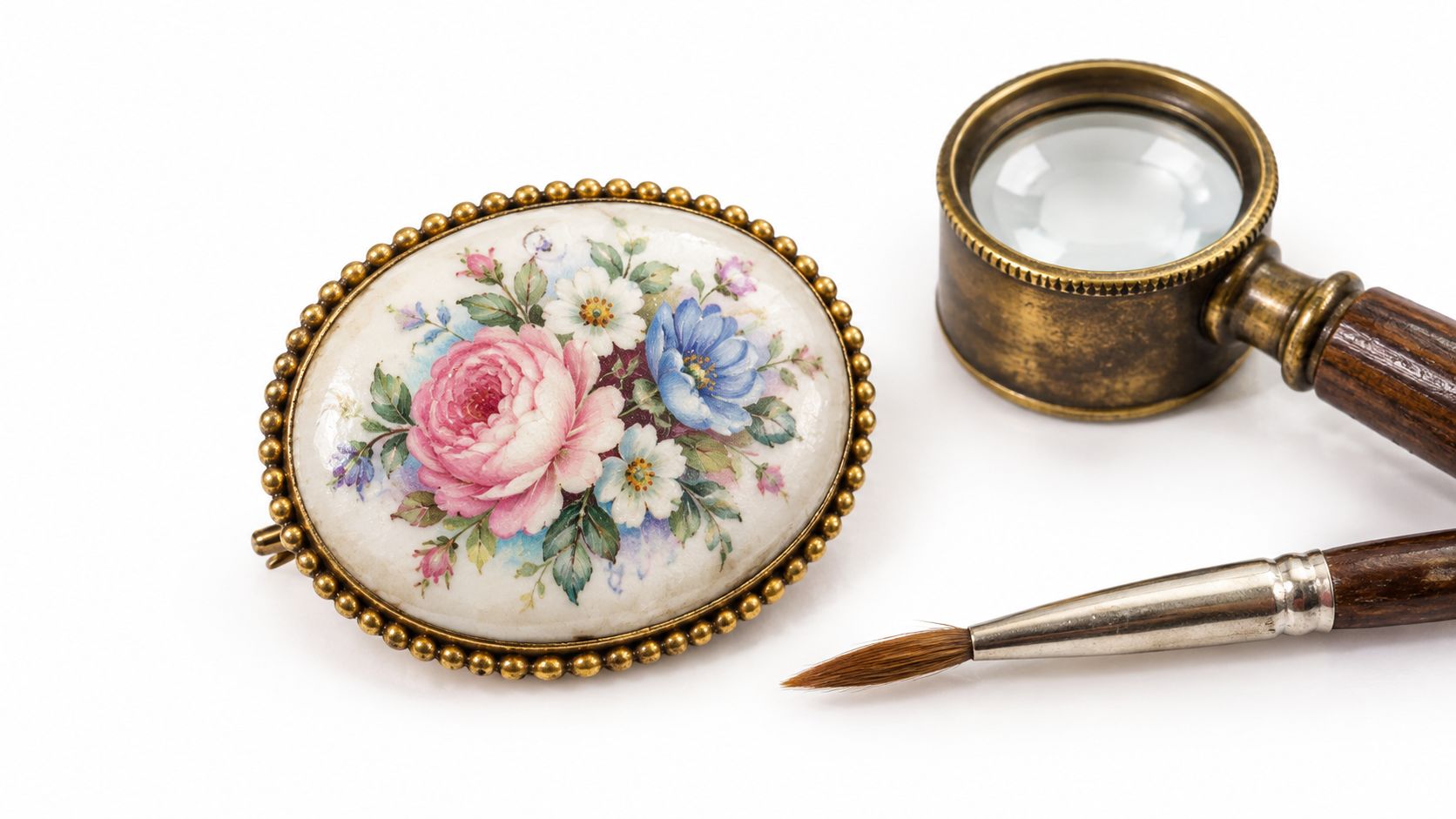
You're standing at a Goodwill jewelry case with a small oval floral brooch priced at $4.99. The porcelain looks old, the flowers look painted, and the rollover clasp still closes. It could be a clean little flip, or it could join the death pile with every other pretty pin that never gets a serious offer.
Most porcelain brooches are ordinary costume jewelry. A genuine vintage hand-painted porcelain brooch, however, can sit in a different market when the painting is original, the maker is identifiable, and the condition supports the price. The spread is wide enough that buying by appearance alone is a mistake.
The useful question isn't, “Is it pretty?” It's, “What do the sold comps say after fees, shipping, and condition adjustments?”
This guide gives you a fast reseller system for identifying the piece, checking marks, grading the painted surface, comparing realistic sold prices, and deciding whether the buy belongs in your cart or stays in the case.
Table of Contents
- Introduction
- What Makes a Vintage Hand Painted Porcelain Brooch Different
- How to Identify Age Maker Marks and Painting Style
- Condition Grading That Actually Affects Value
- What Vintage Hand Painted Porcelain Brooches Actually Sell For
- Where to Source and Sell for Best Sell Through
- Your Flip or Pass Playbook for Porcelain Brooches
Introduction
A $4.99 floral oval sits behind the glass. The gold-tone edge is attractive, the clasp closes, and the painted flowers look old. It can become a clean flip, or it can join the death pile beside every pretty pin that never earns a serious offer.
Start with the resale question, not the decoration. A transfer print, rubbed paint, or unmarked mount usually limits the price. A specialist portrait, identifiable maker, or unusually clean plaque can justify a closer look. The difference appears in sold comps and in the condition details buyers mention.
Brush variation matters. Uneven lines, layered shading, and small pigment changes support hand-painted work. Repeating outlines and perfectly flat color blocks suggest a decal or transfer until the back, construction, and marks provide stronger evidence.
A pretty face gets you to the comp search. It doesn't get you to the buy decision.
Your buy decision rests on paint quality, recognizable origin, condition, and buyer demand. A secure clasp is useful, but it will not repair a plaque with missing lettering or worn floral detail. A maker mark can support a higher ask, yet a chipped edge or fractured porcelain still cuts into the net.
Hand-painted china oval brooches survive from circa 1900, with examples described from the late nineteenth century through the 1940s. The tradition has been popular for well over 100 years (historical and secondary-market context for hand-painted porcelain jewelry). Age creates sourcing opportunities, not automatic profit. An old brooch can still be a $15 pass after fees, shipping, packing risk, and slow sell-through.
Run the same checks every time:
- Confirm porcelain rather than plastic or resin.
- Decide whether the image appears hand-painted.
- Check the back for a maker, artist, or construction clue.
- Inspect paint loss, chips, crazing, and the clasp.
- Compare sold comps, then calculate net profit.
- Buy only when the margin pays for your time and shipping risk.
A $100-plus flip needs evidence, not optimism.
What Makes a Vintage Hand Painted Porcelain Brooch Different
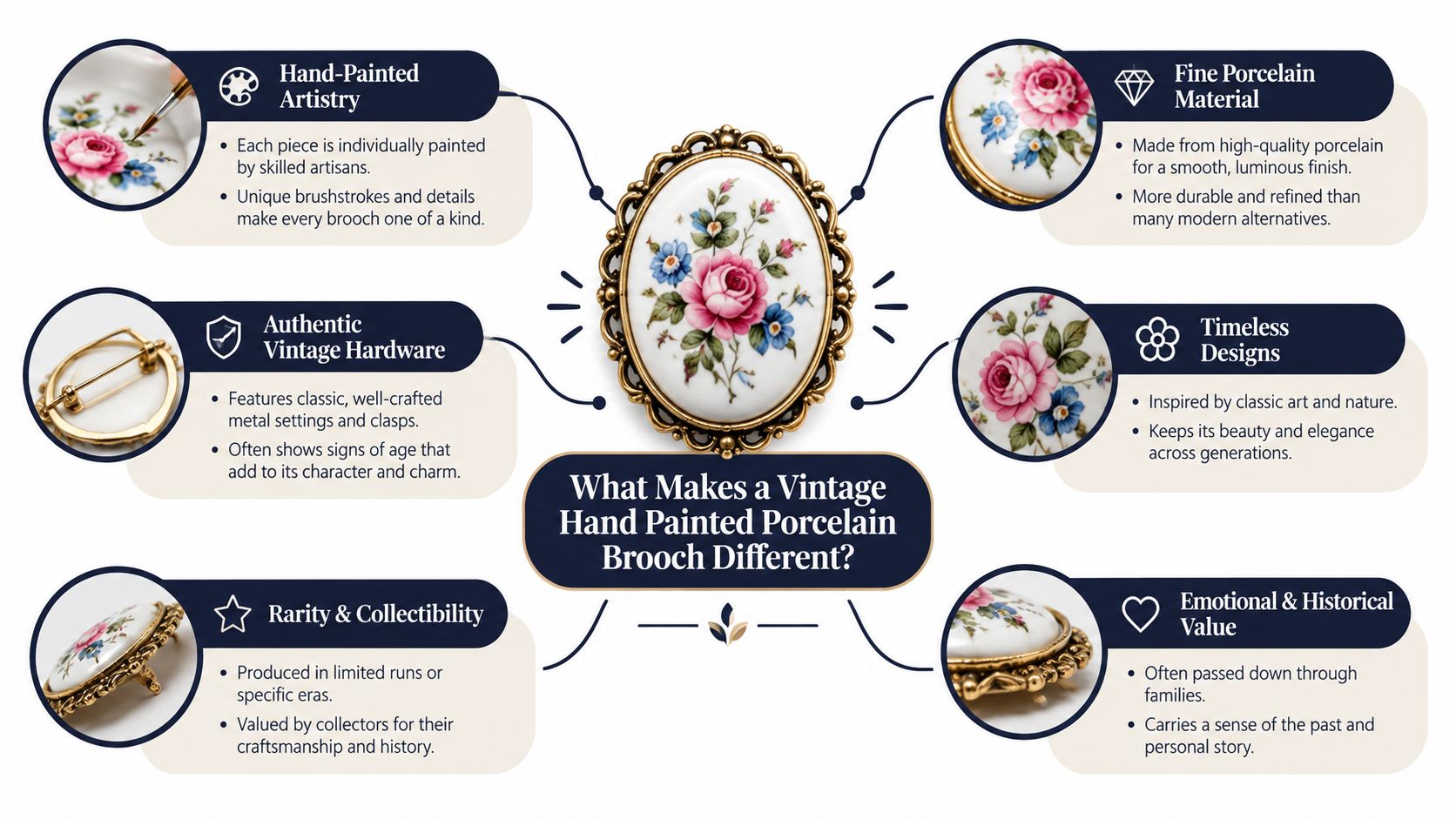
Porcelain is a hard-fired ceramic. It usually feels cooler and more substantial than molded plastic, and the painted plaque often has a smooth glazed surface with a distinct edge where it meets the mount. Resin can imitate the look, but it tends to feel lighter and more uniformly manufactured.
Hand-painted means the image was applied by a person rather than produced as one standardized transfer. You're looking for small variations in line weight, shading, and color density. A rose petal may have a slightly different stroke from the next petal. Leaves may show layered brushwork instead of one flat green shape.
Think of the difference as an original painting compared with a poster print. Both can show the same subject, but the original has evidence of the maker's hand. A decal can still be attractive and collectible, but you shouldn't price it as hand-painted without stronger evidence.
The fast tactile check
Hold the brooch by the mount and assess the whole build before chasing the decoration.
- Weight: Porcelain and a metal frame often give the brooch a denser feel than thin stamped costume jewelry.
- Glaze: Look for a glassy or satin ceramic surface, not a flexible, soft-looking image layer.
- Back construction: A closed back can protect the plaque edges and may support an older construction story, although it isn't proof of age by itself.
- Frame: A beaded metal edge is a useful construction detail, especially when it remains complete and firmly attached.
- Clasp: A rollover clasp that closes securely is more useful than a decorative pin with a loose or damaged catch.
Don't confuse visible brush texture with every irregularity. Dirt, scratches, and paint loss can create unevenness too. Use the front, edge, and back together. A hand-painted claim becomes stronger when the brushwork agrees with the ceramic base and the overall construction.
What doesn't work
Buying because the brooch “looks antique” is unreliable. So is assuming that a floral subject means hand painting. Many low-value pieces borrow antique colors and shapes, while some authentic older examples have plain mounts and little decoration on the reverse.
A loupe can help later, but you don't need laboratory equipment to make the first decision. If the surface is clearly plastic, the design is a repeated transfer, or the clasp is broken, move on unless the mark or subject creates an exceptional reason to investigate.
How to Identify Age Maker Marks and Painting Style
Identification works best as a layered process. Start with the broad manufacturing context, then narrow down the maker, then assess the painting itself. One mark rarely proves everything, but several matching clues can turn an anonymous brooch into a searchable item.
English porcelain jewelry expanded during the post-war period. The history of English porcelain jewelry manufacture is described as beginning in the middle of the twentieth century, with Stoke-on-Trent companies such as Dorothy Ann China making bone-china brooches and clips in the 1950s and 1960s. Sources describe more than a dozen related makers active in that era, including Aynsley, Coalport, Crown Staffordshire, and Denton China (English porcelain brooch makers and manufacture history).
That context matters in a thrift aisle because a brooch doesn't need a famous luxury name to be worth researching. A legible backstamp can give you the words buyers use in searches, and those words can separate a generic floral pin from a marked bone-china example.
Read the back before the front
Turn the piece over and photograph the reverse mentally, or with your phone, before you handle it too much.
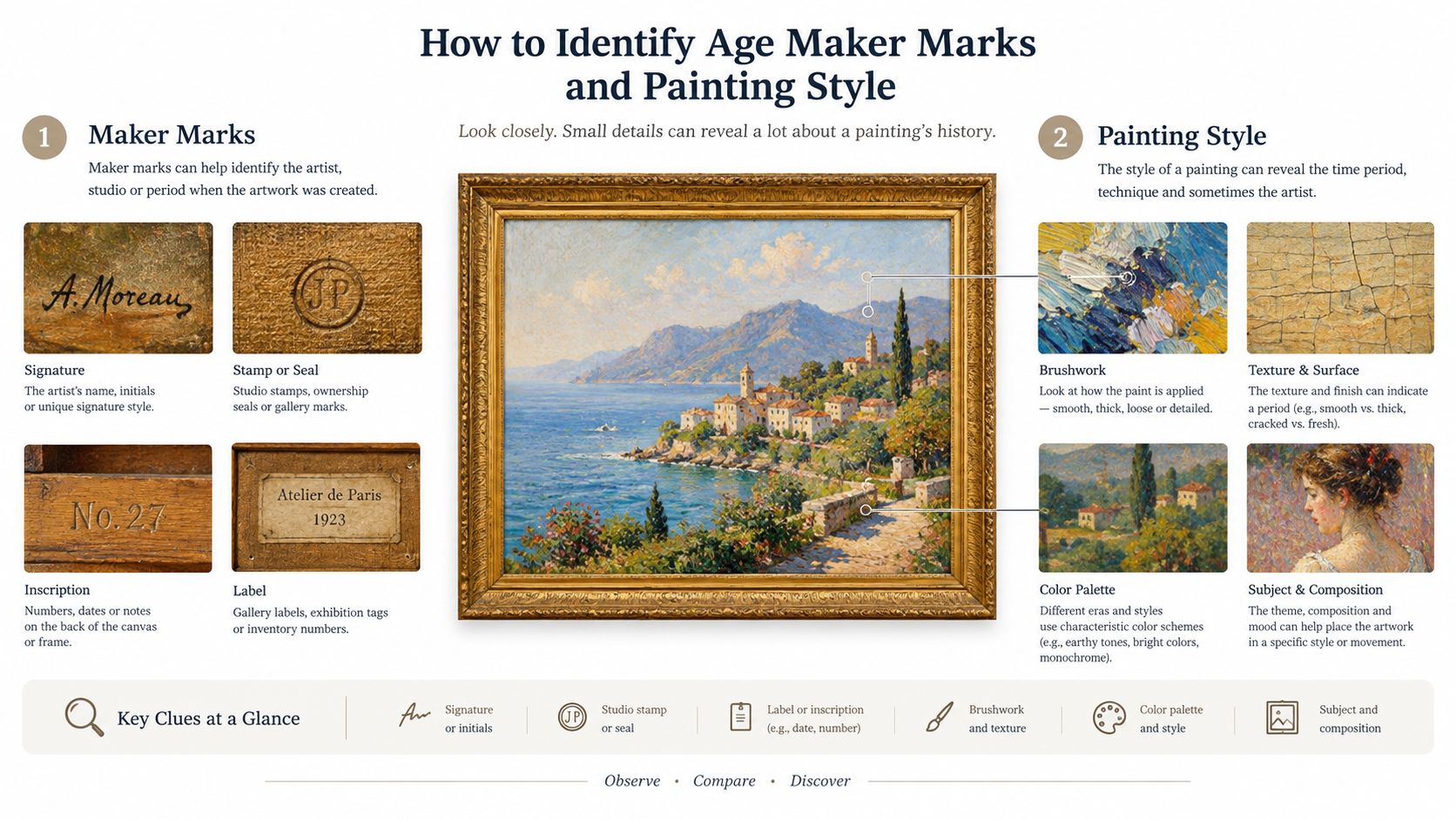
- Backstamps: Look for printed factory marks, impressed marks, or painted initials on the porcelain or mount.
- Foil labels: A partial label can still provide a maker name, country, or collection clue.
- Artist signatures: A tiny signature near the painted image may be more important than a generic metal stamp.
- Mounting details: Note whether the plaque is closed in, bezel-set, held by prongs, or surrounded by a beaded edge.
- Pin hardware: Record the clasp type and whether the hardware looks original to the plaque.
Don't treat an unreadable mark as a positive. “Possibly signed” isn't a search term buyers trust. Use a close photo, rotate the image, and compare the visible letters with reliable maker references or sold listings.
Painting style changes the search
Delicate florals are common enough that they need support from the mark and construction. Portrait miniatures are different. They demand closer inspection of facial proportions, fine brushwork, and attribution.
Specialist artists sometimes painted porcelain portrait plaques rather than working as general jewelry assemblers. A documented portrait brooch attributes the porcelain portrait to Fernand Paillet, described as a miniature painter of enamel and porcelain. That example combines the plaque with 18k yellow gold and rose-cut diamonds, a construction that shows why a named portrait painter and precious-metal mount can materially change the valuation (documented portrait brooch with Fernand Paillet attribution).
Don't assign an artist based on resemblance alone. Attribute only when the signature, provenance, or documented comparison supports it. The wrong attribution can create returns, credibility problems, and a price that the market won't accept.
Condition Grading That Actually Affects Value
The painted image is the value driver, not the fact that a pin happens to contain porcelain. The frame can survive ordinary handling better than the image layer, but metal durability doesn't protect the painted surface from abrasion, impact, or cleaning damage.
A useful condition check takes less than a minute.
Start with the image layer
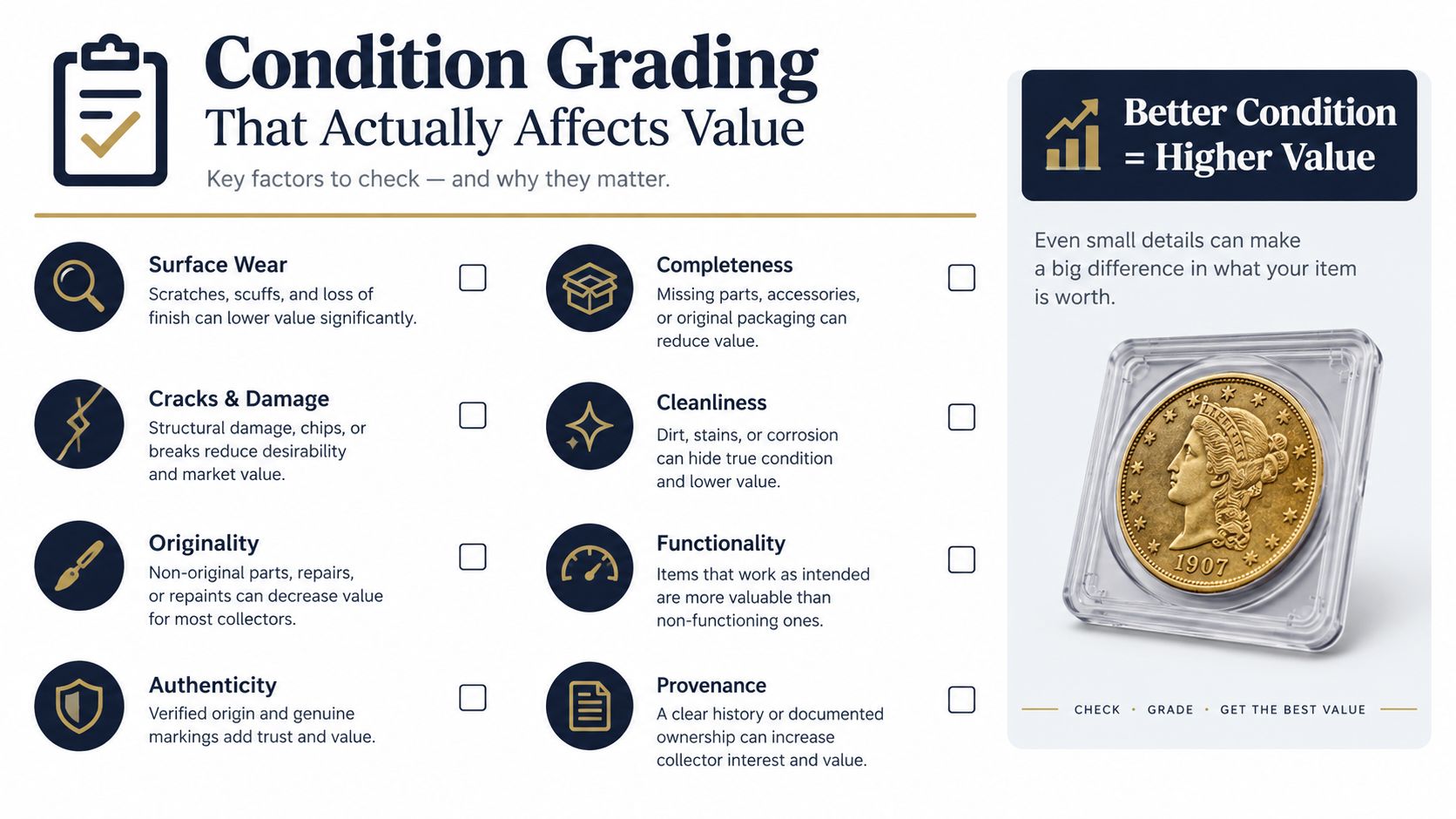
Look across the face under direct light. Check whether the flowers, lettering, portrait features, and background color remain complete. Paint loss in the focal area is much more serious than a faint mark on an unimportant background section because buyers pay for the hand-painted detail.
Then inspect the edge. Look for small chips, bruises, hairline fractures, and areas where the glaze has been rubbed. Porcelain can appear fine from the front while showing impact damage around the rim.
Crazing, the network of fine glaze lines, needs description rather than automatic panic. Light crazing may be acceptable to some buyers, but heavy crazing, staining, or structural movement makes the item harder to sell and safer to pass.
Use the mount as a separate grade
Test the clasp gently. It should close and hold without excessive looseness. Check the pin stem, hinge, frame, and any solder repairs. A secure clasp and intact frame are positives, but they're supporting positives.
A documented 1950s hand-painted example has a closed back, rollover clasp, and gold-tone beaded edge, while showing visible paint loss in the floral details and lettering (example showing construction and paint loss). That is the right evaluation model. The hardware can be sound while the feature that separates the brooch from ordinary costume jewelry is already compromised.
Practical rule: Grade the painting first, the porcelain second, and the hardware third.
For your listing notes, describe condition plainly. Mention exact paint loss, edge wear, crazing, chips, clasp action, and repairs. A concise condition description workflow for resellers helps prevent the vague “good vintage condition” language that causes buyer disputes.
What Vintage Hand Painted Porcelain Brooches Actually Sell For
A pretty porcelain brooch can still be a bad buy. The price only works if the painting is sharp, the mark supports the age, and the piece has enough buyer appeal to justify fees, shipping, and your time.
High-end hand-painted porcelain pieces sit in a different comp group from generic floral pins. That split matters. A signed portrait with strong paint and a better mount can bring real money, while a rubbed floral brooch with no clear attribution often belongs in the $15 pass pile.
Sold comps show the range. A hand-painted brooch category tied to long-running marketplace pricing has examples that go far back in the market, and the broader sold-market picture for painted antique brooches runs from low double digits into the thousands (painted antique brooch sold-market range). On the resale side, you can also find portrait brooches selling in the $31 to $56 zone, which is the kind of number that keeps margins tight on ordinary buys. Use eBay sold-price research to pull close matches instead of chasing one glossy outlier.
Price tiers for a reseller's first pass
| Brooch Type | Typical Sold Range | Net Profit Notes |
|---|---|---|
| Generic, unmarked floral brooch | Under $20 | Usually a pass unless the buy cost is very low and condition is clean |
| Lower-end painted or portrait result | About $31 to $56 | Can work, but fees, shipping, and time can wipe out the gain |
| Painted antique comp range | $98 to $8,900 | Needs a close match on maker, subject, materials, and condition |
| High-end hand-painted brooch market | Up to $12,500 | Treat as specialist merchandise, not an ordinary costume flip |
The table is a buying guide, not a promise. A signed portrait plaque in gold should not be compared with a floral bone-china clip just because both are painted porcelain. Subject, construction, mark, and damage level have to line up.
Do the net math before you buy
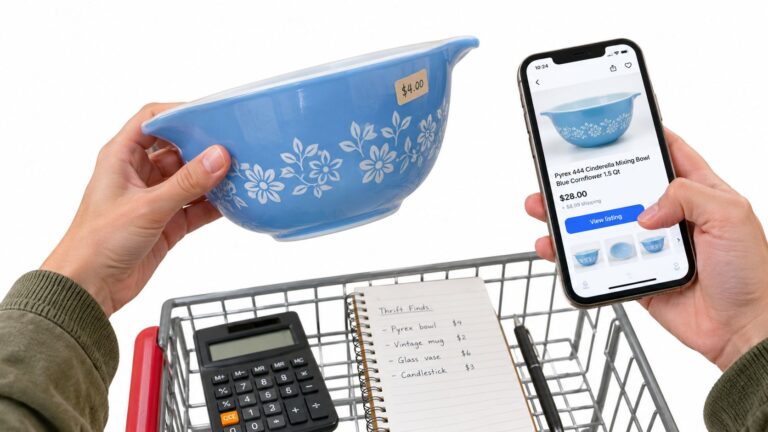
Pull the last 10 sold comps for the nearest match, then use the median, not the flashiest sale. If the exact model is missing, search the maker, subject, shape, clasp, and material separately.
The basic math is simple.
Expected sold price minus marketplace fees, shipping, packing, and cost of goods equals estimated net profit.
Set a personal $15 net profit floor for this category. A $4.99 buy that might sell around $31 can look fine on paper, but a chipped edge, weak clasp, or slow sell-through can erase the margin fast. A higher comp does not help if your example has paint loss the comp does not.
A seller who wants better numbers needs the right comps, not the highest ones. Save the closest sold results and judge the brooch against those.
Where to Source and Sell for Best Sell Through
The best sourcing spots are the ones where jewelry is poorly identified. Check thrift-store cases, estate-sale dresser trays, garage-sale button jars, and mixed vintage jewelry lots. A brooch hidden among plastic beads can be easier to buy profitably than one displayed with a confident antique price.
At an estate sale, inspect the underside before you admire the front. At a garage sale, ask whether the pin came from a larger jewelry lot, but don't let a seller's story replace a mark and condition check. In a thrift case, look for oval plaques, closed backs, beaded edges, and floral or portrait decoration that hasn't been rubbed flat.

Match the venue to the item
eBay usually gives you the broadest sold-comp history for unusual porcelain jewelry and the clearest place to test collector demand. Signed, portrait, and well-documented examples benefit from searchable titles and detailed photographs.
Poshmark and Mercari can suit lower-end wearable pieces when your price is realistic and the photos show the painted face clearly. They're less forgiving when you use vague wording or hide flaws in a single styled image.
For a stronger piece, use a higher-end marketplace or a specialist dealer route when the maker, artist, precious metal, or provenance supports it. Don't send a $15 costume brooch into a venue where the photography, fees, and handling requirements consume the margin.
Photograph what buyers are paying for
Use a straight front image, a close detail of the painting, the full back, the mark, the clasp, and every flaw. Photograph under neutral light so buyers can see brushwork, glaze, chips, and paint loss without guessing.
Your title should use the terms buyers search, such as vintage, hand-painted, porcelain or bone china, floral or portrait, maker, brooch, pin, and the relevant era when supported. Avoid calling it antique when you only know that it looks old.
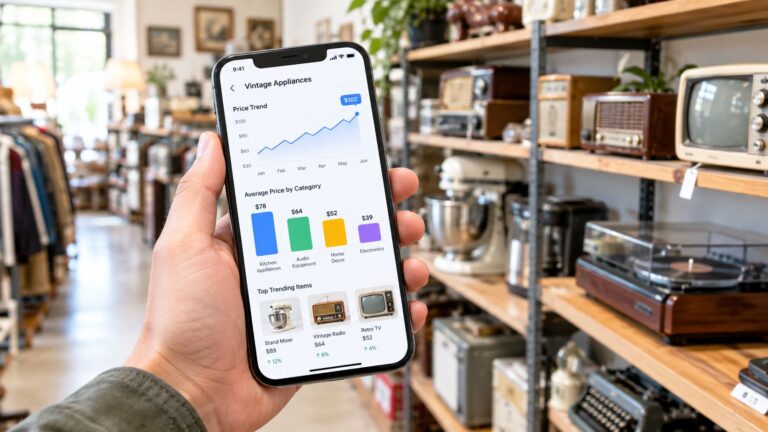
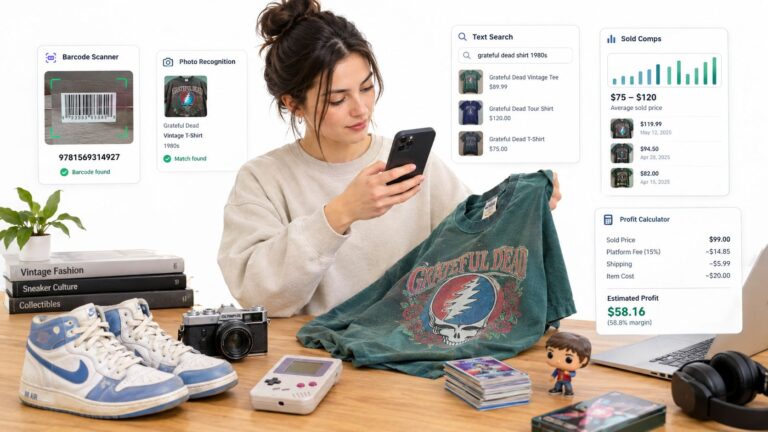
For aisle decisions, ScanFlip AI can identify an untagged item with an AI photo scan, or use barcode scan and text search when a label or searchable name exists. It aggregates sold comps across eBay, Poshmark, Mercari, Depop, Amazon, Whatnot, ThredUp, Facebook Marketplace, and TikTok Shop, then calculates net profit after fees and returns a red or green flip-or-pass verdict at scanflip.ai. Use it as a sourcing check, not as a substitute for inspecting the paint and porcelain yourself.
A solid sourcing routine for resellers keeps the process repeatable. The goal isn't to grab every brooch. It's to identify the few that justify photographing, packing, researching, and waiting for the right buyer.
Your Flip or Pass Playbook for Porcelain Brooches
Run the decision in this order:
- Confirm the material. Check for a hard ceramic plaque, glaze, and a substantial mount. If it feels like plastic or the image looks like a flat transfer, lower your expectations.
- Check the back. Search for a maker, artist signature, foil label, or useful construction detail. Dorothy Ann China, Aynsley, Coalport, Crown Staffordshire, and Denton China deserve a closer comp search when the mark is credible.
- Grade the image. Paint loss, especially across flowers, lettering, or a portrait face, can erase the premium.
- Test the hardware. A working rollover clasp and intact frame help, but they don't compensate for a damaged painted plaque.
- Run sold comps. Match the actual subject, maker, materials, and condition. Don't use the top result as your expected sale.
- Apply the floor. If the estimated net profit doesn't clear your $15 minimum, pass unless the piece has a strong reason to hold for specialist research.
Generic unmarked florals with heavy paint loss belong in the pass column. Comps under $20 usually don't leave enough room for fees, shipping, packing, and your time. A clean, marked, unusual, or portrait example can justify deeper work, but only after the numbers support it.
Keep your scan history and notes. After enough sourcing reps, you'll know which stores produce marked jewelry, which estate sales price porcelain aggressively, and which bins are mostly dead stock.
Use ScanFlip AI to photo-scan an untagged brooch, check sold comps across major marketplaces, and see the estimated net profit after fees before you spend the money. Visit ScanFlip AI and use it on your next thrift, garage-sale, or estate-sale jewelry run.