
7 Best Items to Resell on eBay in 2026
You're standing in a Goodwill aisle with a few seconds to decide. The unfamiliar phone might be a profitable flip or a locked brick. The boxed game could have a strong buyer pool, while the jacket beside it may be a common model with weak sold comps. At an estate sale, the same pressure shows up with a card slab, a power tool, or a pair of sneakers before another reseller grabs it.
The best items to resell on eBay aren't just the products with the highest asking prices. They're items with recognizable model numbers, set numbers, sizes, grades, or authentication cues, enough recent sold comps to price confidently, practical shipping dimensions, and manageable return risk.
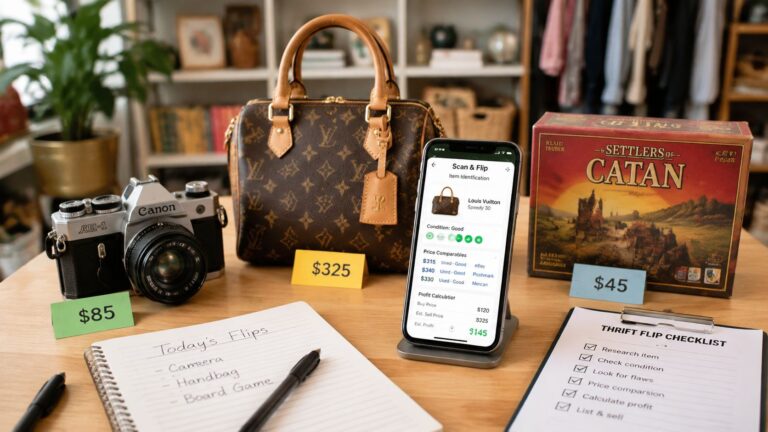
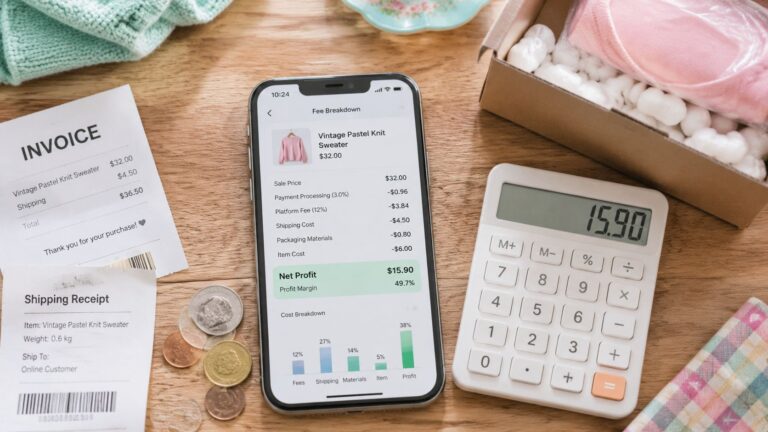
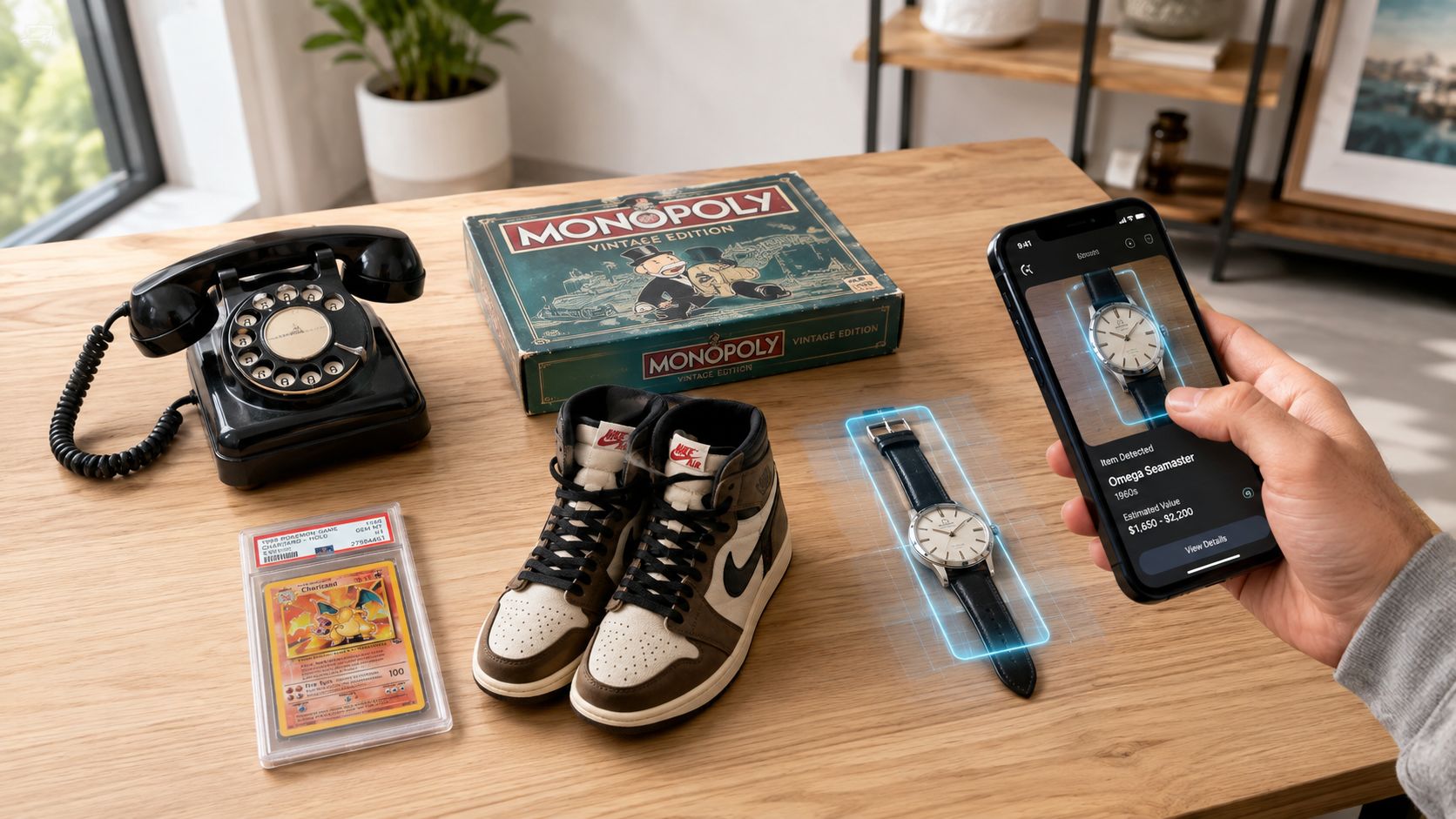
The workflow is simple. Check sold prices, subtract eBay fees, shipping, packaging, and cost of goods, then apply your own flip-or-pass threshold. For unfamiliar finds, ScanFlip AI can use an AI photo scan with no barcode, a barcode scan, or text search, then aggregate sold comps across eBay, Poshmark, Mercari, Depop, Amazon, Whatnot, ThredUp, Facebook Marketplace, and TikTok Shop while calculating net profit after fees.
Table of Contents
- 1. Used iPhones and Flagship Smartphones
- 2. Current-Gen Game Consoles, Controllers, and Top Franchises
- 3. Authenticated Sneakers and Streetwear
- 4. Trading Cards
- 5. LEGO Sets
- 6. Pro-Grade Power Tools and Batteries
- 7. Vintage Denim, Workwear, and Band Tees
- Top 7 eBay Resell Items, Quick Comparison
- Turn the List Into a Repeatable Sourcing System
1. Used iPhones and Flagship Smartphones
Used smartphones sit near the top of my sourcing list because the exact item is usually identifiable within moments. The model, storage capacity, carrier status, color, and condition all affect the sold price, but they also give you precise search terms. A late-model iPhone or premium Samsung Galaxy is far easier to comp than an unbranded electronic with no model information.
Apple's official iPhone resources are useful when you need to confirm model differences, compatibility, or support details. Newer Samsung S-series devices also benefit from recognizable model families and strong buyer familiarity. Abundant parts and accessories make working devices easier for buyers to repair or complete.
Practical rule: Never buy a phone until you've checked the IMEI or serial information, activation status, carrier situation, and battery condition.
The main risk isn't demand. It's hidden failure. An iCloud lock, Android Factory Reset Protection lock, blacklisted ESN, weak battery, damaged Face ID, or undisclosed screen issue can turn a good-looking buy into a return. Test cameras, speakers, microphones, charging, buttons, Wi-Fi, Bluetooth, biometric features, and the screen before you commit.
Where the margin disappears
Accessories can improve the buyer's perception, but don't overvalue an original box or charger if the phone itself has a lock or serious defect. Condition tiers also need honest documentation. Photograph the serial number, screen, frame, battery-health screen where available, and every flaw.
For a faster sourcing workflow, this guide to finding sold prices on eBay is useful when you're comparing the exact model and storage tier rather than broad “iPhone” results. eBay's seller fee information explains that selling costs include insertion and final value fees, with a per-order fee of $0.30 for orders of $10 or less and $0.40 for orders over $10. Build those charges into the flip before you buy.
The best phone flip is a tested, carrier-compatible, accurately described device bought well below its recent sold range. An untested phone with a vague “powers on” description belongs in the pass pile unless the cost is low enough to cover parts, returns, and your time.
2. Current-Gen Game Consoles, Controllers, and Top Franchises
Game hardware gives you one of the cleanest in-aisle identification systems in reselling. Nintendo Switch variants, PlayStation consoles, Xbox models, first-party controllers, and popular game titles usually have model numbers, UPCs, or highly recognizable packaging. That makes sold-comp research quick, especially when you're standing at a garage sale with a seller waiting for an answer.
Start with the exact hardware revision. A Switch console, Switch Lite, and OLED model aren't interchangeable for pricing. The same applies to PlayStation storage variants, Xbox bundles, and controllers with different editions or included accessories. Confirm the item against Nintendo's official product information when packaging or model details are unclear.
The buyer pool is broad, and repeat purchases create useful demand for extra controllers, Joy-Cons, charging docks, and first-party games. Seasonal interest can strengthen around holiday shopping and major franchise releases, but don't buy purely because a title is familiar. A common sports game or heavily supplied accessory may sit even when the console category is healthy.
Test before you trust the box
Controller drift is a common failure point. Test every analog stick, trigger, button, vibration function, wireless connection, and charging port. For consoles, check HDMI output, disc drives where applicable, Wi-Fi, account removal, factory reset, storage recognition, and included power cables.
- Confirm the bundle: Missing docks, proprietary chargers, stands, or controllers can change the net profit quickly.
- Inspect accessories: Counterfeit or third-party accessories may have weaker buyer confidence and higher defect risk.
- Pack for impact: Consoles need internal cushioning and a sturdy outer box, not a loose mailer.
- Check sold comps: Match the exact model, condition, bundle contents, and region before setting your maximum buy cost.
A low buy price doesn't rescue a console with a likely DOA claim. Shipping damage and incomplete bundles can erase the spread, so the best sourcing decision often comes from passing on a cheap system that you can't test.
3. Authenticated Sneakers and Streetwear
Sneakers reward sellers who can identify small details quickly. The model name alone isn't enough. You need the style code, colorway, size, release version, condition, and signs of authenticity. Nike Jordan, adidas, New Balance, and selected streetwear pieces can have strong resale demand, but the same brand also produces plenty of ordinary inventory with weak margins.
Use Nike's official site to compare model naming and product details when a tag or box is unclear. Match the inner label, box label, outsole, stitching, materials, and shape. A pair that looks right from across the room can still be a counterfeit or a reissue with a very different sold range.
eBay's Authenticity Guarantee program can reduce buyer concern for qualifying items because eligible purchases go through an authentication process. That doesn't remove the sourcing responsibility. You still need to avoid obvious fakes, undisclosed damage, altered pairs, and shoes with severe odor or separation.
Size and condition control the outcome
Clean, unworn pairs are easier to price, but worn sneakers can work when the model is desirable and the buy cost leaves room for cleaning. Photograph the soles, toe box, heel drag, insoles, size tag, box label, and any replacement laces. Never assume the original box belongs to the pair.
This vintage Puma high-top guide shows why photo-based identification can help when a thrift-store pair has no useful retail packaging. Still, a scan is a starting point, not an authenticity verdict.
Trend risk is real. A model that sold well during a release cycle may cool before your pair sells. Check recent sold comps, not active asking prices, and consider how long you're comfortable holding inventory. Sneakers are compact and potentially high-value, but a counterfeit claim or inaccurate condition description can cost more than a missed flip.
4. Trading Cards
Trading cards are highly liquid only when you identify the exact card. Set, card number, language, parallel, edition, condition, grading company, grade, and centering can all change the result. Pokémon, sports cards, and other trading card games have different buyer communities, but each rewards precise identification over broad category knowledge.
eBay has highlighted collectibles as a major category, and its historical research reported $2 billion in U.S. trading-card GMV during the first half of 2021, equal to all of 2020. That historical figure doesn't predict your individual flip, but it shows why card sellers can find deep comp data when they search the exact item.
For grading references, PSA's official site helps confirm slab details, certification information, and grading terminology. Qualifying cards may also be eligible for eBay Authenticity Guarantee, which can reduce buyer anxiety around higher-value transactions.
Raw cards need stricter discipline
A raw card can look excellent under poor lighting and reveal whitening, dents, scratches, or print lines under close inspection. Use a loupe or strong light when appropriate, protect cards during handling, and don't price a raw card against a graded comp. A slab's grade and certification are part of the product.
- Identify the exact set: Similar artwork can appear across sets, promos, reprints, and languages.
- Separate raw and graded comps: They're different products with different buyer expectations.
- Watch reprint risk: New supply can shift the price floor for modern cards.
- Factor grading costs: A card that only works after a strong grade may not justify the gamble.
When I find an unfamiliar binder at an estate sale, I'm looking for the exact card first, not a dramatic headline value. This guide to valuing collectibles can help with photo or text identification while you verify the card manually. The safest buys are cards with clear identity, recent sold activity, and enough spread after fees and protective shipping.
5. LEGO Sets
LEGO is one of the easiest collectible categories to research because the set number is usually printed on the box, instructions, or original packaging. That number lets you distinguish between similar Star Wars, Ideas, Modular Buildings, and licensed sets without relying on memory or a vague theme search.
Visit LEGO's official website when you need to verify set details, product names, or included figures. Sealed retired and exclusive sets can attract collectors, while used sets can still work if they're complete and accurately sorted. Media tie-ins and retirements may create buying interest, but they don't make every old box valuable.
Box condition is part of the product
A sealed set with crushed corners, sun fading, torn seals, or water damage isn't equivalent to clean collector-grade packaging. Photograph the seals and every damaged panel. For used sets, missing minifigures, printed pieces, stickers, and rare accessories can matter more than the loose brick count.
LEGO usually has less defect risk than electronics, but completeness creates its own inspection burden. A mixed bin at a garage sale can be profitable if you can identify valuable figures or reconstruct sets, yet it can also become a slow sorting project that joins your death pile.
The best buy is a set with a verified number, reasonable storage requirements, and sold comps that support your target net profit. Don't pay a collector price for an item you still need to clean, sort, complete, and test for missing parts.
6. Pro-Grade Power Tools and Batteries
DeWalt, Milwaukee, Makita, and Festool tools sell because working buyers search for exact models within an ecosystem they already own. A bare impact driver, OEM battery, charger, saw, or drill can be useful even without a full kit. The model number is your shortcut to identification, and DeWalt's official website is a reliable place to confirm product naming and specifications.
Look for tools at estate sales, pawn shops, thrift stores, big-box return channels, and liquidation lots. A dirty tool isn't automatically a bad buy, but test the trigger, speed settings, clutch, chuck, blade guard, battery connection, and charger. Batteries need extra caution because capacity, age, swelling, and compatibility affect buyer confidence.
Buy the platform, not just the brand. A recognizable logo isn't enough if the model is obsolete, damaged, counterfeit, or missing the battery system buyers expect.
Shipping is the trade-off. A heavy tool or battery can consume a large part of the gross sale price, and poor packing can create damage claims. Calculate shipping before you buy, especially when a local sale may be more sensible for bulky equipment.
Document provenance where possible. Professional tools can be stolen goods, and serial numbers, receipts, estate-sale context, or purchase records can help establish a cleaner chain of ownership. Avoid suspicious lots with altered labels or missing serial information.
The strongest flips are common workhorse models with clear sold comps and a low buy cost. A rare tool may look exciting, but if buyers are scarce and shipping is expensive, a boring, tested drill can be the better use of your cash.
7. Vintage Denim, Workwear, and Band Tees
Apparel gives thrift and estate-sale sellers the widest sourcing field, but it also punishes lazy identification. Levi's denim, Carhartt workwear, single-stitch band tees, selvedge pieces, and made-in-USA garments can attract focused buyers. Generic clothing usually doesn't deserve the same cart space unless the buy cost is exceptionally low and the sold comps are clear.
eBay and Retail Dive reported that nearly 90% of consumers bought or sold used items in the previous year, with pre-loved clothes the leading category at 48%. The same report identified books at 34%, shoes at 24%, home and garden at 23%, and tech and electronics at 22%. Those figures support the broader resale demand, but the individual garment still has to earn its place through brand, era, condition, measurements, and sold prices. Levi's official website can help when you need to compare tag details, product families, or fit names.
Measure before you price
Sizing varies across decades and brands. Record pit-to-pit, shoulder, sleeve, length, waist, rise, inseam, and leg opening when relevant. A tagged size without measurements creates avoidable returns, especially with vintage denim and workwear.
- Inspect the tags: Stitching, care labels, country of manufacture, and tag style can help establish era and authenticity.
- Check construction: Rivets, buttons, hems, single-stitch details, fabric weight, and selvedge edges may separate desirable pieces from reprints.
- Look for hidden flaws: Collar wear, crotch damage, moth holes, stains, odor, repairs, and dry rot can destroy the expected net profit.
- Price the actual garment: Match brand, model, size, wash, era, graphics, and condition in sold comps.
Fashion trends move quickly. eBay's Watchlist Trend Report has highlighted momentum around Louis Vuitton, Birkenstock, western wear, suits, pastel tones, bag charms, unique denim, and the Chanel 25 Small bag, which was reported up 77% in a quarter. Treat trend data as a sourcing signal, not a reason to overpay for ordinary inventory.
Top 7 eBay Resell Items, Quick Comparison
| Item | Implementation complexity | Resource requirements | Expected outcomes | Ideal use cases | Key advantages |
|---|---|---|---|---|---|
| Used iPhones and Flagship Smartphones (Apple, Samsung) | Moderate, requires testing and IMEI/lock verification | Diagnostic tools, parts access, comps data, battery/lock checks | Fast sell-through and steady margins when verified; fraud/return risk if not | Resellers with testing workflows and parts/repair access | High demand, long software support, abundant comps and refurbishment frameworks |
| Current-gen Game Consoles, Controllers, and Top Franchises | Low–Moderate, SKU ID and hardware testing needed | Model/UPC lookup, testing accessories, careful packing for shipping | Steady year-round sales with seasonal spikes; repeat purchases common | Retail/arbitrage flippers and seasonal sellers | Clear SKUs, abundant comps, frequent repeat accessory sales |
| Authenticated Sneakers and Streetwear (Nike, Jordan, adidas, New Balance) | Moderate, authentication and trend monitoring required | Authentication services, photo documentation, secure storage | High average selling prices; values tied to hype cycles | Specialists in sneaker/streetwear resale and authenticated listings | Authentication increases buyer confidence; high ASP potential |
| Trading Cards (Pokémon, Sports, TCGs) with eBay AG | Moderate–High, grading and condition sensitivity important | Grading/authentication fees, comp databases, careful handling | Scalable liquidity with volatile spikes; grading improves realized value | Collectors, speculators, and volume card flippers | Deep comps, eBay AG fraud reduction, strong collector demand |
| LEGO Sets (Sealed Retired, Exclusive, Popular Themes) | Low, straightforward comping by set number | Storage space, box-condition care, set-number research | Predictable post-retirement appreciation; low return rates if described accurately | Long-term holds and collector-focused resellers | Clear SKUs, predictable catalysts, low defect rate relative to electronics |
| Pro-Grade Power Tools and Batteries (DeWalt, Milwaukee, Makita, Festool) | Moderate, functional testing and provenance checks advisable | Diagnostic testing, heavy-duty packing materials, shipping cost management | Strong resale retention; consistent professional demand | Tool-savvy resellers sourcing pawn/liquidation returns | Durable items, branded ecosystems, high sell-through for common models |
| Vintage Denim, Workwear, and Band/Merch Tees (Levi's, Carhartt) | Low–Moderate, photo-ID and precise measurements required | Measurement tools, quality photos, niche comp research | High ROI potential on low buys; steady niche demand with sizing sensitivity | Thrift/estate flippers and small-package sellers | Low acquisition cost, cheap shipping, strong niche buyer communities |
Turn the List Into a Repeatable Sourcing System
The category gets you to the rack. The exact item decides whether it belongs in your cart. Before money leaves your pocket, identify the model, set, size, grade, or era as precisely as possible. If you can't name the item accurately, you can't trust the sold comps or the expected net profit.
Check recent sold comps instead of asking prices. eBay's standard fee structure applies final value fees to the total transaction amount, and one independent 2026 fee guide summarizes most everyday U.S. categories at 13.6% up to $7,500 per sale, then 2.35% above that, plus the per-order fee. That guide is useful for planning, but always verify the category-specific rate before buying. eBay's own seller update shows that selected categories changed in 2025, with examples including Antiques, Art, Baby, Crafts, Dolls & Bears, Entertainment Memorabilia, Health & Beauty, Home & Garden, Pet Supplies, Pottery & Glass, Specialty Services, and Sporting Goods at 12.7% plus 2.35% on the portion over $2,500. See eBay's final value fee update for the category table.
Use the same math at every source:
- Identify the exact item: Match the model, set, size, grade, edition, or era.
- Check sold comps: Ignore optimistic active listings and compare recent completed sales.
- Subtract every cost: Include fees, shipping, packaging, returns risk, and cost of goods.
- Inspect failure points: Test locks, drift, authenticity, completeness, battery health, flaws, and measurements.
- Apply your threshold: Buy only when expected net profit clears your minimum.
Sell-through rate adds the velocity check. A commonly used formula is Sold divided by Sold plus Unsold plus Active, as described in the eBay community pricing discussion. Use it consistently across the exact item, not the entire category. A high-value item that sits can tie up cash, shelf space, and attention, while a smaller flip with dependable demand may keep your sourcing business moving.
Scan unfamiliar finds before you pay, then record promising items and the sourcing location for later review. Over time, you'll learn which Goodwill stores, estate-sale organizers, garage-sale neighborhoods, and liquidation channels produce the right inventory for your model.
Strong eBay flips come from disciplined buying. Expensive products aren't automatically good buys, and popular categories won't protect you from fees, shipping, defects, returns, or overpaying.
ScanFlip AI helps you evaluate these categories before you commit by offering AI photo identification without a barcode, barcode scanning, and text search. It pulls sold comps across major marketplaces, factors in fees, shipping, and buy cost, then shows expected net profit with a red or green flip-or-pass verdict. Visit ScanFlip AI to check unfamiliar phones, cards, clothing, tools, and other finds while you're still at the source.