
Vintage Puma High Tops: Authentication and Resale Guide
You're standing in a thrift aisle with a beat-up pair of Puma high-tops in your hand. The tag says $8, the uppers look old enough to matter, and the side stripe catches your eye, but the bigger question is the one every reseller asks fast, before somebody else grabs them, are these real vintage, or just another retro pair? With Puma, that split matters because the brand's history stretches from 1948 and the founding of PUMA in Herzogenaurach, Germany, through its export push by 1962 and its public listing in 1986 (PUMA history). That timeline gives context, but the money comes from knowing how to verify what's in your hand.
Table of Contents
- Spotting Vintage Puma High Tops in the Wild
- Authentication Checklist for True Vintage Models
- Condition Grading That Really Drives Price
- Pulling Sold Comps Across Marketplaces
- Where to Source Vintage Puma High Tops
- Making the Buy-or-Pass Decision
Spotting Vintage Puma High Tops in the Wild
A pair of Puma high-tops on a crowded rack can look promising long before you know whether they're worth buying. The trick is to slow your eyes down for five seconds and look for the things that separate archival basketball models from later lifestyle releases, because Puma's long run from the 1950s through the 1980s created a lot of visual overlap in the marketplace (PUMA history, retro Puma high-top timeline).
What your eye should catch first
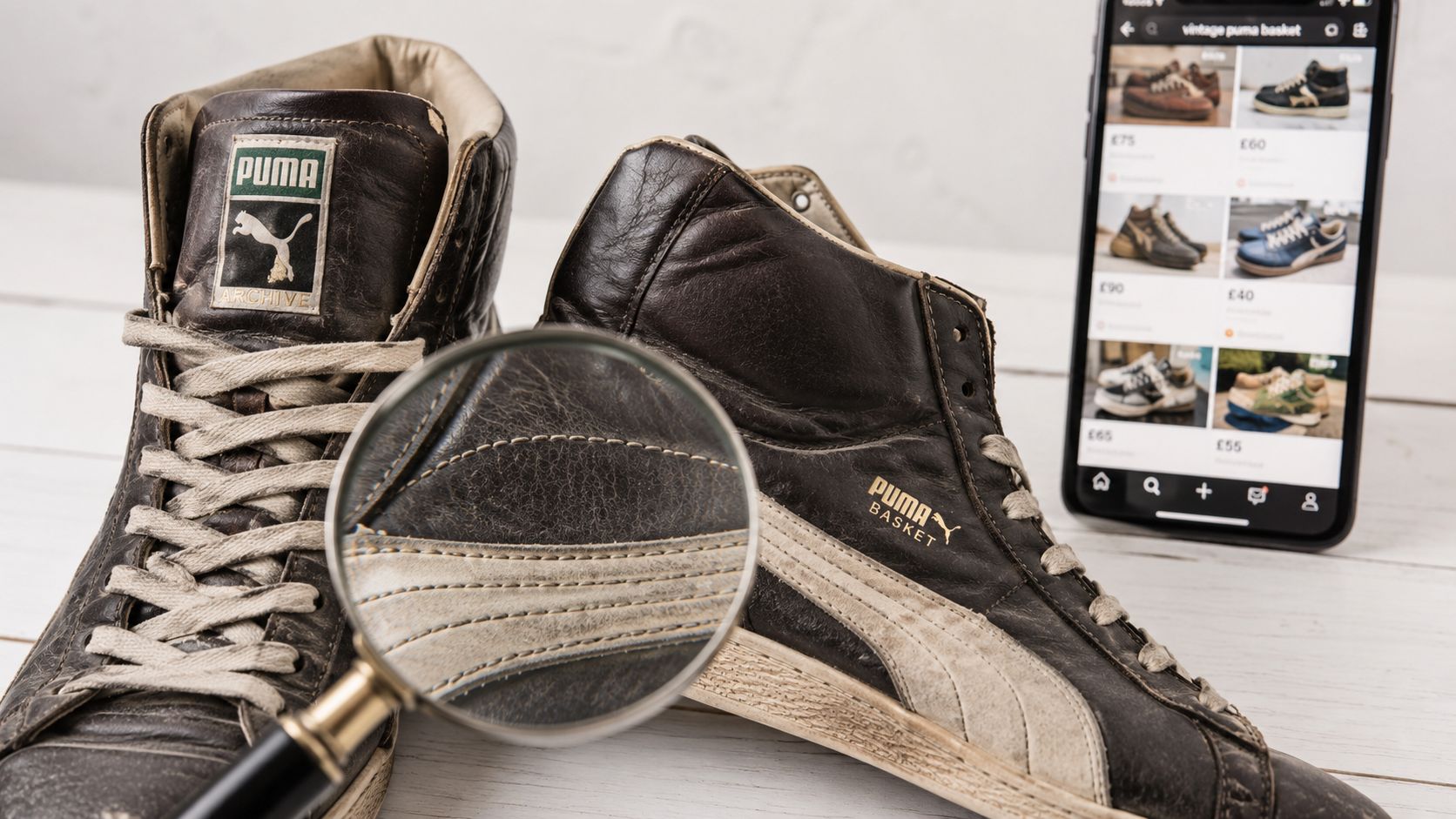
The best first pass is silhouette, then materials. True vintage pairs usually read as high-top, leather or suede upper, rubber outsole, padded collar, and they often show era-specific branding like the Formstrip placement, tongue tab shape, or country-of-manufacture marks. That's the kind of visual cluster you want when you're deciding whether to keep digging or put the shoes back.
A lot of beginners get fooled by modern Puma lifestyle high-tops because they borrow the same visual language. The difference is that newer pairs often feel more mixed-material and more comfort-driven, while older ones usually look simpler in their build and less technical in the midsole wording. If the shoe looks vintage but the materials read modern, slow down and inspect it like a reissue, not a collectible.
Practical rule: If the pair looks right at ten feet but doesn't show the old-school construction feel up close, treat it as a probable retro release until the labels and materials prove otherwise.
Puma's own history helps here. The Clyde arrived in 1973 as a signature basketball shoe for Walt “Clyde” Frazier, while earlier milestones like the Suede in 1968, the Formstrip in 1958, and the Super Atom in 1952 show how deep the brand's basketball and sport roots go (retro Puma high-top timeline). That matters because the more familiar you are with those design cues, the faster you can decide whether a shelf find deserves research time.
Authentication Checklist for True Vintage Models
A pair can look right from across the room and still fall apart under inspection. That happens a lot with vintage Puma high tops, so I start with the upper before I look at anything else. A representative archive-style PUMA high-top listing points to a leather upper, rubber outsole, fabric lining and insole, padded collar, cushioned tongue, and durable stitching, which is the construction pattern that usually holds up when a pair is being sold as vintage.
The physical inspection order that saves money
Begin with the upper composition. Leather or suede with a straightforward build usually fits an older basketball-style pair, while heavy use of foam language, mixed overlays, or comfort-first wording points more toward a later lifestyle model or a retro-inspired release than original vintage stock.
Then move to the outsole and collar. Vintage high tops depend on rubber traction and ankle coverage, not flashy cushioning systems, so the outsole edge and collar structure tell you a lot about age and wear. Country-of-manufacture marks, tongue tabs, and Formstrip placement should match the era you think you are holding, because those small details are what separate an archive piece from a recent throwback.
Practical rule: Check the upper and outsole first, then the brand details. If those three do not agree, the pair probably is not being represented accurately.
The most common mistake is trusting vintage-looking branding on a modern shoe. Puma's newer retro references can keep the old silhouette while using updated materials like textile or suede overlays, mesh lining, and regular-fit patterning, which changes how the shoe should be priced and categorized (modern Puma retro reference). That is why I do not rely on style alone at intake.
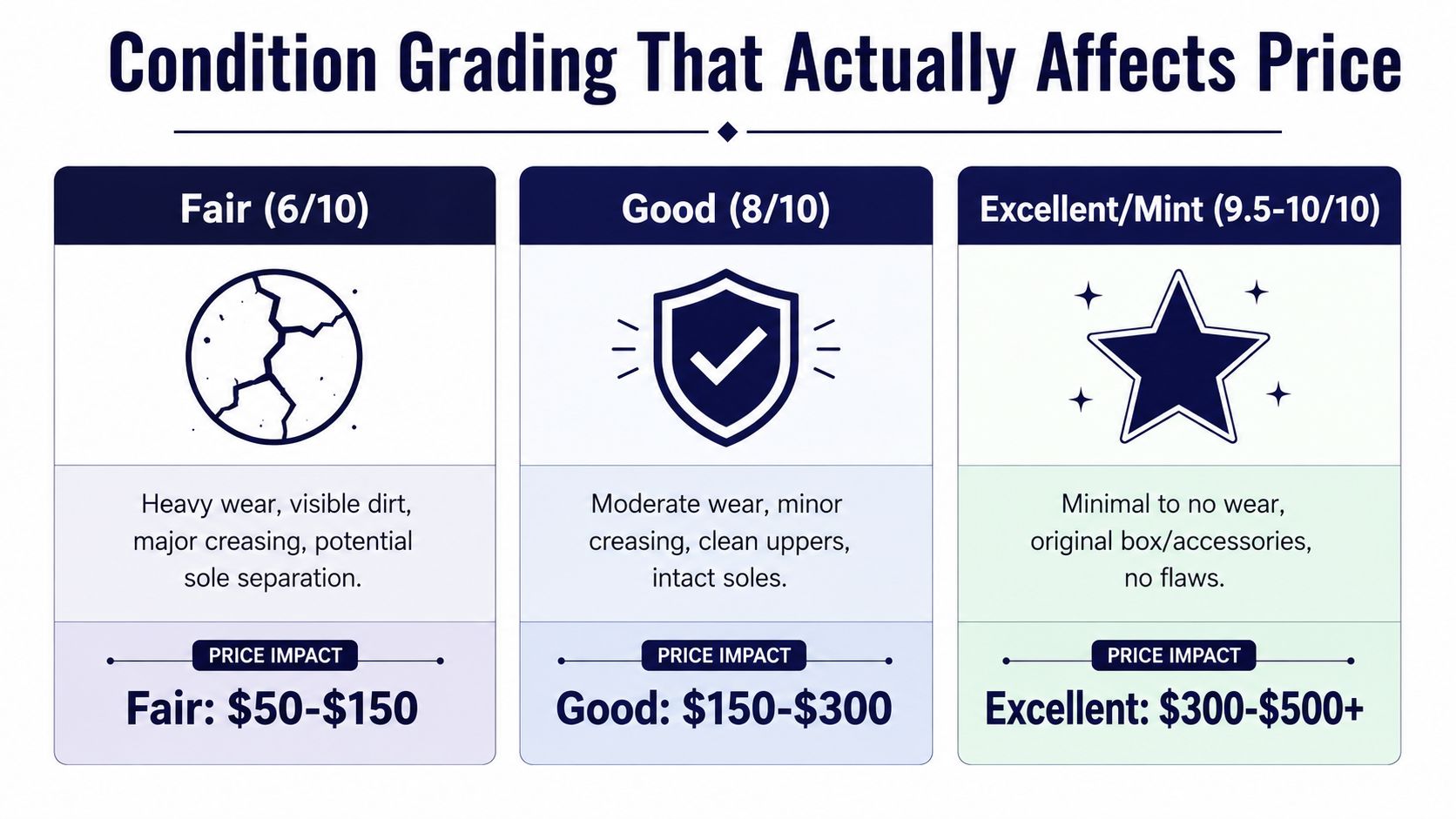
For broader clothing and accessory checks that follow the same logic, this vintage item identification guide is useful, because the core habit stays the same, verify construction before you trust the tag. Once that is clear, use the infographic above to keep condition separate from authenticity, because those are two different calls.
Condition Grading That Really Drives Price
Condition is where a decent buy turns into a bad one fast. With vintage Puma high-tops, the market usually rewards pairs that still have shape, clean uppers, and intact soles, while heavily worn pairs take a real hit in sellability because collectors see damage before they see nostalgia. The quickest way to protect your margin is to grade the shoe before you even think about comps.
What to inspect before you price anything
Look at the rubber outsole, the tongue label, and the leather overlays first. Those are the first places age shows up, and they're also the areas buyers zoom in on in photos. If the outsole edge is chewed up, the collar has collapsed, or the stitching is failing, you're no longer evaluating a clean collectible, you're evaluating a repair project or a discount listing.
A pair that looks “pretty good” in hand can still be a poor flip if it has visible wear in the wrong places. That matters even more with older high tops because they do not have the cushion-heavy forgiveness of newer shoes, so condition carries more weight than casual shoppers expect. Sellers lose money when they assume a collector will tolerate extra wear just because the model is old.
If the heel structure is slouching and the outsole is tired, price it like a used pair, not a display piece.
The condition image above is the easiest way to keep your expectations realistic. In practice, fair pairs with heavy wear and possible separation sit in a much weaker sales lane than good pairs with intact structure, and excellent pairs with minimal flaws are the ones that can support premium ask prices. The exact dollar figures in the graphic are for workflow reference, not a promise, so use them as a pricing lens, then verify against current comps. For more context on how sellers translate condition into asking ranges, the vintage clothing price guide is useful because the same basic rule applies, condition first, market second.
If you skip condition and jump straight to hype, you'll overpay for beat pairs that sit forever.
Pulling Sold Comps Across Marketplaces
The asking price on an active listing tells you almost nothing. Sellers can list a beat pair too high, a scarce pair too low, or a common pair at a fantasy number, so the only useful number is what buyers paid. That's why sold comps matter more than live listings when you're pricing vintage Puma high-tops for resale.
Build a comp set, not a single example
Start with the exact model name if you have it, then compare sold items across marketplaces where sneaker buyers shop. Pull recent sales from eBay sold items, then cross-check marketplace history on Poshmark and Mercari, and use Depop or StockX-style pricing tools when a pair has enough visibility to generate an estimate. The goal isn't to find one perfect match, it's to build a range you can trust.
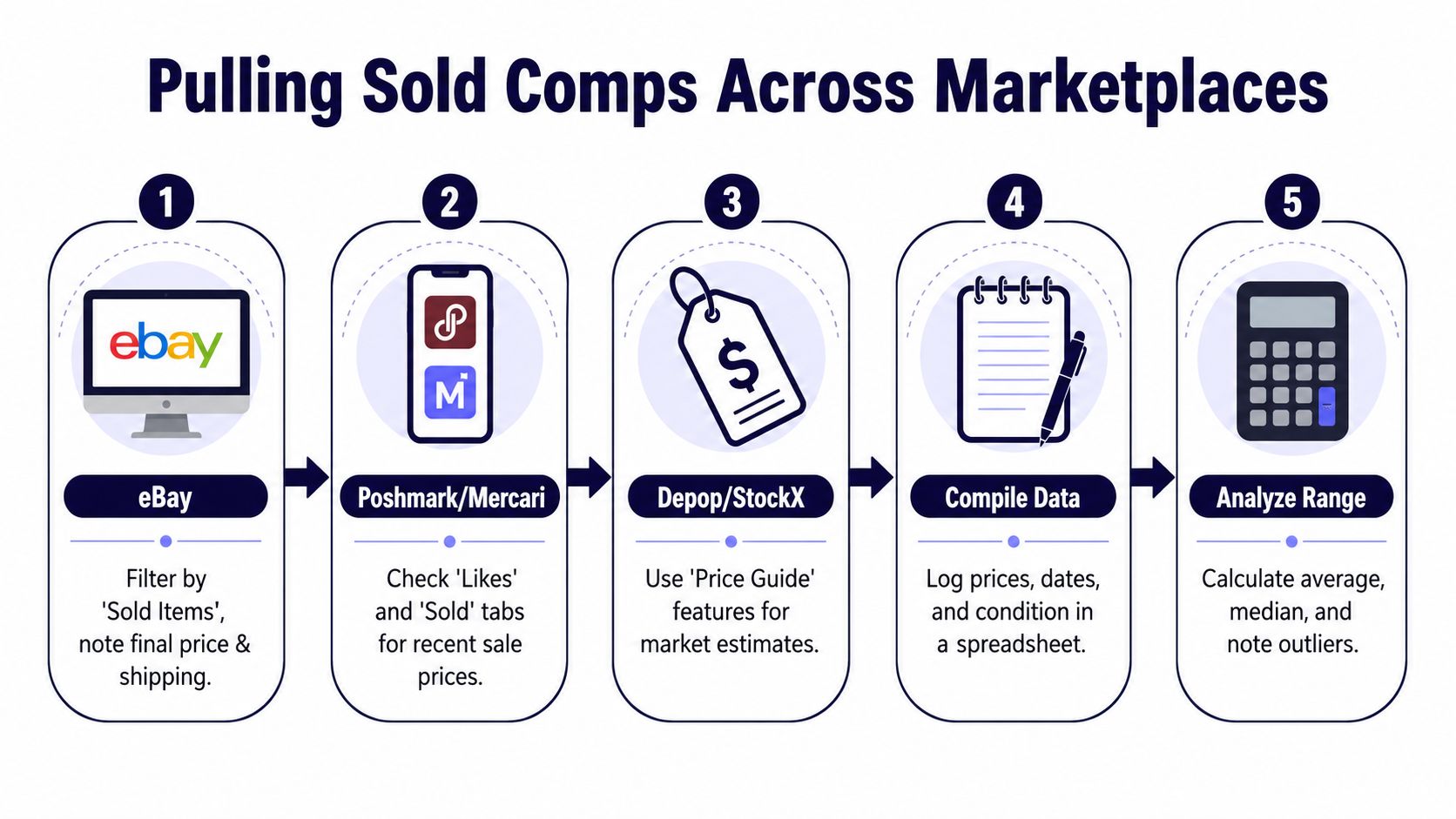
When I'm pricing a pair, I log the sale date, model, size, condition, and final sold amount, then I throw out obvious outliers. One unusually high sale doesn't make the market. You want the middle of the cluster, not the dream comp that happened to catch two determined bidders.
Practical rule: If three to five comparables cluster tightly, trust the range. If the results are scattered, you don't have a clear market yet.
For a faster workflow on eBay specifically, this sold prices method for eBay is a solid reminder to separate sold results from active listings. In this category, exactness matters. A Puma Clyde, a Puma Suede-derived high top, and a generic retro-inspired Puma lifestyle shoe may all look close at a glance, but they don't belong in the same comp bucket if you want clean pricing.
Where to Source Vintage Puma High Tops
The best pairs usually turn up where other sellers are moving fast and looking down, not in polished sneaker shops. Thrift stores, estate sales, garage sales, and local auctions still produce the best margins because the seller often doesn't know the exact model, but you need quick eyes and a willingness to walk away when the pair is too tired or too generic.
In-person versus online sourcing
Thrift stores reward speed. You're making a yes-or-no decision from a rack, sometimes with no clean light and no time to do a deep search, so the pairs that win are the ones with obvious vintage cues and manageable wear. Estate sales can be better for older inventory because footwear may have been stored with the rest of a household's forgotten goods, but the competition can be just as sharp.
Online marketplaces give you more research time, but they also give everyone else more access to the same listing. That means you can compare photos, ask for label shots, and verify details before buying, yet you'll usually pay for that convenience through stronger competition and shipping costs. The trade-off is simple, offline sourcing favors margin, online sourcing favors certainty.
A lot of profitable sourcing still comes from listings that are under-described. A seller might call a pair “old Pumas” without naming the model, which creates room for a reseller who knows how to read the Formstrip, tongue tab, and silhouette. That's where your homework turns into edge.
Making the Buy-or-Pass Decision
The buy-or-pass decision gets easier when you stop thinking in gross sale terms and start thinking in net outcome. A pair can look exciting, match the era, and still be a pass if the condition is weak, the model is common, or the likely net after fees and shipping doesn't justify the time. That's the part beginners miss, and it's where they tie up cash in slow inventory.
A fast decision filter that works under pressure
First, ask whether the pair is vintage, a later retro, or just a used modern release. If authentication confidence is low, don't force the buy. If it's clearly authentic but the condition is rough, price it like a lower tier pair and be honest about the expected audience.
Next, match the condition grade to the likely buyer. Fair pairs usually need a bargain buyer or a collector who wants a project. Good pairs are the sweet spot for most reseller flips because they're presentable without pretending to be deadstock. Excellent pairs deserve the most attention, but only if the comps support the premium.

Here's the cleanest rule I use in the field. If the model is right, the construction matches the era, the condition is honest, and the sold comps still leave room after fees and shipping, buy it. If any one of those four breaks, you don't need to argue with yourself.
ScanFlip AI fits this exact moment because it identifies items from photos, pulls sold comparables across major marketplaces, and calculates expected net profit so you can decide faster at the rack or table. If you want a quicker way to evaluate vintage Puma high-tops and other secondhand finds before money leaves your hand, visit ScanFlip AI and use it in the same sourcing workflow you already rely on.