

Best Resell Sites: 7 Marketplaces for Flippers
A $12 item in the Goodwill aisle can look like an easy flip until you check the sold comps, shipping weight, marketplace fees, condition, and likely time to sell. A strong gross sale price doesn't automatically leave a strong net profit. A cracked hinge, missing accessory, or oversized shipping label can turn a promising buy into a slow-moving item in your death pile.
The best resell sites depend on what you're holding, where you sourced it, who buys that category, and how quickly you need the cash back. A trading card, a vintage jacket, a sealed retail item, and a stack of books each need a different exit plan. The right marketplace gives the item access to buyers who already want it, instead of forcing you to fight the platform's audience and fee structure.
This roundup compares eBay, Amazon, Poshmark, Mercari, Depop, Whatnot, and TikTok Shop by buyer audience, fees, likely sell-through, net profit potential, operational friction, and the listing approach that gives each marketplace a fair chance. The comparison starts with the buy decision, not the upload screen.
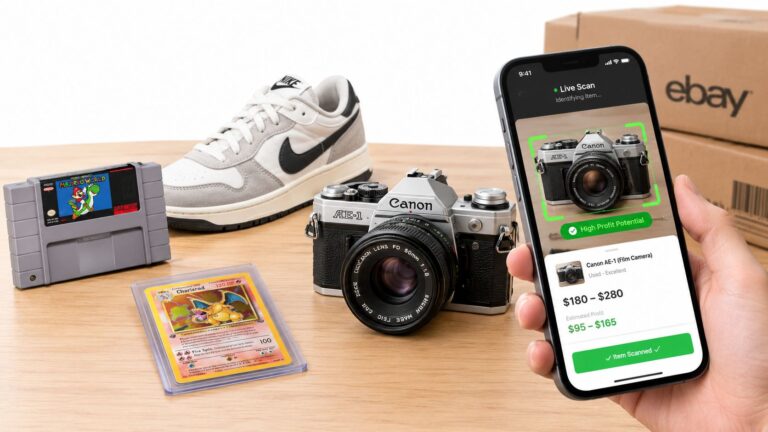
At the sourcing stage, ScanFlip AI can check an item with an AI photo scan that needs no barcode, a barcode scan, or text search. It aggregates sold comps across eBay, Poshmark, Mercari, Depop, Amazon, Whatnot, ThredUp, Facebook Marketplace, and TikTok Shop, then estimates net profit after fees and shipping with a red or green flip-or-pass verdict. It handles the sourcing decision before you spend money and complements crosslisting tools such as Vendoo or List Perfectly.
Table of Contents
- 1. eBay
- 2. Amazon
- 3. Poshmark
- 4. Mercari
- 5. Depop
- 6. Whatnot
- 7. TikTok Shop
- Top 7 Resell Sites Comparison
- Choose the Exit Before You Source
1. eBay
eBay remains the strongest all-purpose exit for inventory that doesn't fit neatly into one category. Its audience reaches collectibles, fashion, electronics, tools, books, media, parts, toys, and oddball items that may sit untouched on a narrower fashion or social marketplace. Traffic data for February 2026 put eBay at 532.44 million monthly visits, around 68% of combined traffic across the top 10 resale marketplaces. The marketplace traffic comparison supports what most experienced flippers already see, broad buyer demand creates more opportunities for long-tail inventory.
That reach doesn't mean every eBay buy is good. A $12 item with only one recent sold comp may need an auction, while a common game, replacement remote, or branded tool may work better as fixed price with Best Offer. Use sold comps, not active asking prices, to decide whether the market supports your cost of goods. eBay gives you auction and Buy It Now formats, quantity listings, offers, international shipping programs, category pricing guidance, promoted listings, and a long history of completed sales.
Where eBay earns its place
eBay is usually the best choice when the buyer is searching for a specific model, part number, edition, or obscure variation. A discontinued calculator, a replacement vacuum attachment, a regional sports collectible, or a used camera lens can receive stronger search intent there than on a social-first app.
The platform's fee structure needs to be part of the buy decision. A current comparison lists eBay at about 13.6% plus $0.40 per order, though fees vary by category and optional promotion can add cost. This guide to current reselling app fees is useful for checking the calculation before you commit to inventory.
Practical rule: If the item only works at an optimistic asking price, leave it behind. eBay's buyer pool helps with real demand, but it can't create a profitable sold comp where none exists.
Listing approach and risk
Use a clear title built around the exact brand, model, size, and compatibility details. Photograph every flaw, test electronics on camera when practical, and include measurements for clothing or unusual parts. Returns and “not as described” claims make condition documentation part of your margin.
For thin comps, an auction can discover price, but it also exposes you to a weak ending if the audience isn't active at that moment. Fixed price with Best Offer gives more control for known SKUs and bread-and-butter inventory. For a deeper workflow on checking completed sales, use this guide to find sold prices on eBay.
eBay is the default for reach and price discovery, but it isn't always the fastest exit. It works best when the item has a searchable identity and you can tolerate the packing, customer service, and return risk.
2. Amazon
Amazon Seller Central is strongest when your inventory is new, sealed, retail-ready, cataloged, or supported by an established product page. It suits retail arbitrage, online arbitrage, book scanning, media, replenishable goods, and compliant wholesale inventory better than it suits unstructured vintage or questionable used apparel.
The central advantage is the ASIN catalog. You aren't creating a storefront from scratch for every common product. You attach an offer to an existing product detail page, and buyers already understand the item. That can produce faster sales velocity for suitable products, especially when the offer qualifies for Prime through Fulfillment by Amazon.
The buy decision is mostly fee math
Amazon offers Individual and Professional selling plans, referral fees by category, and optional FBA charges. FBA can handle fulfillment, customer returns, and much of the late-shipment burden, but storage, fulfillment, returns, and referral costs can consume a thin spread quickly. FBM can preserve more control, though it puts shipping and service work back on your desk.
A book scanner may find an attractive gross sale price, but the key question is whether the rank, condition, fees, and shipping leave enough net profit after the book is received and processed. A retail arbitrage item can look better until you discover a restricted brand, a gated category, or a condition requirement that prevents you from selling it.
Amazon rewards repeatable sourcing more than clever one-off finds. If you can't verify condition, authenticity, and category eligibility, the apparent margin isn't usable margin.
What works and what doesn't
Amazon is a good fit for sealed games, new accessories, recognizable household goods, and books with reliable demand. It can also work for brand-compliant replenishment where you can source the same product repeatedly. Detailed analytics, advertising, and catalog data make the platform suitable for sellers who want to build an operation rather than just clear a garage shelf.
It is a poor fit for unbranded vintage clothing, incomplete electronics, and items whose condition is difficult to describe against a standardized catalog page. Category gating and intellectual-property restrictions can stop a purchase from becoming sellable. Don't buy first and investigate approval later.
For an Amazon buy, check the exact ASIN, current offers, fulfillment method, condition restrictions, and total fee estimate before paying. A product's popularity doesn't guarantee that your offer will win the Buy Box or that the net profit justifies prep and storage.
3. Poshmark
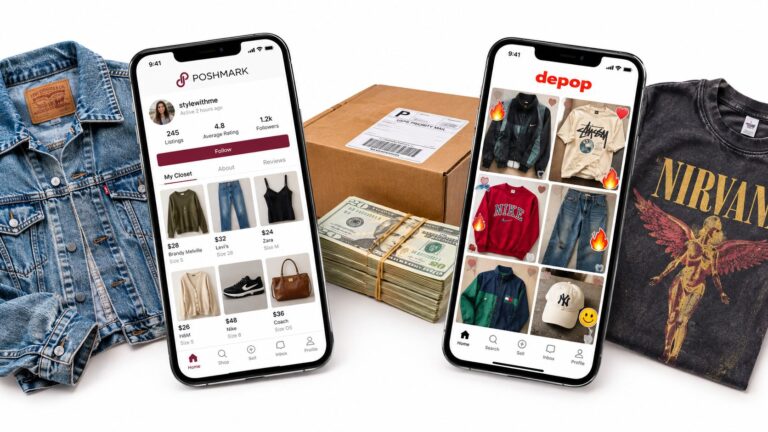
Poshmark makes the most sense for fashion, shoes, accessories, home goods, and beauty items that can be understood quickly through photographs and style cues. Its mobile-first audience is already browsing closets, brands, sizes, colors, and trends. That makes it a practical outlet for thrifted jackets, boots, handbags, denim, streetwear, and home pieces that need visual discovery rather than a highly technical search.
The shipping workflow is simple. Poshmark provides a prepaid label, and sellers can use bundles, offers, social sharing, and Posh Shows to create more opportunities for a sale. The convenience is real, but it doesn't erase the fee. Poshmark charges 20% on sales of $15 or more, according to the fee comparison in this overview of where to sell online. That percentage matters when a thrifted item has a modest sold price.

Fashion needs presentation
A Poshmark listing should answer the questions a buyer asks while scrolling on a phone. Show the front, back, brand tag, size tag, fabric tag, sole or hardware, and every flaw. Measurements reduce avoidable questions, especially for vintage sizing. A clean cover photo and accurate style keywords can matter more than a long description.
Poshmark is often a better exit than eBay for a wearable piece with an active style audience. It is not automatically better for a low-value item, a bulky coat, or a hard good that shoppers aren't opening the app to find.
A good Poshmark buy has both a recognizable buyer and a presentable story. If the item is ordinary, stained, hard to size, and expensive to ship, the simple listing flow won't rescue it.
When to pass
A $12 thrift find should stay on the rack if the sold comps are weak, the measurements are unusual, or the garment needs repairs that you won't complete promptly. A strong brand helps, but saturated brands can still produce a slow sell-through rate when the style is dated or the size is hard to move.
Social sharing can improve visibility, and Posh Shows can help trend-driven inventory move in a live setting. Still, the platform's audience is fashion-heavy. Electronics, tools, collectibles, and replacement parts usually deserve a broader marketplace.
Before buying, calculate the expected take-home after the Poshmark fee, shipping responsibility, cleaning, photography, and storage time. This guide to selling on Poshmark is useful when you want to match the item to the platform's fashion-led workflow instead of treating every thrift find as interchangeable inventory.
4. Mercari
A tested game controller from a garage sale, a clean pair of popular sneakers, or a complete Lego set can make sense on Mercari when the item is easy to identify and ship. Mercari is built for common, shippable inventory that does not need eBay's deeper tools. Sellers use it for games, toys, small electronics, clothing, kitchen items, and household goods, while buyers often look for straightforward purchases at bargain-aware prices.
Mercari's current selling fee is about 10%, according to this marketplace fee comparison. That simpler fee structure makes the first net-profit calculation easier, but shipping, packaging, returns, and any payment-related costs shown in your seller account still affect the final take-home amount.
Bread-and-butter inventory fits best
The listing process suits items with an obvious model, brand, or use. Photograph the entire product first, then show model numbers, wear, accessories, and testing results. For electronics, state whether the charger, batteries, manuals, or original packaging are included. Buyers need enough information to decide without sending several messages.
Ship-your-own options and in-app labels give sellers flexibility, though weight and dimensions still affect the margin. A bulky appliance may look profitable at the purchase price and become a poor buy after packing materials and shipping. Check sold comps before sourcing, then set a minimum price that covers fees and expected costs.
Mercari's buyer pool is smaller than eBay's, and price sensitivity can create pressure to accept concessions. That may help ordinary inventory move, but a discount can erase the profit on a low-dollar thrift find. Promotions work only when the floor price already protects your net profit.
A quick listing is not evidence of quick sell-through. A ten-minute listing can still become dead stock when demand is weak or the sold comps are outdated. A common mistake is buying first because the item is easy to list, then discovering that buyers rarely search for it.
Mercari also holds payment until the transaction is completed through its rating process or automatic rating. Delivery confirmation does not mean the cash cycle is finished, so include that delay in your operating plan.
Mercari is a useful second exit for common inventory, not a reason to buy marginal inventory. The fee is easy to model, while weak demand still produces weak net profit.
Use Mercari when the item has a clear market, manageable shipping, and enough margin to survive bargaining. Rare collectibles, obscure parts, and products that need maximum search reach usually fit eBay better.
5. Depop
Depop is built for fashion discovery rather than general-purpose resale. It suits vintage, Y2K, streetwear, sneakers, accessories, and pieces with a strong visual identity. A curated closet can perform well there because buyers follow aesthetics, save items, and browse through social signals instead of searching only for exact product names.
A faded graphic tee, unusual denim, a vintage track jacket, or a pair of distinctive sneakers can be more compelling on Depop than on a general marketplace. The same logic works against ordinary hard goods. A toaster, used router, or generic kitchen item doesn't benefit much from a style-led audience.
Style is part of the product
Depop rewards photos that show how the item fits into an outfit or aesthetic. Use natural light, clean backgrounds, accurate measurements, and useful keywords without stuffing unrelated trends into the title. Vintage buyers care about tag details, era clues, fabric, flaws, and fit. A compelling presentation can help a good item reach the right buyer, but it can't compensate for an inaccurate condition description.
Depop's fee model has shifted in ways that can reduce the selling-fee burden for some U.S. sellers, while payment processing still applies. Check the current seller terms before running your net-profit calculation. A lower platform fee doesn't make a bad buy good if the item needs extensive cleaning, repairs, or months of storage.
Timing and curation matter
Depop is a stronger choice for a seller who can photograph consistently, maintain a coherent closet, and understand micro-trends. It is less suitable for a random bin of unrelated thrift finds. Presentation quality and timing affect the chance of a quick sale, so the sourcing decision should include whether you can make the item look desirable.
A vintage piece with a distinctive silhouette may justify a higher cost of goods than a generic mall-brand shirt, but only if recent sold comps support that decision. Don't use active asking prices as proof. A closet full of optimistic prices can create the appearance of demand while producing no cash flow.
Depop buyers purchase identity as much as utility. Source pieces with a clear look, then photograph and describe that look honestly.
Use Depop when the inventory is fashion-forward and you enjoy the creative work. Use eBay or Mercari when the item is primarily functional and the buyer is searching for specifications rather than inspiration.
6. Whatnot
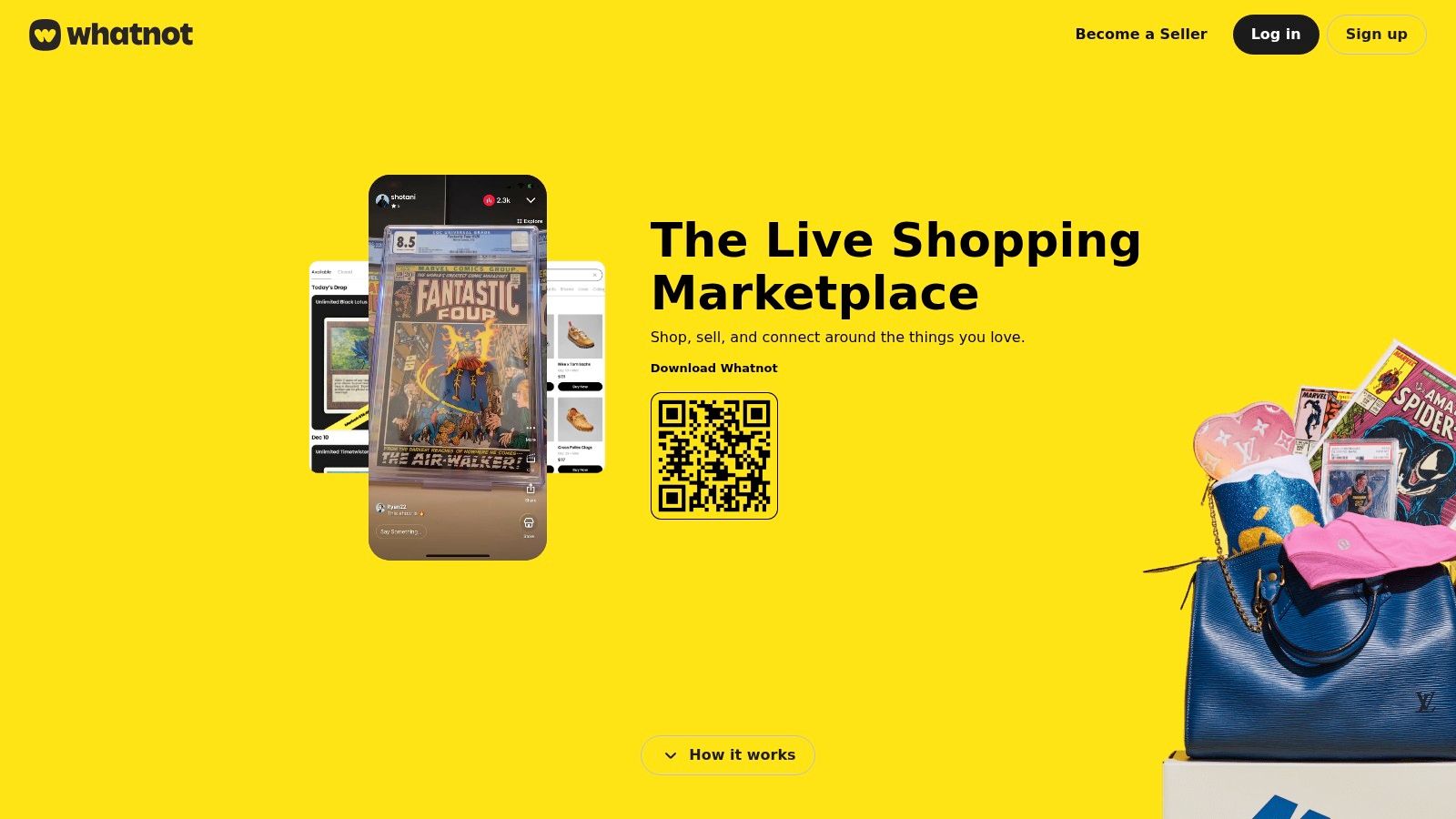
Whatnot is the most format-dependent marketplace in this group. Its strength is live commerce, especially for trading cards, comics, toys, collectibles, sneakers, and other inventory that benefits from real-time bidding and community energy. A seller who can host a consistent show, explain condition, and keep buyers engaged may move inventory faster than through static listings.
That speed comes with operational pressure. Whatnot performance depends on hosting ability, show scheduling, audience development, accurate sorting, and fast fulfillment. Category-specific rate cards and seller fees vary, so check your own rate card before buying. A popular category doesn't guarantee a profitable stream if the audience expects low opening bids or if your inventory lacks enough desirable items to keep viewers watching.
Buy for the show, not just the item
Whatnot makes sense when you can group inventory into a compelling event. Card lots, collectible runs, toy assortments, comics, and sneaker drops can create a reason for buyers to return. A single ordinary item with no story may perform better as a fixed-price listing elsewhere.
Live auctions can discover a market price through bidding, but they can also end below your target if the audience is thin or the timing is poor. Set sourcing limits before the show. Don't assume energy in the chat equals profit after fees, shipping supplies, sorting time, and unsold leftovers.
Live-selling test: If you wouldn't feel comfortable explaining the item, grading its condition, and shipping it promptly on camera, it probably isn't the right Whatnot inventory.
Where sellers lose margin
Collectibles require disciplined condition standards. Cards need accurate grading language, corners and surface checks, and protection during shipping. Toys need completeness checks. Sneakers need size, authenticity, and condition details. A fast sale can create more customer-service work when the product was rushed onto the stream.
Whatnot can be excellent for fast-turn inventory, but it isn't a substitute for sold-comps research. Compare recent sold prices across relevant marketplaces, then account for the platform's current category fees and shipping workflow. Use static storefront listings between lives for suitable items, but don't buy a large lot solely because it looks entertaining on camera.
The best Whatnot sellers source with the show format in mind. They know which items create bidding interest, which items belong in a bundle, and which items should be passed to eBay for long-tail search demand.
7. TikTok Shop
TikTok Shop Seller Center combines shoppable short video, LIVE selling, checkout, and creator affiliate tools. It can suit trend-led goods, beauty, accessories, low-priced gadgets, and products that become more appealing when demonstrated. The buyer often discovers the product through content instead of searching for a specific used item.
That makes TikTok Shop quite different from eBay. A listing alone rarely does the full job. Sellers need a content engine, live demonstrations, creator relationships, or a product angle that works in a short video. A thrifted one-off with uncertain condition may be difficult to scale, while a repeatable retail-arbitrage item can benefit from multiple videos and creator promotion.
Content changes the sourcing equation
A phone accessory, beauty item, small gadget, or trend-driven product needs more than a favorable sold comp. Ask whether you can demonstrate its use, explain its benefit clearly, and fulfill orders consistently. If the answer is no, the platform's discovery reach won't necessarily convert into a sale.
Creator affiliate programs and promotional tools can expand distribution, but commissions, discounts, shipping, returns, and platform fees all affect net profit. Fee programs and promotions can change, so monitor the current rates in Seller Center rather than relying on an old spreadsheet. A TikTok Shop fee calculator can help organize the variables before you source, but the platform's own current terms should control the final calculation.
The right seller profile
TikTok Shop favors sellers who can create attention repeatedly. A seller who only wants to photograph an item once and wait for search traffic may find the workflow frustrating. A seller with product knowledge, video skills, or access to creators can test multiple angles and learn which content produces orders.
Don't confuse a viral view count with a profitable sale. Returns, creator costs, discounts, fulfillment errors, and customer support still come out of the operation. Check the product's actual sold comps and your expected net profit before purchasing inventory.
TikTok Shop is worth testing for repeatable, demonstrable products. It is usually a poor primary outlet for one-off vintage, obscure parts, or collectibles that depend on a precise search query.
Top 7 Resell Sites Comparison
| Marketplace | Implementation complexity | Resource requirements | Expected outcomes | Ideal use cases | Key advantages |
|---|---|---|---|---|---|
| eBay | Moderate, learn auction/fixed formats and fee rules | Moderate, quality photos, comps research, returns management | Strong price discovery and broad reach; variable velocity by item | Collectibles, trading cards, used electronics, rare/hard‑to‑find items | Unmatched buyer pool, auctions + fixed price, mature seller tools |
| Amazon (Individual & Professional; FBM/FBA) | High, catalog/ASIN management, gating, FBA integration | High, inventory prep, fees (referral/FBA/storage), compliance | Fast sales velocity for retail‑ready SKUs; margin pressure if fees unmanaged | New/retail‑ready goods, books/media, retail/online arbitrage | Massive conversion, Prime/FBA logistics, advanced analytics & ads |
| Poshmark | Low, app‑first listing and simple workflows | Low, photos, basic packaging, mobile engagement | Fast sell‑through for fashion; trend‑driven velocity | Apparel, shoes, accessories, vintage and streetwear | Mobile‑first community, easy shipping labels, social selling features |
| Mercari | Low, streamlined mobile listings, simple tools | Low, photos, shipping labels, predictable fees | Consistent demand for common flips; generally bargain‑skewed prices | Sneakers, consoles, toys, small home goods | Low listing friction, predictable fees, good for bread‑and‑butter flips |
| Depop | Low–Moderate, emphasis on curation and presentation | Moderate, strong photography, styling, social promotion | Good outcomes for curated/trend pieces; timing and presentation critical | Vintage, Y2K, streetwear, curated fashion closets | Trend‑focused Gen‑Z audience, social discovery, presentation matters |
| Whatnot | Moderate–High, live show hosting and auction skills needed | High, live production, scheduling, audience building, inventory | High sell‑through and bidding dynamics during live events; variable otherwise | Trading cards, collectibles, comics, toys, hype sneakers | Live auctions + real‑time engagement, strong conversion for hype items |
| TikTok Shop (US) | High, content/creator strategy and platform integrations | High, short‑form content, live selling, creator partnerships, logistics | Rapid reach and spikes for trend items; conversion tied to content quality | Trend products, beauty, accessories, low‑AOV gadgets | Shoppable video + LIVE, creator amplification, in‑app checkout and discovery |
Choose the Exit Before You Source
The marketplace decision should happen before the money leaves your pocket. Start by identifying the item, the likely buyer, and the condition that buyer will accept. A vintage jacket, a boxed retail gadget, a used game console, and a binder of sports cards can all have different best resell sites even when you find them in the same garage sale.
Next, check recent sold comps, not asking prices. Active listings show what sellers hope to receive. Sold comps show what buyers paid. Look for the closest match by brand, model, size, edition, condition, completeness, and included accessories. One high sale shouldn't carry the whole decision when the rest of the market is lower or stale.
Then calculate the complete cost. Include cost of goods, platform fees, payment processing where applicable, shipping, packaging, cleaning, repairs, authentication, storage, and likely return exposure. A $12 buy may look attractive until the item needs a replacement charger, an oversized box, or hours of testing. Net profit is what remains after those costs, not the difference between the thrift-store price and an optimistic gross sale price.
Match inventory to buyer behavior
Use eBay for items with specific search demand, broad category appeal, or long-tail potential. It gives obscure parts, collectibles, electronics, tools, and media a larger chance of finding the right buyer.
Use Amazon for books, sealed goods, retail-ready products, and repeatable inventory that meets category and brand requirements. Check the ASIN and fee stack before buying. A product can have strong demand and still fail your sourcing threshold.
Use Poshmark for fashion that photographs well and has a clear brand, style, size, or trend angle. Use Depop for curated vintage, Y2K, streetwear, and style-led pieces where presentation and timing influence discovery. Don't force generic hard goods onto either platform.
Use Mercari for straightforward, shippable bread-and-butter inventory when its simpler mobile workflow and fee structure fit the margin. Use Whatnot for collectibles and other items that benefit from a live audience, but only if you can host, grade, sort, and ship reliably. Use TikTok Shop for repeatable products that can be demonstrated through short video, LIVE selling, or creator content.
Protect your time as well as your margin
Sell-through rate matters because storage has a cost even when the spreadsheet doesn't show one. Fast-turn inventory can be worth choosing at a lower per-item profit when it requires little handling and reliably converts. Long-tail inventory can justify more profit when it is small, stable, and easy to store, but not when it occupies a bin for months and needs repeated relisting or customer messages.
Trust also affects the exit. Independent resale research based on a 264-participant survey found that resale price satisfaction was a stronger driver of overall satisfaction than product performance satisfaction, and that seller reviews and buyer-protection guarantees were stronger trust drivers than high-quality photos or authentication alone. The resale satisfaction research reinforces a practical point, buyers need confidence in both the price and the transaction.
The broader market is large enough that sourcing efficiency matters. A 2025 industry report valued the U.S. secondhand market at $56 billion, up 14.3% year over year, and said online resale represented 88% of total resale spend. It projects online resale will nearly double to $40 billion by 2029, at a 13% compound annual growth rate. The 2025 resale report gives context for why more sellers are using data at the source instead of relying on memory and rough aisle estimates.
The actionable rule is simple. Don't buy on gross sale price alone. Buy only when the expected net profit clears your minimum after fees, shipping, condition risk, handling time, and the chance that the item sits unsold. The best resell sites are the ones whose buyers already want your inventory and whose economics leave enough profit to make the work worthwhile.
Use ScanFlip AI at the source to identify items with an AI photo scan, barcode scan, or text search, compare sold comps across major marketplaces, and calculate net profit after fees and shipping. Visit ScanFlip AI before your next Goodwill run, garage sale, or estate-sale pickup and make the flip-or-pass decision before you buy.