
Discontinued Makeup for Sale: A Reseller’s Sourcing Guide
You're at a thrift store, estate sale, or scrolling a late-night marketplace listing, and you spot an old MAC compact, a discontinued Revlon lipstick, or a random lot of unopened cosmetics. The seller priced it like clutter. You're wondering whether it's a flip, a fake, or expired junk that will sit forever.
That's the strategy with discontinued makeup for sale. It isn't enough to know that some old beauty products have a fan base. You need to know which items still have demand, how to verify what you're looking at, and whether the resale spread survives fees, shipping, and buyer skepticism.
Table of Contents
- The Untapped Goldmine in Forgotten Cosmetics
- Your Treasure Map Where to Find Discontinued Makeup
- Verifying Authenticity and Condition Before You Buy
- The Profit Equation Analyzing Price and Demand
- The Smart Buy and Post-Purchase Workflow
- Build Your Discontinued Beauty Business
The Untapped Goldmine in Forgotten Cosmetics
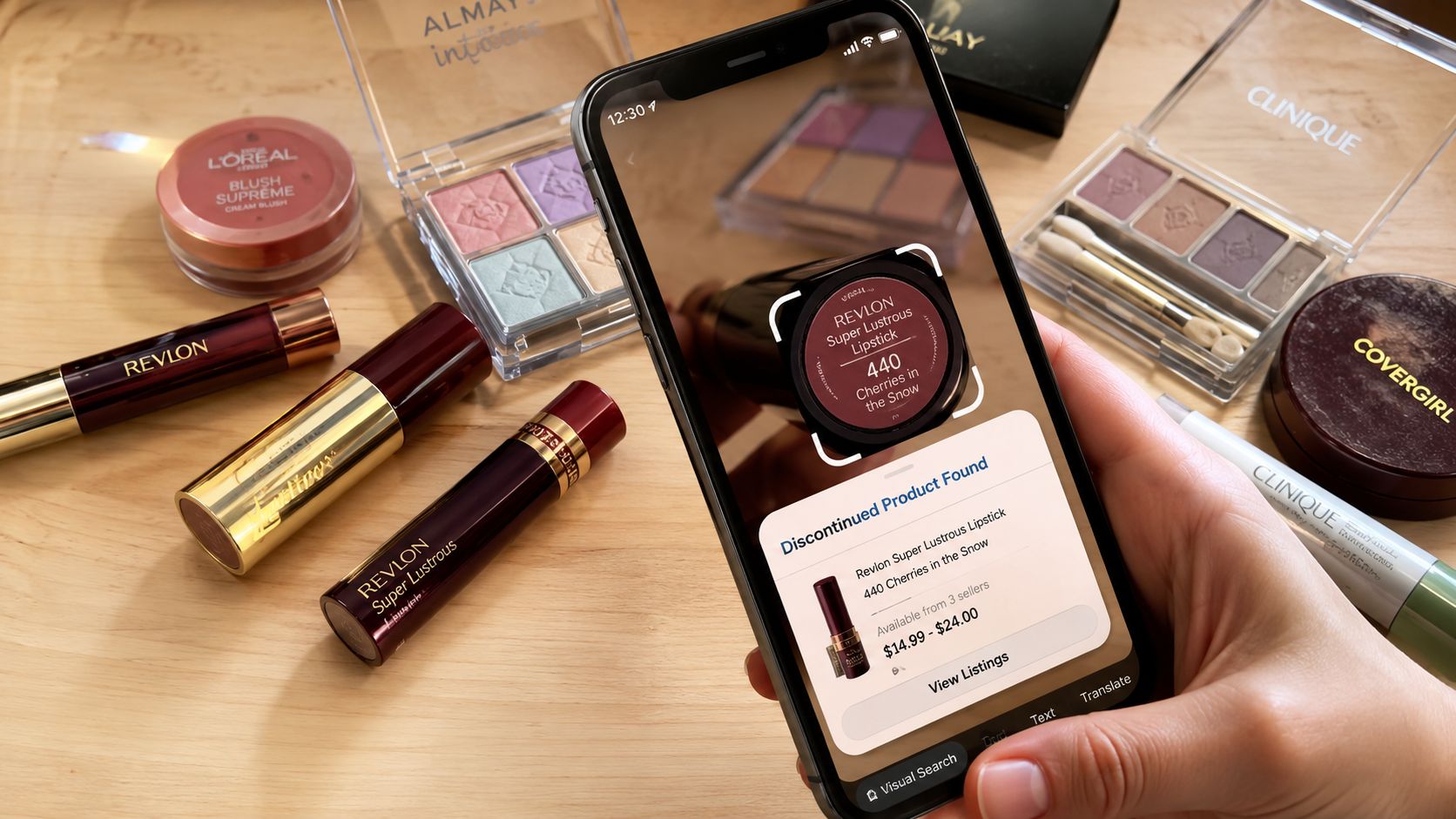
You're scanning a mixed estate-sale lot on your phone. Half the items look like junk. One sealed Bite Beauty lipstick is sitting in the middle of the pile, and the seller priced the whole box like used drugstore makeup. That is the kind of mistake resellers get paid for spotting fast.
Discontinued makeup for sale is profitable for a simple reason. A product can disappear while demand stays alive. Brands cut lines for margin, ingredient sourcing, retailer resets, or a broader brand repositioning. Buyers do not care why a favorite shade vanished. They care that they cannot walk into Ulta, Sephora, or Target and replace it.
That gap creates a resale market with real urgency. Some buyers want a backup of the only nude lipstick they ever wore. Some want a specific compact from a closed line. Some are collectors. The strongest flips usually come from replacement demand, not nostalgia alone, because replacement buyers tend to pay quickly when they find an exact match.
What makes this niche attractive
This category gives you several ways to make money, and each one has a different speed-to-profit profile.
- Single-item flips: Sealed MAC limited shades, discontinued Urban Decay palettes, or older Becca highlighters with proven sold comps.
- Bulk cleanouts: Vanity drawers, makeup artist kits, storage lockers, and estate boxes where one desirable item can cover the whole buy.
- Brand-exit leftovers: Inventory from lines that were cut or fully shut down, often listed by sellers who do not track beauty resale.
- Collector inventory: Packaging variants, collaboration pieces, and shade names buyers search for by memory.
The key distinction is not old versus new. It is wanted versus dead stock. This distinction is where profit starts.
Practical rule: Buy discontinued makeup only when you can tie it to current buyer demand, recent sold comps, and a realistic margin after fees and shipping.
That is why I treat this niche like any other resale category. I do not buy based on rarity claims or nostalgia in the comments. I check whether the exact item is still getting searched, sold, and relisted at a spread worth my time. If you want a repeatable sourcing system, this guide on using a discontinued products website for resale research is a useful companion to comp checking.
Why forgotten cosmetics stay underpriced
A lot of sellers misread beauty inventory. They assume opened equals worthless, old packaging equals expired, and unknown shade names equal no demand. That bad sorting creates opportunity for resellers who can identify what still has a market in under a minute.
The trade-off is real. Beauty can produce fast flips and strong margins, but mistakes are expensive. Counterfeits exist. Condition matters more than in many other categories. A dusty compact with no box might still sell if it is a sought-after collector piece, while a common lipstick with heavy wear is usually dead inventory no matter how cheap it looks.
Speed helps, but only if it is informed speed. The winning move is to sort every find into three buckets fast: collectible, usable, and pass. Resellers who do that well stop gambling on random old makeup and start buying inventory that behaves like a business.
Your Treasure Map Where to Find Discontinued Makeup
A reseller walks past a “used makeup” bin because it looks messy. Ten minutes later, someone else buys the whole lot and pulls out a sealed MAC limited-edition compact, two backup shades of a discontinued Bite Beauty lipstick, and a neglected holiday set with resale value hiding in the minis. That gap is where profit sits in this niche. The job is not finding perfect listings. The job is finding misidentified inventory before another seller runs comps.
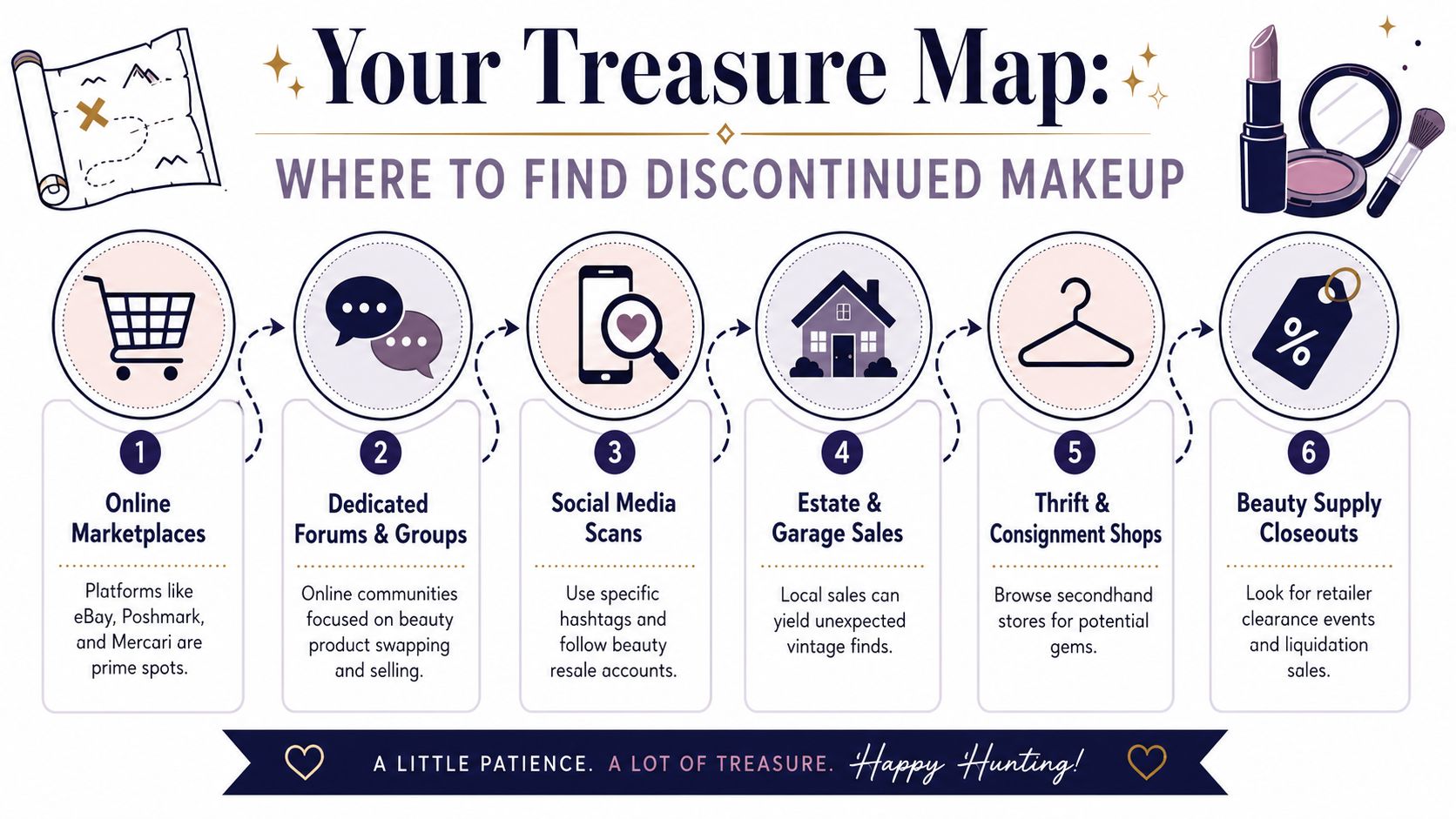
Why discontinued inventory keeps showing up
Discontinued makeup keeps circulating because beauty buyers stockpile favorites, stores liquidate old stock, and personal collections sit untouched for years. A lot of profitable inventory does not come from “collectors.” It comes from ordinary sellers clearing a vanity, a bathroom cabinet, or an estate.
The key trade-off is breadth versus speed. If you only search for exact product names, you miss the sloppy listings where margins live. If you scan everything without a system, you waste hours on expired junk and opened drugstore filler. Good sourcing means checking wide, then cutting fast.
Online places worth checking first
Start where you can scan volume quickly: eBay, Mercari, Poshmark, Facebook Marketplace, and local pickup apps. I treat each platform differently.
eBay is best for sold comps and niche searches like old MAC collections, Urban Decay Naked spin-offs, Marc Jacobs Beauty leftovers, and discontinued Clinique shades. Mercari and Facebook Marketplace are stronger for underpriced bundles because plenty of casual sellers list “makeup lot” without separating high-demand pieces. Poshmark works better for prestige brands and gift sets, especially when sellers cross-list beauty with closets and do not research every item.
Search terms matter more than the platform. Clean product-name searches are only step one. Add phrases that catch weak listings and seller shortcuts:
- Brand plus vague product type: “MAC old lipstick,” “Becca highlighter compact,” “Too Faced palette lot”
- Discontinuation clues: “old formula,” “no longer sold,” “hard to find,” “HTF”
- Bundle language: “makeup bundle,” “vanity cleanout,” “cosmetics lot,” “beauty drawer”
- Storage and estate terms: “estate lot,” “salon cleanout,” “gift set makeup,” “new old stock”
A useful edge is searching by packaging instead of full names. Sellers often know the brand but not the line. They will list “gold YSL compact” or “black square NARS blush” and leave money on the table.
You should also watch where products start disappearing before buyer demand spikes. Brand outlet pages, retailer clearance pages, and replacement-product pages can help you spot future discontinued inventory worth tracking. For a broader sourcing framework, this guide to websites for discontinued products is a strong reference.
Bad photos can be an advantage if you can identify packaging fast and verify value before you buy.
Offline sourcing that still works
Offline buying still produces the best spreads because fewer local sellers check sold comps before pricing. Estate sales are strong. So are garage sales, flea markets, and salon cleanouts. The best setups are the ones where makeup is treated as clutter instead of inventory.
Inside the sale, do not just scan the obvious table. Check the places where backup buying shows up.
| Location | What to look for | Why it works |
|---|---|---|
| Bathroom vanities | boxed items, duplicates, backup shades | repeat buyers store favorites close at hand |
| Bedroom dressers | prestige compacts, lipstick drawers, old gift sets | personal collections get forgotten |
| Hall closets | sealed bags, travel kits, holiday extras | unused backups end up in storage |
| Salon or artist cleanouts | pro palettes, multiples, mixed-brand bins | working inventory gets liquidated in bulk |
A few habits raise your hit rate fast:
- Look for duplicates. Two or three of the same shade usually means someone stocked up before a formula change or discontinuation.
- Open the gift sets mentally. The outer box may look low value, but discontinued minis from MAC, BareMinerals, or Smashbox can sell individually.
- Ask a direct follow-up question. “Do you have any sealed makeup, gift sets, or backup cosmetics not on the table?”
- Shop late if bundling is the goal. Sellers become much more flexible when they want the leftovers gone.
One more thing. “Discontinued makeup” is rarely the phrase that gets you the deal. “Makeup artist cleanout,” “salon liquidation,” “vanity lot,” and “department store overstock” surface better buys because they point to volume, and volume gives you room to pick winners and still protect margin.
Verifying Authenticity and Condition Before You Buy
A discontinued item isn't valuable if it's fake, tampered with, or too far gone to list confidently. Many flips fail for this reason. Resellers get excited about rarity and skip inspection.
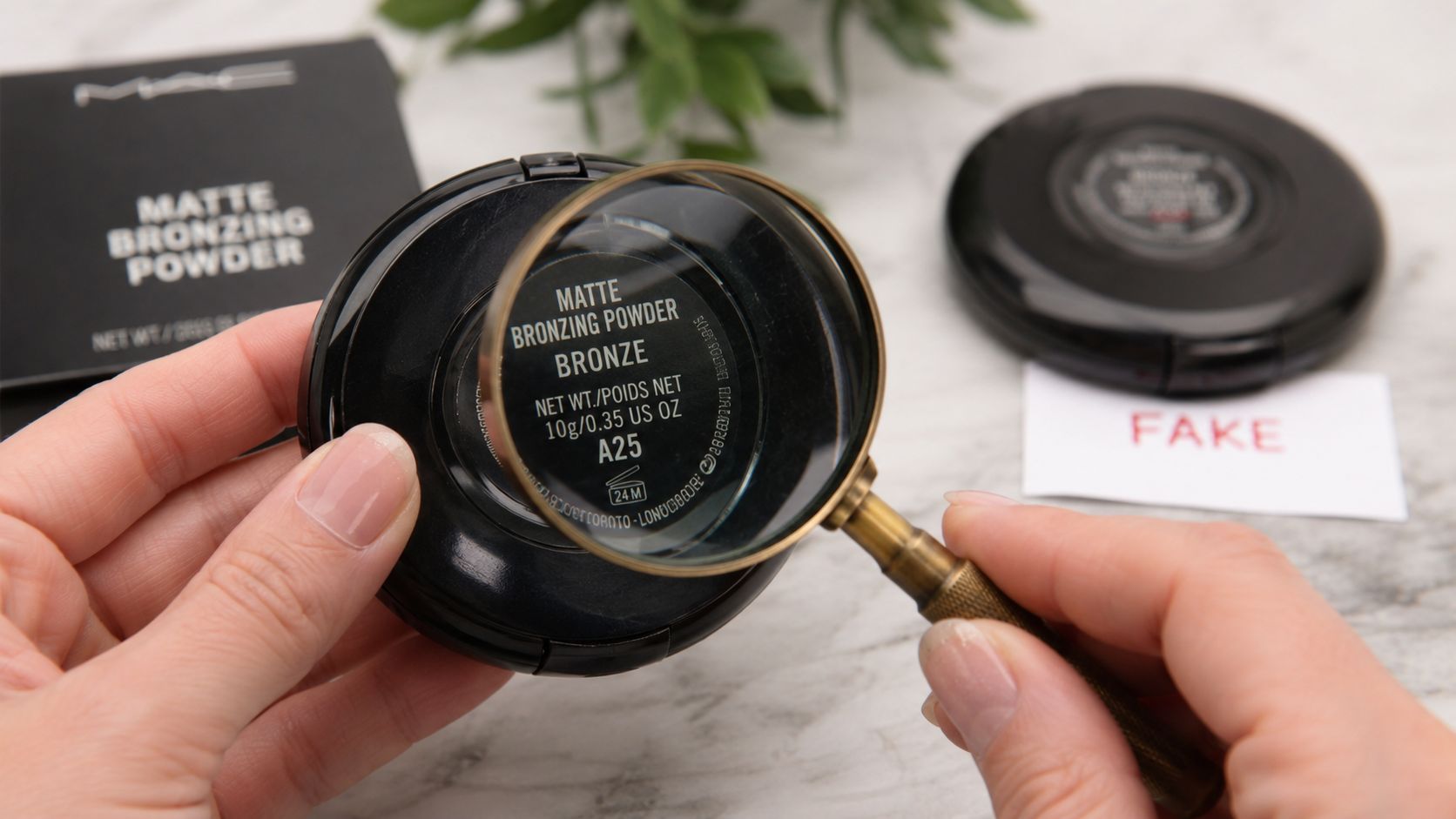
Counterfeit risk is part of the niche
Existing advice around discontinued beauty often tells buyers where to search, but not how to avoid getting burned. That gap matters because social media demand gives counterfeiters a reason to target old cult products, especially recognizable luxury pieces like Marc Jacobs Omega Bronzer, as discussed in this TikTok-driven counterfeit demand reference.
That means “looks close enough” isn't a buying standard. If you can't defend authenticity in your listing photos and description, buyers will hesitate or pass.
If you want a workflow for identifying hard-to-label inventory from photos when packaging is unfamiliar or barcodes are missing, an item identifier app for resale sourcing can help speed up research before you commit.
A practical inspection checklist
Start with the box if the box exists. Then move to the item. Don't try to judge everything at once. Work in a set order so you don't miss obvious red flags.
Check the brand print quality
Fonts, spacing, and logo placement should look deliberate. Blurry text, odd kerning, or inconsistent finish usually means trouble.Inspect the label layout
Shade names, ingredient panels, and sticker placement should look professionally aligned. Cheap overlays and crooked labels are a bad sign.Find the batch code
This matters more than most new flippers realize. If there's no batch code or visible manufacturing date, buyer confidence drops hard.Examine the seal and hinge points
Uneven glue, weak clasps, and rough plastic edges can expose counterfeit packaging fast.Assess product condition
Powders should look intact and dry, not greasy or bubbled. Creams and liquids shouldn't show obvious separation, leakage, or a turned smell.Clearly check for use
Swatched items can still sell in some cases, but hidden use destroys trust. Photograph it clearly and price accordingly.
If the seller's photos avoid the bottom label, the batch code, and the outer box, assume there's a reason.
A few condition categories help with decision-making:
- New in box: Best for collector appeal and easier buyer trust.
- Opened but unused-looking: Sometimes workable, but you need stronger photos.
- Lightly used or swatched: Only worth considering if the item is sought after.
- Heavily used or altered: Usually not worth your time.
Packaging matters a lot in this niche. On discontinued beauty, buyers aren't just purchasing product. They're purchasing confidence. The box, insert, sticker, and factory finish all support the story that the item is real and worth the risk.
The Profit Equation Analyzing Price and Demand
A new flipper spots a discontinued MAC limited-edition compact listed at $65 and assumes there is money in it. The only number that matters is what similar units sold for after fees, shipping, returns risk, and the condition discount.
Gross price is not profit
Bad buys usually start with lazy math. A reseller sees one high sold comp on a discontinued Urban Decay palette, ignores shipping weight, forgets platform fees, and prices the whole opportunity off the best-case number. That is how a flip that looks like a $25 win turns into an $8 win or a break-even sale.
BuyMeBeauty's benchmark data notes two patterns that matter in this niche: sought-after discontinued items can sell well above original retail, and trust markers such as a visible batch code can materially affect what buyers will pay. Use that lesson, not hope.
So the first rule is simple. Use a resale pricing workflow built around sold comps and net profit, then adjust for condition, platform, and shipping before you buy.
What moves resale value
Demand in discontinued beauty is uneven. A sealed Becca highlighter in a popular shade can move fast. An old drugstore bronzer with no box and weak photos can sit for months even if it is harder to find.
Three things usually decide whether a listing has real resale strength:
- Brand and shade recognition: MAC, Becca, Too Faced, Marc Jacobs Beauty, Bite Beauty, and limited-run collabs tend to have stronger buyer search demand than generic discontinued stock.
- Condition confidence: Sealed product, original box, readable shade label, and a visible batch code support stronger pricing.
- Comp depth: Multiple recent sold listings beat one outlier sale every time.
Price and presentation work together. If the item is opened, missing the outer box, or hard to verify, the buyer pool shrinks and your acceptable buy price needs to drop with it.
Working rule: Buy on expected net, not on rarity.
A simple buy or pass table
Use this screen before sending an offer:
| Scenario | Likely move |
|---|---|
| Sealed cult-favorite item with clear batch code and original box | Strong buy candidate |
| Known discontinued item, opened, no box, no batch code photo available | Usually pass |
| Mixed lot with several sealed legacy-brand products | Worth deeper research |
| Luxury compact with packaging inconsistencies | Pass unless authenticity is proven |
| Common old drugstore item with no clear collector demand | Pass |
Rarity does not guarantee liquidity. Some products are scarce because collectors keep buying them. Others are scarce because nobody wanted to store old makeup for ten years.
I use four fast questions to keep decisions tight:
- What is the exact item, shade, and format?
- Are there enough recent sold comps to trust the market?
- Will the condition hold up under buyer scrutiny?
- After fees, shipping, and a realistic sell-through time, is the net worth the effort?
One weak answer means lower the buy price. Two weak answers usually mean pass.
The Smart Buy and Post-Purchase Workflow
You find a sealed Urban Decay Naked palette in a mixed Facebook Marketplace lot at 8:15 a.m. By lunch, another reseller has probably seen it too. The edge goes to the buyer who already knows their max offer, can close fast, and can turn the item into a trust-heavy listing the same day.
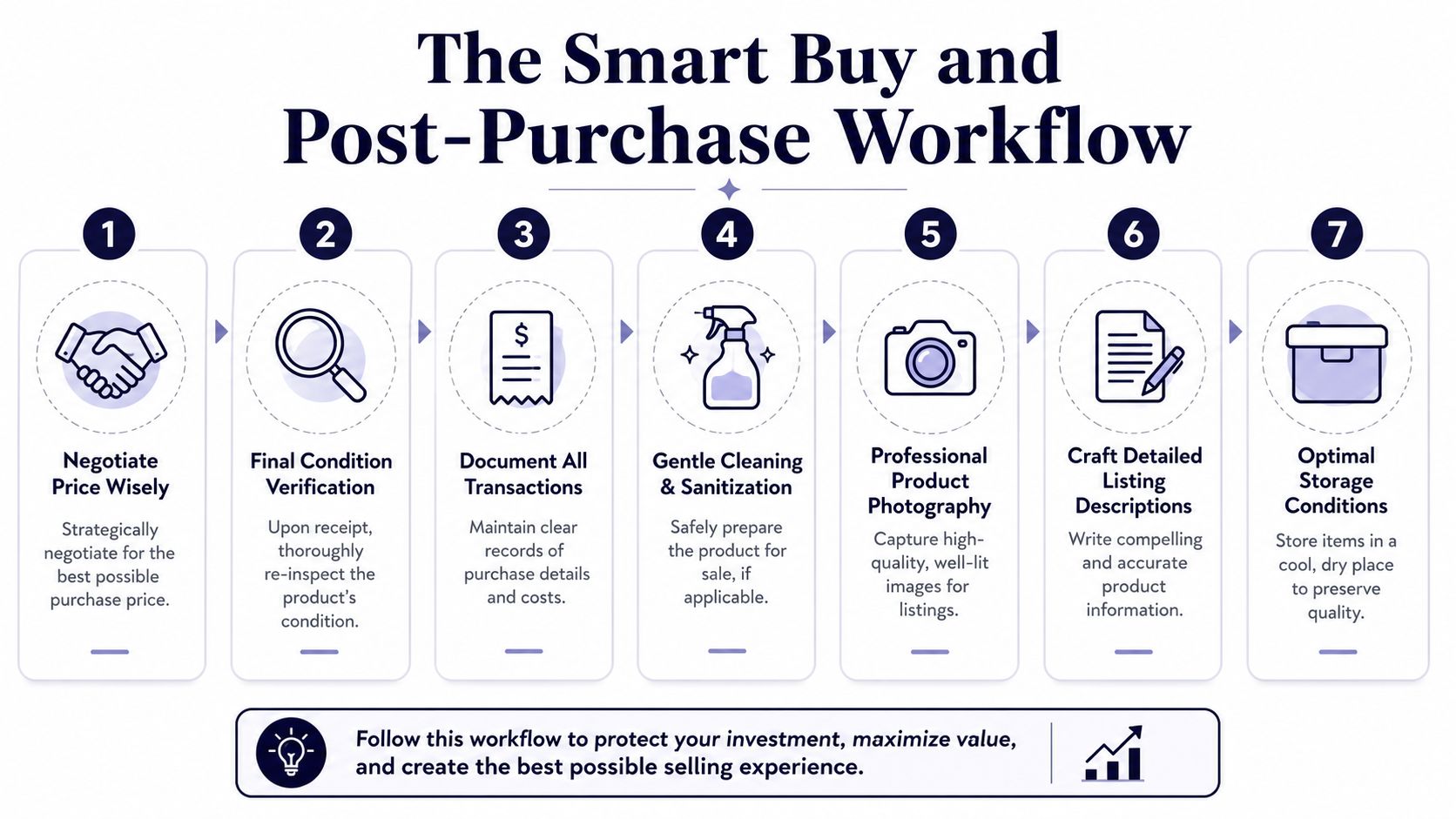
How to buy without hesitating
Decide your number before the chat starts. If a MAC limited-edition lipstick only makes sense after a perfect negotiation, the margin is too thin. Good inventory should still work after ordinary back-and-forth, platform fees, and one price drop if the first listing stalls.
My rule is simple. Buy speed comes from prep, not instinct.
Use this workflow at the point of purchase:
- Verify the item against your notes: Match the exact shade, finish, size, and packaging version to the sold comps you checked earlier.
- Confirm the condition in real time: Look again for broken seals, hairline cracks, powder damage, label wear, and missing cartons.
- Keep seller questions tight: Ask “Is it unopened?” or “Has it been stored in a bathroom or car?” Short questions get usable answers.
- Bundle with a target, not randomly: If a seller has discontinued Clinique, Becca, and Too Faced in one lot, build the offer around the two items with proven resale demand.
- Log your cost immediately: In a 10-piece lot, assign a unit cost before you leave. Waiting until later leads to bad pricing and fake margins.
Mixed lots are where newer resellers get sloppy. One strong item can justify the buy, but only if the rest of the lot does not erase the margin with dead stock, damage, or long-tail items that sit for months.
If one item carries the deal, assign most of the cost basis to that item first. Treat the rest as upside only after sold comps support a resale price.
How to prep and relist for trust
Profit is protected after the buy. A buyer looking at discontinued cosmetics is checking for red flags the whole time. Packaging damage, vague photos, and soft wording cost real money because they shrink your buyer pool and push your listing into the “maybe fake, maybe old” bucket.
A clean post-purchase process keeps that from happening:
Re-inspect under strong light
Check hinges, pans, bullet tips, mirror condition, outer box wear, and any shift in product texture.Clean the exterior only
Wipe dust and fingerprints off the compact or carton. Leave seals, stickers, and labels untouched.Photograph every trust signal
Capture the front, back, bottom label, batch code, seal, insert, outer box, and each flaw. For brands like MAC or Estée Lauder, that extra label shot often decides the sale.Write titles for search and buyer confidence
Include brand, product line, exact shade, and accurate condition terms such as “sealed,” “new in box,” or “unused without box.”Keep descriptions plain and complete
State what is included, mention visible wear, and avoid claims you cannot prove. “Stored in a smoke-free closet, seal intact, outer box shows shelf wear” sells better than hype.Store inventory like it still matters
Use a cool, dry shelf away from bathroom humidity, direct sun, and hot car trunks. Heat turns clean inventory into return requests.
Strong listings remove doubt fast. In discontinued beauty, that usually matters more than writing flair. Buyers pay for confidence, and confidence comes from clear photos, exact wording, and pricing that still leaves room for a fast sale if you need to move inventory.
Build Your Discontinued Beauty Business
The resellers who do well with discontinued makeup for sale aren't chasing nostalgia. They're running a repeatable system.
The workflow is straightforward. Source where overlooked inventory appears. Verify authenticity and condition before money changes hands. Analyze recent sold demand and actual net profit, not just visible asking prices. Buy with enough margin for the listing to survive reality. List with photos and wording that answer buyer concerns before they ask.
That approach turns a chaotic category into something much more stable. You stop buying random old cosmetics and start buying documented demand. You stop guessing what a vintage compact might be worth and start filtering for items that have both buyer interest and enough trust signals to move.
This niche rewards calm operators. If a product is real, presentable, and priced from sold data, it has a path to profit. If it's fake, vague, or missing key verification details, it becomes a time sink.
Stick to the process and the category gets much easier. You'll pass more often, but your buys will be cleaner, your listings will convert better, and your capital won't get trapped in nostalgic dead stock.
If you want faster buy-or-pass decisions while sourcing, ScanFlip AI helps you identify items from photos, check cross-platform sold comps, and estimate net profit after fees and shipping. That's a better way to evaluate discontinued beauty finds than bouncing between marketplace apps and doing the math by hand.