
10 Best Discontinued Products Websites for Resellers in 2026
You find a retired dinnerware plate at an estate sale, a discontinued shampoo on a liquidation shelf, or an older fragrance bottle with no box and no useful barcode. In those moments, a discontinued products website is a sourcing tool, not a trivia database. It helps confirm what the item is, whether buyers still want it, and whether the margin survives fees, shipping, and return risk.
Resellers miss profit when they run every odd item through the same marketplace search. That shortcut breaks down fast with china patterns, salon products, niche fragrances, and discontinued candy. Each category has its own demand signals, pricing quirks, and verification method.
The sites in this guide are organized by niche for that reason. Tableware buyers need pattern matching and replacement pricing. Beauty sourcing needs batch caution, expiration checks, and sell-through discipline. Candy and fragrance calls for tighter trial-buy workflows because condition, freshness, and authenticity can erase margin in a hurry.
For fast sourcing, pair these niche sites with an item identifier app for resellers and a profit calculator such as ScanFlip AI. That combination lets you identify the product, verify replacement demand, estimate fees, and make a buy or pass decision while you are still standing in the aisle.
That is the key edge here.
This list goes beyond naming websites. It shows where each one fits in an arbitrage workflow, what kind of inventory it handles best, and where the downside sits if you get sloppy.
Table of Contents
- 1. Replacements, Ltd.
- 2. Classic Replacements
- 3. Tabletop Designs
- 4. Denby Finder
- 5. BuyMeBeauty
- 6. Discontinued Beauty
- 7. UCo Outlet
- 8. CandyFavorites
- 9. CandyWarehouse (Discontinued Candy collection)
- 10. Pleroma Fragrance
- Top 10 Discontinued Products Sites Comparison
- Final Thoughts
1. Replacements, Ltd.
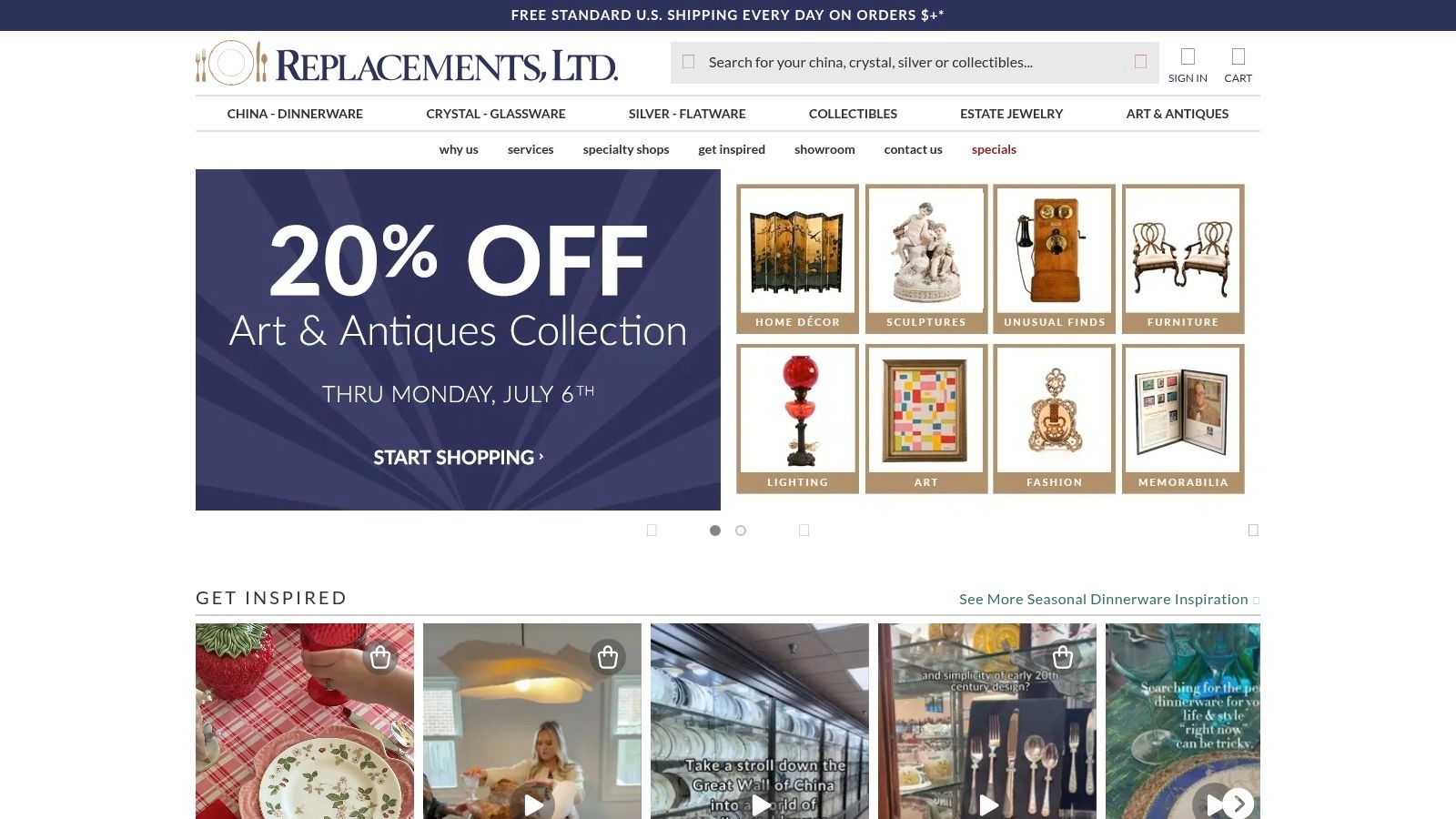
Replacements, Ltd. is the first discontinued products website I'd check for dinnerware, crystal, and flatware. If you source estate sale kitchens, this site solves the biggest problem in that niche: figuring out whether a random plate is common filler or one piece away from completing a valuable set.
The catalog depth is the draw, but profitability stems from the pattern-matching workflow and wait-list style alerts. If you've got a partial Noritake, Lenox, Mikasa, or Wedgwood set, you can use Replacements to identify the exact pattern, then decide whether to sell single replacement pieces, complete the set, or hold for a stronger buyer.
Why it works for pattern-based flips
A lot of tableware profits come from completeness. A gravy boat, covered sugar bowl, or serving platter can change the listing from “miscellaneous dishes” into a collector purchase. Replacements helps you spot those missing links faster than general marketplace browsing.
I also like it as a pre-buy validation tool. If I'm staring at a stack of china in a church thrift store, I don't want to guess on pattern names from memory.
- Pattern ID first: Match the design before you comp anything.
- Check single-piece availability: If key pieces are hard to find, your incomplete set may have stronger resale appeal.
- Watch weight and fragility: Heavy, breakable inventory can kill a decent spread once packing materials and postage enter the picture.
Practical rule: In tableware, margins often disappear in the box, not at the buy price.
For fast field decisions, pair that pattern confirmation with a barcode-free item identifier workflow built for odd and untagged inventory. That's especially useful when the backstamp is faded or the item isn't clearly marked.
2. Classic Replacements
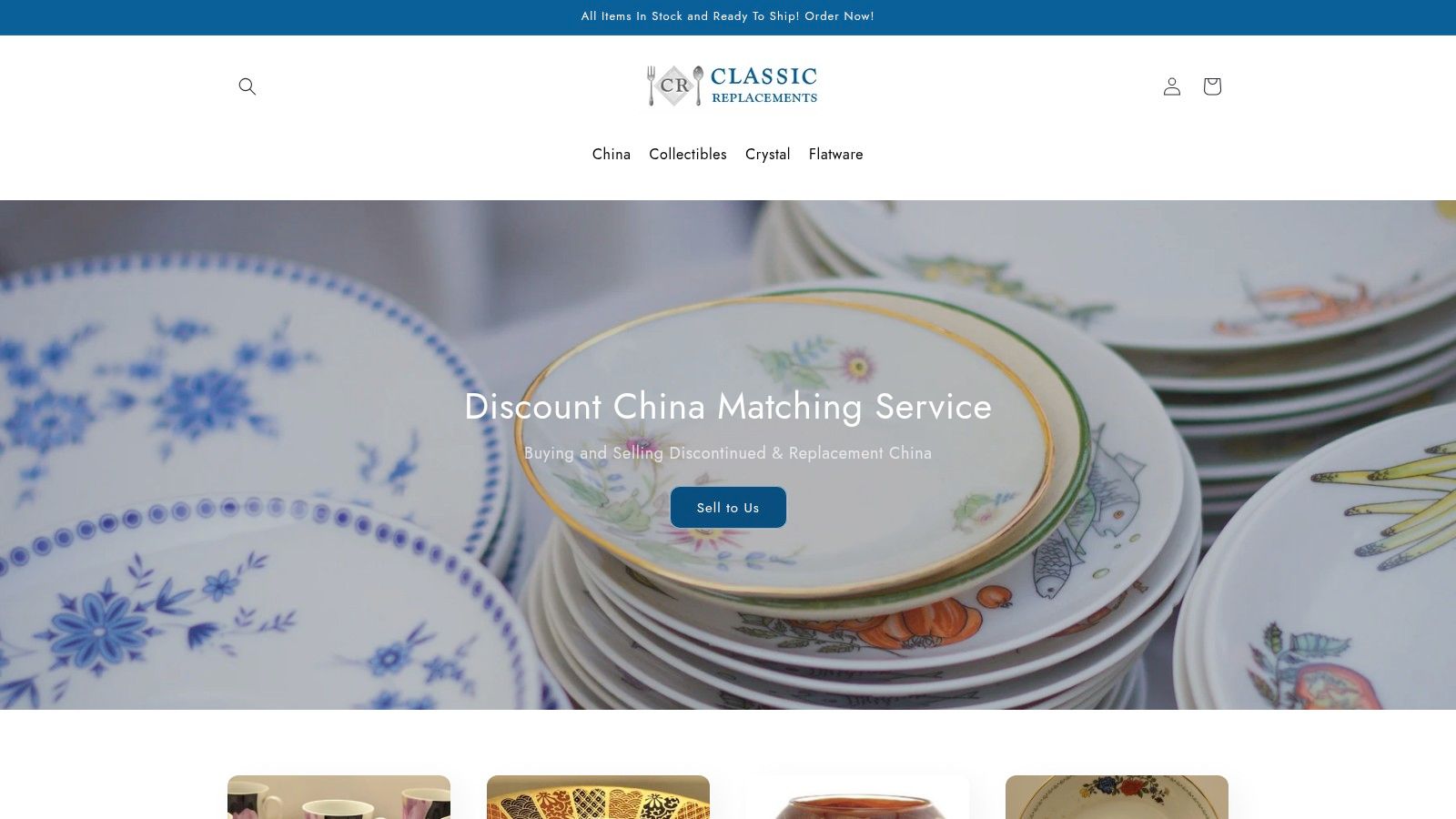
Classic Replacements is smaller and more concierge-driven than the biggest players, which is exactly why some resellers do better with it. This is a useful site when you already know the niche and need help finding an obscure piece instead of browsing a giant catalog.
Its “find it for me” style sourcing support is especially good for bundle builders. If you've bought a partial Royal Doulton, Villeroy & Boch, or Oneida set cheap, completing it can lift the final sale more than chasing another random thrift find.
Best use case
Use this site when the spread comes from completion, not discovery. In other words, you've already sourced the core lot and now need one or two pieces to turn a broken set into a coherent listing.
That's a different game from broad arbitrage. Instead of asking “what can I buy here,” you're asking “what missing piece raises the exit price most?”
A simple workflow works well:
- Buy partial sets cheap: Focus on clean condition and recognizable brands.
- Identify the missing anchors: Teapots, serving bowls, creamers, and specialty pieces often matter more than extra dinner plates.
- Source selectively: Don't over-complete weak patterns. Add only what improves sell-through or bundle quality.
The trade-off is inventory variance. Some patterns move steadily. Others sit until the one collector who needs them shows up. That makes Classic Replacements better for patient sellers who understand the category than for someone trying to brute-force quick flips.
3. Tabletop Designs
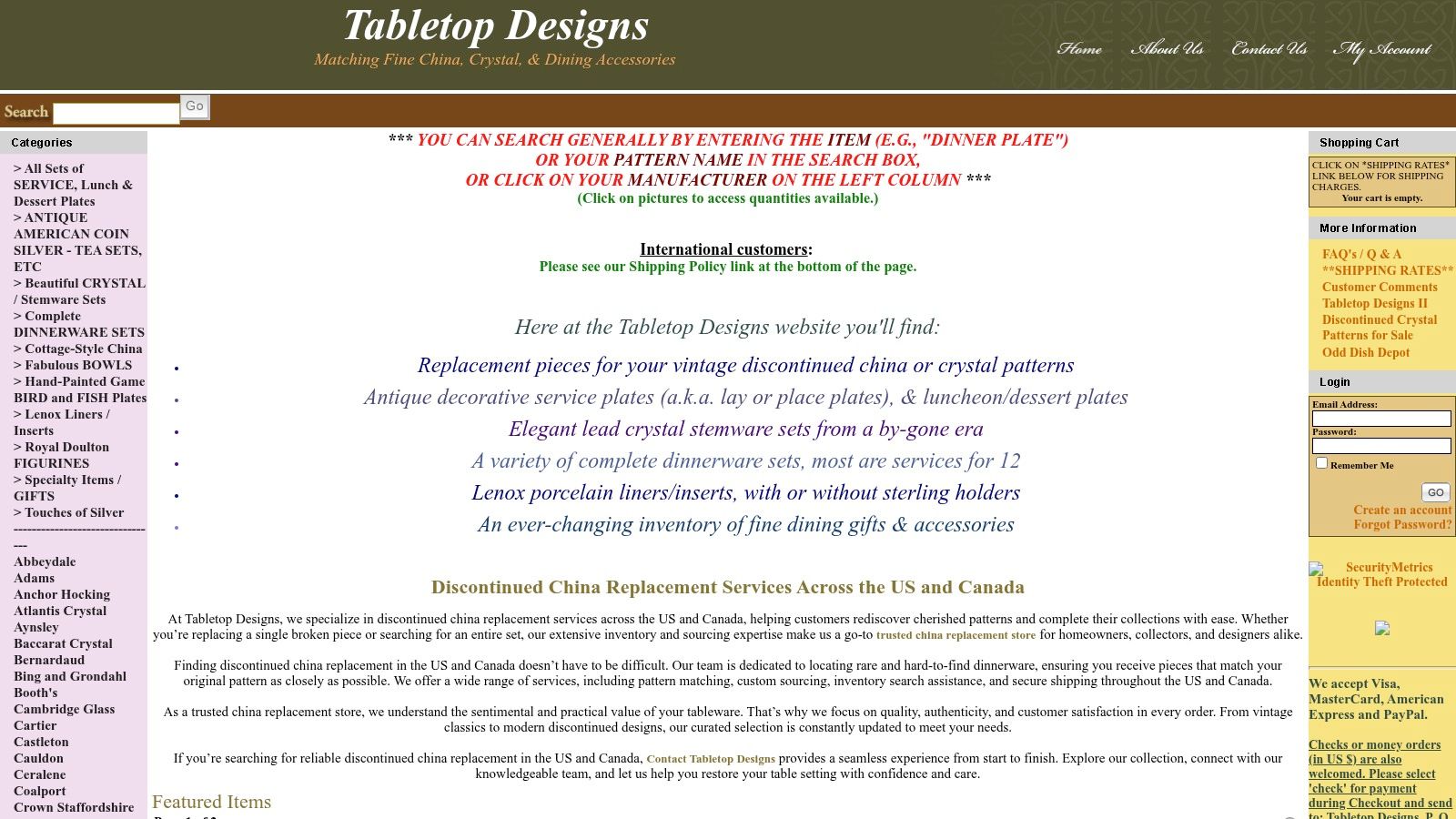
Tabletop Designs is a cleaner fit when you want less noise and more focus. The site specializes in discontinued china replacement and on-request sourcing, which makes it practical for resellers who frequently find partial household sets in regional estate sales.
I like sites like this for one specific reason. Broad marketplaces tempt you to compare everything against everything. Niche replacement sites keep you centered on exact-match demand.
Where it fits in a sourcing routine
This is a strong second-check website. First, confirm the maker and pattern from stamps, shape, and trim. Then use Tabletop Designs to see whether exact replacement availability looks tight or loose.
If availability looks thin, that can be a signal that a clean partial set is worth more attention. Not always. But it often points you toward listings where collectors care about matching pieces rather than generic everyday use.
Don't confuse “old” with “valuable.” Exact-match demand matters more than age in replacement categories.
One useful lens comes from insurance and valuation workflows for discontinued items. In consumer goods, a discontinued model can become impossible to replace with the exact same item within a year, which is why specialists use “like, kind, and quality” attribute matching instead of relying only on model numbers in many databases, as explained in Xactware's guide to inactive and discontinued items. That same mindset helps in tableware. Exact match wins when possible. Close substitute is the fallback.
4. Denby Finder
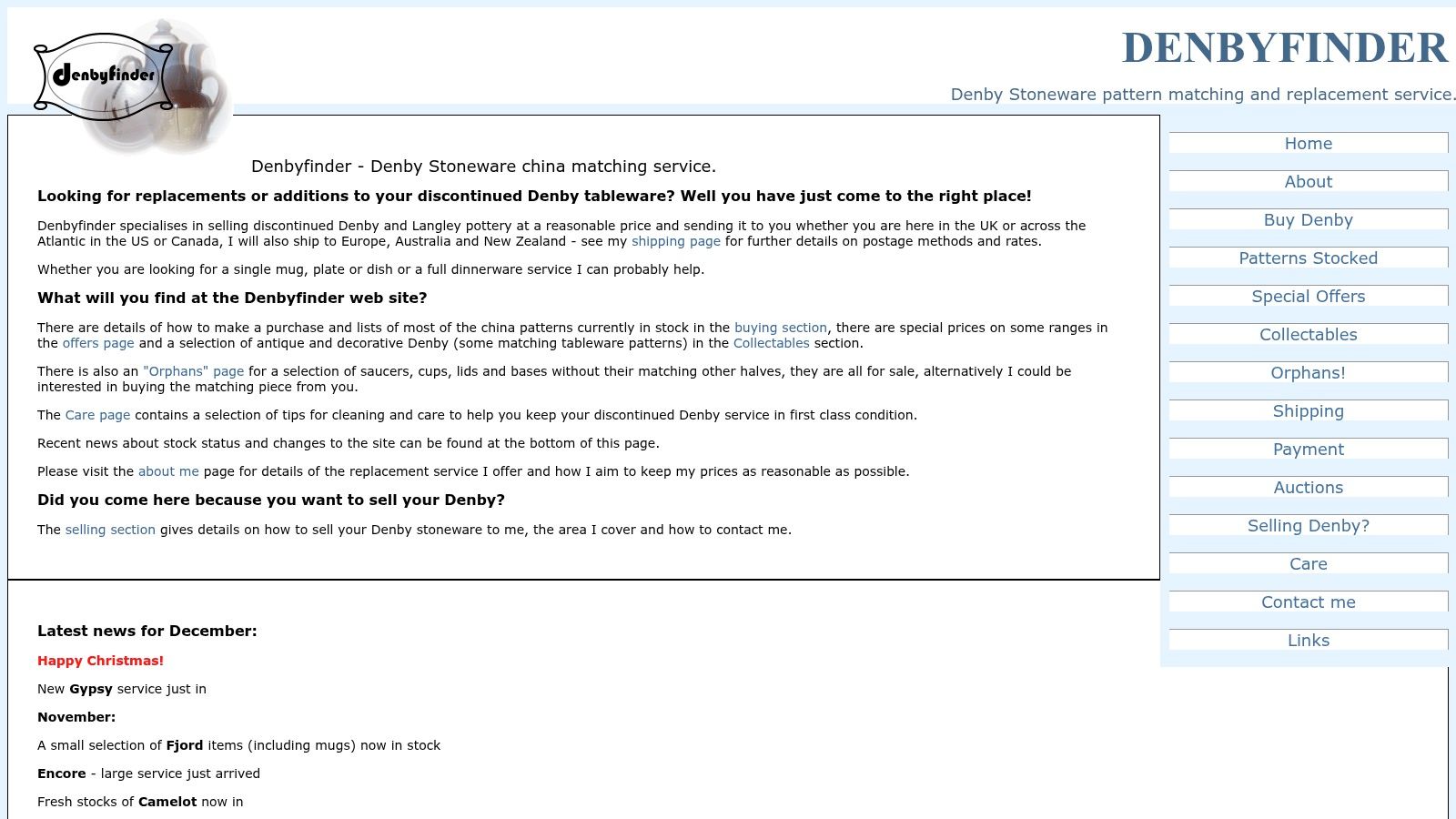
Denby Finder is narrow by design, and that's its advantage. If you source in areas where Denby stoneware turns up often, this site shortens the comping process because you're not sorting through unrelated brands and patterns.
Micro-niche discontinued products websites can be better than big directories when you already know what keeps showing up in your local sourcing circuit. One reseller may find endless Mikasa. Another finds Denby, Hornsea, and Portmeirion. Your buying tools should match your territory.
The Denby-specific edge
Denby buyers tend to care about pattern continuity, replacement utility, and condition. Chips, crazing, and utensil wear matter a lot. A specialized site makes those decisions easier because the audience is already pattern-aware.
This is how I'd use it in practice:
- Spot local repeat inventory: If Denby regularly appears in your thrifts, build a saved reference routine around it.
- Separate utility pieces from decorative pieces: Mugs, cereal bowls, and dinner plates usually source differently from serving items.
- Stay selective on condition: Stoneware survives, but damaged rims still crush resale value.
What doesn't work is trying to force scale from a one-brand site. Denby Finder is a precision tool, not a broad sourcing engine. It's best for resellers who know the brand well enough to recognize profitable patterns at a glance.
5. BuyMeBeauty
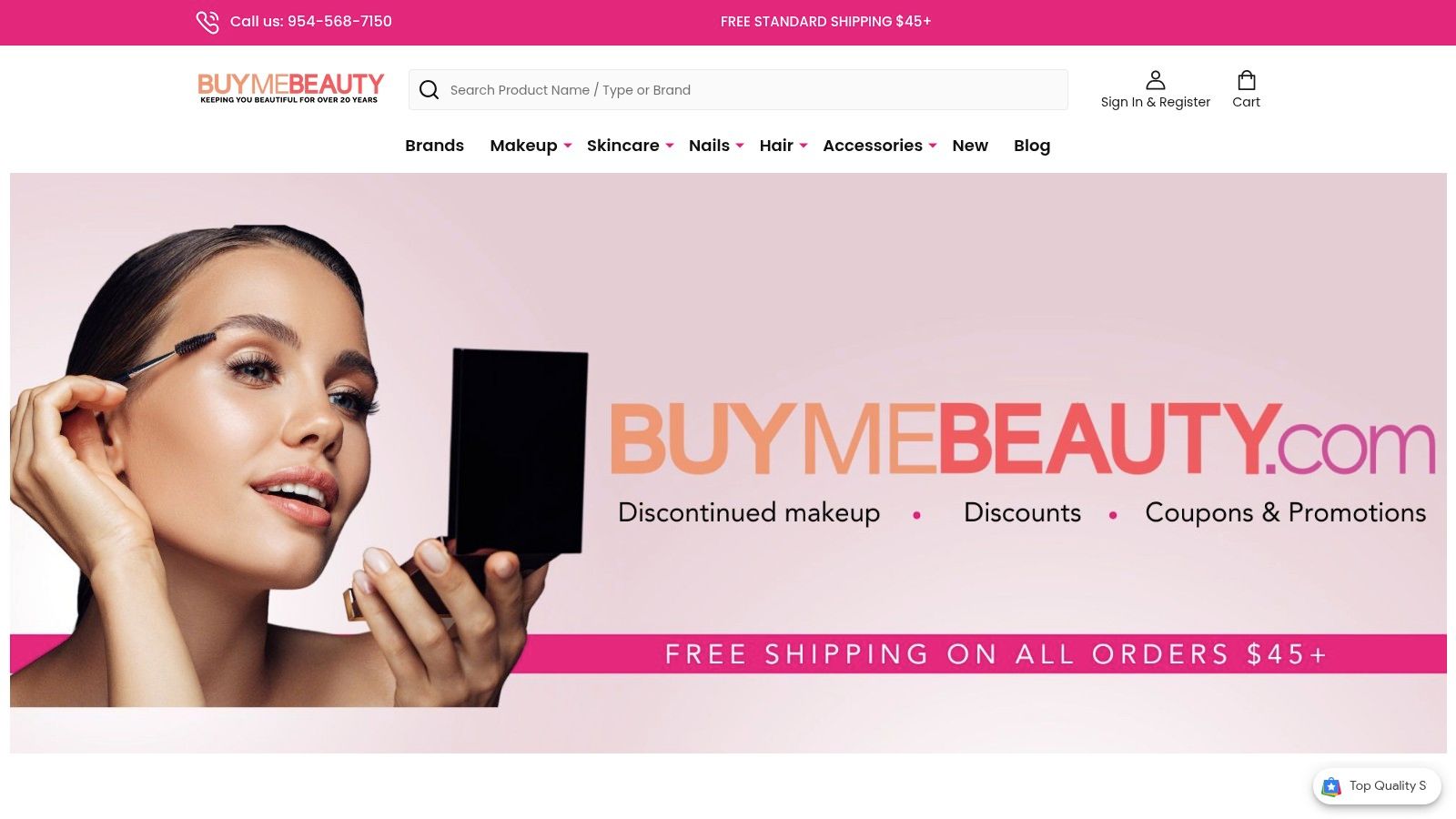
A shopper messages at 11 p.m. asking for a lipstick shade that left stores years ago. That is the kind of demand BuyMeBeauty serves well. Buyers here usually want an exact match, not a close substitute. In beauty, that difference matters because shade, finish, scent, and formula memory drive repeat purchases.
For resellers, this niche can pay. It can also go wrong fast. Old stock, counterfeit risk, broken seals, and sloppy shade matching turn a promising buy into returns and account trouble.
BuyMeBeauty works best as a verification layer inside a beauty arbitrage workflow. I use sites like this to confirm that a product line, shade, or discontinued variant still has a real buyer base, then I compare sold comps and run the numbers in a calculator like ScanFlip AI before I buy depth. If the item is opened, missing batch information, or priced close to current alternatives, I pass.
Best use case: shade-specific and formula-specific buys
The practical advantage here is catalog clarity. Beauty reselling lives or dies on specifics. A one-word difference in shade name can mean a different product, and similar packaging across reformulations causes constant listing mistakes.
That makes BuyMeBeauty more useful than a generic discontinued products website for cosmetic sourcing. It helps answer the first question fast. Is this exact item something people still look for?
A workable process looks like this:
- Confirm the exact product identity: Match brand, line, shade, finish, and packaging version before spending time on comps.
- Favor sealed inventory: Sealed units convert better and create fewer authenticity disputes.
- Check storage risk: Powder products usually tolerate age better than creams and liquids.
- Buy shallow on unclear lots: If batch codes, seals, or item history are fuzzy, test with a small order or skip it.
- Run net profit before committing: Fees, shipping, and return risk can erase margin on low-dollar beauty items.
The best flips here usually come from discontinued staples with a loyal following, not random drugstore leftovers. MAC shades, retired Revlon colors, older compacts, and familiar formulas can all work if the buy cost leaves room for returns and slower sell-through.
The trade-off is simple. BuyMeBeauty is strong for identifying real discontinued beauty demand, but beauty requires tighter quality control than housewares, candy, or outdoor gear. Sellers who treat it like a blind bulk category usually lose money. Sellers who verify details, stay strict on condition, and make quick buy or pass calls can pull steady profit from a niche that broader resale tools often price badly.
6. Discontinued Beauty
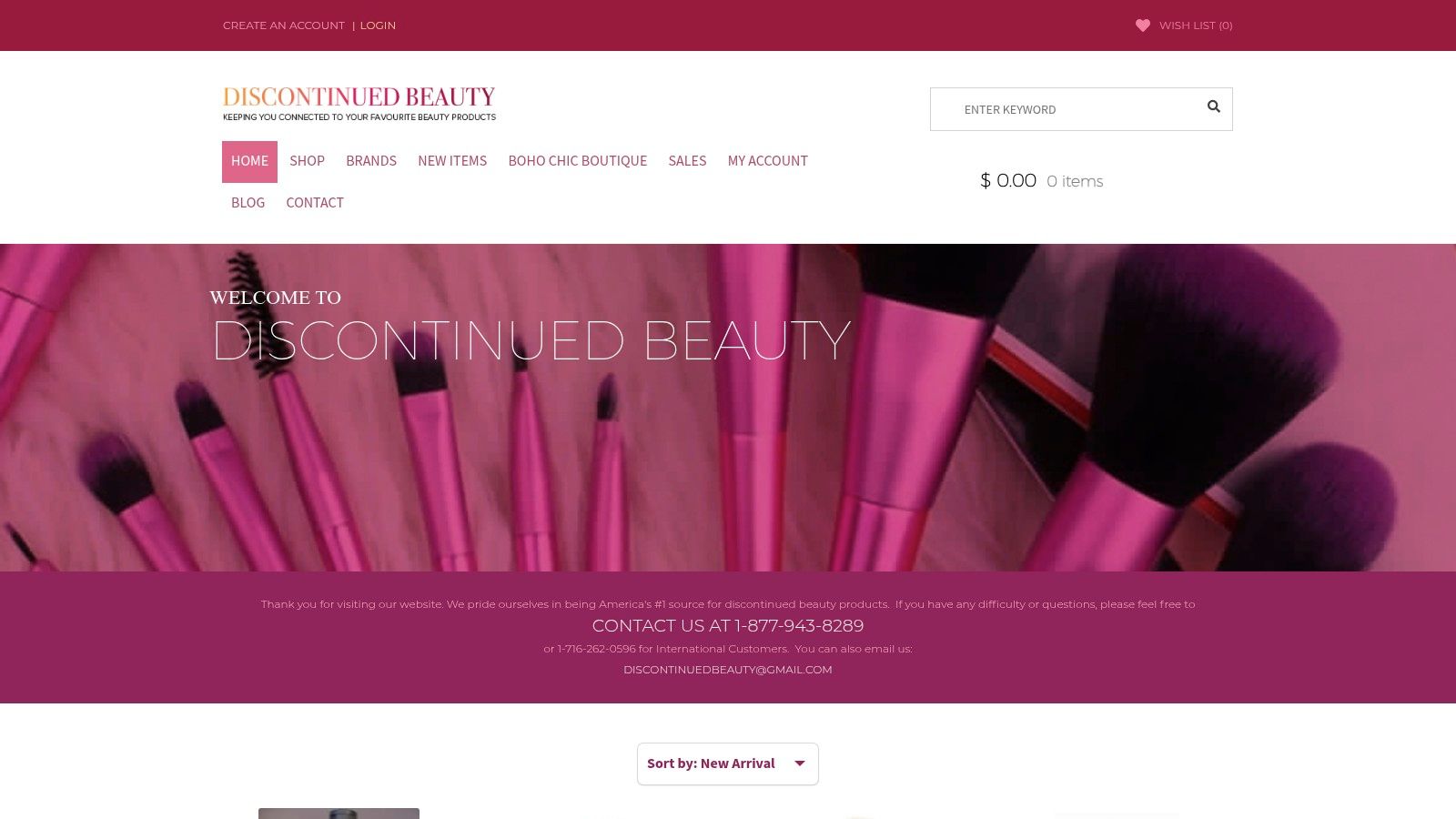
Discontinued Beauty has more of a boutique feel, and that's useful when you're hunting narrower salon and beauty demand. This site makes sense for buyers who know the pull of retired haircare, salon-grade lines, and niche beauty products that stayed popular after stores stopped carrying them.
The best opportunities here usually come from brand-loyal buyers, not trend buyers. Someone hunting a retired Redken, Sebastian, Matrix, or specialty styling product often wants familiarity, not novelty.
When boutique sourcing beats broad marketplaces
Broad marketplaces are good for seeing what's out there. Boutique discontinued sites are better for seeing what buyers still care enough to search for.
This distinction matters in SEO too. For discontinued product pages, keeping pages live can preserve search visibility when people still want the item. Conductor's guidance on handling discontinued product pages points out that pages can remain useful while search demand is still alive, instead of being removed too early. That same logic applies to sourcing. If a product still gets searched, it can still resell.
Buyers don't stop wanting a product just because the brand stopped making it.
The main caution here is provenance. With salon and boutique beauty, don't rely on vague assumptions about age or storage. Read descriptions carefully, and be conservative if the lot has unclear history.
7. UCo Outlet
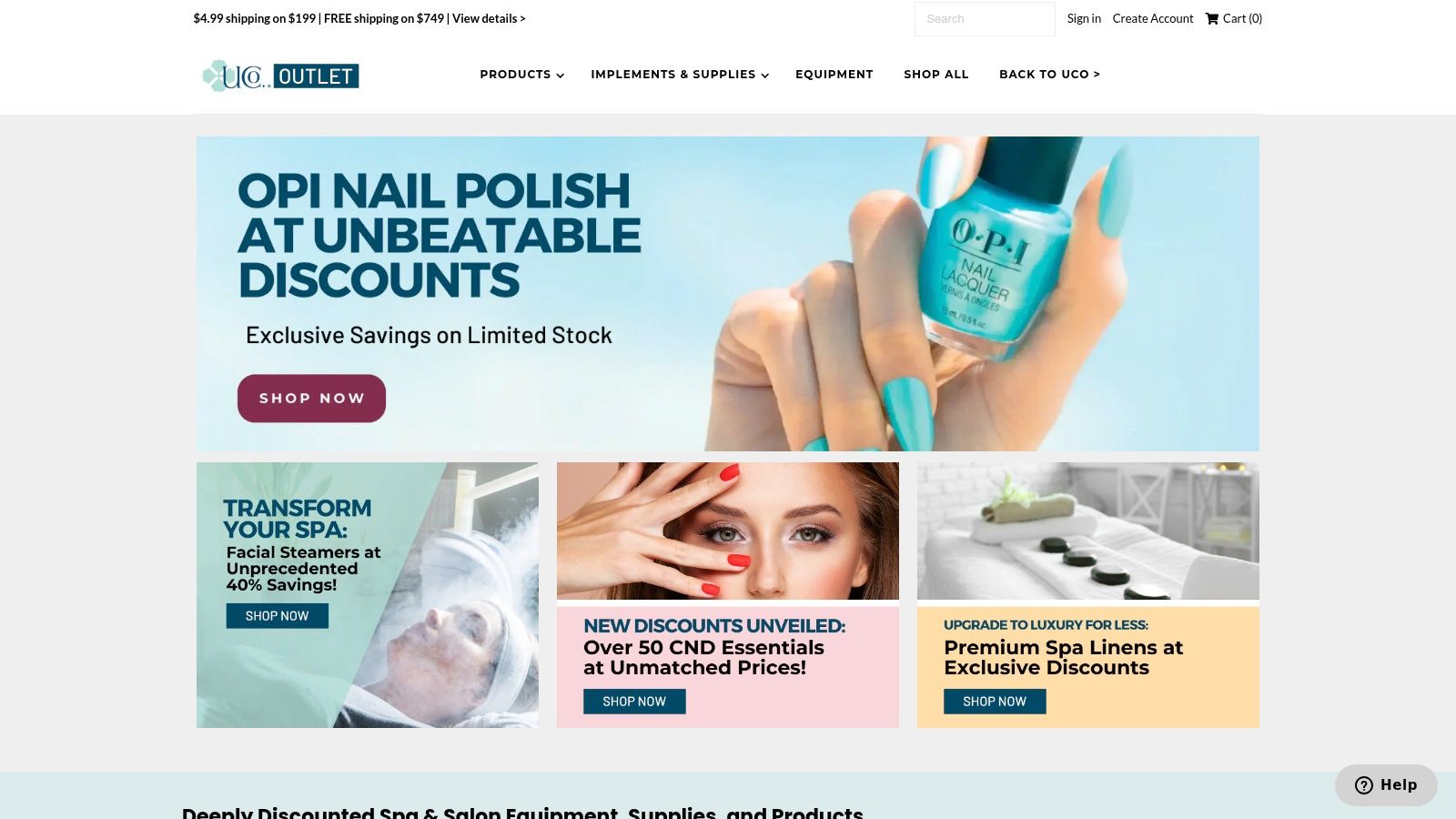
UCo Outlet plays a different game from the beauty boutiques. This one is useful because the inventory includes discontinued, overstock, and imperfect professional beauty goods with brand-partnership supply. If you like reselling pro-grade skincare, hair, or body products, that origin story matters.
The biggest win here isn't romance. It's risk reduction. Brand-direct or manufacturer-origin inventory usually gives you better authenticity signals than random third-party lots.
Why brand-direct matters here
Professional beauty buyers can be picky. They know packaging changes, salon-only lines, and texture differences. That means your sourcing source matters almost as much as the item itself.
A practical workflow for UCo looks like this:
- Target recognizable pro lines: Buyers are already trained to search for them.
- Read item condition carefully: “Imperfect” can mean cosmetic packaging flaws, and sometimes that's fine. Sometimes it isn't.
- Calculate true take-home: Beauty can be light to ship, but returns or complaints eat time.
This is also where fast sourcing tech pays off. The underserved reseller problem isn't just finding discontinued inventory. It's pulling sold comps across fragmented platforms and seeing net profit fast enough to make the buy decision in the moment. A YouTube discussion of discontinued-item sourcing highlights that gap and notes the value of sold-comp signals like 50 sold versus 10 listed indicating high demand with low supply. That kind of market shape is what you want to verify quickly before loading up.
8. CandyFavorites
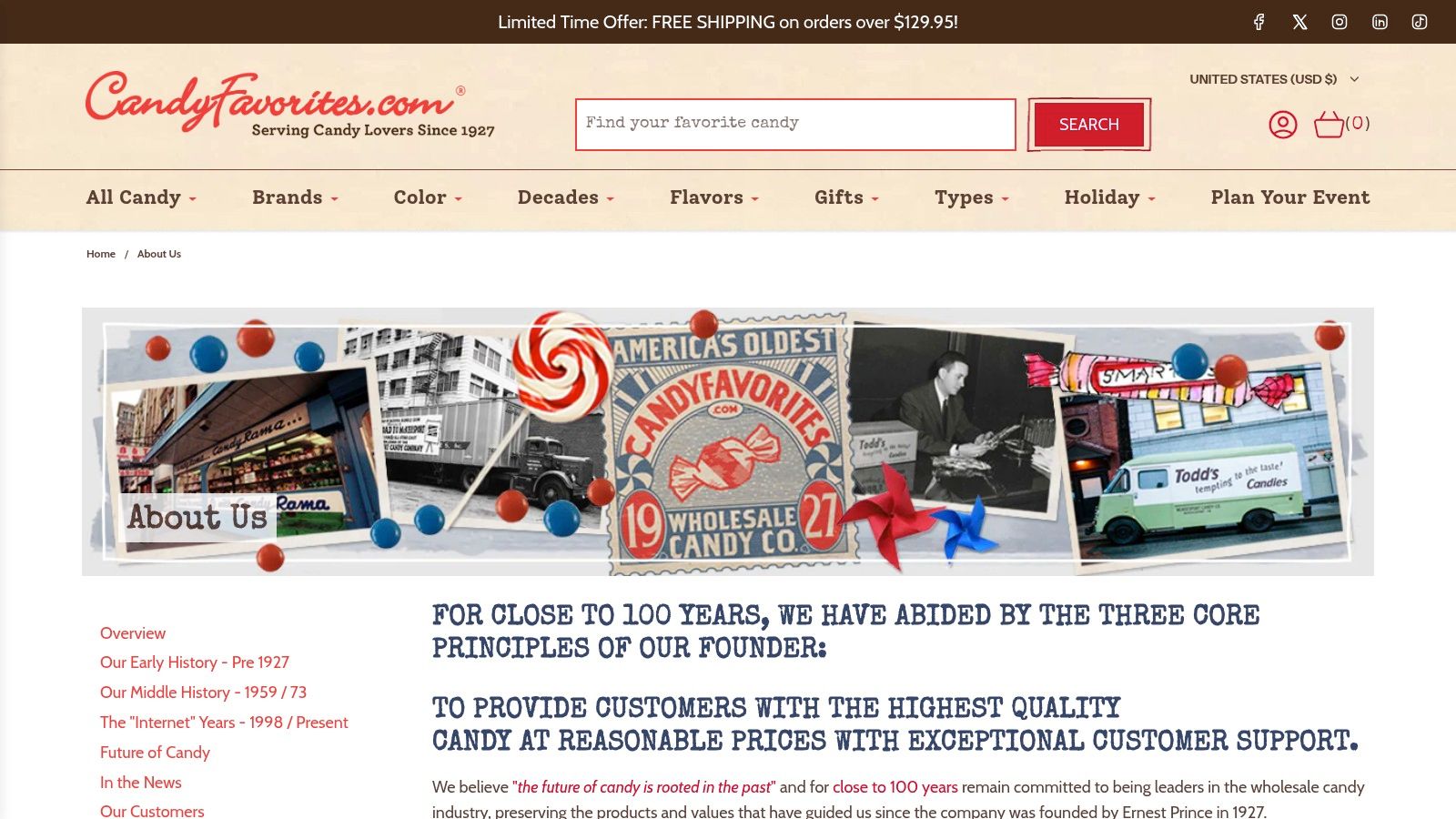
CandyFavorites is one of the more interesting discontinued products websites because it turns nostalgia into bundle potential. This isn't just about one candy bar someone misses. It's about decade packs, retro gift boxes, party favors, and themed lots.
That's the right way to think about candy reselling. Single-item profits can be thin. Themed merchandising is where it gets more attractive.
How to make nostalgic candy reselling work
This site works best when you build around occasions. Birthday nostalgia packs, office gifts, movie-night bundles, and old-school candy assortments all give buyers a reason to spend beyond one SKU.
The key is exactness. In candy, “close enough” often disappoints buyers. Some products are revivals, reformulations, or similar replacements rather than the exact old item people remember.
- Bundle around a theme: Decade, color, holiday, or brand family.
- Mind heat and shelf life: Summer shipping changes the math.
- Test small before scaling: Food inventory punishes overbuying.
If you're looking for categories that bundle well and sell with emotion attached, this overlaps with a lot of the logic in high-margin resale categories worth testing. Nostalgia does sell. But only if your packing, timing, and item accuracy are tight.
9. CandyWarehouse (Discontinued Candy collection)
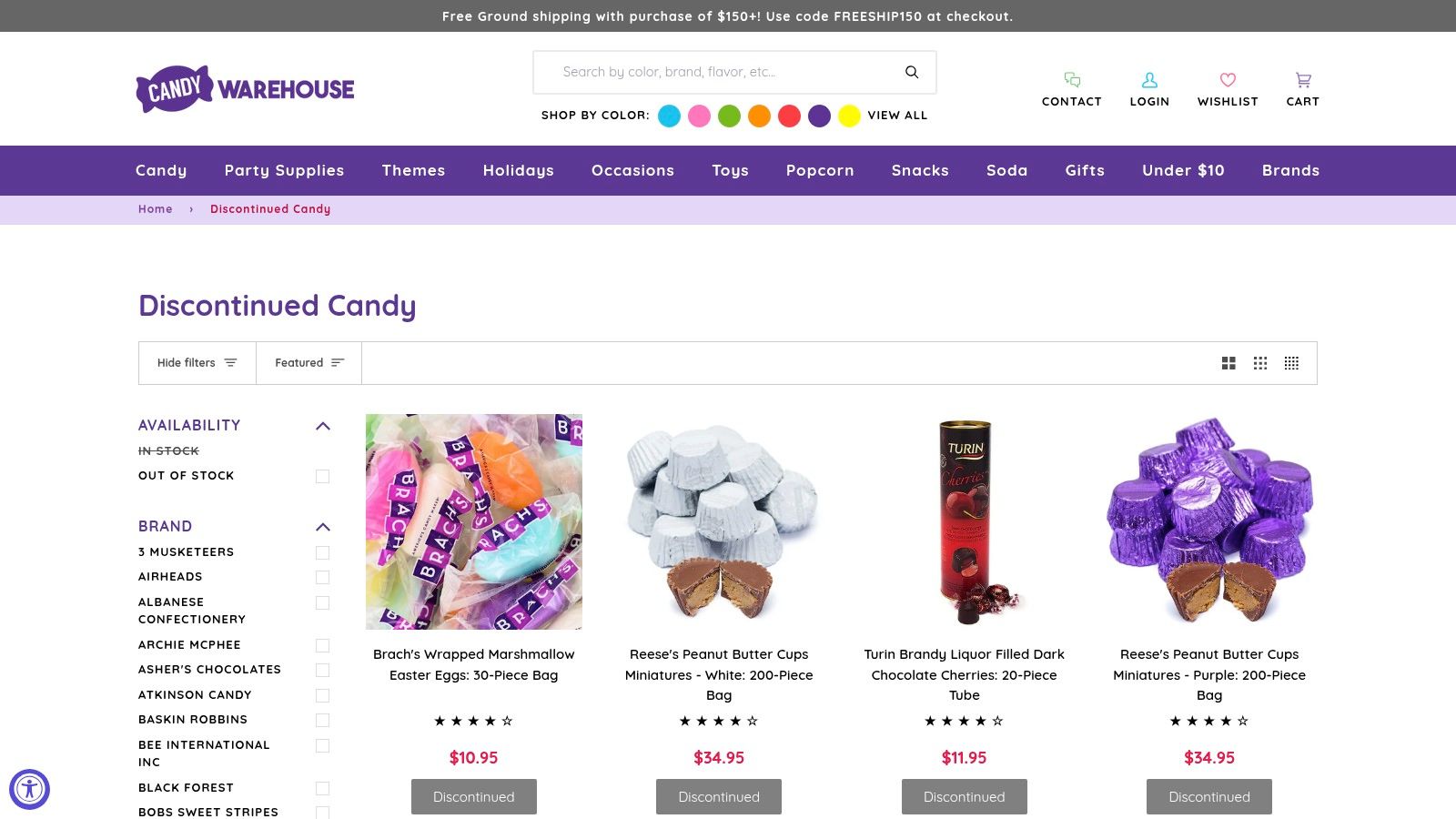
CandyWarehouse's discontinued candy collection is a good test bench. I wouldn't treat it as a deep moat source. I'd treat it as a quick place to validate bundle ideas, recognized brand demand, or seasonal leftovers worth trial buying.
That distinction matters. Some sites are inventory engines. Some are idea engines. This one leans toward the second role for resellers.
Best workflow for trial buys
Use CandyWarehouse when you want to test a concept with controlled exposure. Maybe you're trying a retro movie snack lot, a discontinued gum bundle, or a novelty candy mix that needs known brands to pull clicks.
I like a short leash here:
- Start with small quantity tests: Prove the bundle format before buying depth.
- Watch holding time closely: Food inventory doesn't reward slow mistakes.
- Photograph exact packaging: Brand recognition drives these sales.
A lot of beginners overestimate the strength of the word “discontinued.” In candy, nostalgia helps, but freshness, timing, and presentation still decide whether the listing converts.
10. Pleroma Fragrance
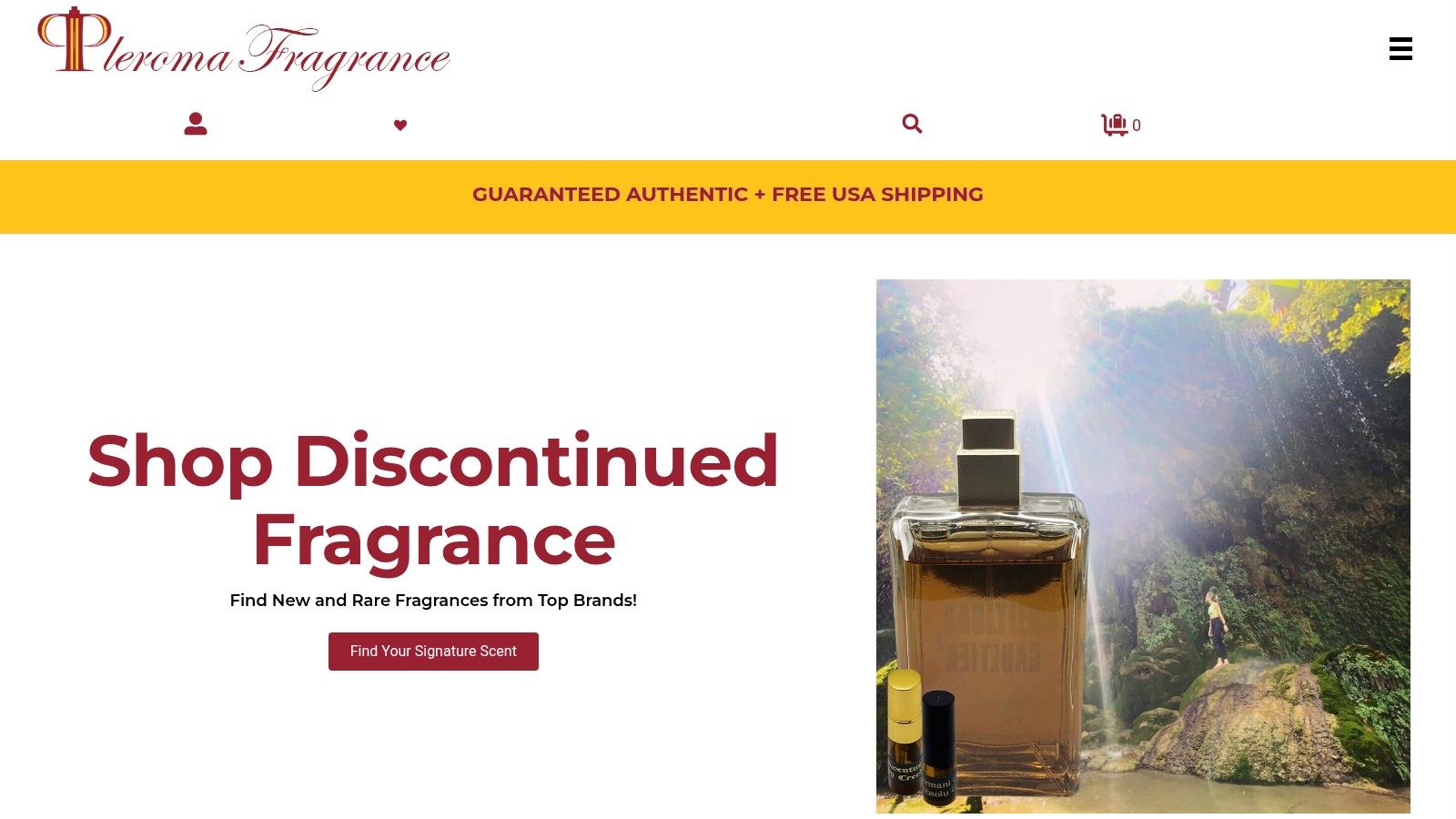
Pleroma Fragrance is one of the more useful niche fragrance sites for resellers because it offers both discontinued fragrances and decants. That creates a smart arbitrage angle. You can test demand with a smaller buy-in before committing to full bottles.
Fragrance buyers can be obsessive in a good way. They care about reformulations, vintage batches, bottle style, fill level, and provenance. That means this category can pay well, but only if you list carefully and document what you have.
How to use decants as market research
Decants help you avoid a common mistake. Buying expensive full bottles of a scent with a passionate but tiny buyer pool. A smaller-format test can tell you whether interest is real enough to justify hunting the full presentation later.
This category also benefits from clear sourcing discipline. In fast environments like thrift stores and estate sales, you need a workflow suited to items that may not have useful barcodes at all. That's where a retail arbitrage process built around identification, sold comps, and net-profit decisions becomes more practical than bouncing between marketplace apps.
One broader retail lesson also applies here. In inventory analysis, sales from discontinued items can still show up after products are retired, and one Power BI discussion notes that 6% of total sales revenue can come from discontinued products. That's a reminder not to dismiss “old” inventory. Discontinued doesn't mean dead. It often means the buying and pricing rules changed.
Top 10 Discontinued Products Sites Comparison
| Marketplace / Specialist | Key sourcing features | Target buyer & demand | Reseller value proposition | Key risks & costs |
|---|---|---|---|---|
| Replacements, Ltd. | Massive catalog, photo pattern ID, wait‑list alerts, buy/sell program | Collectors of discontinued tableware; steady niche demand | Pre‑validated demand, deep comps for long‑tail patterns | Competition on popular patterns, heavy/breakable shipping costs |
| Classic Replacements | Inventory of legacy patterns, concierge "find it for me", single pieces/sets | Buyers completing sets or seeking rare pieces | Sourcing support to raise ASPs by completing sets | Variable inventory turns, international shipping impacts margins |
| Tabletop Designs | Replacement service, inventory + on‑request sourcing, ships US/CA | Collectors needing exact matches, estate/thrift fillers | Precise matches reduce relisting effort, less marketplace noise | Smaller catalog, lead times for special requests |
| Denby Finder | Denby‑specific pattern lookup and matching, replacement pieces | Highly targeted Denby collectors; easier comps | Simplifies sourcing for brand‑specific finds, clearer pricing | Very limited scope, sporadic stock on rare patterns |
| BuyMeBeauty | Discontinued cosmetics catalog, shade/line filters, FAQs | Cult beauty buyers and repeat purchasers | Predictable demand for cult shades, accurate listings when boxed | Counterfeit risk in beauty, limited shelf life for some SKUs |
| Discontinued Beauty | Salon/legacy beauty lines, brand/category navigation | Salon‑grade and brand‑loyal customers | Access to high‑demand legacy items with strong signals | Fast inventory turnover, need to verify batch provenance/age |
| UCo Outlet | Brand partnerships, manufacturer overstock/imperfect stock | Resellers seeking authentic pro‑grade lines | Strong authenticity signal, potential margin on pro brands | Imperfect/open‑box items require inspection, expiration/PAO concerns |
| CandyFavorites | Nostalgic/discontinued candy, wholesale roots, curated assortments | Seasonal/retro bundle buyers, repeat gift customers | Good for themed bundles and multi‑unit margins | Heat‑sensitive shipping, seasonality, verify "discontinued" claims |
| CandyWarehouse (Discontinued) | Dedicated discontinued candy section, brand filters, case/single buys | Nostalgia buyers, bundle testers | Centralized source to trial bundle ideas | Hit‑or‑miss availability, food dating and seasonal limits |
| Pleroma Fragrance | Discontinued fragrances, decants for testing, some full bottles | Fragrance enthusiasts and collectors | Low‑cost decants to validate demand before full buys | Provenance/authenticity required, fragile and regulated shipping |
Final Thoughts
You find a discontinued dinner plate at a thrift store, a boxed salon shampoo at a closeout shelf, and a retired candy flavor in a liquidation lot. All three can resell. All three need a different buying process.
That is the main takeaway from this list. A discontinued products website is not one market. It is a set of niche tools, and each one works best when paired with the right sourcing workflow.
For tableware, the money is in exact identification, pattern matching, and set completion. Sites like Replacements, Classic Replacements, Tabletop Designs, and Denby Finder help confirm what the item is before you trust any comp. For beauty and fragrance, the upside comes from brand loyalty and hard-to-find SKUs, but mistakes get expensive fast. BuyMeBeauty, Discontinued Beauty, UCo Outlet, and Pleroma Fragrance are useful because they help you verify line names, packaging, and buyer demand signals before you commit cash. Candy is different again. CandyFavorites and CandyWarehouse are strongest when you treat them as bundle research and seasonal demand tools, not just product catalogs.
The profit comes from matching the source to the category.
My rule is simple. Use niche sites to identify and validate. Use sold comps to price. Use fee and shipping math to decide whether the item is worth buying at all. That keeps you out of the common trap where a product looks rare, sounds nostalgic, or appears discontinued, but still sells too slowly or too cheaply to matter.
This is also where resellers separate curiosity from process. Good buyers do not just collect tabs and screenshots. They build repeatable loops by niche. In tableware, that might mean pattern ID, replacement-piece demand, breakage-safe shipping costs, and average sell-through. In beauty, it means checking authenticity, lot condition, expiration risk, and whether repeat buyers exist for that line. In candy, it means case sizing, melt risk, and whether the margin survives after protective packaging and summer shipping.
If you use the sites above as category-specific filters, they get a lot more useful. They stop being a directory and start acting like a sourcing system.
If you want faster buy-or-pass decisions while sourcing discontinued goods, ScanFlip AI is built for exactly that job. It identifies items from photos, pulls sold comps across major marketplaces, factors in platform fees and shipping, and shows expected net profit in one place. That is especially useful for untagged, vintage, or barcode-missing inventory where niche discontinued websites help with identification, but the final decision still comes down to real resale comps and take-home math.