
Mastering Discontinued Makeup Products: Your Reseller Guide
You're probably staring at a thrift shelf, estate sale vanity, or Facebook Marketplace lot with the same question every reseller asks: is this old makeup junk, or is it money?
That question gets expensive when you guess wrong. Discontinued cosmetics are one of those categories that look low-value until you know the signals. A dusty compact, a sealed powder foundation, or a forgotten palette from a retired line can sell fast to the right buyer. The problem is that beauty buyers are emotional, platform rules are strict, and condition matters more than in most other categories.
This niche rewards resellers who move fast, inspect hard, and stay honest in their listings. If you treat discontinued makeup products like random clearance leftovers, you'll buy bad inventory. If you treat them like collectible consumer goods with safety limits, you can build a reliable flip category.
Table of Contents
- Why Discontinued Makeup Is a Reseller Goldmine
- Where to Find Discontinued Makeup Inventory
- The In-Aisle Scan Workflow for Fast Decisions
- Authenticating and Grading Your Finds
- Listing and Pricing for Maximum Profit
- Common Questions About Selling Discontinued Cosmetics
Why Discontinued Makeup Is a Reseller Goldmine
A lot of profitable inventory starts the same way. Someone clears a bathroom cabinet, tosses a makeup bag into a box lot, and assumes it has no resale value because the products aren't current anymore. That's exactly where resellers make money.
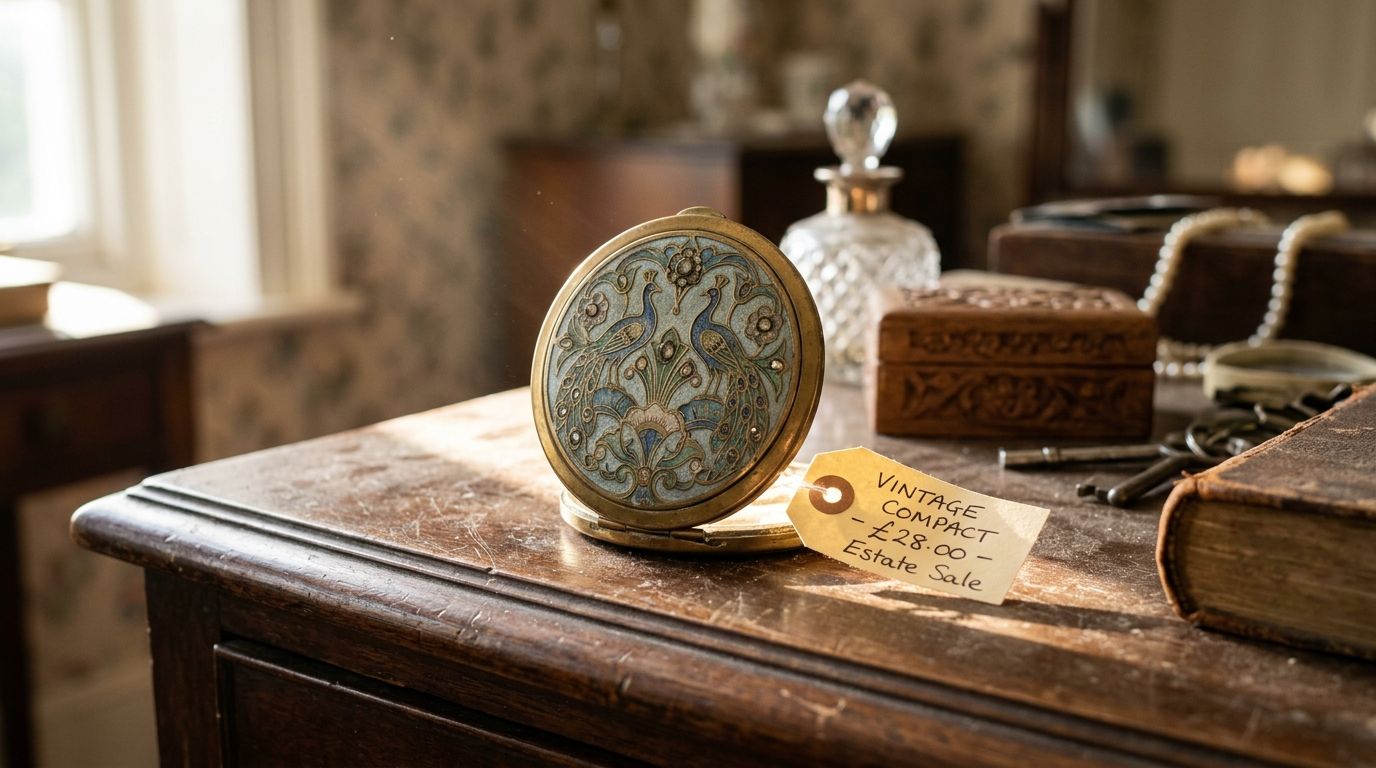
Discontinued makeup products aren't just leftovers. They sit in a real resale ecosystem. On eBay, there are dedicated shops focused on discontinued makeup products, with thousands of vintage and rare items actively traded, and brands such as Tokidoki still attract buyers even after the line ended in 2012 (eBay discontinued makeup marketplace activity).
Scarcity creates the buyer
When a brand kills a formula, retires a shade, or exits the category entirely, supply stops. Demand often doesn't. In beauty, that gap matters because buyers don't always want a replacement. They want the exact compact, exact shade name, exact embossing, or exact formula they already know.
That's why discontinued makeup products can outperform newer inventory in the same price bracket. Buyers aren't shopping broadly. They're hunting specifically.
A few patterns show up again and again:
- Brand exits create finite inventory. Victoria's Secret stopped selling makeup in 2014 to focus on other categories, which pushed its former beauty products into the secondhand market.
- Cult brands stay alive after retail death. Tokidoki operated its makeup line from 2006 until it closed in 2012, but buyers still seek specific characters and packaging.
- Economic stress pushes more items into resale. BH Cosmetics was acquired by Revolution Beauty in February 2022 after bankruptcy, and Flower Beauty by Drew Barrymore was reportedly closing in 2025, according to the verified data tied to the eBay reference above.
Nostalgia is not a small factor
Beauty buyers don't behave like buyers in commodity categories. A discontinued foundation or palette often carries routine, identity, and nostalgia. That creates a different sales dynamic than flipping a generic household item.
Practical rule: If a product has a known fan base, distinct packaging, and no direct replacement, don't judge it by age alone.
The best finds usually look unremarkable at first glance. A sealed powder from a retired line, a vanity tray with old Benefit items, or a mixed lot of discontinued lip products can hold more value than a trendy current release with no loyal following.
That's what makes this niche attractive. You're not trying to predict trends. You're supplying people who already know what they want.
Where to Find Discontinued Makeup Inventory
The easiest mistake in this category is sourcing only where everyone else looks. Thrift stores can work, but the better inventory usually comes from places where makeup shows up as part of a larger cleanout, not as a curated beauty listing.
Estate sales and house cleanouts
Estate sales are the strongest source because they produce older inventory in context. You're not just buying one compact. You're buying from a lifetime stash that may include department store brands, gift-with-purchase sets, and products tucked away in drawers.
Start in three places:
- Bedroom vanities. Older powders, compacts, blushes, and boxed gift sets often live here.
- Bathroom cabinets. You'll find practical staples here, but you need to be stricter about condition.
- Closet bins and travel bags. Sealed backups, unused gift items, and old makeup bags turn up here more often than people expect.
At estate sales, don't ask only for “makeup.” Ask whether there are unopened cosmetics, vanity items, or beauty gift sets not yet staged. Sellers often separate them late.
Local marketplaces and mixed lots
Facebook Marketplace, neighborhood selling apps, and local auction groups are useful because people list beauty items poorly. They'll post “old makeup bag,” “bathroom lot,” or “cosmetics bundle” without naming brands or shades.
That creates an edge if you know what to look for in photos:
- Older packaging styles often signal discontinued lines.
- Department store bags and train cases can hide better brands than the listing title suggests.
- Gift sets are worth opening up mentally item by item. The seller may price the set as clutter while one discontinued item carries the value.
Use search terms that broad buyers ignore, such as “vintage cosmetics,” “makeup lot,” “beauty bag,” “vanity drawer,” and retired brand names. If you also source other discontinued categories, this guide on finding discontinued products websites and sourcing opportunities is useful for building broader lead lists.
Thrift stores, flea markets, and antique booths
These aren't my first choice for liquids, but they're excellent for powders, compacts, mirrors, and sealed vintage pieces. Antique booths are especially good for decorative makeup items and older prestige packaging that crosses into collectible territory.
What works in person is simple:
| Location | Best target | Main risk |
|---|---|---|
| Thrift stores | Sealed items, powders, gift sets | Missing parts, hidden use |
| Flea markets | Bulk buys, older vanity stock | Heat exposure, poor storage |
| Antique booths | Vintage compacts, branded sets | Seller already knows rarity |
Older makeup is often stored with costume jewelry, perfume trays, and dresser accessories. Check the whole display, not just the cosmetics bin.
Online liquidation and secondary bulk sources
Some resellers skip this channel because they assume liquidation means current overstock. That's only partly true. Beauty closeouts, shelf-pulls, and mixed health-and-beauty lots can contain discontinued makeup products, especially when a retailer clears old planograms or merged inventory.
Read manifests carefully when they exist. If they don't, focus on sellers who provide lot photos close enough to inspect packaging, shade labels, or brand families. Unmanifested lots are where the upside lives, but only if you're disciplined enough to pass when the photos are weak.
The In-Aisle Scan Workflow for Fast Decisions
Most bad buys happen in the first minute. You see a brand you recognize, remember that people miss discontinued items, and start filling your basket before you know the exact product, condition, or take-home profit.
That's backward.
The profitable workflow is fast, but it isn't casual. It needs to answer four questions in order: what is it, what condition is it in, what has sold, and what's left after fees and shipping. That matters because, as discussed in a Reddit thread about discontinued makeup obsession, no existing content quantifies real-time resale profitability across marketplaces, even though forums show 1K+ users fixated on specific items (BeautyGuruChatter discussion on the profitability gap).
Start with a ten-second visual check
Before you scan anything, do a quick physical filter. This cuts out the obvious passes.
Check these first:
- Seal status. Factory sealed is strongest.
- Product type. Powders are usually safer bets than mascaras, glosses, or cream products.
- Packaging wear. Edge dents, cracked hinges, label peeling, and residue lower buyer confidence fast.
- Shade label presence. If the shade sticker is missing, expect slower sales and more buyer questions.
If the item fails the basic hygiene or condition check, stop there. A rare item can still be a bad buy if it invites returns.
Identify the exact item before you assume value
Identifying products often consumes most resellers' time. Beauty products often have tiny print, worn labels, or no barcode. Vintage and discontinued items are worse because packaging changed across runs, holiday editions, and regional releases.
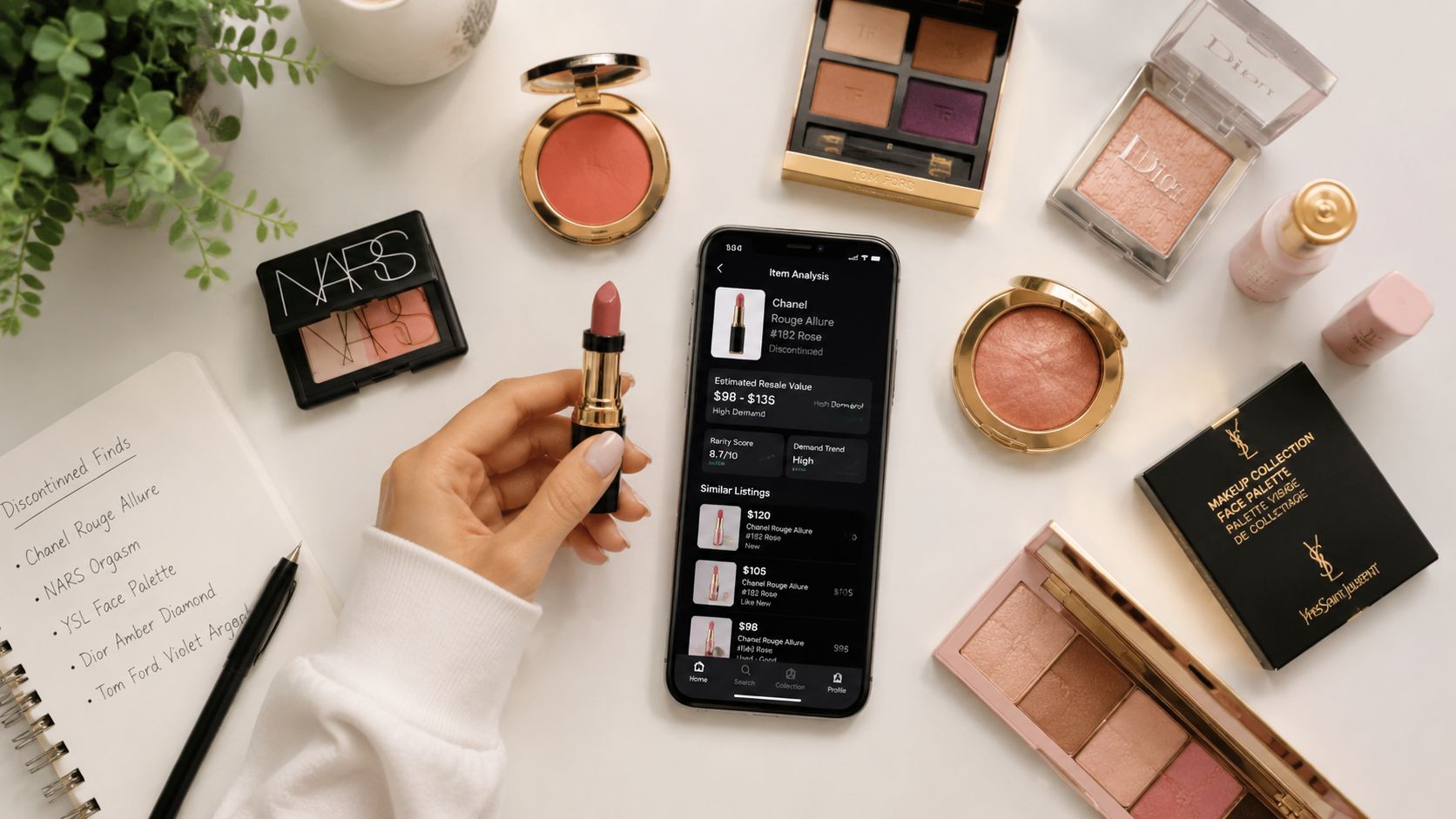
A barcode-only lookup won't help much here. You need image-based identification or a direct visual search process that can handle untagged items. If you want a cleaner breakdown of that approach, this article on an item identifier app for resellers is worth reviewing.
The rule is simple. Don't comp “similar.” Comp exact.
That means matching:
- brand
- product line
- shade name or number
- finish
- packaging version
- whether it is boxed or loose
A boxed Urban Decay item and the same item without the box are not the same listing problem. Buyers treat them differently.
Read comps like a reseller, not a collector
Collectors talk about what they loved. Resellers need to know what buyers paid recently, in comparable condition, on the platforms that matter for this type of item.
When you review sold comps, ignore the highest outlier unless your item matches it exactly. One pristine sale doesn't mean your scuffed compact belongs in that range. Look for repeatability. If several recent solds cluster in a workable band and the item has clear buyer interest, you've got a candidate.
Three comp mistakes kill profit:
- Using active listings as value. Asking prices are wish lists.
- Ignoring condition drift. Swatched, lightly used, and sealed are different markets.
- Skipping marketplace differences. The same beauty item can move differently depending on where collectors shop.
A simple decision grid helps:
| Signal | What it means | Action |
|---|---|---|
| Several recent solds in similar condition | Real demand | Keep evaluating |
| Only old solds and many stale actives | Weak velocity | Buy only very cheap |
| Big spread between best and worst sales | Condition-sensitive item | Inspect harder |
| High sold price but fragile or heavy bundle | Shipping risk | Recalculate net |
Calculate net before the cart fills up
Gross sold price is bait. Net profit is the business.
For discontinued makeup products, this matters even more because the category attracts emotional buying. A reseller sees a beloved old foundation or palette, remembers the hype, and starts valuing it like a fan instead of an operator. The right move is to calculate expected take-home after platform fees, shipping, and your buy cost before you check out.
My working rule is blunt: if an item needs a perfect buyer, a perfect platform, and a perfect photo set to make sense, it isn't a fast sourcing decision. It's a gamble.
Use a pass threshold that reflects reality:
- Buy when condition is solid, demand is visible, and net leaves room for error.
- Maybe when the product is sealed but the comp spread is messy.
- Pass when age, authenticity, or platform policy create too much friction.
A discontinued beauty item can be desirable and still not be profitable. Those are not the same thing.
Authenticating and Grading Your Finds
Discontinued cosmetics attract two kinds of trouble. The first is fake product. The second is real product in unsellable condition. You need to catch both before the listing stage.
Authentication comes before excitement
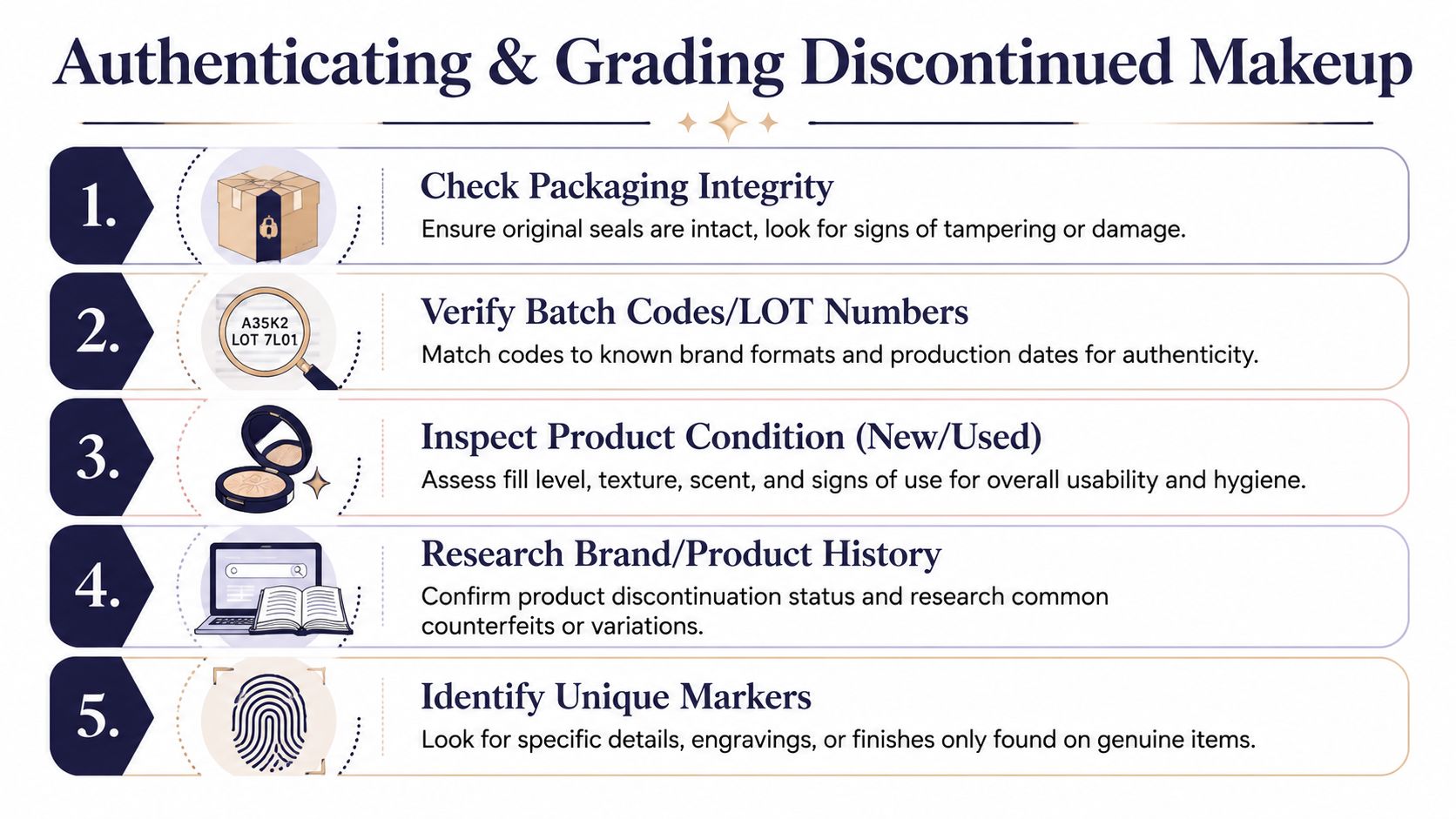
Start with packaging. Counterfeit cosmetics often fail on small details long before they fail on the product itself. Look at fonts, spacing, shade stickers, pans, mirrors, hinges, and print sharpness. If you've sold enough beauty, you already know that cheap counterfeit packaging often looks almost right until you compare it closely.
Build a checklist and use it every time:
- Outer box match. Box design should align with the item generation inside.
- Batch or lot code. Presence alone doesn't prove authenticity, but missing or odd formatting is a warning.
- Brand-specific details. Embossing, insert cards, and label placement matter.
- Smell and texture. Off odors, wax bloom, separation, and unusual sweating signal storage or authenticity issues.
When in doubt, compare your item against archived listings, older brand photography, and collector forums. Don't use one photo from a random active listing as your standard.
Use a grading system buyers can trust
Most returns in this category come from vague condition language. “Great condition” means nothing. Buyers need a usable grading standard.
I keep it simple:
| Grade | What it means | Listing note |
|---|---|---|
| New in box | Sealed or clearly unused with original packaging | State whether seal is intact |
| New without box | Unused, no signs of testing, no retail box | Show pan, applicators, labels |
| Swatched | Minimal use, usually surface contact only | Include clear close-ups |
| Lightly used | Visible use but still presentable | Disclose use plainly |
| For display only | Collectible packaging, not recommended for cosmetic use | Sell as collectible when policy allows |
Non-negotiable: If a buyer has to guess how much product is left, the listing is weak.
For powders, photograph the pan surface straight on and at an angle. For lip products, show the bullet. For foundations, show the fill line if visible. For boxed items, photograph all sides of the box, including labels and seals.
Shelf life changes the whole deal
Safety is where many reseller guides get sloppy. Shelf life varies by product type. Verified guidance notes that mascara has a shelf life of 3 to 4 months, while powders can last 2 to 3 years, and expired discontinued items may harbor germs, degrade, or become unsellable on major platforms if handled poorly (BuyMeBeauty discontinued makeup FAQ on shelf life and safety).
That doesn't mean every older powder is automatically worthless. It means you need judgment.
Here's the practical split:
- Mascara and liquid eyeliner: usually a pass unless clearly sealed and platform-compliant.
- Cream products: high caution. Age and storage matter too much.
- Pressed powders and powder blushes: best candidate type, especially if sealed or visibly unused.
- Collectible packaging: can have value apart from cosmetic use, but your listing must be explicit.
If you can't stand behind the item's condition, don't list it as usable makeup. That protects your account, your buyer, and your reputation.
Listing and Pricing for Maximum Profit
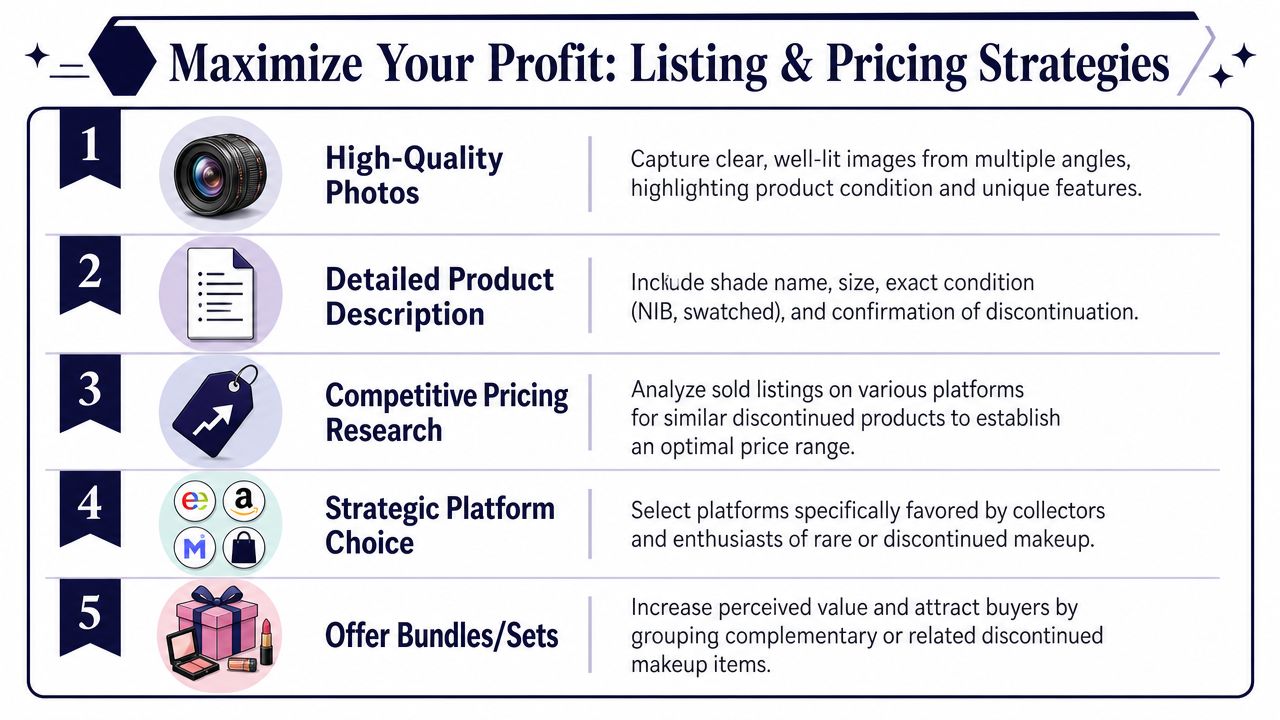
This niche rewards clean listings more than clever ones. Buyers of discontinued makeup products already know what they want. Your job is to remove doubt fast.
Allure's reporting on discontinued beauty shows why this works: discontinued products can sell for significantly above original retail value, buyers actively track and hoard them, and collectors may go to extreme lengths to get verified, unused stock (Allure on scarcity and discontinued beauty demand). That buyer behavior supports premium pricing, but only when the listing gives them confidence.
Write titles for intent, not creativity
Strong titles are direct and searchable. Put the buyer's search terms first.
A practical formula looks like this:
Brand + Product Line + Shade + Discontinued + Condition + Descriptor
Examples:
- Benefit Hello Flawless Powder Foundation Ivory Discontinued New
- Urban Decay Naked Palette Discontinued Swatched with Brush
- Tokidoki Powder Compact Rare Discontinued New in Box
Use words like rare, discontinued, vintage, or HTF only when they help describe a real search behavior. Don't stuff all of them into every title.
If pricing is the part you want to tighten up, this guide on how to price resale items has a solid framework for balancing speed and margin.
Photos and description close the sale
Photos should answer the buyer's objections before they type them.
Include:
- front packaging
- back label
- shade sticker
- seal or open product view
- box wear if present
- side angles for compacts and palettes
- applicators or inserts if included
Descriptions should be transparent, not flowery. State the exact condition, whether the product is discontinued, whether it appears unused, and any age or storage uncertainty you can't verify.
A good description sounds like this in plain language: discontinued item, shade named, condition observed, packaging status, and clear disclosure that buyers should review photos closely.
Buyers pay a premium for certainty. They don't pay a premium for mystery.
Price for your strategy
Pricing depends on whether you want velocity or maximum margin. Don't use the same strategy for every beauty find.
For faster flips, price near the realistic sold cluster for similar condition. This works well for known products with regular buyer demand. For stronger long-tail items, especially sealed discontinued stock, you can price firmer and wait.
Use this split:
| Strategy | Best for | Pricing stance |
|---|---|---|
| Quick flip | Common cult products with repeat demand | Competitive and realistic |
| Hold for premium | Sealed, harder-to-find, collector-grade pieces | Higher ask with room for offers |
| Bundle | Lower-value shades or same-line items | Raise total cart value |
| Auction test | Hard-to-price rarity with active interest | Useful when comps are thin |
What doesn't work is pricing from nostalgia. Your memory of how popular a product was doesn't matter unless current buyers still show up.
The strongest listings in this category do three things well: they prove authenticity, show condition clearly, and remove surprises.
Common Questions About Selling Discontinued Cosmetics
Can you sell older makeup legally and safely
You can sell older cosmetics only if the item and listing comply with the platform's policies and the condition is accurately represented. The primary issue usually isn't legality in the abstract. It's whether the product is hygienic, authentic, and allowed under marketplace rules.
If the product is expired, visibly degraded, or risky by type, don't try to force it into the “collectible but usable” gray area. If it's being sold for display or collectible packaging value, say that plainly and avoid implying cosmetic safety.
What brands and product types deserve a second look
A practical BOLO list starts with categories, not hype. Look for discontinued powders, iconic palettes, retired foundation lines, and brand exits that left loyal buyers behind.
Good signs include:
- Recognizable legacy brands with long retail history
- Retired lines that people specifically search for
- Distinctive packaging tied to collector interest
- Unused or sealed condition, especially in powders
BuyMeBeauty positions itself as the “#1 source” for discontinued makeup from brands like Revlon, L'Oréal, Maybelline, and Almay, which tells you where buyer demand often clusters in legacy mass-market beauty. That claim appears in Allure's reporting cited earlier, so it's a useful clue for sourcing priorities even if you still need to comp each item individually.
How should you ship fragile cosmetics
Ship discontinued makeup products like fragile collectibles, not like generic health-and-beauty stock. Powders crack easily, mirrors break, and old hinges fail in transit.
Use a simple packing routine:
- Wrap the item in tissue or a plastic sleeve first.
- Add bubble wrap around the product itself.
- Immobilize it inside a sturdy box.
- Avoid oversized packaging that lets the item bounce.
- For palettes or pressed powders, add extra protection over the face of the compact.
If an item already has a weak latch or hairline crack, disclose it before sale and pack for the failure point, not the best-case scenario.
The resellers who do well here aren't just finding rare makeup. They're making disciplined buy decisions, grading accurately, and listing with zero ambiguity.
If you want faster buy-or-pass decisions while sourcing, ScanFlip AI is built for that job. It helps resellers identify items from photos, pull sold comps across major marketplaces, and calculate expected net profit after fees and shipping so you can decide on the spot whether a discontinued makeup find is worth buying.