
Garage Sale Pricing Guide: Maximize Your Profit in 2026
You've got a driveway full of stuff, a roll of stickers, and one question that decides whether the day feels worth it or not: what should all of this cost?
Garage sale organizers often get stuck in one of two bad modes. They either price everything emotionally and watch buyers walk away, or they slap $1 tags on half the garage and accidentally give away the only items that had real resale value. A good garage sale pricing guide fixes both problems. It gives you a fast system for the everyday items and a slower, more careful method for anything unusual, branded, collectible, or hard to identify.
That matters because garage sales aren't just casual weekend clutter-clearing. In the United States, the industry generates between $1.5 billion and $2 billion annually, across an estimated 6.5 to 9 million individual sales, and the average sale brings in $100 to $200 in profit for the seller, according to Statista's secondhand apparel market overview. Those numbers tell you two things. First, this is a real market. Second, most sellers don't have much room for pricing mistakes.
Table of Contents
- Your Smart Start to Garage Sale Pricing
- The Prep and Pricing Workflow
- Category Pricing Heuristics and Quick-Reference Ranges
- Uncovering Hidden Gems with Real-Time Comps
- The Art of the Deal Bargaining and Markdown Strategy
- Frequently Asked Garage Sale Pricing Questions
Your Smart Start to Garage Sale Pricing
The fastest way to price a garage sale is not to treat every item the same.
A stained kid's T-shirt, a working blender, and an unmarked vintage lamp shouldn't go through the same pricing process. If you try to price everything with equal effort, you'll waste hours on low-value stuff and rush through the few items that deserve research. That's how sellers end up spending twenty minutes debating a box of mugs while a valuable jacket gets tagged at yard-sale throwaway prices.
The practical fix is a hybrid system. Move common items with quick rules. Slow down only for pieces that look branded, unusual, collectible, or hard to replace. That's the balance that keeps the sale manageable and protects you from obvious underpricing.
Practical rule: Price the ordinary fast. Price the odd stuff carefully.
Most successful garage sale pricing comes down to three judgments:
- What should move quickly? Everyday household goods, basic clothes, toys, and common kitchen items usually need simple, shopper-friendly prices.
- What needs a little room for negotiation? Furniture, tools, and better appliances usually sell better when the tag leaves some wiggle room.
- What deserves research first? Anything vintage-looking, premium-brand, modified, boxed, collectible, or unfamiliar belongs in a separate pile until you verify what it is.
This approach also helps with mindset. You're not trying to squeeze top dollar from every object in the house. You're trying to turn clutter into cash without making expensive mistakes. For most sellers, that means aiming for a clean, organized sale, sensible prices, and a few protected wins on the standout items.
A good garage sale pricing guide should do more than hand you a static list. It should help you make quick decisions under pressure, especially when the driveway is busy and buyers start asking for bundle deals before you've had coffee.
The Prep and Pricing Workflow
Good pricing starts before the first sticker goes on. If your items are still mixed in random boxes, you'll price slowly, forget things, and create a sale that feels chaotic to shoppers.
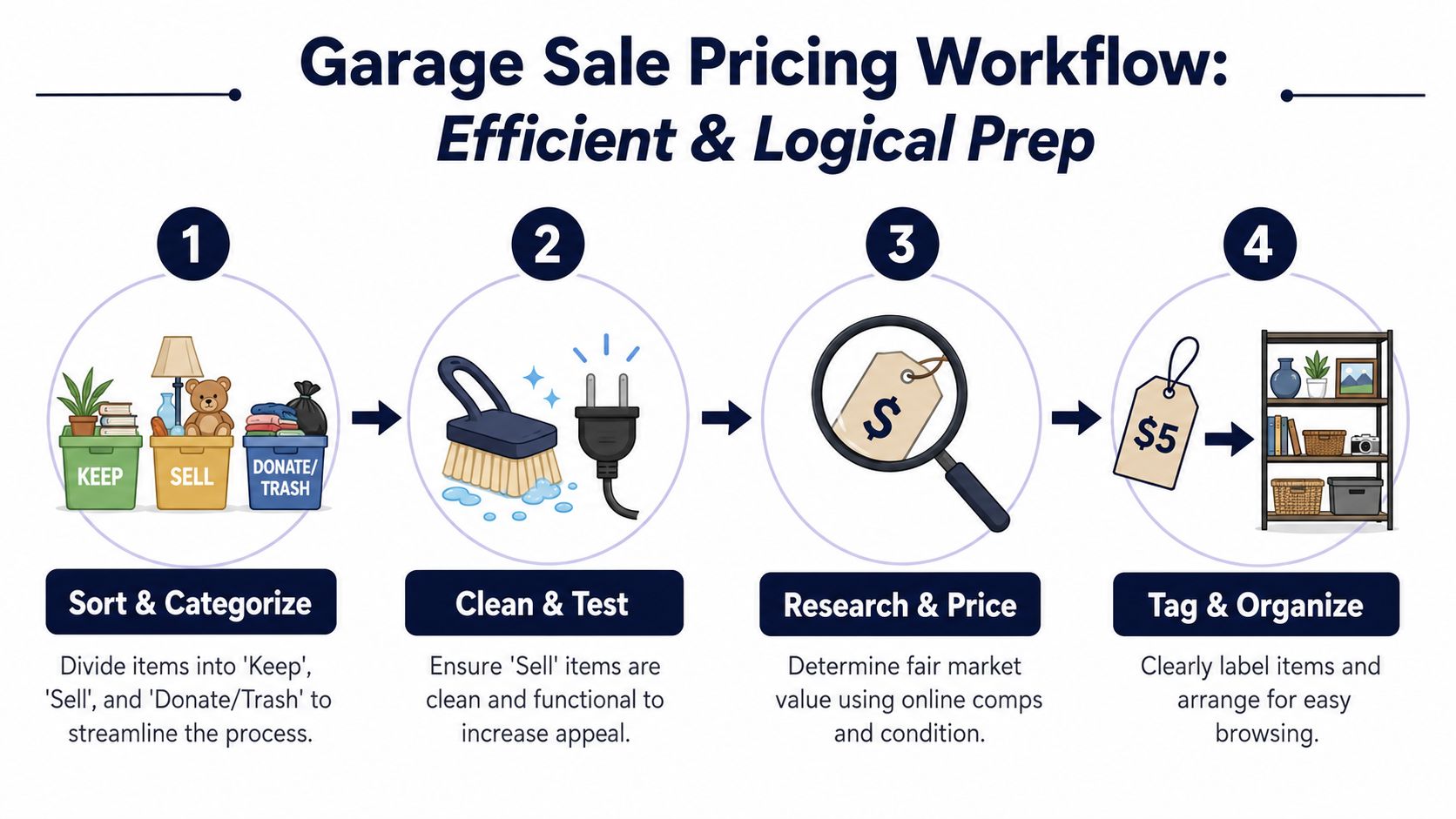
Use the three-pile sort
Set up three piles before you think about exact prices.
Bulk and bundle pile
Put low-value, common, or abundant items here. Think paperback books, basic kids' clothes, loose kitchen utensils, drinking glasses, and older toys. These usually sell better in groups than one by one.Standard items pile
This is your bread-and-butter inventory. Clean shirts, working blenders, dish sets, lamps, hand tools, and everyday home goods belong here. These can be priced quickly with category ranges and simple round numbers.Research-worthy pile
Put anything unusual here. Vintage-looking decor, name-brand outerwear, electronics with model numbers, collectibles, old media, premium shoes, or anything you suspect could be worth more than typical garage sale pricing. If you want a broader resale framework, this breakdown lines up well with this guide on how to price items for resale.
Before pricing, do two basic cleanup jobs. Wipe dust off hard goods and test anything with a plug, battery compartment, or moving part. A clean coffee maker looks sellable. A dusty one looks broken, even when it isn't.
Build a simple pricing system before tagging
Once items are sorted, pick a system that buyers can understand in seconds.
The 10% rule is the best baseline for standard items. Pricing everyday goods at 10% to 30% of original retail is a benchmark used by 95% of successful sellers, and many pair it with color-coded stickers to speed up decisions, according to YardHunts' garage sale pricing guide. That doesn't mean every item lands at the same percentage. It means the rule gives you a fast lane.
Use one of these formats:
- Color-coded stickers for broad tiers
- Table pricing such as $1, $5, and $10 sections
- Large signs for bundle bins so buyers don't need to ask
Buyers move faster when the pricing system is obvious from a few feet away.
A garage sale works best when people can browse without needing a conversation for every item. If they have to ask ten times, they'll buy less. If the sale feels easy, they keep stacking things in their hands.
Category Pricing Heuristics and Quick-Reference Ranges
Static price lists are useful, but only if you treat them as starting points. Condition still matters. Completeness matters. Brand matters. A spotless blender and a sticky one shouldn't wear the same tag, even if they fall into the same category.
Use ranges as starting points, not rigid rules
For common garage sale inventory, pricing by category keeps you moving. Good-condition adult clothing tends to sell best at $3 to $5, children's clothing moves fastest at $1 to $2, small appliances like blenders typically fall at $5 to $20, and kitchenware sets are commonly priced at $5 to $25, according to Goodwill's garage sale pricing guidance.
Those ranges work because they match buyer expectations. Garage sale shoppers want visible value without needing to calculate whether your used item is still too close to retail.
Use these quick adjustments when tagging:
- Price toward the low end if the item is common, dated, or has visible wear.
- Price toward the high end if it's clean, complete, and clearly useful today.
- Bundle instead of discounting one by one when you have multiples.
- Avoid odd prices that slow down checkout and create friction.
Garage sale pricing quick-reference
| Category | Item | Suggested Price Range |
|---|---|---|
| Clothing | Adult clothes in good condition | $3 to $5 |
| Clothing | Designer or like-new adult pieces | $10 to $15 |
| Clothing | Children's clothing | $1 to $2 |
| Clothing | Baby clothes per piece | $1 to $3 |
| Clothing | Baby full outfit | $4 to $5 |
| Clothing | Clothes with original tags attached | 10% to 70% of original price |
| Appliances | Small appliances like coffee makers and blenders | $5 to $20 |
| Appliances | Medium appliances like microwaves | $20 to $150 |
| Appliances | Large appliances like refrigerators | $75 to $250 |
| Kitchen | Kitchenware sets such as dishes or pans | $5 to $25 |
| Kitchen | Drinking glasses | $0.10 to $1.50 each |
| Yard and tools | Edgers and weed eaters | $5 to $40 |
If you're trying to protect your profit while keeping prices attractive, it also helps to understand what your take-home looks like after a resale flip. A simple resale margin calculator app guide can sharpen your instincts on what's cheap enough to move and what's too valuable to dump into the wrong pile.
One more practical rule: if an item makes you hesitate, don't force it into the quick-reference table. That hesitation is usually your signal that the item belongs in research, not in the standard pile.
Uncovering Hidden Gems with Real-Time Comps
It's 6:45 a.m. A buyer picks up an old video game accessory from your table, asks, “Will you take a dollar?” If you haven't checked it, you're guessing. Sometimes that guess costs you $20. Sometimes it costs you $100.
The expensive mistakes at a garage sale usually come from the oddball items that don't fit a simple pricing table. Plain mugs, basic shirts, and common toys can move on quick heuristics. The research pile is different. Brand matters. Model numbers matter. Small details matter.
What belongs in the research pile
Pull these items out before you start tagging the easy stuff:
- Recognizable brands with unclear resale demand
- Older pieces that look vintage, discontinued, or out of production
- Items with model numbers, serial tags, or specialized attachments
- Collectibles such as video games, toys, media, sports gear, and niche electronics
- Higher-quality materials like real leather, solid brass, cast iron, or wool
- Anything that makes you pause because it looks better or rarer than the rest of the pile
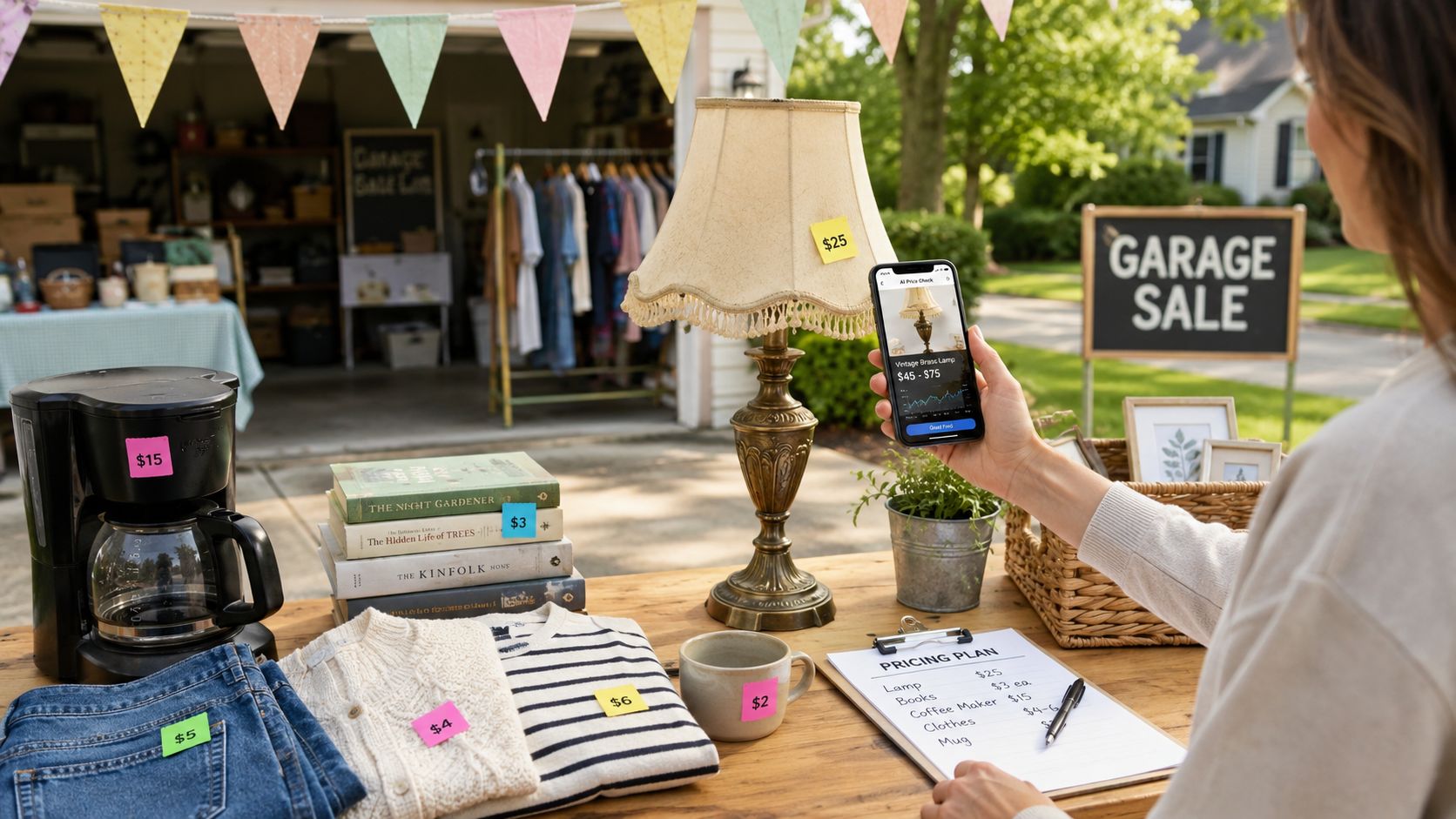
Here's the image most sellers wish they had in the middle of setup:
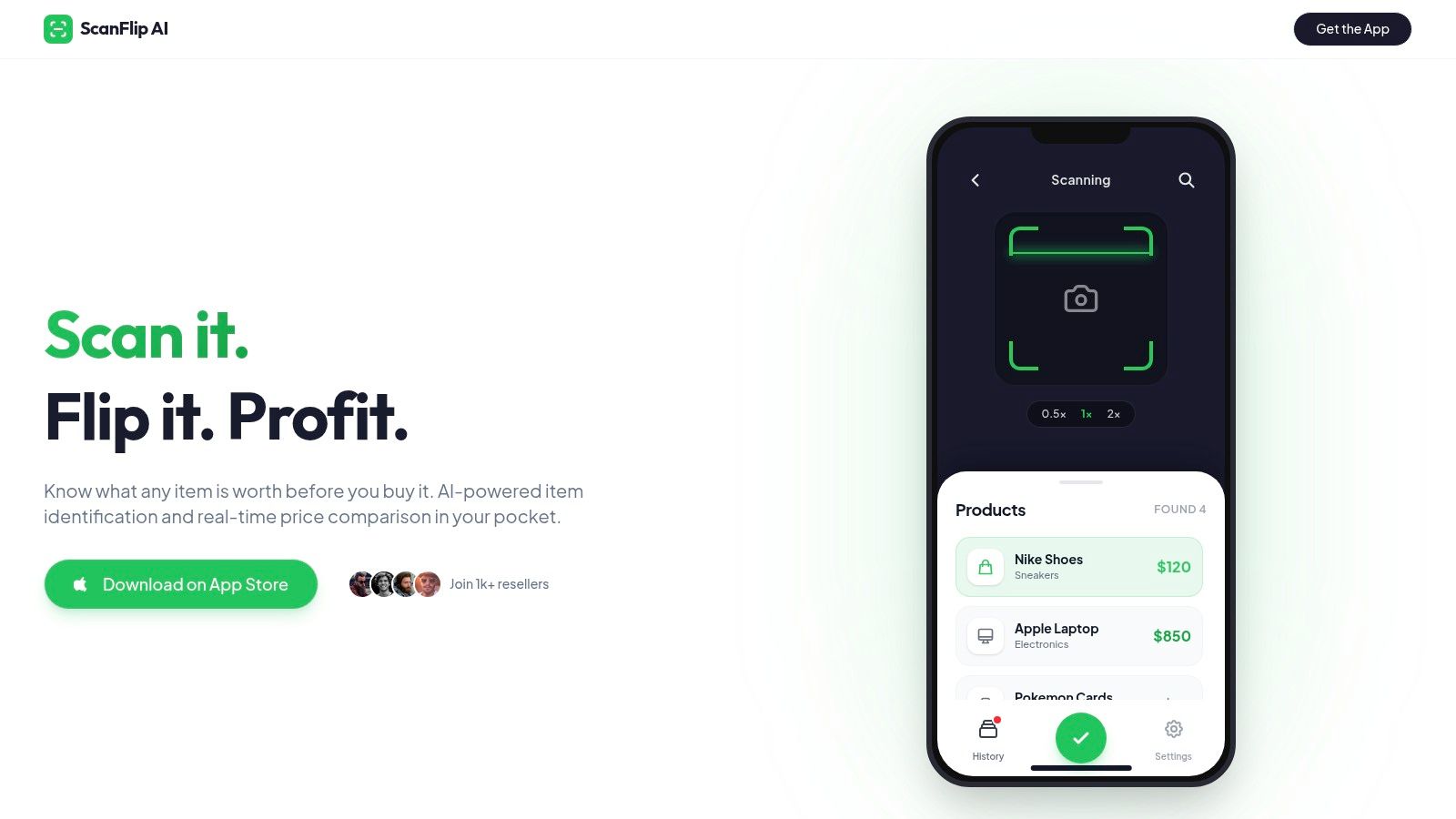
Check sold comps, then price for the driveway
For these outliers, sold comps beat gut instinct every time. Active listings tell you what sellers want. Sold listings tell you what buyers paid.
That difference is where people lose money.
A vintage lamp listed at $85 means nothing if similar lamps sold for $28 to $35. A discontinued blender part with three sold comps at $40 should not be dumped in a $3 appliance box just because it looks boring. Real-time comps keep you from making both mistakes.
Use a simple workflow:
- Identify the item as precisely as you can.
- Match the brand, model, size, color, and condition.
- Filter out active listings and look at sold results.
- Determine the actual range, not the highest outlier.
- Set your garage sale price at roughly 50% to 75% of recent sold value if you want it to move.
That range works because a driveway sale offers immediate pickup and no selling fees, but buyers still expect a deal. If an item regularly sells online for $40 plus shipping, a $25 to $30 tag is usually reasonable. If you want it gone by noon, price closer to $20. If it's scarce and demand looks strong, stay near the top of the range.
If you need a clean process for checking completed sales, this guide on how to find sold prices on eBay shows the exact filter to use.
Ask one question: what did buyers already pay for this exact item?
For higher-value outliers, speed matters too. Manually bouncing between search terms, marketplaces, and image results slows setup and leads to bad calls. I prefer a split system. Use fast heuristics for low-value basics, then use ScanFlip AI for the suspicious items with upside. That lets you identify the product, pull market context faster, and separate the profitable items from the filler before the first serious buyers arrive.
That's how you avoid selling a $100 item for $1 just because it was sitting in the wrong box.
The Art of the Deal Bargaining and Markdown Strategy
Your tag price is the opening move, not the final word.
A garage sale is live selling. Buyers bundle. They ask for round-number deals. They point out flaws you already noticed. The sellers who handle this well don't take it personally. They build negotiation into the pricing from the start and protect the few items that deserve firm pricing.
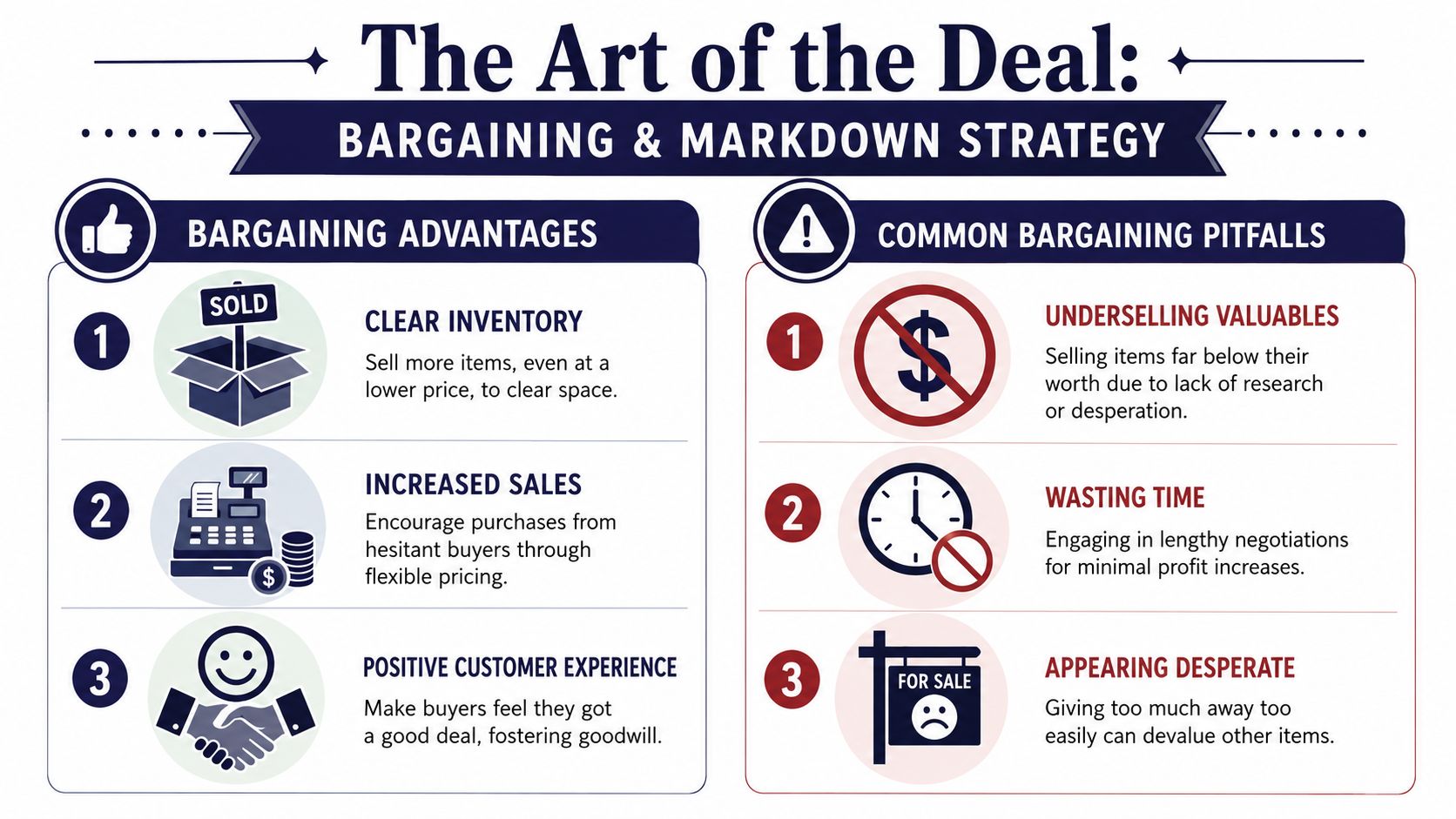
Negotiate without giving away the sale
For everyday items, a little flexibility helps the sale keep moving. For researched items, stay firmer. If you already checked sold comps and priced reasonably, you don't need to cave just because someone asks.
A few tactics work especially well:
- Use crossed-out pricing on select items if you want buyers to feel they're already getting a deal.
- Bundle related items instead of dropping the price on the best piece.
- Hold your line early on standout inventory when serious buyers are still arriving.
- Say yes faster on low-stakes items to keep energy positive and lines moving.
One common mistake is tagging expensive items too low at the start, which wipes out all negotiation room. Another is arguing too long over small differences. If you spend five minutes protecting a tiny discount, you may lose three other buyers who were ready to pay and leave.
Use time-based markdowns to clear leftovers
The best markdown strategy is tied to the clock, not your emotions.
Sellers who cut prices by 50% or more in the final hours, including offers like “fill a bag for $5,” sell 60% to 70% of remaining stock, compared with 20% to 30% for sellers who don't run final promotions, according to Pete Castro's garage sale pricing guide.
That tells you when deep discounts make sense. Not at the beginning, when the best buyers are still shopping. Later, when your goal shifts from maximizing price per item to clearing space and converting leftovers into cash.
A simple day-of rhythm works well:
| Timing | Best approach |
|---|---|
| Early sale | Stay closer to tag price on better items |
| Mid-sale | Offer bundle deals to increase cart size |
| Final stretch | Mark down heavily and use bag or box deals |
A garage sale usually ends one of two ways. You either bring boxes back inside, or you accept that late-day pricing serves a different purpose than morning pricing.
That shift is where a lot of sellers leave money on the table. They either discount too early or refuse to discount when the sale is clearly winding down.
Frequently Asked Garage Sale Pricing Questions
How should I price items with no tags, damage, or missing pieces
Many sellers freeze when the item isn't perfect, there's no original tag, and the usual category chart doesn't feel precise enough.
That's a real problem. Sellers often struggle to price untagged or imperfect items fairly, and buyers prefer fixed prices over “pay what you can” ambiguity, according to Sonoma Family Life's garage sale pricing guide discussion. The practical takeaway is simple: don't make buyers guess.
Use a condition-first framework:
Minor cosmetic wear
Keep the item in the normal category, but tag it toward the lower end of the range.Missing pieces but still usable
Price it as a compromise item and make the limitation obvious on the tag.Damage that affects function
Price low, disclose clearly, and decide whether it belongs in the sale at all.No tag or no brand info
Default to fixed pricing based on visible quality and utility, not sentimental value.
A handwritten note can help. “Works, lid missing” or “small chip on rim” does more for trust than a long explanation at checkout. Buyers are much more comfortable when the condition is clear before they ask.
Should I price every item individually or use group pricing
Use both. Individual pricing works best for standard items and anything with meaningful value differences inside the same category. Group pricing works best when the time required to tag each item would exceed the likely return.
Good candidates for group pricing include books, basic toys, kids' clothes, loose housewares, mugs, and media. Good candidates for individual pricing include appliances, tools, decor, better clothing, shoes, and anything you'd be annoyed to sell too cheaply.
A practical split looks like this:
| Type of inventory | Better method |
|---|---|
| High-volume, low-value items | Group pricing |
| Mixed-value everyday goods | Individual tags |
| Research-worthy or premium items | Individual tags with firm pricing |
If you aren't sure which route to choose, ask one question: would buyers assume these items are interchangeable? If yes, group pricing is usually fine. If not, tag them one by one.
Should I price high and haggle or price low and sell fast
That depends on the item, your tolerance for negotiation, and your real goal for the day.
If your main objective is to clear space fast, simpler pricing wins. Buyers love obvious deals, and a clean, fairly priced sale creates momentum. If your goal is to protect value on selected items, price those pieces with room to negotiate and keep the rest straightforward.
The mistake is using one strategy for everything.
Use higher opening prices with negotiation room for:
- furniture
- tools
- appliances
- researched items
- premium brands
Use clean, low-friction pricing for:
- basic clothing
- kitchen basics
- books
- toys
- low-value household overflow
If you expect haggling on every item, the sale gets tiring fast. If you price everything rock-bottom from the start, you lose the chance to protect better inventory.
The middle path usually works best. Keep common items simple. Leave a little room on bigger-ticket pieces. Research the outliers before the driveway opens.
If you source, flip, or just want a faster way to avoid underpricing the oddball items in your garage, ScanFlip AI helps identify products from photos, pull sold comps across major marketplaces, and estimate expected net profit after fees and shipping. It's especially useful for the research pile, where one unmarked jacket, collectible, or electronic accessory can be worth a lot more than a standard garage sale tag suggests.