

How to List Items for Maximum Resale Profit
You've got a death pile in the corner, a jacket from Goodwill you still haven't photographed, and a collectible you bought at an estate sale because the sold comps looked promising. The sourcing felt productive. The cash hasn't arrived because unlisted inventory has no resale value until a buyer can find it, trust it, and purchase it.
Learning how to list items profitably means treating the listing as the final step of sourcing, not a clerical chore. Before you publish, verify the item, document its condition, choose the right marketplace, calculate net profit, and present the product in a way that matches buyer search behavior. A fast workflow beats perfectionism, but a careless listing creates returns, policy problems, and stale inventory.
Table of Contents
- Turning Sourced Inventory Into Actual Profit
- Staging and Shooting Photos That Convert
- Crafting Searchable Titles and Accurate Specifics
- Pricing With Sold Comps and Net Profit Math
- Scaling With Crosslisting Tools and Shipping Setup
- Avoiding Policy Violations and Account Suspensions
Turning Sourced Inventory Into Actual Profit
A listing is the bridge between a good buy and money in the bank. I've seen resellers spend an afternoon finding promising pieces, then lose momentum when every item requires a fresh decision about photos, measurements, titles, pricing, shipping, and platform rules. That hesitation turns a profitable haul into a bigger death pile.
The fix is to separate sourcing mode from merchandising mode. At the store, garage sale, or estate sale, decide whether the item deserves your money. At home, use a repeatable production line to turn approved inventory into live listings.
Build a fixed listing queue
Start with a physical inspection. Check brand, model, size, color, material, working condition, missing parts, stains, odors, authenticity markers, and anything that could affect shipping or buyer expectations. Don't photograph an item until you know what you have.
Then move each item through the same sequence:
- Verify the product: Identify the exact model or variation instead of relying on a broad category.
- Record condition: Note wear, repairs, defects, measurements, and included accessories.
- Shoot the photos: Capture the item, labels, identifying marks, scale, and flaws.
- Write searchable data: Create the title, category, item specifics, and condition description.
- Calculate the price: Use sold comps and subtract cost of goods, fees, shipping, and other selling costs.
- Publish and store: Give the item a location before it goes live, so fulfillment doesn't become a scavenger hunt.
A simple station helps. Keep a measuring tape, postal scale, lint roller, cleaning supplies, phone tripod, photo backdrop, and packaging within reach. The point isn't to build a studio. It's to remove the small interruptions that make a single listing feel like a project.
Practical rule: If you can't explain why an item should sell, who searches for it, and what you'll net, don't spend extra time polishing the listing.
Basic listing advice usually stops at photos, title, category, and price. That misses the decision that matters most: whether the item was profitable to buy in the first place. Resellers often spend substantial time crafting individual listings while still lacking a clear view of profitability math, a gap highlighted in coverage of reseller listing challenges and profitability decisions.
The best workflow keeps sourcing information attached to the item. Save the model name, comparable sold prices, expected fees, and target net in your notes while the item is still fresh. That makes the listing phase a controlled execution step instead of another round of guesswork.
Staging and Shooting Photos That Convert
Buyers can't touch a jacket, inspect a card, or test a camera through a marketplace screen. Your photos need to answer the questions that normally get answered in person: What is it, what condition is it in, how large is it, and what exactly will arrive?
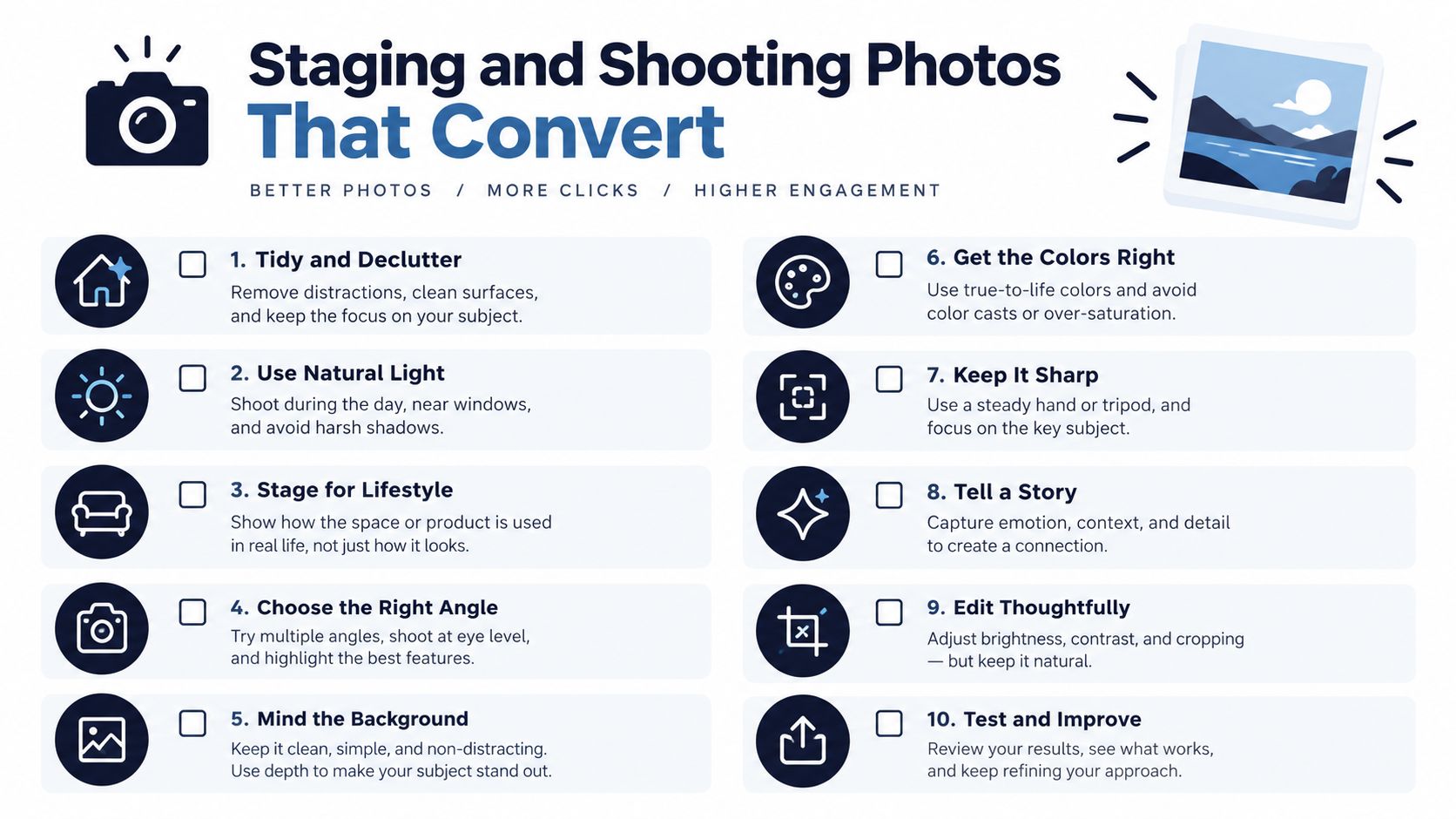
Start with a clean background and steady light. Natural window light works well when it's indirect. Avoid harsh overhead lighting that creates color shifts and deep shadows, especially on black clothing, glossy electronics, trading cards, and footwear. Keep the camera parallel to the item instead of shooting at a dramatic angle that distorts shape.
Use a repeatable photo set
Shoot the hero image first. Show the whole item, centered and uncluttered, with enough surrounding space that the platform can display it without cutting off important edges. Then add detail shots that support the price and reduce uncertainty.
- Full front and back: Show the overall silhouette, color, and condition.
- Labels and tags: Photograph brand, size, fabric, model, serial, care, and authenticity information.
- Functional details: Capture ports, buttons, soles, zippers, hinges, screens, and closures.
- Flaws: Show stains, scratches, pilling, dents, fading, missing pieces, and repairs close up.
- Scale: Include measurements or a familiar reference when size is difficult to judge.
- Accessories: Photograph boxes, manuals, chargers, straps, certificates, and replacement parts.
- Multiple angles: Use side, top, bottom, and interior views when construction or wear matters.
High-quality imagery is a measurable conversion lever. An industry summary citing eBay Research Labs reports that adding a first image can double conversion compared with no image, adding a second can double it again compared with one, and larger “supersized” images can more than double conversion. The same summary cites research reporting that professionally lit, high-resolution photos convert 94% better than low-quality photos, so the product photography evidence and testing methodology deserves attention.
Photograph flaws before buyers discover them
A flaw hidden from view becomes a return conversation. Photograph it, describe it, and make sure the condition field agrees with the evidence. A close-up of a worn cuff or scratched screen may reduce the number of casual buyers, but it attracts buyers who understand what they're purchasing.
For wording that stays factual rather than defensive, use this guide to describing item condition. Poshmark's listing flow is image-driven, with sellers uploading or taking a photo and adding multiple images, as shown in its official listing guide. That makes photo preparation especially important before you start entering price and description details.
A/B testing can help when you have enough consistent traffic. Test a hero image or complete image set over 2 to 4 weeks at moderate traffic, then compare conversion rate, click-through rate, and return rate. Don't change the title, price, and photos at the same time, or you won't know what caused the result.
Crafting Searchable Titles and Accurate Specifics
A good photo earns the click. The title and item specifics determine whether the right shopper sees it at all. Searchers generally want precise identifying information, not creative copy, so lead with the facts that separate your item from similar inventory.
A useful title usually follows this order:
Brand, model or product name, item type, size, color, material, and an important feature.
For example, a title for a hiking fleece might include the brand, exact model, men's or women's category, size, color, and quarter-zip construction. A book title should prioritize author, title, edition or format, and condition. A trading card title should identify the player, year, set, card number, parallel, and grading information when applicable.
Don't fill unused character space with unrelated keywords. Search stuffing makes a listing harder to read and can violate platform rules. Use the description for measurements, compatibility, flaws, included components, and relevant context, not for repeating the same phrase.
Treat item specifics as search infrastructure
eBay's item specifics vary by category. Some fields are required and others are optional, with common examples including brand, size, type, color, and style. eBay states that required item specifics must be completed for new or revised listings, and it has announced new requirements for certain categories over time, including changes that applied from May 16, 2023. Check the current requirements in eBay's listing guidance before revising older inventory.
Buyers filter by exact attributes. A missing size can keep a clothing item out of a filtered result, while an incorrect model number can attract the wrong buyer and create a return.
Mercari is stricter about completeness and accuracy. Its rules prohibit listings that omit basic details such as size, color, or quantity, and they prohibit asking the buyer to supply those details later. Mercari also bans unrelated categories, false brands, excessive keywords, stock or advertising photos, and items the seller doesn't possess. The Mercari prohibited conduct policy should be part of your pre-publish checklist.
Write descriptions that remove objections
Use short factual paragraphs or bullets. State measurements, material, condition, included accessories, testing performed, and known limitations. For electronics, say what worked and what you couldn't test. For clothing, include pit-to-pit, length, inseam, rise, or other measurements buyers in that category expect.
A title gets the impression, structured specifics improve filtering, and a clear description closes the confidence gap. Don't promise “like new” when the photos show wear. The quickest listing is the one that doesn't need a correction after the first buyer message.
Pricing With Sold Comps and Net Profit Math
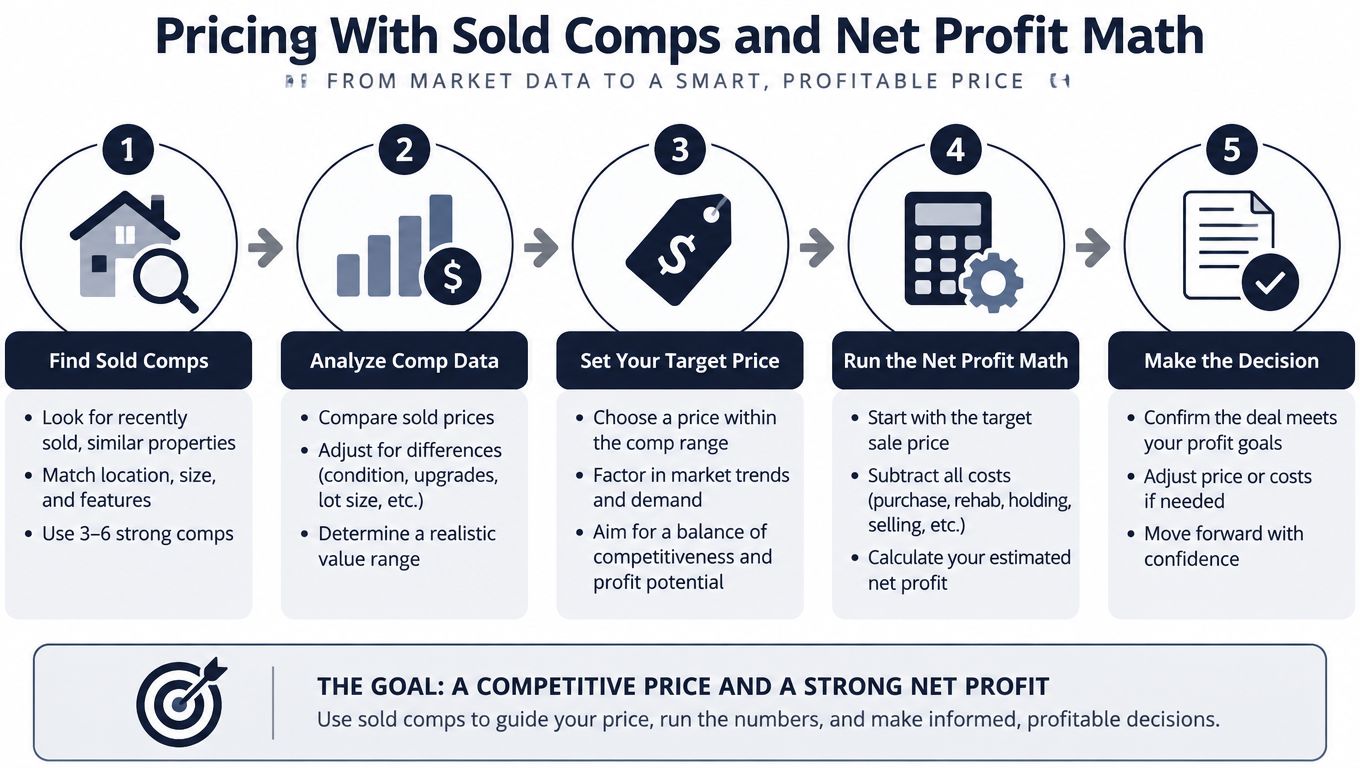
Never price from active asking prices alone. Those sellers may be optimistic, stale, or willing to wait longer than you are. Sold comps show what buyers actually paid, which makes them the useful starting point for a listing price.
Begin by matching the exact item. Compare the same brand, model, size, variation, condition, colorway, included accessories, and platform where possible. A used game with no case, a sealed game, and a collector's edition aren't interchangeable comps.
Run the profit calculation
Use this basic formula:
Expected sale price − marketplace fees − shipping cost − cost of goods − other direct costs = estimated net profit
Suppose you paid $8 for a jacket, expect it to sell for $42, estimate $9 for shipping, and budget $6 for marketplace fees. The estimated net is:
$42 − $6 − $9 − $8 = $19
That is the number to compare with your time, storage space, return risk, and minimum profit threshold. If cleaning, replacement parts, promoted placement, or special packaging adds a cost, include it before deciding whether the item belongs in your active inventory.
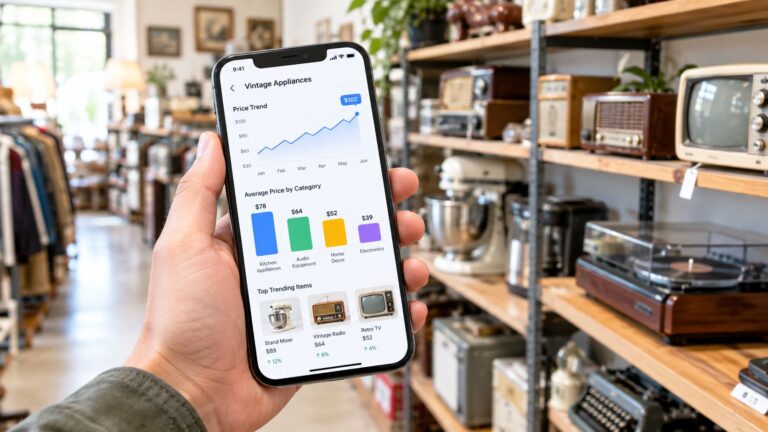
For fast sourcing decisions, ScanFlip AI's resale pricing workflow is one option. It offers three scan methods, an AI photo scan with no barcode needed, barcode scanning, and text search. It aggregates sold comps across eBay, Poshmark, Mercari, Depop, Amazon, Whatnot, ThredUp, Facebook Marketplace, and TikTok Shop, then calculates estimated net profit after fees and shipping with a red or green flip-or-pass verdict.
Pricing rule: A high gross sale price can still produce a weak flip after fees, shipping, and cost of goods.
Choose a price that matches your objective
Use a competitive price when comparable inventory is plentiful and you want movement. Use Best Offer when you can tolerate negotiation and have enough margin to accept a reasonable discount. For rare collectibles, unusual sizes, or scarce models, patience may justify a higher starting price, but that decision should come from the sold evidence rather than an attractive active listing.
Track stale inventory by days listed, watchers, offers, and net profit potential. If an item has weak interest, improve the photos or specifics before cutting the price. If demand exists but buyers hesitate, a controlled price adjustment or Best Offer setting may clear it. Don't keep a $19 projected net item forever just because the original price felt right.
Scaling With Crosslisting Tools and Shipping Setup
Manual listing gives you control and avoids another subscription. It also makes every marketplace require another round of data entry, photo selection, and sold-comp review. Crosslisting software changes the trade-off, but it doesn't remove the responsibility to keep titles, specifics, prices, and inventory accurate.
Compare the operating choices
| Approach | What works | What costs you |
|---|---|---|
| Manual listing | No additional software subscription, full platform-by-platform control, easy to tailor every field | More repetitive work, slower expansion, greater risk of forgetting where an item is listed |
| Vendoo or List Perfectly | Faster distribution across marketplaces, reusable listing data, useful for larger active inventories | Subscription cost, setup time, platform differences, and the need to remove sold items promptly |
| Single-platform focus | Simpler shipping, fewer policy systems, easier message management | Fewer buyer pools and less protection from weak demand on one marketplace |
Crosslisting tools such as Vendoo and List Perfectly can complement the sourcing and pricing work. They don't replace platform-specific editing. An eBay title may need different attributes from a Mercari listing, while Poshmark depends heavily on visual presentation. Search behavior also varies across marketplaces, with platform-specific keywords, exact attributes, local context, and increasingly visual or AI-assisted sorting influencing discovery, as discussed in marketplace selection and resale platform comparisons.
Use a master inventory record with SKU, storage location, cost of goods, target price, lowest acceptable offer, and every marketplace where the item is live. When an item sells, mark it immediately and remove or deactivate the other copies. Crosslisting increases reach only when synchronization is reliable.
Make shipping part of the listing
Weigh the packed item, not just the product. A denim jacket, boxed game, framed print, and ceramic piece can change shipping economics once packaging is included. Measure the final parcel when dimensional pricing might apply, and save those details in the listing record.
Set up a small fulfillment station with:
- Packing supplies: Keep mailers, boxes, tape, tissue, bubble wrap, labels, and markers sorted by item type.
- A scale: Weigh finished packages consistently before buying or printing labels.
- A printer or label workflow: Remove the last-minute hunt for a readable shipping label.
- Storage locations: Assign a bin, shelf, or garment rack position before publication.
- A dispatch routine: Pull sold orders, inspect the item, pack it, and confirm shipment in one batch.
Accurate shipping estimates protect net profit. A listing that sells quickly but loses money because the package was heavier than expected is still a bad listing.
For sellers working across marketplaces, this guide to selling on multiple platforms can help frame the operational trade-offs. Add channels only when your storage, fulfillment, and delisting process can handle them.
Avoiding Policy Violations and Account Suspensions
A polished listing can disappear if the item violates marketplace rules. Compliance starts at the sourcing table, not after a platform sends a warning.
Check authenticity before buying branded goods. Look at tags, stitching, serial numbers, packaging, hardware, logos, and provenance, but don't treat one familiar detail as proof. If you can't establish that an item is genuine, the possible sale isn't worth risking your account or refund liability.
Mercari explicitly bans counterfeit items, including items where the seller disclaims authenticity or says the item is counterfeit. Its help center also says listed goods must be legal to sell and legal to ship under federal, state, and local law, and warns, “If you don't own it, don't sell it”. Review the Mercari authenticity and legal-selling guidance before listing estate-sale finds, liquidation goods, or retail-arbitrage inventory.
Use a pre-publish compliance check
- Possession: Confirm the physical item is in your hands and ready to ship.
- Authenticity: Remove anything questionable until you can verify it.
- Legality: Check whether the item is legal to sell and ship where you operate.
- Accuracy: Match the brand, category, condition, quantity, and photos.
- Intent: Don't publish placeholder drafts, misleading information, or items you don't plan to sell.
- Platform fit: Read the current prohibited-item and category rules for each marketplace.
A daily listing habit keeps these checks practical. Process a manageable batch, finish each item before starting another, assign storage immediately, and record the final price and net target. That keeps the death pile from becoming a permanent storage system.
The most profitable listing is not necessarily the longest one or the highest-priced one. It's the listing built from a verified buy, clear evidence, accurate marketplace data, realistic sold comps, and shipping math that survives contact with the post office.
ScanFlip AI helps you make the sourcing decision before you list, using AI photo scan with no barcode needed, barcode scan, or text search to find sold comps across major marketplaces and estimate net profit after fees and shipping. Visit ScanFlip AI to check whether the next item in your Goodwill cart deserves a flip-or-pass decision.