

Selling on Multiple Platforms: A Modern Reseller’s Guide
You're in a thrift store, a garage sale, or an estate sale, holding something that looks promising. The label is right. The condition is solid. The buy cost is low enough that your reseller brain says, “This should work.” Then the question hits. Where should you sell it?
That's the part a lot of reseller advice skips. People talk about sourcing, listing, and shipping as separate jobs. In practice, they're tied together. The platform you choose changes your pricing, your fees, your shipping setup, how fast the item moves, and whether the flip was worth your time in the first place.
Selling on multiple platforms isn't about posting everything everywhere and hoping for the best. That approach burns time, creates inventory mistakes, and fills your day with admin work that doesn't make you money. The better approach is to source with the end market in mind, price for each platform's buyer behavior, and build a workflow that keeps your operation under control.
Table of Contents
- Why Selling on Just One Platform Limits Your Profit
- Start Smarter Sourcing with a Multi-Platform Mindset
- Choosing Your Marketplaces and Setting Smart Prices
- Mastering Inventory and Avoiding Double-Selling Disasters
- Building a Scalable Fulfillment and Shipping Workflow
- Tracking True Profitability to Scale Your Reselling Business
Why Selling on Just One Platform Limits Your Profit
Relying on one marketplace feels simpler. One inbox. One fee structure. One listing style to learn. That simplicity is real, especially when you're new.
But single-platform selling creates a ceiling fast. The biggest problem is that buyers don't shop the same way on every marketplace. A buyer hunting a specific model number behaves differently from a buyer browsing outfits, vintage style, or impulse finds. If you put every item into one marketplace, you force all inventory through the same channel, even when that channel isn't the best fit.
That hurts profit in a few ways:
- You miss better-fit buyers who would have paid faster or with less negotiation elsewhere.
- You price too broadly because you're using one pricing habit across very different audiences.
- You absorb more platform risk when policy changes, fee changes, or visibility shifts hit your only sales channel.
- You slow cash flow by leaving good inventory on the wrong shelf, digitally speaking.
Practical rule: If an item can attract different types of buyers, it deserves a platform decision, not an autopilot listing.
There's also a labor trap here. Many resellers assume selling on multiple platforms means multiplying the work. It can, if you treat every item the same and list blindly. It doesn't have to, if you choose platforms intentionally.
The useful mindset is this: diversification is not the strategy by itself. Selective placement is. Some items should stay exclusive. Some should be cross-listed. Some should start on one platform and move later if they stall. Good resellers don't try to be everywhere. They put the right item in the right market and protect margin at every step.
Start Smarter Sourcing with a Multi-Platform Mindset
Most mistakes in selling on multiple platforms happen before the listing is ever created. The mistake is buying first and asking platform questions later.
The platform decision starts before you buy
At the sourcing stage, you're not just deciding whether an item has resale value. You're deciding whether it has platform-specific resale value. That distinction matters. A jacket, game, pair of shoes, collectible, or kitchen item can look like a winner in the aisle and still be a weak flip once fees, buyer expectations, and shipping are factored in.
That's why a multi-platform strategy starts with cross-market visibility at the point of sourcing, not after you get home and open your draft listings.
Resellers who source well don't just ask, “Can I sell this?” They ask better questions:
- Which marketplace has the strongest buyer for this kind of item
- Will shipping kill the deal
- Does the likely take-home justify the time to clean, photograph, list, store, and ship
- Is this best as a single-platform listing or a cross-listed item
If you understand how online arbitrage works in practice, this will feel familiar. The key edge isn't spotting a cheap item. It's spotting a mismatch between buy cost and likely net profit before someone else does.
What good sourcing intelligence actually changes
A lot of reseller tools help after the fact. They help you cross-list, delist, or ship. Those matter, but they don't fix a bad buy. The first job is still selecting inventory that has enough room for profit.
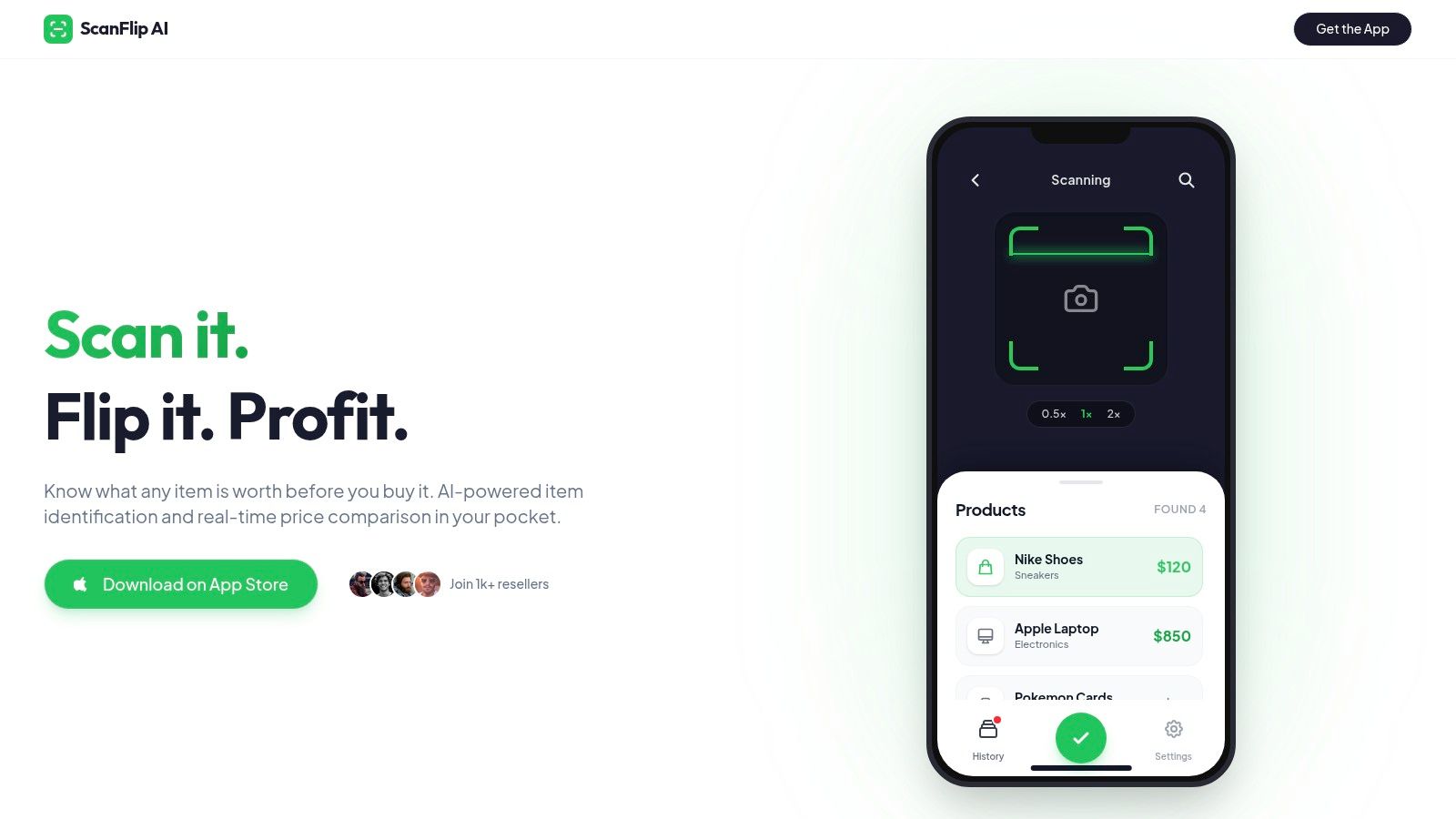
What helps at that point is seeing an item identified quickly, checking sold comps across more than one marketplace, and judging the opportunity based on likely net rather than gross sale price. That's the shift many guides miss. Selling on multiple platforms starts with sourcing intelligence, not listing volume.
Here's what that changes in the field:
| Sourcing question | Weak approach | Better multi-platform approach |
|---|---|---|
| Is it worth buying | Check one marketplace and guess | Review cross-platform comps and likely take-home |
| Where should it go | Decide later at home | Decide primary and secondary channels while sourcing |
| How should it be priced | Use one default markup | Anticipate platform-specific pricing before purchase |
| Should it be cross-listed | Cross-list everything | Reserve multi-platform effort for items that justify it |
An item with broad demand isn't automatically a good cross-list. It's a good cross-list only if the extra exposure improves your expected outcome enough to justify the added handling.
Experienced resellers distinguish themselves. They don't source “cool stuff.” Instead, they source inventory with an exit plan. When you know the likely best marketplace before you buy, every step after that gets easier. Photos are framed for the likely buyer. titles focus on the right search behavior. pricing leaves room for the right kind of offer. Even storage and shipping get simpler because the item already has a lane.
And when the answer is no, you pass faster. That saves more money than one might expect.
Choosing Your Marketplaces and Setting Smart Prices
Once the item is in your inventory, the next decision isn't “Should I list it?” It's where does this item belong first, and what price makes sense there? Many resellers inadvertently lose profit. They use one price across every marketplace and assume exposure alone will do the work.
Match the item to the buyer, not just the app
Different marketplaces train buyers to behave differently. That changes what sells well, how offers come in, and how much friction you'll deal with.
A practical way to think about common marketplaces:
| Marketplace | Buyer behavior | Strong fits | Common trade-off |
|---|---|---|---|
| eBay | Search-driven, comparison-heavy | Collectibles, electronics, niche items, parts, vintage with model details | More direct price competition |
| Poshmark | Style-driven, offer-heavy, bundle-friendly | Apparel, shoes, bags, fashion brands | More negotiation and sharing culture |
| Mercari | Fast, simple, price-conscious | Everyday goods, toys, home items, lower-friction flips | Buyers can be more price sensitive |
| Etsy | Value and uniqueness matter | Vintage, handmade, distinctive decor and specialty items | Not the place for generic mass-market goods |
| Amazon | Catalog-driven, speed-oriented | Standardized items, replenishable products, some branded goods | High competition and stricter listing structure |
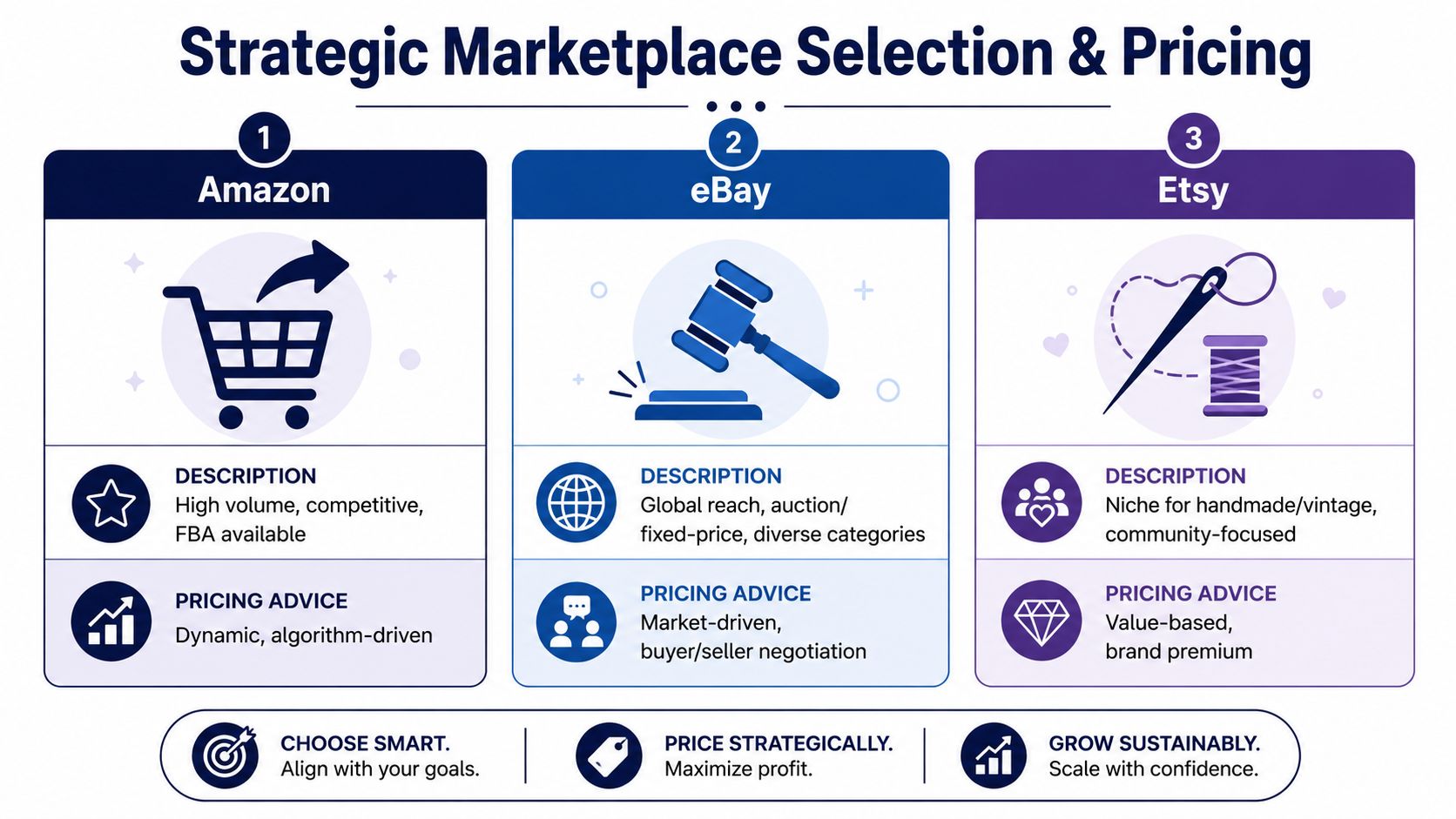
This is why selling on multiple platforms works when it's selective. A vintage camera accessory might get serious search traffic on eBay. A trendy pair of sneakers might get stronger engagement on Poshmark. A simple household item may move fastest on Mercari if the price is right.
The marketplace should match the shopping behavior the item needs.
Price the platform, not only the item
Resellers often say, “This item is worth X.” That's incomplete. An item doesn't have one universal value. It has a range of likely outcomes depending on where you list it, how buyers there negotiate, and what fees and shipping do to your final take-home.
That's why you want to price resale inventory with a platform-specific method, not just copy the same number everywhere.
Use these filters when setting price:
Audience expectation
A buyer on a style-focused app may tolerate a higher list price if offers are part of the culture. A buyer on a bargain-oriented marketplace may skip your listing unless you come in tighter.Fee structure
Two platforms can produce the same sale price and leave you with different take-home profit after fees and shipping.Shipping model
Heavy, bulky, or awkward items can look profitable until shipping changes the math.Search behavior
If buyers search by model number, title accuracy matters more than aesthetic presentation. If buyers browse visually, your cover photo and styling often matter more.
Seller habit worth keeping: Build your target around take-home profit, then back into the list price that fits each platform's buyer behavior.
A simple way to compare two platforms before listing
You don't need a complex spreadsheet to make a better decision. Compare likely outcomes side by side.
Sample comparison
Platform A has stronger sold prices, but buyers expect offers and the fee structure is heavier. Platform B has slightly lower sale prices, but less negotiation and a cleaner shipping setup. If Platform B leaves you with the same or better take-home, and the sale is likely to be smoother, it may be the better first listing even if the visible price looks lower.
That blockquote example is the core lesson. Gross price is not the goal. Net profit with manageable workload is.
A simple platform check before listing:
- Look at sold comps by marketplace.
- Identify how buyers usually behave there.
- Estimate your likely accepted price, not your dream list price.
- Subtract fees, shipping, and hassle.
- Choose a primary platform first.
- Add secondary platforms only if the item's margin justifies the extra handling.
One more thing matters here. Don't treat “list everywhere” as a badge of seriousness. It isn't. Smart resellers protect time as aggressively as they protect margin. If a low-dollar item will probably sell fine in one place, keep it there. Save your multi-platform effort for inventory where placement can materially change the result.
Mastering Inventory and Avoiding Double-Selling Disasters
The fastest way to turn selling on multiple platforms into a mess is poor inventory control. One item sells on one marketplace, stays live on another, and then you get hit with the second order. Now you're canceling, apologizing, and risking account health over a mistake that was preventable.
The manual system that works when inventory is small
If your inventory is still manageable, a manual system is enough. It doesn't need to be fancy. It needs to be strict.
Use a simple spreadsheet or inventory sheet with:
- SKU or bin location so you can find the item fast
- Item name and short description so there's no confusion
- Platforms listed so you know exactly where it's live
- Status field such as active, sold, packed, shipped
- Date listed or relisted so stale inventory stands out
Your workflow should be mandatory. When an item sells, you delist it everywhere else before you print the label, answer messages, or pack the order.
Sell first, delist second is how double-sells happen. Sell first, delist immediately is the rule.
This manual path works well for newer resellers because it teaches discipline. It also forces you to understand your own inventory instead of outsourcing the problem too early.
When automation starts making sense
Once listings spread across several marketplaces, manual tracking starts eating time. That's when cross-listing and inventory sync tools become useful. The best reason to adopt them isn't convenience. It's reducing preventable errors while freeing you up for higher-value work like sourcing and pricing.
If you're evaluating software, look for tools that help with:
| Need | What to look for |
|---|---|
| Cross-posting | Ability to create once and adapt across marketplaces |
| Delisting | Quick manual delist or assisted automatic removal |
| Inventory visibility | One dashboard showing where items are active |
| Workflow speed | Draft reuse, photo reuse, and easier editing |
You can explore broader reseller app stacks for sourcing, listing, and operations when you're ready to tighten the system.

Automation isn't free. It adds subscription cost and can tempt sellers into listing too widely just because the software makes it easy. That's the trap. Tools should support a smart strategy, not replace one.
How to avoid duplicate listing headaches
Marketplaces don't all love identical duplicated content. Even when cross-listing is allowed, repeating the exact same presentation everywhere can create friction.
A cleaner approach:
- Vary titles slightly based on platform search behavior
- Rotate the lead photo so every listing doesn't open with the same image
- Adjust description order while keeping facts accurate
- Tailor category language to the platform's buyer mindset
This isn't about being deceptive. It's about adapting the listing to the marketplace while keeping your brand and item details consistent.
Manual systems are slower but cheap. Automation is faster but costs money and still needs oversight. Pick the one your current business can run well.
Building a Scalable Fulfillment and Shipping Workflow
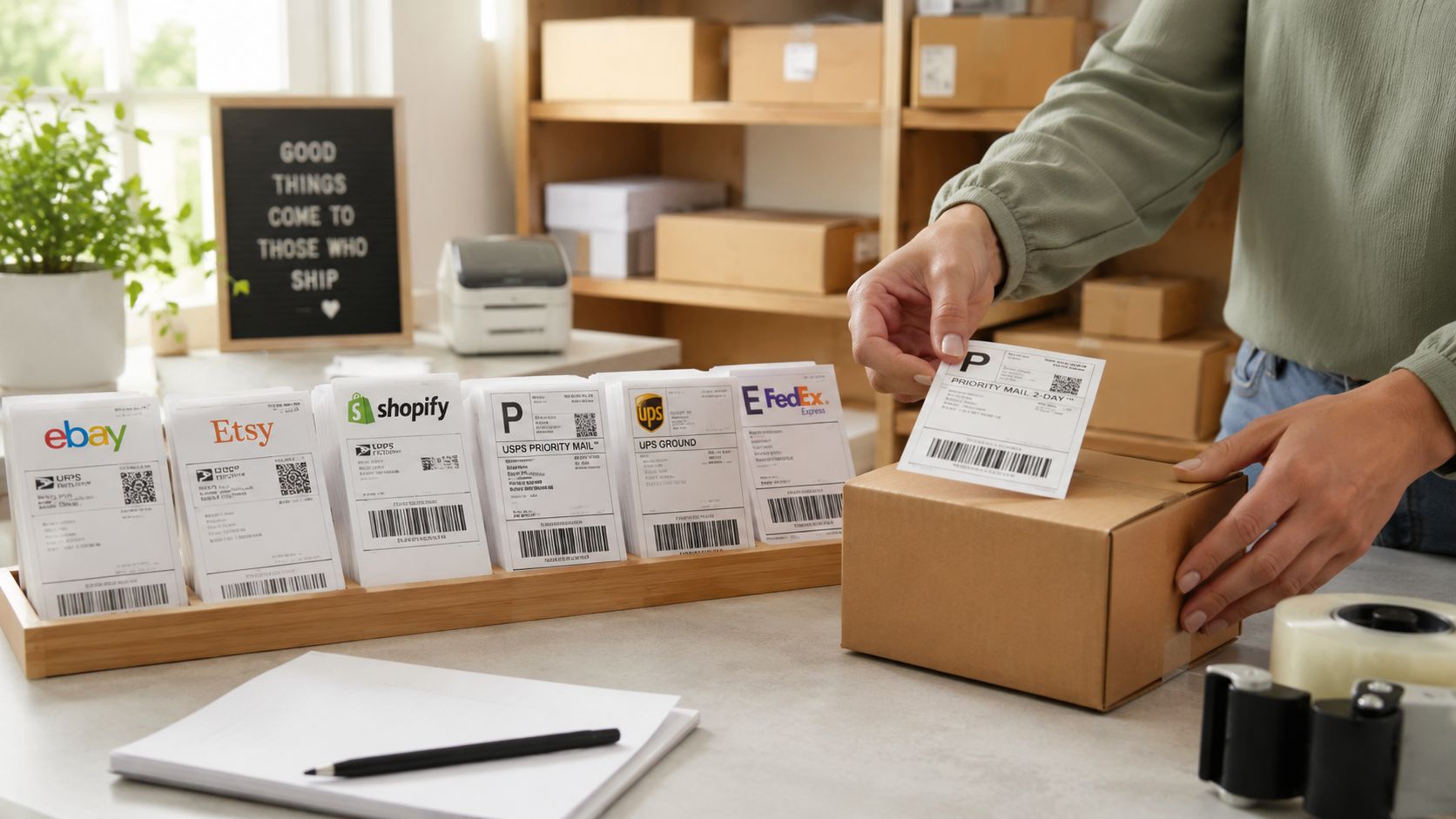
The operational side of selling on multiple platforms gets ugly when every order feels like a fresh emergency. Different sale notifications, different label flows, different packaging choices, different storage spots. If you don't standardize, shipping will take over your day.
Batch your work so orders stop feeling random
The easiest fix is batch processing. Don't jump on each order the moment it appears unless the platform or buyer situation requires it. Group similar tasks together so your brain stays in one mode at a time.
A clean daily workflow looks like this:
Pull all new orders into one review window
Check each platform, confirm item, buyer notes, and shipping requirements.Delist sold inventory before anything else
This keeps account problems from snowballing.Pick all items in one pass
Walk your storage once, not repeatedly.Inspect before packing
Catch condition issues while there's still time to message the buyer if needed.Print labels together
One printing session creates fewer mistakes than switching back and forth all day.Pack similar item types in batches
Clothing together, hard goods together, fragile items together.Stage outgoing packages in one spot
That final visual check prevents missed orders.
A messy shipping process usually isn't a packing problem. It's a sequencing problem.
Standardize what you can
You don't need a warehouse to ship like a professional seller. You need repeatable choices.
Keep your materials tight:
- A small set of box sizes that cover most hard goods
- Polymailers in a few common sizes for clothing and soft goods
- One labeling station with tape, scale, labels, and scissors in one place
- Basic protective materials you trust and use consistently
Every extra packaging decision slows you down. If you have a default mailer for shirts, a default box for shoes, and a default process for fragile items, your fulfillment gets faster and less error-prone.
When shipping software is worth adding
Platform-native labels are fine when order volume is light. As volume grows, third-party shipping software can help by consolidating label creation, organizing carrier options, and giving you one place to manage outbound flow.
Use outside shipping software when:
- you're checking multiple platforms several times a day
- you're losing time comparing labels manually
- you need a clearer shipping history across channels
- your pack station is slowing because the label process is fragmented
Don't add software because it looks advanced. Add it when it removes a real bottleneck. The test is simple. If the tool saves mental friction every day and lowers mistakes, it earns its place.
Tracking True Profitability to Scale Your Reselling Business
A lot of resellers know their sales total. Fewer know their real profit by item, category, and platform. That's the difference between having activity and having a business.
Track the full life of the item
Every item should leave a trail from purchase to payout. You can do this in a spreadsheet, bookkeeping software, or a simple inventory tracker. The format matters less than consistency.
Track these fields for every item:
| Field | Why it matters |
|---|---|
| Buy cost | Shows sourcing discipline |
| Marketplace used | Reveals best-fit channels |
| Sale price | Records top-line result |
| Fees | Keeps gross and net separate |
| Shipping cost or shipping burden | Exposes hidden margin loss |
| Supplies or prep notes | Helps identify labor-heavy categories |
| Final take-home | Tells you if the flip was actually worth it |
If you skip this, you'll repeat unprofitable buys because they felt successful at the time. That's common with large or trendy items that sell quickly but leave very little after costs.
Use post-sale data to sharpen future buys
The core value of tracking isn't bookkeeping. It's feedback.
Look for patterns such as:
- Which platforms consistently leave you the best margin
- Which item categories move cleanly with low buyer friction
- Which products attract messages, offers, and returns
- Which buys looked good in the aisle but underperformed after fees and shipping
The best sourcing improvements often come from your last batch of sold items, not your next trip to the thrift store.
Once you can see those patterns, your business changes. You buy with more conviction, pass faster on weak inventory, and cross-list only when it adds real value. Over time, that's how selling on multiple platforms stops being chaotic and starts becoming a system.
If you want to make better buy decisions before you ever build a listing, ScanFlip AI gives you a faster way to identify items, review cross-platform sold comps, and estimate likely take-home profit while you're sourcing. That kind of clarity helps you choose the right marketplace from the start, which is where most profitable multi-platform selling decisions are really made.