
What Is Online Arbitrage? Your 2026 Guide
You spot a discounted shampoo bundle on Walmart, check the Amazon listing, and the spread looks good. Ten minutes later, the deal is dead. Amazon is suppressing the Buy Box, three sellers have matched the price, and the profit that looked solid turns into break-even after fees, prep, shipping, and returns.
That is online arbitrage in 2026.
Online arbitrage means buying products from one online retailer and reselling them on another marketplace for more, usually Amazon. The concept is simple. The work is not. Good sellers win on fast research, disciplined buying, and hard profit math. Bad sellers trust the first calculator result they see and learn the expensive way.
The part beginner guides often miss is that revenue is not profit, and a listed Buy Box price is not a promise. Buy Box suppression can choke sales on listings that looked healthy the day before. Fees change. Coupons disappear. A product with a decent margin on paper can still be a poor buy once you factor in inbound shipping, prep supplies, storage exposure, return risk, and the time your cash stays tied up.
Online arbitrage also gets confused with other reselling models, which leads new sellers to expect the wrong workflow.
| Model | Where you source | Inventory handling | Typical workflow |
|---|---|---|---|
| Online arbitrage | Online stores | You buy inventory, then resell it | Research, buy, receive, prep, list, fulfill |
| Retail arbitrage | Physical stores | You buy inventory, then resell it | In-store sourcing, scanning, buying, listing |
| Dropshipping | Supplier catalogs | You usually don't handle inventory directly | List first, supplier ships after sale |
The appeal is real because you can start small, test quickly, and build systems without opening a storefront or developing a product. The catch is that the easy version of online arbitrage barely exists now. The sellers who last are the ones who treat it like inventory trading with platform risk, not easy money from price gaps.
Table of Contents
- Introduction
- What Online Arbitrage Is (and Is Not)
- The Online Arbitrage Workflow from Start to Finish
- Sourcing Strategies and Top Marketplaces
- The Reality of Profitability and Common Pitfalls
- Essential Tools for Online Arbitrage Success
- Legal, Tax, and Account Health Considerations
- Frequently Asked Questions About Online Arbitrage
Introduction
Arbitrage exists in plenty of industries, but in resale it comes down to one boring truth: price gaps exist because marketplaces don't price everything the same way at the same time. A retailer runs a clearance event, a marketplace listing stays high, and someone who notices the mismatch gets paid for noticing it first.
That's what online arbitrage is in practice. You buy low online, then sell higher online. Unlike retail arbitrage, you're not driving store to store. Unlike dropshipping, you own the inventory and carry the risk once you place the order.
People often get into it because it feels accessible. That part is true. You can start small, test a few products, and learn the mechanics without signing a wholesale contract. But the part many tutorials leave out is that online arbitrage rewards precision, not enthusiasm.
Practical rule: If you can't explain why a deal should still work after fees, shipping, returns, and price pressure, it isn't a deal yet.
A lot of beginners treat online arbitrage like couponing with upside. Experienced sellers treat it like inventory trading. That mindset shift matters. You're not just finding “cheap stuff.” You're buying items that have enough spread, enough demand, and enough room for mistakes to still leave profit on the table.
What Online Arbitrage Is (and Is Not)
The plain-English definition
A seller spots a toy on clearance from an online retailer, checks the Amazon listing, sees steady demand, runs the fees, and buys only if the margin still works after shipping, prep, and likely price drops. That is online arbitrage in real terms.
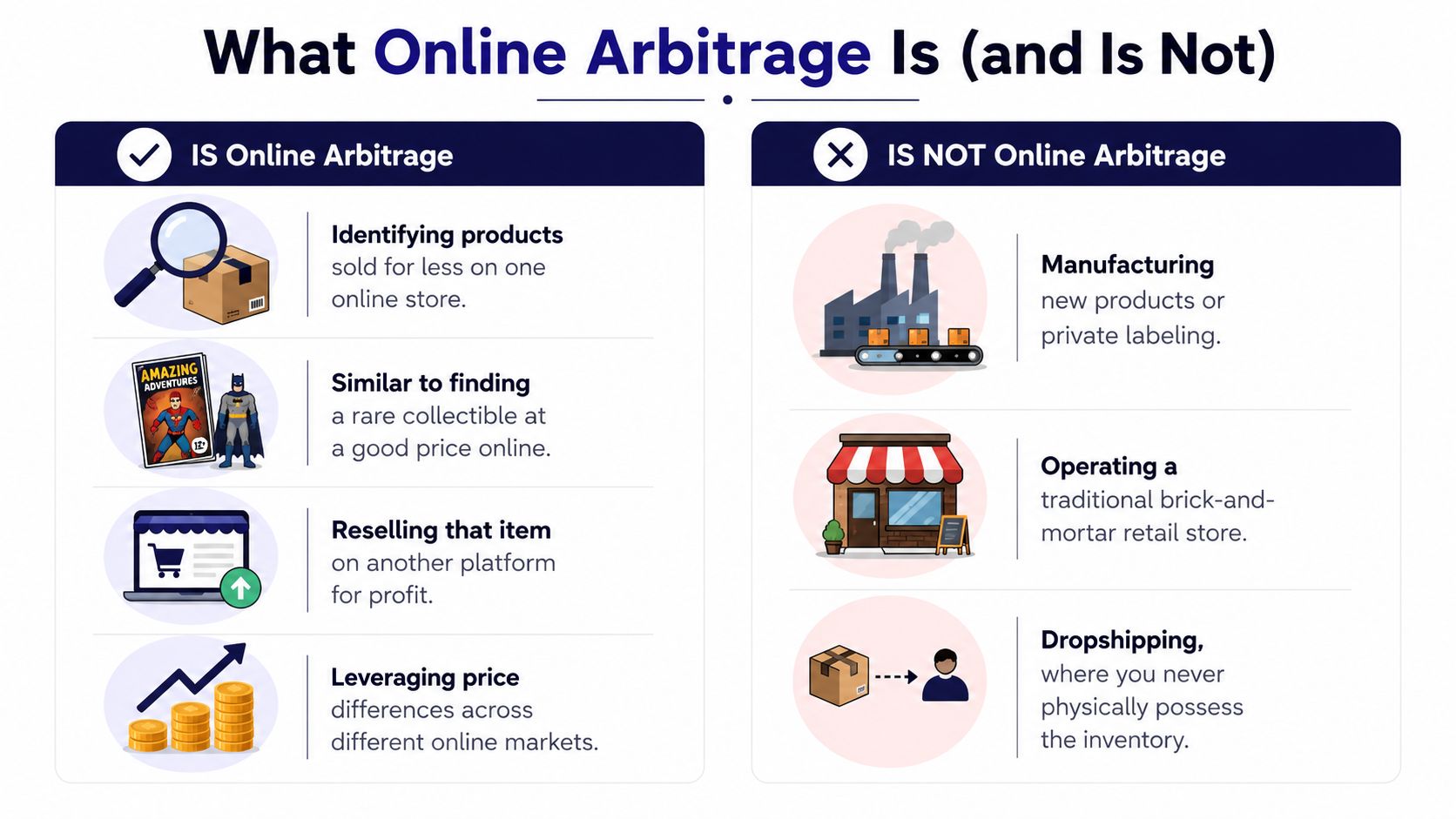
Online arbitrage means buying an existing product from one online store at a lower price and reselling that same product on another marketplace for more. In practice, Amazon gets most of the attention, but the model is bigger than Amazon. The key is the spread between your buy cost and your true net profit after all selling costs.
That last part matters more in 2026 than a lot of beginner guides admit. A product can look profitable in a quick scan and still lose money once the Buy Box disappears, another seller tanks the price, or returns eat the margin. Online arbitrage is a resale model built on execution, not screenshots.
What it is not
People blur OA together with any online selling model. That creates expensive mistakes.
Online arbitrage is not private label. You are not creating a branded product or controlling the listing from the ground up. It is not wholesale either, because you are not buying from an authorized distributor under a long-term supplier relationship. It is not dropshipping, because you take possession of the inventory and carry the risk once you buy it. And if you source in physical stores instead of online retailers, that falls under retail arbitrage and other store-based resale models.
The distinction matters because each model has different margins, different account risks, and different operational work. OA sits in the middle. It is easier to start than wholesale or private label, but it is less protected. Other sellers can find the same listing, the same retailer, and the same deal.
| Model | What it is | What it is not |
|---|---|---|
| Online arbitrage | Buying discounted products from online retailers to resell on marketplaces | Creating your own branded product |
| Retail arbitrage | Buying from physical stores to resell online | Sourcing entirely through websites |
| Dropshipping | Selling products before you physically receive them | Inspecting and prepping inventory yourself |
| Private label | Launching and branding your own product | Reselling existing retail inventory |
A few practical truths make the line even clearer:
- OA is inventory-based: you pay upfront, receive the units, inspect them, and then list or send them in.
- OA is listing-dependent: many sellers join existing marketplace listings instead of building new ones.
- OA is margin-sensitive: the key figure is net profit after fees, shipping, prep, storage, returns, and price movement.
- OA is platform-exposed: approval status, listing quality, Buy Box suppression, and policy enforcement can shut down a deal fast.
I have seen beginners call something a winning OA product because the visible spread looked wide enough. Then the item arrives, Amazon suppresses the Buy Box because pricing is off, and the inventory sits. On paper, it was arbitrage. In practice, it was trapped cash.
That is the part worth remembering. Online arbitrage is not just buying low and selling high online. It is buying inventory you can resell, on a listing you are allowed to join, at a price that still leaves profit after the market does what it usually does.
The Online Arbitrage Workflow from Start to Finish
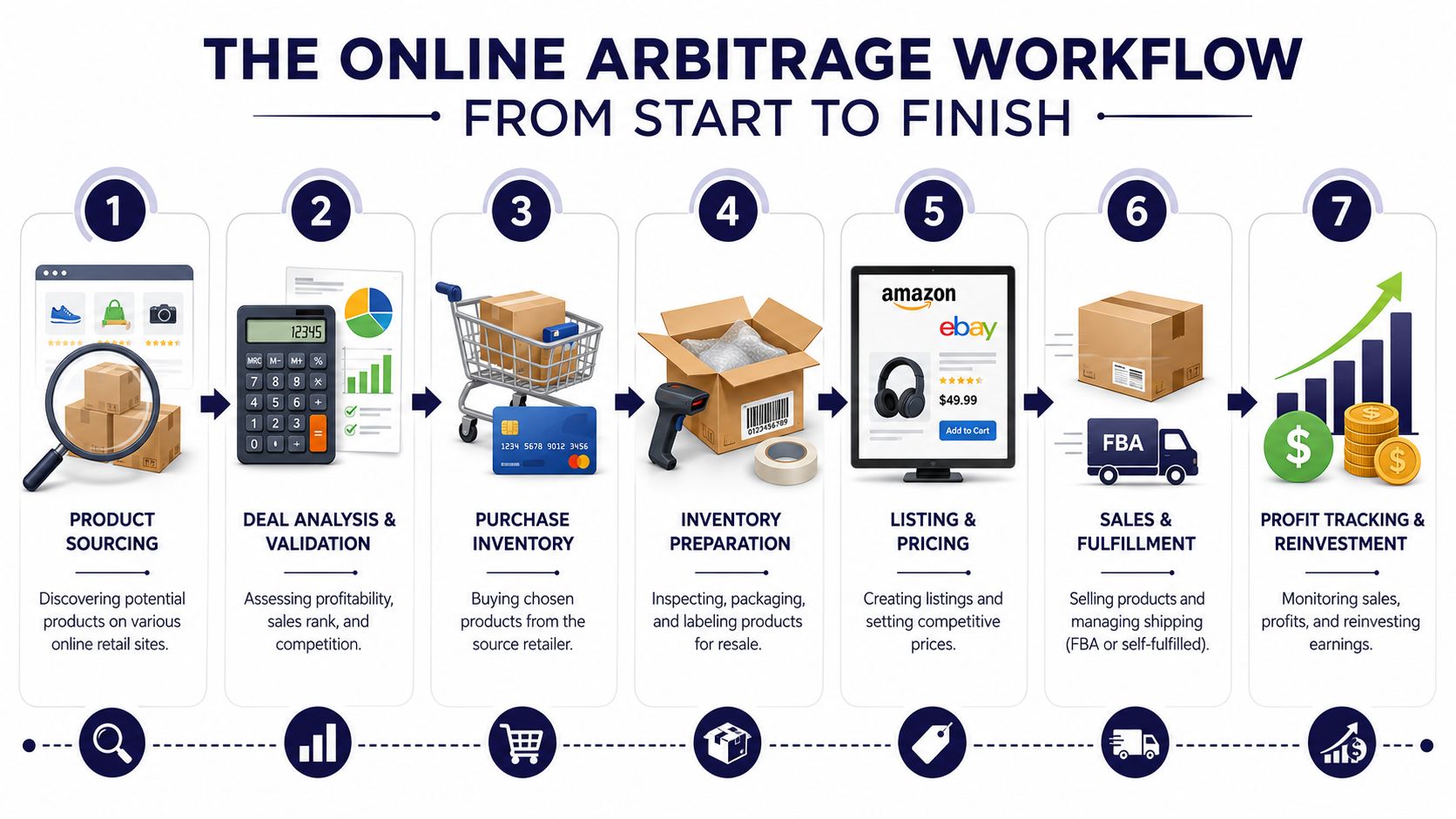
A typical OA buy starts with a product that looks easy. A retailer runs a sale, the Amazon listing shows a healthy gap, and the calculator says there is money on the table. Then the work starts. You check whether you can sell the brand, whether the listing is clean, whether Amazon or a wave of low-price sellers is about to crush the offer, and whether the Buy Box is even active.
That screening step decides whether you are buying inventory or buying a headache.
Finding deals worth checking
The first pass is fast. Search retailer sites like Walmart, Target, and Best Buy for discounted products, coupon stacks, clearance pages, and short-term promos. Then match those products to marketplace listings and start filtering hard.
The first questions are simple:
- Can you sell the brand and category on your account?
- Does the listing match the product exactly?
- Is there steady demand, not just a temporary price spike?
- Is Amazon on the listing now, or do they show up often?
- Is the Buy Box active, or is it suppressed?
- After fees, shipping, prep, returns, and likely price movement, is there still enough net profit left?
Beginners often stop at visible spread. Experienced sellers do not. A product can look profitable and still fail if the listing is stranded without a Buy Box, if the variation is messy, or if ten other sellers bought the same clearance deal that morning.
Price history matters, but current offer quality matters just as much. A stable listing with reasonable competition usually beats a flashy spread on a chaotic ASIN.
What happens after you buy
Once the order lands, OA stops being a sourcing exercise and turns into an inventory job. At this stage, bad assumptions show up fast. Wrong pack counts, updated packaging, damaged seals, regional versions, and listing mismatches all cut into profit.
A practical prep sequence looks like this:
- Inspect each unit for damage, authenticity concerns, expiration dates, and exact listing match.
- Separate problem inventory before it gets mixed into good stock.
- Choose FBA or FBM based on fees, turnover speed, and how much control the item needs.
- Prep and label correctly if the marketplace requires barcode coverage, poly bags, or expiration labeling.
- Log the actual cost basis while invoices, cashback adjustments, and shipping charges are easy to verify.
Buy decisions happen on a screen. Margin gets won or lost when the box is open.
That cost log matters more than many new sellers realize. If you leave out inbound shipping, prep supplies, removal risk, or expected return loss, your spreadsheet will flatter you. Your bank account will not.
Listing and fulfillment choices
Most online arbitrage sellers use one of two fulfillment paths:
| Fulfillment path | How it works | Best for |
|---|---|---|
| FBA | You send inventory into Amazon's warehouses | Faster-selling products, simpler day-to-day shipping, and listings where Prime access helps conversion |
| FBM | You store and ship inventory yourself | Test buys, slower-moving products, meltable items in restricted periods, and inventory that needs tighter control |
FBA is usually easier to scale, but it adds storage fees, inbound shipping costs, and less control when something goes wrong. FBM gives you more control over inventory and cash flow timing, but it adds daily operational work and can make it harder to win the Buy Box on some listings.
Pricing needs the same discipline. Set your price from your true landed cost, current competition, and realistic sell-through time. Do not price from optimism. If the Buy Box is suppressed, assume a slower exit or skip the buy entirely. In 2026, that issue traps a lot of capital because sellers keep treating suppressed listings as temporary glitches instead of a real risk factor.
The last step is post-sale review. Check what happened. Did the item sell in the time you expected? Did fees or inbound shipping come in higher than planned? Did returns, repricing pressure, or Buy Box suppression wipe out the margin you thought you had? Those notes improve future buys far more than another hour spent scrolling for deals.
Sourcing Strategies and Top Marketplaces
A seller spots a clearance price at Target, runs the numbers fast, and sees a spread that looks great on Amazon. Two weeks later, the order gets partially canceled, the Amazon listing is crowded, and the product sits because the Buy Box is suppressed. That is what sourcing looks like in 2026. The job is not finding cheap products. The job is finding inventory you can buy, list, and exit at a real net profit.
Large retail sites still produce plenty of leads. Walmart, Target, Best Buy, Walgreens, Kohl's, Home Depot, and brand outlet stores all create openings through clearance cycles, app-only offers, coupon stacking, and short-lived price mismatches. The strongest sources are the ones you can revisit every week and learn. Random one-off deals are fine, but repeatable patterns are what turn sourcing into a business instead of a lucky streak.
Cross-border sourcing adds another layer. As noted earlier, once you start buying across regions, the extra friction shows up fast through VAT, currency conversion, shipping delays, returns, and marketplace differences. A deal that looks attractive before those costs can turn mediocre once the money settles.
Where experienced sellers actually spend time
Retailer websites matter, but they are only part of the picture. Good sourcing usually comes from working a few channels well:
- Major retailers: Best for predictable promos, clearance resets, and volume buys
- Brand websites and outlet stores: Good for exclusive bundles, direct markdowns, and products Amazon sellers have not repriced yet
- Cashback and coupon platforms: Useful for improving margin, but not for rescuing a weak buy
- Deal communities and alerts: Good for lead generation, but crowded fast
- Niche ecommerce stores: Often overlooked, especially in hobby, beauty, pet, office, and home categories
Cashback, points, and gift card plays can help. They are not margin. Treat them as upside, not as the reason to buy. If the deal only works when every rebate tracks perfectly, pass.
What usually makes a product sourceable
The best OA inventory is boring in a good way. It ships easily, matches clearly, and sells without constant explanation.
Products with these traits tend to be safer:
- Small and light: Lower inbound and return pain
- Simple listings: Fewer pack-count mistakes and variation mix-ups
- Steady demand: Better than chasing a brief trend you have to time perfectly
- Ungated or easy to approve: Less chance of tying up cash in inventory you cannot list
- Low breakage risk: Better for both prep and customer satisfaction
- Bundle-friendly: A smart multipack or accessory set can create separation from crowded single-unit offers
The weak candidates are familiar too. Fragile items, oversized products, meltables, listings dominated by Amazon, and products with muddy variations create problems that spreadsheets hide. So do products with a temporary price spike. If the current Amazon price is an outlier, assume it will fall before your inventory lands.
Checks that prevent bad buys
This is the part many beginner guides skip.
Before buying, confirm the retailer is selling the exact item you think it is. Check count, size, scent, model number, edition, packaging update, and whether the photo is outdated. Retail listings are wrong more often than people admit. One mismatch can turn a profitable buy into a return-heavy mess.
Then check the Amazon side with the same level of skepticism. Read the title, bullets, variation tree, recent seller count, and whether the listing shows signs of instability. If the listing has suppressed Buy Box history or pricing swings that make no sense, build that risk into the buy decision. The spread on paper is not enough.
Use a real margin process, not a back-of-napkin estimate. This guide to pricing items for resale with real margin in mind is a good reference for building your numbers from total cost instead of wishful thinking.
One more rule matters. Favor stores and categories you can understand well. Sellers who know exactly how CVS clears seasonal stock, how Nike outlet restocks hit, or how office supply sites bundle slow movers usually source better than sellers scanning every site on the internet. Breadth feels productive. Pattern recognition makes money.
The practical goal is simple. Find deals that survive bad assumptions, not deals that need perfect conditions.
The Reality of Profitability and Common Pitfalls
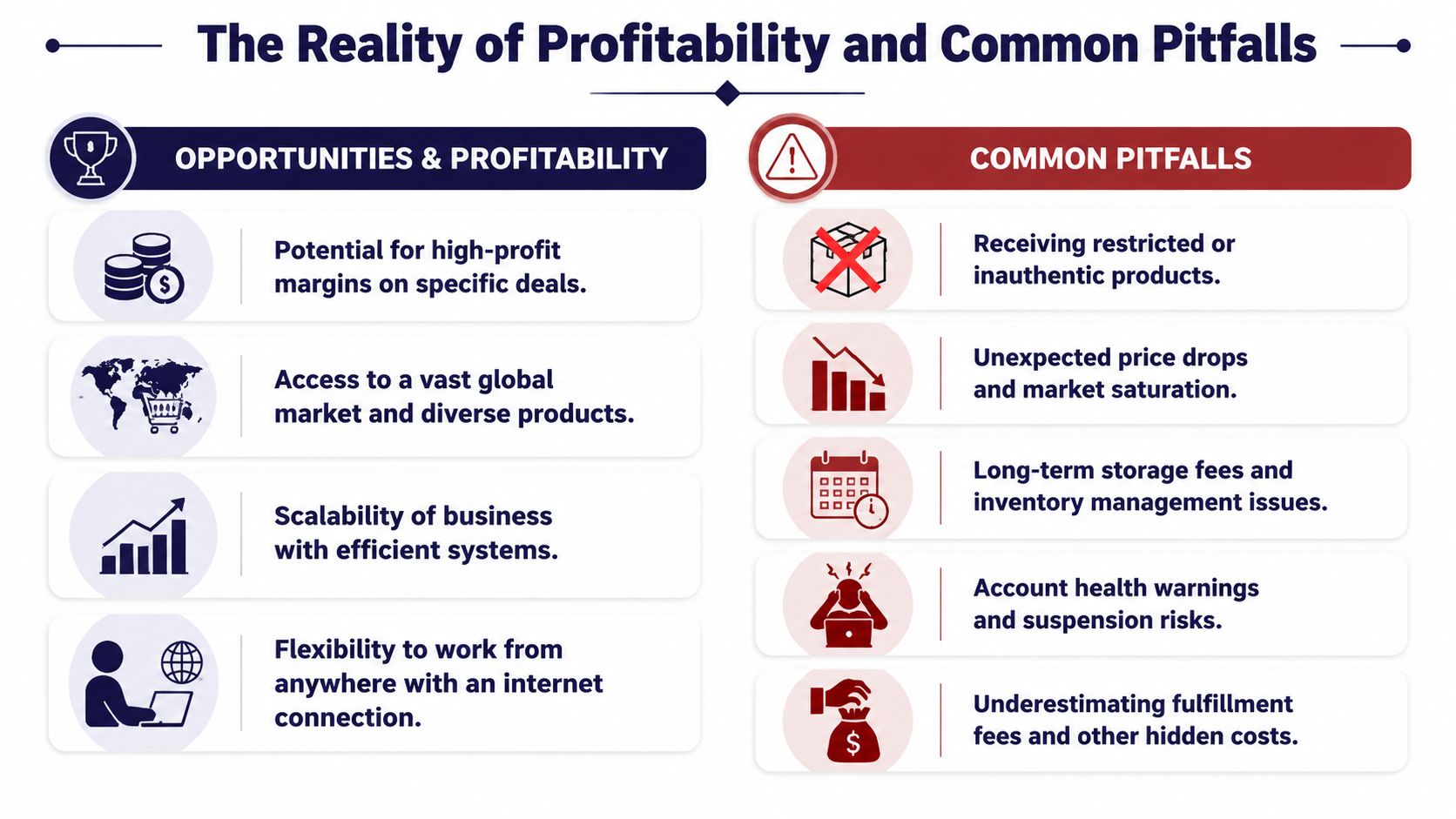
Why old advice breaks in 2026
You buy 24 units of a discounted product, send them to Amazon, and the numbers still look fine in your spreadsheet. Then the listing shows no Buy Box for stretches of the week, a brand-heavy seller rotates in and out, and your inventory sits long enough for storage costs and price drops to eat the spread. That is a normal online arbitrage outcome in 2026, not a rare exception.
A lot of beginner content still describes OA like Amazon works the way it did a few years ago. It treats any acceptable spread as a workable opportunity and assumes that listing against an existing ASIN is enough to get consistent sales. That assumption breaks fast once Buy Box suppression enters the picture.
Actorio's beginner guide focused on Amazon online arbitrage points to Buy Box removals as a direct threat to the old piggyback model. That matters because profitability is no longer just about fees and buy cost. Visibility now decides whether the projected margin has any chance to materialize.
Experienced sellers screen for that risk early. They ask whether the offer will be visible often enough, whether the listing has stable sales behavior, and whether they can still make money after a forced price cut. If the answer depends on perfect conditions, it is not a strong buy.
Field note: A profitable ASIN on paper can still be dead inventory in practice.
How to calculate true net profit
Bad OA buys usually start with incomplete math, not bad sourcing.
Helium 10's article on online arbitrage highlights the operational costs that beginner calculators often miss, including shipping swings, returns, and other adjustments that turn a green-looking deal into a weak one. That lines up with what experienced resellers see every week. Profit disappears in the gaps between estimate and reality.
A thorough profit check should include:
- Buy cost: Unit cost, retailer shipping, sales tax if you cannot recover it, and any coupon or cashback uncertainty.
- Amazon fees: Referral fees, FBA fulfillment fees, storage exposure, and prep or labeling costs.
- Price compression risk: The likely selling price after other sellers match the deal and race down.
- Buy Box risk: Whether your offer is likely to win enough visibility to sell through in a reasonable time.
- Return and condition risk: Categories with picky buyers, fragile packaging, or variation confusion need a wider margin.
- Time to exit: A slower sale is not free. Capital tied up for months has a cost.
Use a resale pricing method that accounts for total landed cost and net margin instead of treating the current Buy Box price as guaranteed. The only number that matters is what remains after fees, delays, repricing pressure, and routine headaches.
Mistakes that keep repeating
Some errors show up in nearly every struggling OA operation:
| Mistake | Why it hurts |
|---|---|
| Buying from screenshot margins | The listed spread often disappears after shipping, prep, and price matching |
| Assuming Buy Box access | A suppressed or unstable Buy Box can kill sales velocity even on a good ASIN |
| Counting cashback as guaranteed profit | Tracking fails, terms change, and payout timing can wreck cash flow |
| Underestimating price tanking | Other sellers find the same retail deal and push the floor down fast |
| Buying too many test units | Large first orders magnify mistakes on listings you have not sold before |
| Ignoring exit speed | Slow inventory ties up capital and turns decent margins into poor annual returns |
Good OA sellers are not the ones finding the most leads. They are the ones rejecting weak deals quickly, buying narrower and cleaner, and treating visibility risk as part of profit math instead of an afterthought.
Essential Tools for Online Arbitrage Success
A messy tool stack creates expensive mistakes. The goal is not to collect subscriptions. The goal is to make faster decisions with fewer bad buys.
Three tool categories pull their weight in online arbitrage. Sourcing and product research tools help find price gaps, check listing history, and compare offers across marketplaces. Repricing tools matter once you are on competitive ASINs where the floor can drop while your inventory is still inbound. Inventory and analytics tools show what sold, what is sitting too long, and which suppliers keep producing weak results.
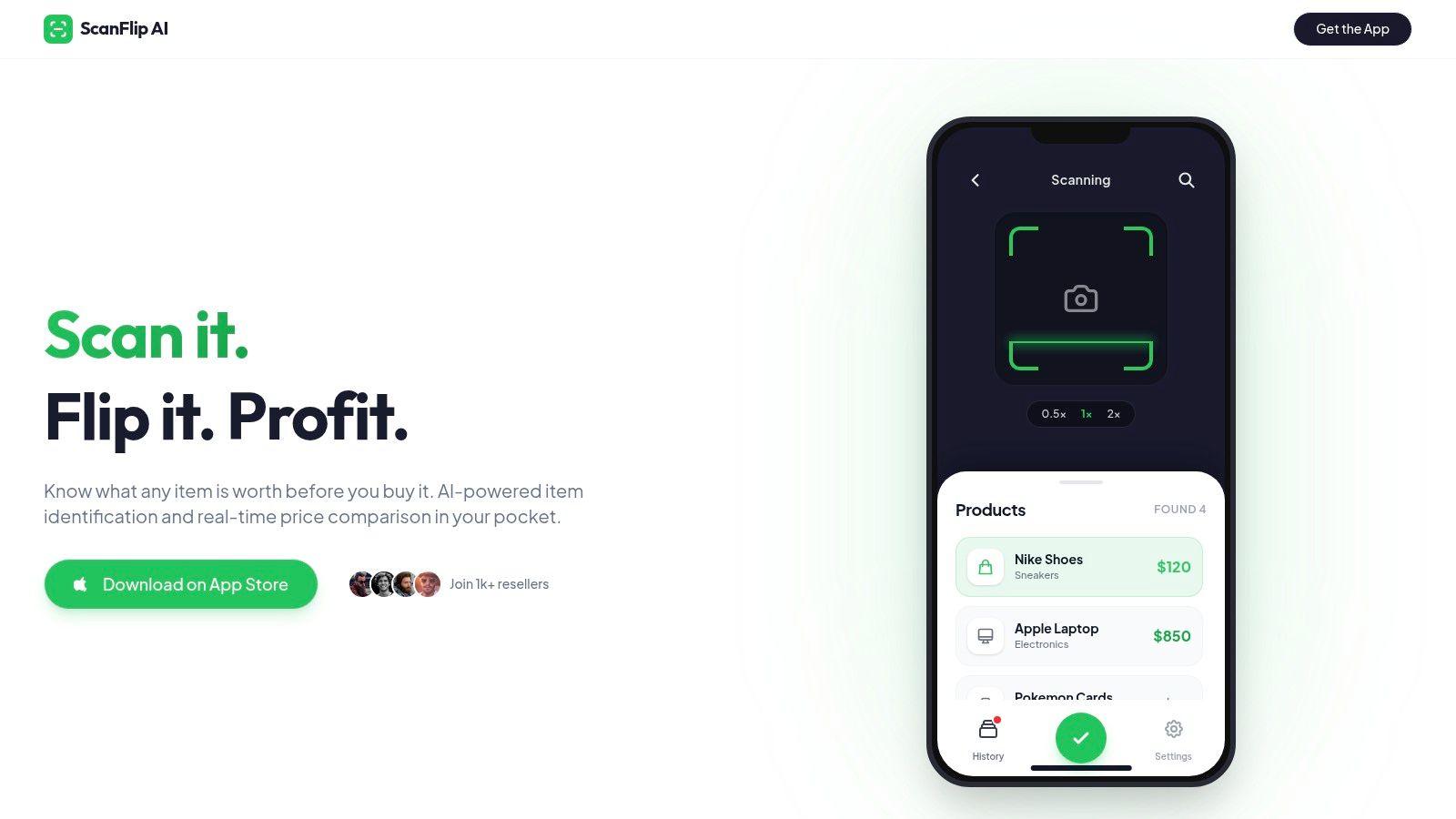
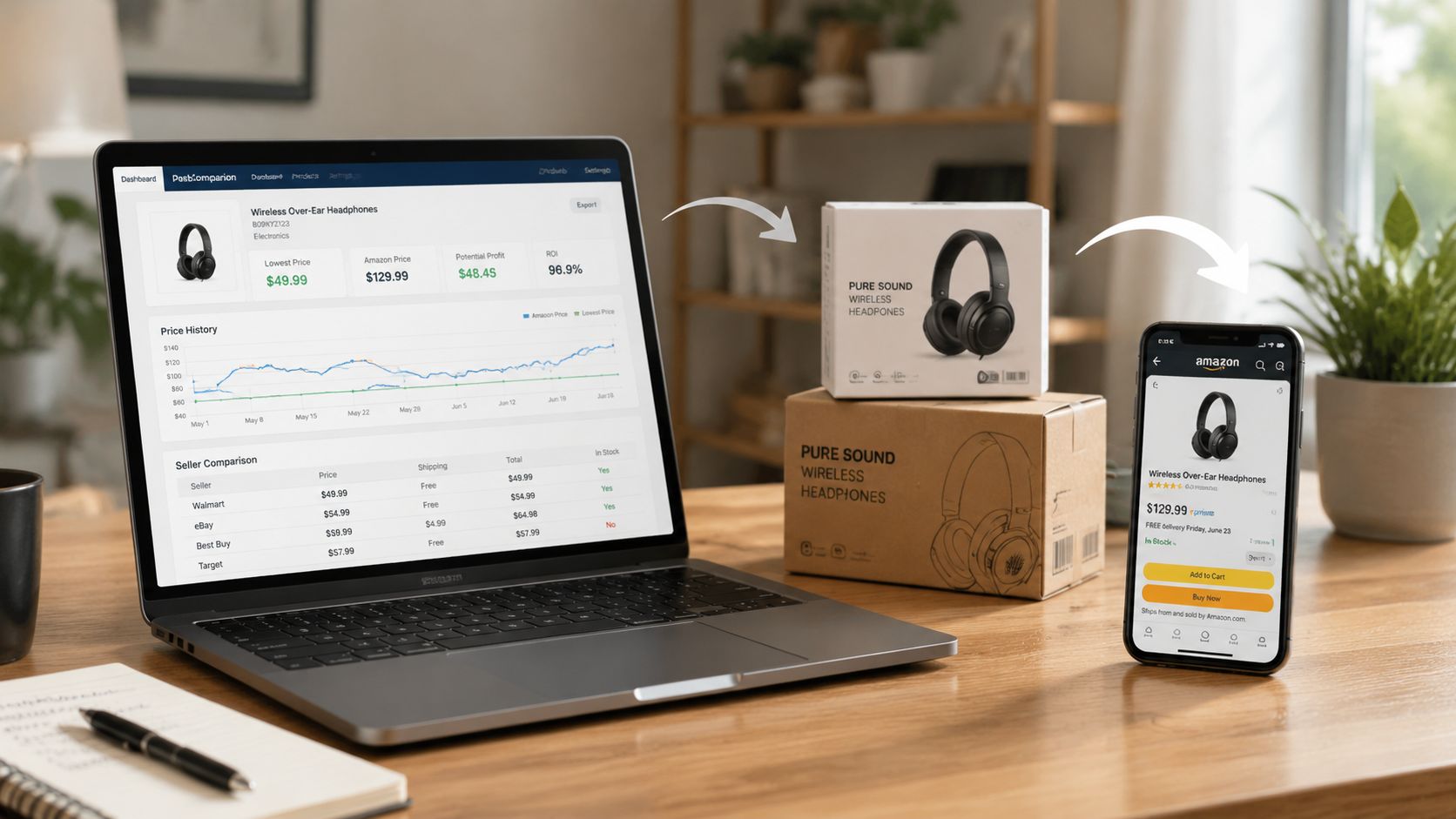
The screenshot matters for one reason. Good OA decisions happen in a narrow window, and resellers need comps, fees, and expected take-home profit in front of them before the deal dries up.
Fast math beats fancy dashboards.
Beginners often overspend on software and still miss the core problem. Their inputs are wrong. They check the current selling price, estimate fees loosely, ignore prep and inbound shipping, and treat the Buy Box as automatic. In 2026, that shortcut gets punished more often because suppressed Buy Boxes and unstable listing visibility can slow sales even when the ASIN looks fine on paper.
A useful setup should help answer a few questions in under a minute. If it cannot, it is slowing the business down instead of helping it.
- Can I sell this ASIN or brand on my account?
- What are buyers paying right now across the listing, not just the top visible offer?
- What is my true net after referral fees, FBA fees, prep, tax, shipping, and expected price pressure?
- How exposed am I if the Buy Box is suppressed or rotates poorly before my units arrive?
That last point gets ignored in beginner guides. It should not. A tool can show a profitable spread, but if the listing has weak Buy Box visibility or constant seller churn, the exit may be slower and uglier than the calculator suggests.
For sellers comparing options, this roundup of reseller apps for sourcing and pricing gives a practical starting point.
Use fewer tools, but use them well. Clean cost inputs, fast restriction checks, and honest profit math will save more money than any flashy feature set.
Legal, Tax, and Account Health Considerations
Business setup without overthinking it
Most new sellers start as a sole proprietor because it's simple. Some eventually move to an LLC for organizational or liability reasons. The right choice depends on your location, risk tolerance, and tax situation, so it's worth checking with a local accountant or attorney before you scale.
What matters early is treating the activity like a business. Keep records. Save invoices. Separate personal spending from inventory spending if you can.
Sales tax and resale certificates
If your state or country supports resale documentation, learn how it works before you start placing larger orders. A resale certificate can let you purchase inventory for resale without paying sales tax at the time of purchase, depending on the seller and your jurisdiction.
This is one of those boring details that affects margins more than people expect. The sellers who stay organized here usually make better decisions everywhere else too.
Account health is part of the business
Platform account health isn't just an admin screen. It's one of your main business assets.
Watch out for:
- Restricted brands and categories: Approval rules can change, and not every invoice or receipt will satisfy a marketplace review.
- Condition complaints: Used sold as new, damaged packaging, and wrong variations create avoidable trouble.
- Late fulfillment or cancellation issues: Especially relevant if you self-fulfill.
- Authenticity challenges: Retail receipts don't solve every dispute.
A sloppy sourcing decision can become an account problem later. That's why experienced sellers often pass on deals beginners would force.
Frequently Asked Questions About Online Arbitrage
Is online arbitrage legal and sustainable
Online arbitrage is generally legal if you buy legitimate inventory and resell it within marketplace rules, brand policies, and local law.
The bigger issue is whether it stays workable for your situation. In 2026, OA still works, but the margin for error is smaller. Buy Box suppression, tighter brand enforcement, rising fees, and slower sell-through can turn a deal that looked fine on a calculator into dead stock. Sellers who last treat sustainability as a sourcing discipline problem, not a motivation problem.
How much money do you really need to start
A small test budget is enough to learn, but it is not enough to make many mistakes.
Plenty of sellers start with a few hundred dollars and use that first round to learn prep costs, fee structure, replenishment timing, and what a bad buy is like in practice. The practical answer is simple. Start with money you can afford to tie up for a while, because inventory does not always flip on your timeline.
How long does it take to become profitable
Profitability shows up at different speeds for different sellers, and early results are often misleading.
A beginner might sell a few units quickly and assume the model is working, then realize later that returns, removals, prep, software, and storage ate the margin. Real profitability starts when your sourcing decisions hold up after every cost is counted. That includes shipping to the marketplace, prep supplies, tax treatment, unsellables, and the cases where the Buy Box stays suppressed and your inventory sits longer than planned.
Is this still beginner-friendly in 2026
It is still accessible, but it is less forgiving than older guides make it sound.
The hard part is not opening an account or finding a price gap. The hard part is finding inventory that is sellable, staying within policy, and calculating true net profit instead of headline ROI. Beginners can still do well, but the learning curve is sharper now, especially on Amazon.
If you want a faster way to make buy-or-pass decisions with real resale math, ScanFlip AI is worth a look. It's built for resellers who need quick item identification, sold comps across major marketplaces, and expected net profit after fees and shipping, so you can stop guessing and source with evidence.