
Retail Arbitrage Books: The Real Math and Strategy
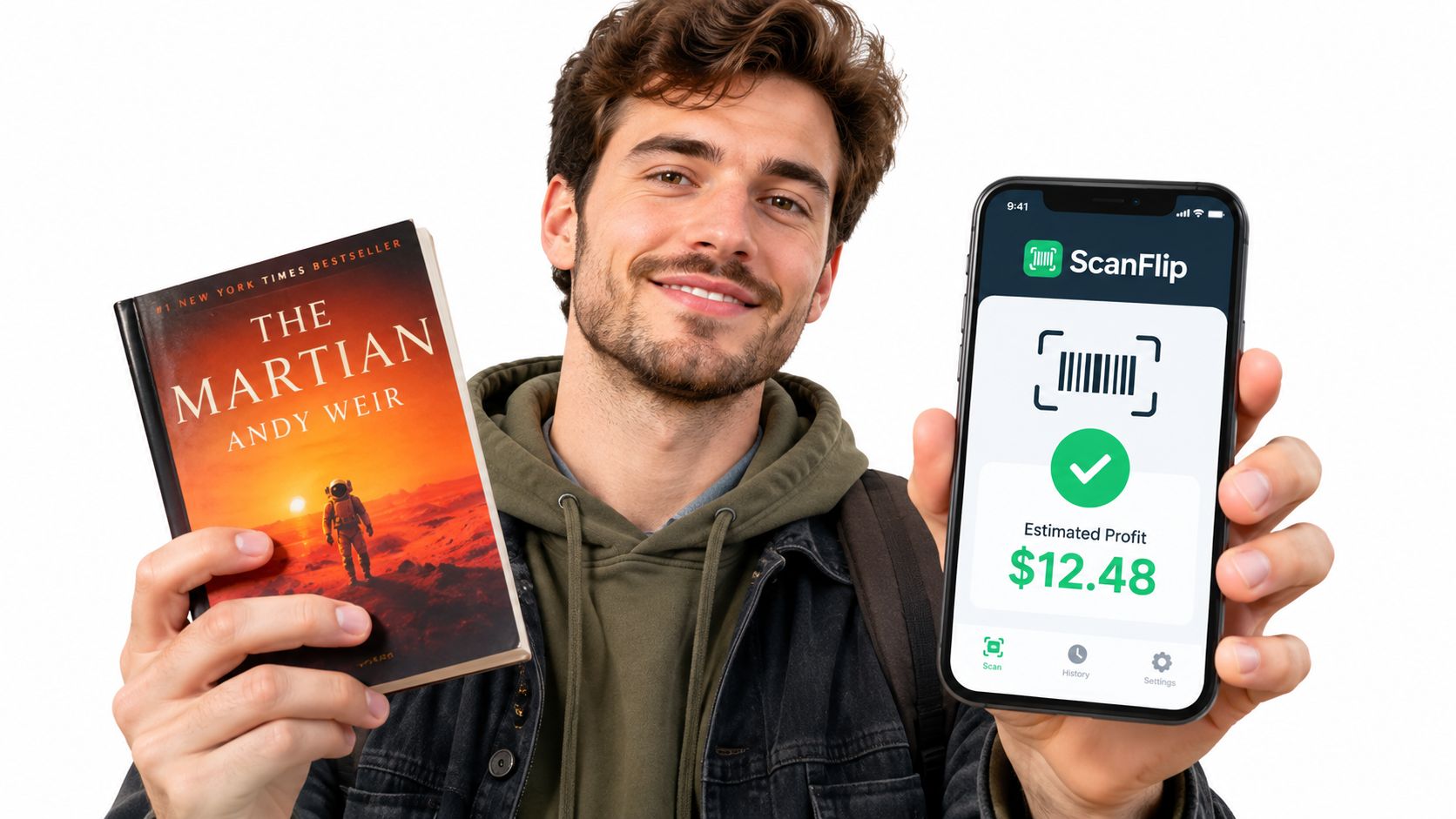
A $1 thrift-store book priced at $9.50 may leave only $1 to $2 in profit after marketplace fees and shipping, so retail arbitrage books are worth buying only when the expected net margin survives the full fee stack. The key question in the aisle isn't what the book sells for, but what you keep.
You're standing at Goodwill with a bin of books priced at $1 each. One paperback catches your eye because a marketplace result shows a $9.50 price. It looks like an easy flip until you subtract the referral fee, the media closing fee, fulfillment or postage, and the cost of getting the book into condition.
That gap between the gross sold price and net profit is where most beginner book flips go wrong. Cheap inventory isn't automatically profitable inventory. A book can be a good buy at a garage sale, a pass at a thrift store, and a terrible purchase when sold through a fulfillment program that adds weight-based charges.
The durable opportunity is real. The U.S. online used-book market was estimated at $3.4 billion in 2026, with 3,741 businesses operating in the industry and sector growth of 4.9% CAGR from 2019 to 2024, according to Verified Market Reports' online second-hand books market data. That established resale ecosystem creates plenty of price discovery and inventory movement, but it doesn't rescue weak unit economics.
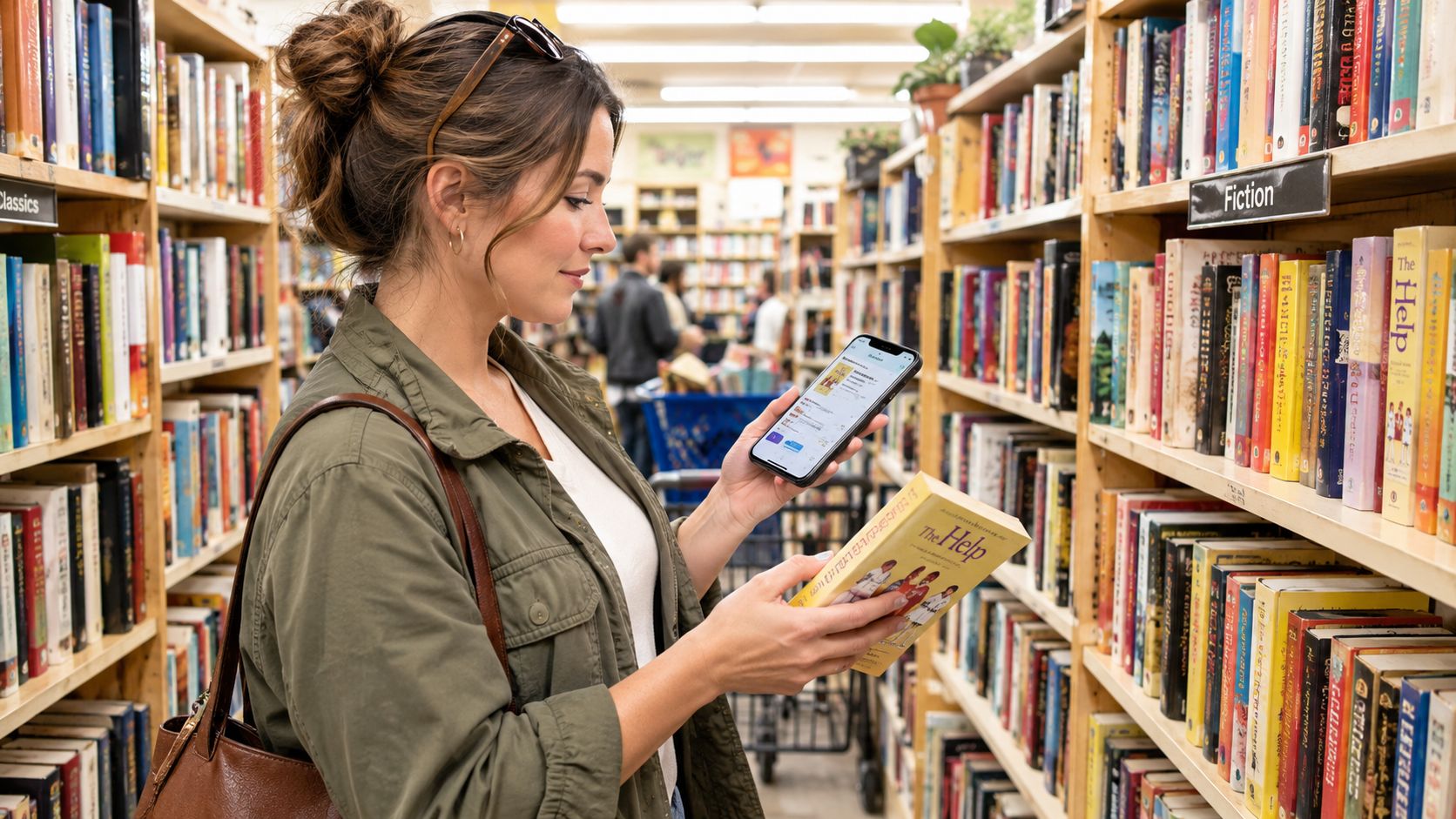
Table of Contents
- The Thrift-Store Book Aisle Problem
- Why Book Margins Collapse After Fees
- How to Scan and Vet Book Buys Fast
- Where to Source Profitable Books
- ISBN Matching and Comp Quality Standards
- When to Skip the Flip
The Thrift-Store Book Aisle Problem
The first mistake is trusting the number on your phone before confirming what it represents. A current offer, an optimistic asking price, or a different edition can make an ordinary book look like a BOLO. Sold comps are the signal that matters, and even a sold price can mislead you if the copy in your hand doesn't match it.
At a $1 buy cost, the temptation is understandable. Your cost of goods looks negligible, and the shelf is full of potential. But the purchase decision has to happen backward from expected take-home: identify the exact book, verify recent comparable sales, estimate every selling cost, and then decide whether the remaining profit justifies handling, storage, packing, and eventual customer service.
The attractive spread that isn't
A $9.50 sale sounds like an $8.50 gross spread before fees. That isn't the number you should use in the aisle. An industry summary cited by Climb the Ladder's analysis of used-book profitability says thrift-store books are often sourced for about $1 each, while a $9.50 list price can leave only about $1 to $2 profit per book after marketplace fees, Amazon media charges, and shipping.
That outcome changes how you source. If the likely net is thin, a book with a clean cover and a recognizable title still belongs on the shelf. The same rule applies to textbooks, novels, workbooks, and media bundles. A low buy cost reduces risk, but it doesn't create a worthwhile flip by itself.
Practical rule: Treat every book as a small business decision. The sale price is revenue, not profit.
What makes the aisle difficult
Books create a special version of retail arbitrage because similar-looking copies can have different demand and different buyer expectations. A hardcover, paperback, teacher's edition, book-club edition, and special edition may all share a title while carrying different resale values. Condition matters too, especially with writing, highlighting, missing supplements, odors, and water damage.
The practical workflow is simple, but it requires discipline:
- Identify the exact copy: Match the ISBN, format, publisher details, and edition before treating any comp as relevant.
- Check sold activity: Prefer recent completed sales over active offers that may never convert.
- Calculate net profit: Subtract cost of goods, marketplace fees, closing charges, shipping or fulfillment, and reasonable preparation costs.
- Set a pass line: If the expected return doesn't compensate you for the work and storage, leave it behind.
Retail arbitrage books isn't a hunt for the biggest apparent price. It's a system for finding books whose net margin, demand, condition, and handling burden all make sense at the moment you buy.
Why Book Margins Collapse After Fees
The fee stack is why a cheap book can still be a bad flip. Amazon says Individual sellers pay $0.99 per item sold, while Professional sellers pay $39.99 per month, plus applicable selling fees, as explained in Amazon's guide to selling books. Those account charges sit alongside category and fulfillment costs.
Amazon's fee schedule adds a $1.80 closing fee per item sold in the Books, DVD, Music, Software & Computer/Video Games, Video Game Consoles, and Video Game Accessories categories, in addition to referral and fulfillment charges, according to Amazon's seller fee schedule. For a low-priced book, that fixed charge consumes a large part of the sale before shipping enters the calculation.
A current seller guide describes books as carrying a 15% referral fee plus the $1.80 media closing fee. It also shows FBA fulfillment fees starting at about $3.06 for items weighing 2 ounces or less, with charges rising as weight increases, as detailed in Underpriced's 2026 Amazon seller fee guide.
The arithmetic behind the pass
Use the $9.50 example without pretending the result is universal. The exact outcome depends on the platform, fulfillment method, seller plan, shipping arrangement, item weight, and whether the buyer or seller absorbs postage. The purpose is to expose the order of operations.
| Fee Type | Typical Amount or Rate | Impact on Margin |
|---|---|---|
| Sale price | $9.50 | Starting revenue, not take-home |
| Cost of goods | About $1.00 | Reduces the spread immediately |
| Referral fee | 15% on Amazon books | Removes a percentage of revenue |
| Media closing fee | $1.80 per item | Fixed charge that hurts low-priced books |
| Fulfillment | Starting at about $3.06 for items at 2 oz or less through FBA | Weight-based cost can consume the remaining spread |
| Estimated remaining profit | About $1 to $2 in the cited example | The practical result after fees and shipping |
The cited industry example isn't a promise that every $9.50 book produces the same result. It demonstrates why the gross number is dangerous. A small change in condition, weight, shipping method, or actual sold price can turn a marginal buy into a loss.
Use net profit as your buy trigger
Before buying, enter the actual expected sold price, not the highest visible offer. Then subtract your buy cost and every variable fee. If your calculation requires a perfect sale, zero storage cost, and no returns to stay positive, the book doesn't meet a professional buy standard.
A useful pricing framework for resale items follows the same principle: price research should support a decision about what remains after the transaction, not just what appears at the top of a marketplace search.
Books can work when acquisition cost is low and demand is proven. They stop working when you accumulate dozens of low-dollar units that each require photographing, grading, packing, storing, and eventually answering buyer questions for almost no net return.
How to Scan and Vet Book Buys Fast
A good aisle workflow has three parts: identify the book, verify demand, and decide before the book enters your cart. Barcode scanning is fast, but it isn't enough on its own. A missing barcode, damaged ISBN, foreign edition, or collectible title can force you into another identification method.
Start with identification, not price
Use the method that fits the copy in front of you:
- AI photo scan: Photograph the cover or item when there isn't a usable barcode. This is useful for older books, collectibles, and damaged copies where the ISBN is hard to read.
- Barcode scan: Scan the ISBN for standard modern books and boxed media. It's the quickest route when the physical code is intact.
- Text search: Search by title, author, publisher, or edition details when the book can't be photographed clearly or the barcode won't scan.
The first result is only an identification candidate. Confirm the title, author, format, and cover against the physical copy. A scanner can locate a product record, but you still have to make sure the record describes the exact book you're holding.
Pull sold comps across channels
Don't anchor on one marketplace's active offer. Look for sold prices and compare evidence across eBay, Poshmark, Mercari, Depop, Amazon, Whatnot, ThredUp, Facebook Marketplace, and TikTok Shop. The point isn't to list the same book everywhere. The point is to see whether buyer demand and realized prices support your purchase.
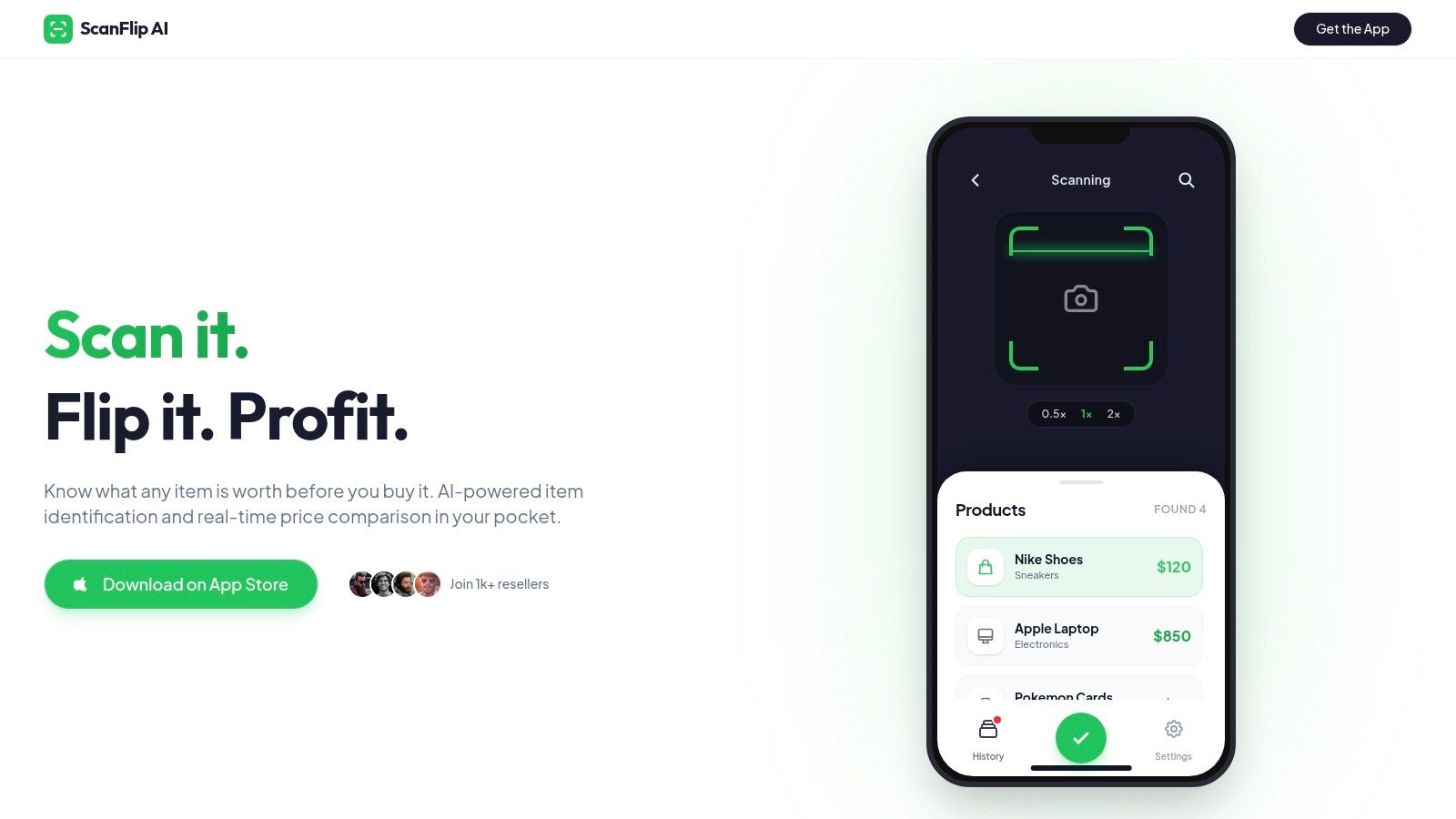
ScanFlip AI brings those three scan methods together and shows sold comps aggregated across those marketplaces, along with net profit after fees and shipping and a red or green flip-or-pass verdict. It's a sourcing-phase tool, so it helps answer whether to buy before you spend money, while tools such as Vendoo and List Perfectly can remain part of a separate selling workflow.
Build a repeatable aisle loop
A scanner only saves time when you apply consistent standards. Use this loop for each promising book:
- Scan the copy: Try the barcode first, then photo or text search if identification fails.
- Confirm the match: Compare the result's cover and format with the physical book.
- Review sold comps: Ignore attractive asking prices that lack completed-sale support.
- Check condition: Look for writing, missing pages, odors, water damage, and included-material requirements.
- Read the net result: Use the expected take-home after fees, shipping, and buy cost.
- Make the call: Buy only when the result clears your own minimum net-profit threshold.
The complete workflow is more useful than a faster scanner used carelessly. Scanning books at thrift stores works best when speed serves verification rather than replacing it. A green result still deserves a physical inspection, and a red result saves you from creating another box of slow-moving inventory.
Where to Source Profitable Books
The best sourcing channel depends on whether you want volume, negotiation room, or unusual inventory. Thrift stores offer repeatable access and low unit costs, but other pickers may already have scanned the obvious titles. Garage sales can produce bulk lots at negotiable prices, while estate sales may reward patience with older collections and harder-to-find editions.
Clearance racks sit between retail and thrift sourcing. The discounts may be predictable, and the books can be cleaner or easier to match, but the acquisition price leaves less room for error. Online marketplaces give you broad reach for remote sourcing, though competition is visible and the spread is usually tighter.
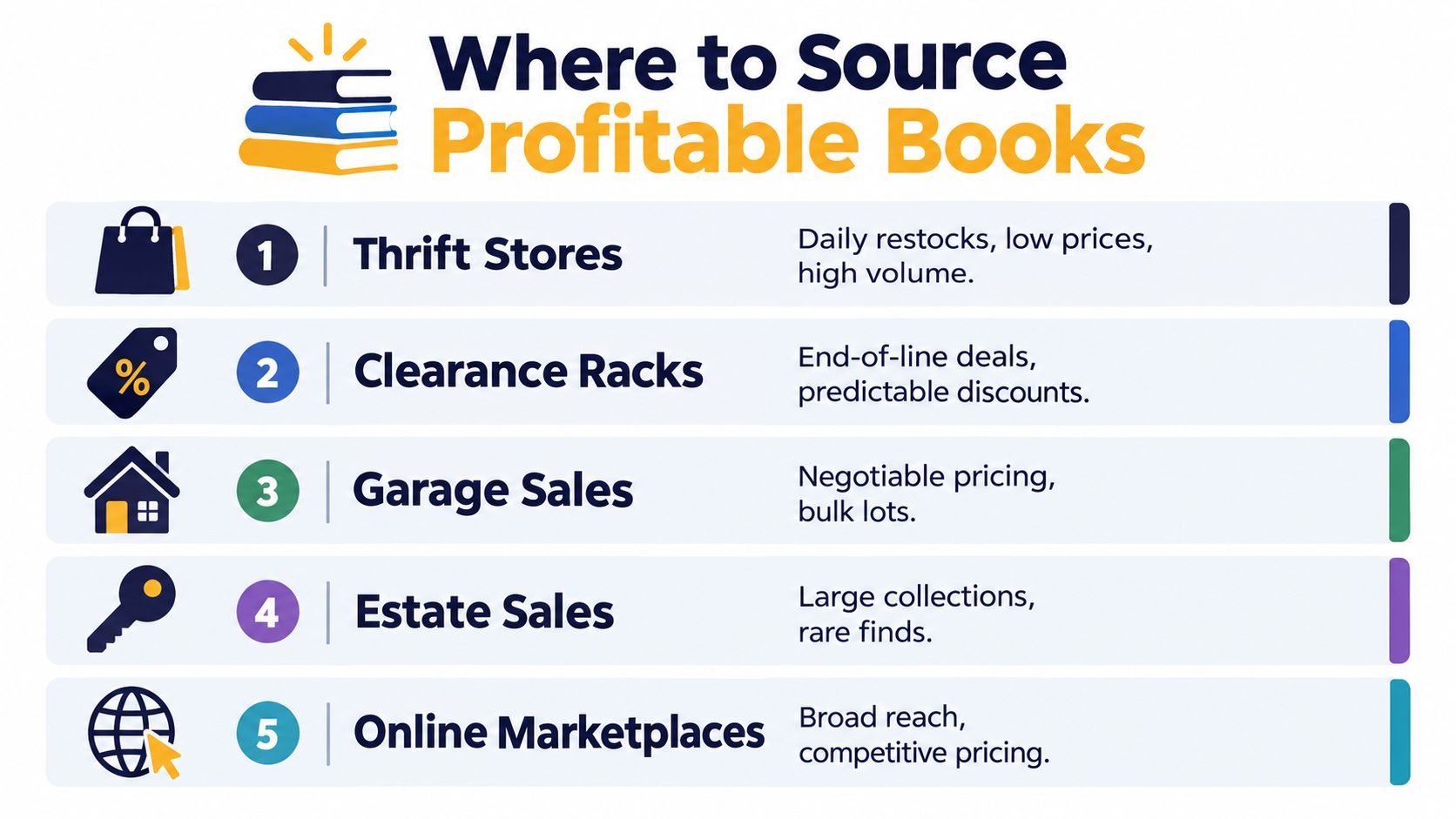
Match the channel to the kind of flip
| Channel | Typical Buy Price | Volume and Speed | Best For |
|---|---|---|---|
| Thrift stores | About $1 per book in the cited industry example | Regular access, fast aisle scanning | Low-cost volume and repeat sourcing |
| Clearance racks | Discounted retail price | Predictable markdowns, variable selection | Clean modern copies and controlled sourcing |
| Garage sales | Negotiable, especially in lots | Uneven access, quick negotiations | Bulk buys and lower cost per unit |
| Estate sales | Varies by collection and seller | Slower browsing, more unusual inventory | Rare, collectible, and out-of-print finds |
| Online marketplaces | Seller-set price | Broad reach, competitive comps | Targeted sourcing when a specific edition is known |
The table isn't a promise that one channel always wins. Your edge comes from choosing the environment where your knowledge is stronger than the competition. A reseller who knows collectible editions may do better at an estate sale than in a crowded thrift aisle. A scanner who prioritizes fast, repeatable buys may prefer stores with steady restocks.
Watch the operational trade-off
Thrift stores produce a lot of candidates, but volume can create a death pile if you buy every positive scan. Garage-sale lots reduce individual acquisition cost, yet you may inherit damaged or unsellable books. Estate collections can contain the highest upside, but you need more time to inspect copyright pages, signatures, dust jackets, and condition.
Online sourcing can reduce travel and aisle pressure, but the seller's photos may hide odor, writing, or missing inserts. For any channel, the same rule applies: don't let a cheap average cost persuade you to accept weak sold comps or questionable condition.
A practical sourcing plan assigns each channel a job. Use thrift stores for consistent scanning practice, garage sales for negotiation, estate sales for specialized knowledge, clearance shelves for predictable modern inventory, and online marketplaces for targeted searches where you already know the ISBN or edition you want.
ISBN Matching and Comp Quality Standards
A book's title isn't its identity. The ISBN, format, publisher, copyright page, cover design, and included materials determine whether a sold comp actually applies. A paperback comp can't automatically justify a hardcover buy, and a standard student text can't be treated as a teacher's edition just because the title matches.
Expert guidance on ISBN sniping and book comps recommends checking the ISBN alongside format details such as hardcover versus paperback, special editions, teacher's editions, and cover-price era. It also emphasizes sold listings and reviewing the most recent 5 to 10 sales rather than allowing a striking outlier to set your expected value.
Inspect the physical book
Hold the book in your hand and compare it with the product record. Check:
- ISBN: The number on the physical book must match the marketplace record.
- Format: Confirm hardcover, paperback, library binding, workbook, or other format.
- Edition details: Look for teacher's editions, international editions, revised editions, and special printings.
- Copyright page: Verify publisher, publication details, and edition information.
- Condition: Inspect writing, highlighting, missing pages, water damage, odors, loose binding, and torn dust jackets.
- Included material: Check whether access codes, answer keys, CDs, maps, or supplements are part of the expected package.
A practical market-value research process starts with the exact object, not the broad title. That distinction protects you from the most expensive kind of scanning error, buying a book whose apparent value belongs to a different edition.
Treat comps as a quality-control problem
Active offers reveal what sellers hope to receive. Sold comps reveal what buyers paid, but only when the comparison is clean. Review the most recent matched sales, note the condition range, and ignore an outlier that depends on an unusually high grade, a signed copy, or a different format.
Don't average mismatched copies just to produce a number. If the available sales are inconsistent, lower your confidence and raise your required margin. Uncertainty is a cost because it increases the chance of a slow sale, a return, or a condition dispute.
The best comp isn't the highest comp. It's the closest recent sale for the exact copy in your hand.
Edition matching also matters for returns. A buyer who ordered a specific textbook edition won't consider a similar ISBN an acceptable substitute. The book-scanning and Amazon FBA guidance from Underpriced notes that the physical ISBN must match the Amazon listing and recommends checking the copyright page and edition details before buying.
This standard may reduce the number of books you purchase. That's a feature, not a problem. Fewer verified buys produce a cleaner operation than a high-volume death pile built on loose title matches and inflated asking prices.
When to Skip the Flip
Retail arbitrage books becomes more profitable when you get comfortable walking away. The low price on the shelf can feel like protection, but sub-$5 sales often leave too little room after fixed fees, postage, fulfillment, supplies, and your time. A book that produces a small positive number on a calculator may still be a poor use of your sourcing budget.
Recent Amazon used-book data put the median used book price at $4.95 in 2025, with about 38% of sales closing between $5 and $20. Sub-$1 penny books represented only 0.7% of sales, according to BiblioScan's Amazon used-book market data. Those figures don't mean every book below $5 is worthless, but they do challenge the beginner assumption that any cheap book can become easy profit.
Low price isn't the same as low risk
A $1 book can still create work:
- Inspection: You need to grade it accurately and identify defects.
- Preparation: You may need cleaning, bagging, or protective packaging.
- Storage: Slow books occupy shelf space and become part of the death pile.
- Fulfillment: Shipping and platform charges don't shrink just because the book was cheap.
- Customer service: A low-dollar order can still produce a return or condition complaint.
The cited market data also show why penny-book strategies are easy to overstate. If sub-$1 books account for a small share of sales and low-priced orders carry fixed or weight-based costs, volume alone doesn't solve the margin problem. You need a strong reason to buy, such as a verified collectible market, a reliable buyback route, or a bundle that changes the economics.
Set a hard pass line
Use your own minimum net-profit requirement, then apply it before purchase. If the expected net after fees and shipping doesn't clear that line, pass. Don't lower the threshold because the book is clean, familiar, or only costs a dollar.
Books can still be a durable resale category. Global second-hand and online second-hand book estimates project continued expansion, with one range moving from $10.1 billion in 2025 to $15.4 billion by 2033 at a 5.1% CAGR, while another broader estimate moves from $26.96 billion in 2025 to $28.8 billion in 2026 at a 6.8% CAGR, as summarized by IBISWorld's online used-book sales coverage. A separate market study estimates the global second-hand books market at $29.6 billion in 2026, rising to $45.1 billion by 2033 at a 6.2% CAGR, according to Research and Markets' second-hand books report.
Those estimates use different methodologies, so they shouldn't be combined into one precise forecast. They do support a qualitative conclusion: demand is substantial, but a large market doesn't make every unit profitable. Commodity flips face fee pressure, while rare books, first editions, signed copies, and out-of-print titles may justify more careful sourcing and verification.
Walk past the book when the net doesn't work. Scan the next one when the edition is unclear. Buy the copy that has matched sold comps, acceptable condition, and enough margin to pay you for the work.
ScanFlip AI helps you vet book buys with AI photo scanning when no barcode is available, barcode scanning for standard books, and text search for difficult identifiers, then compares sold comps across major marketplaces and estimates net profit after fees and shipping. Visit ScanFlip AI before your next thrift-store, garage-sale, or estate-sale sourcing run to make faster flip-or-pass decisions.