
What to Buy at Thrift Stores: 10 High-Margin Flips
You're standing in a Goodwill aisle with one hand on a vintage console and the other on your phone. The sticker says $18. You've got seconds to decide whether it's a clean flip or another box in the death pile. The same pressure shows up in an estate-sale room, at a garage-sale card table, and in a book bin where the best finds disappear while you're still checking ISBNs.
The best thrift finds are the ones you can identify and price fast. This list focuses on categories with recognizable demand and supplied sold-price examples, but gross sale price isn't profit. Cost of goods, marketplace fees, shipping, condition, authenticity, testing, and sell-through all decide whether an item deserves your cash.
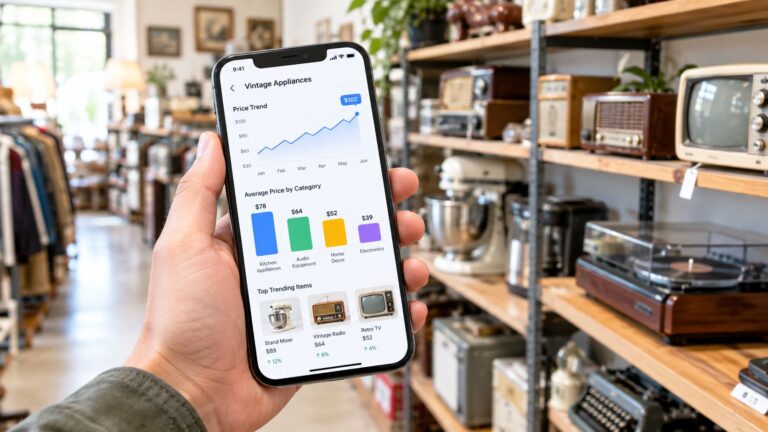
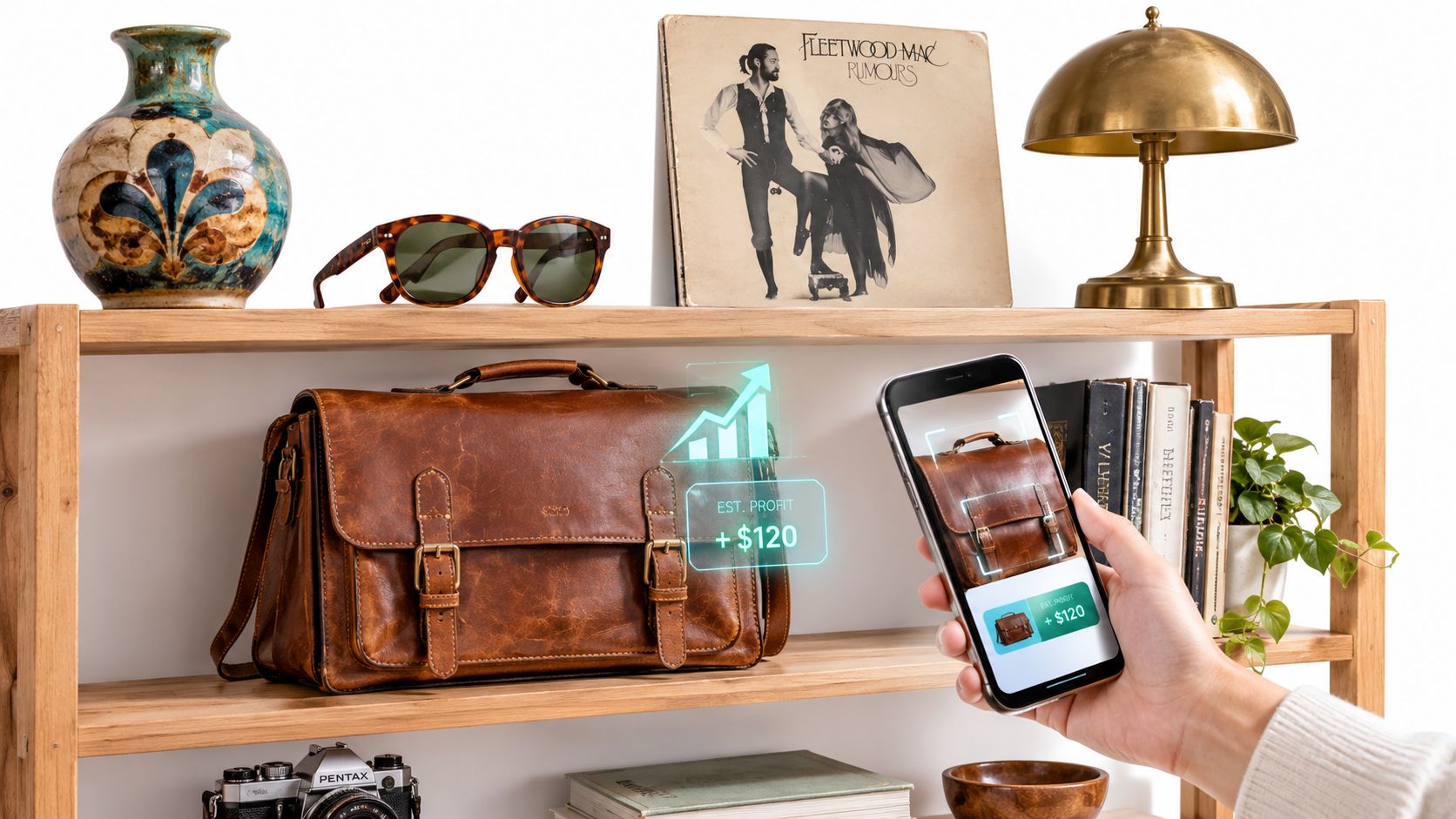
A sourcing-phase check can help. ScanFlip AI offers three scan methods, an AI photo scan with no barcode needed, barcode scanning, and text search. It aggregates sold comps across eBay, Poshmark, Mercari, Depop, Amazon, Whatnot, ThredUp, Facebook Marketplace, and TikTok Shop, then calculates net profit after fees and shipping with a red or green flip-or-pass verdict.
Table of Contents
- 1. Designer and Premium Denim
- 2. Vintage and Retro Video Games and Consoles
- 3. Vintage and Designer Handbags
- 4. Vintage and Collectible Sneakers
- 5. Vintage and Collectible Trading Cards
- 6. Vintage and Designer Clothing
- 7. Vintage and Collectible Toys and Action Figures
- 8. Books, Textbooks, First Editions, and Collectible Titles
- 9. Textbooks and Academic Editions
- 10. Collectible and First Edition Books
- Top 10 Thrift Store Buys Comparison
- Buy the Evidence, Not the Story
1. Designer and Premium Denim
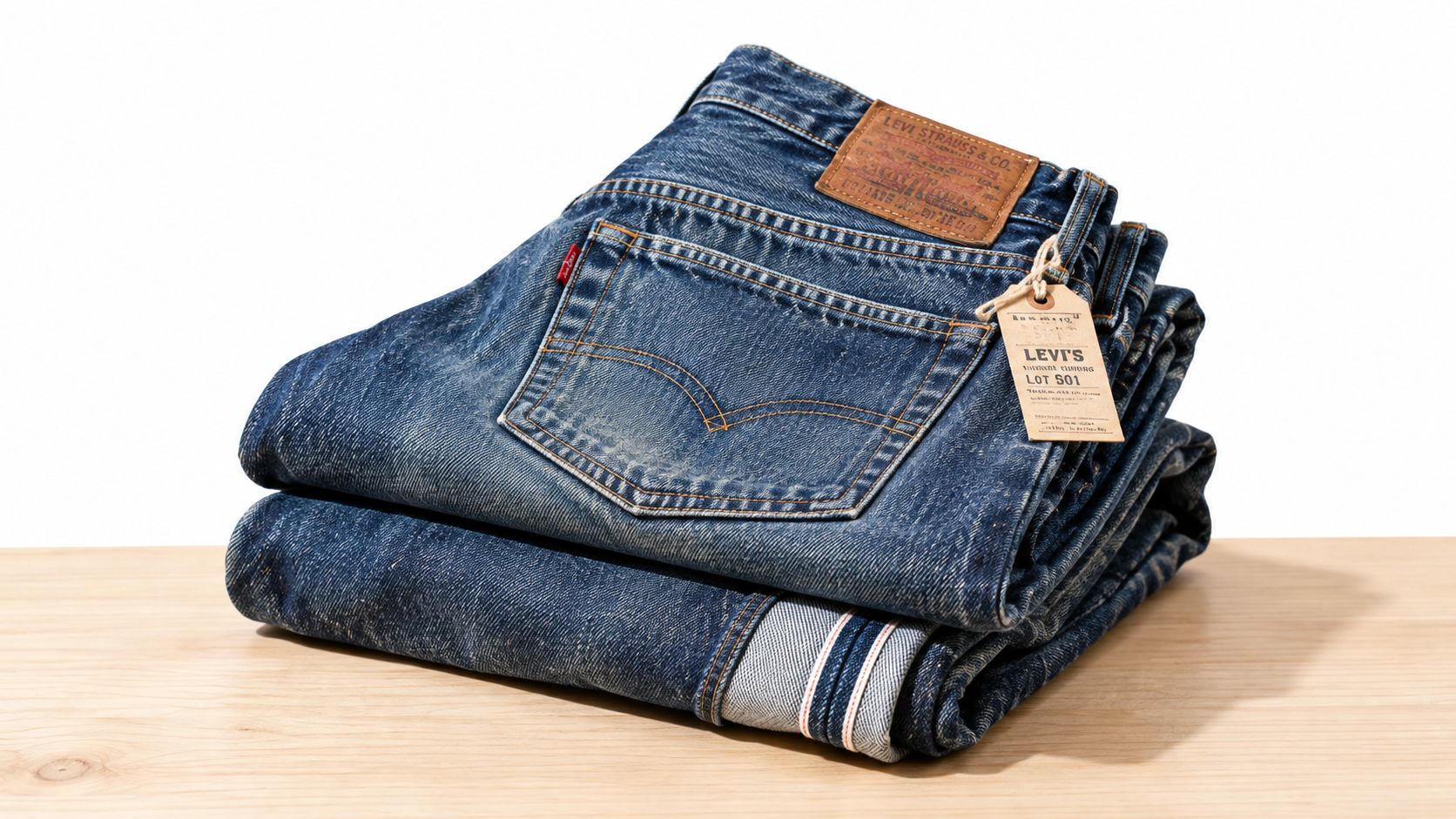
Premium denim is one of the easier clothing categories to evaluate in a crowded rack because the tag, cut, wash, and measurements give you several pricing clues. Look for Levi's 501 and 505, True Religion, Citizens of Humanity, and other recognizable labels. Vintage Levi's from the 1990s and 2000s can move well when the wash, size, and condition line up.
The supplied examples show the spread clearly. A 1990s Levi's 501 Original Fit in size 32 bought for $6 has sold comps of $65 to $85. After a 20% Poshmark fee and $10 shipping, the example produces about $35 to $50 in net profit. A $4 True Religion Joey flare with the tag attached and sold comps of $40 to $55 leaves about $15 to $25 after fees.
What to inspect before buying
Check the waistband, crotch, hems, zipper, button fly, and inner thighs. Older denim can look excellent on the hanger while hiding thinning fabric or repairs. Measure the waist and inseam yourself, especially with vintage pieces, because the tagged size often doesn't match modern sizing.
A vintage Levi's 505 bought for $5, with an oversized high-waisted 1980s cut and sold comps of $75 to $95, can leave about $40 to $55 after fees and shipping. That's the kind of margin that justifies the time spent photographing measurements and wear.
Practical rule: Don't buy denim because the tag says vintage. Buy it when the exact cut, condition, measurements, and recent sold comps support the purchase.
Use an AI photo scan on the tag and overall fit when the brand or model isn't obvious. ScanFlip can pull sold comps across Poshmark, Depop, and Mercari before you leave the rack. At estate sales, inspect older Levi's carefully because less-picked-over racks can contain better examples. Plain basics may need bundling, while premium denim can stand alone.
2. Vintage and Retro Video Games and Consoles
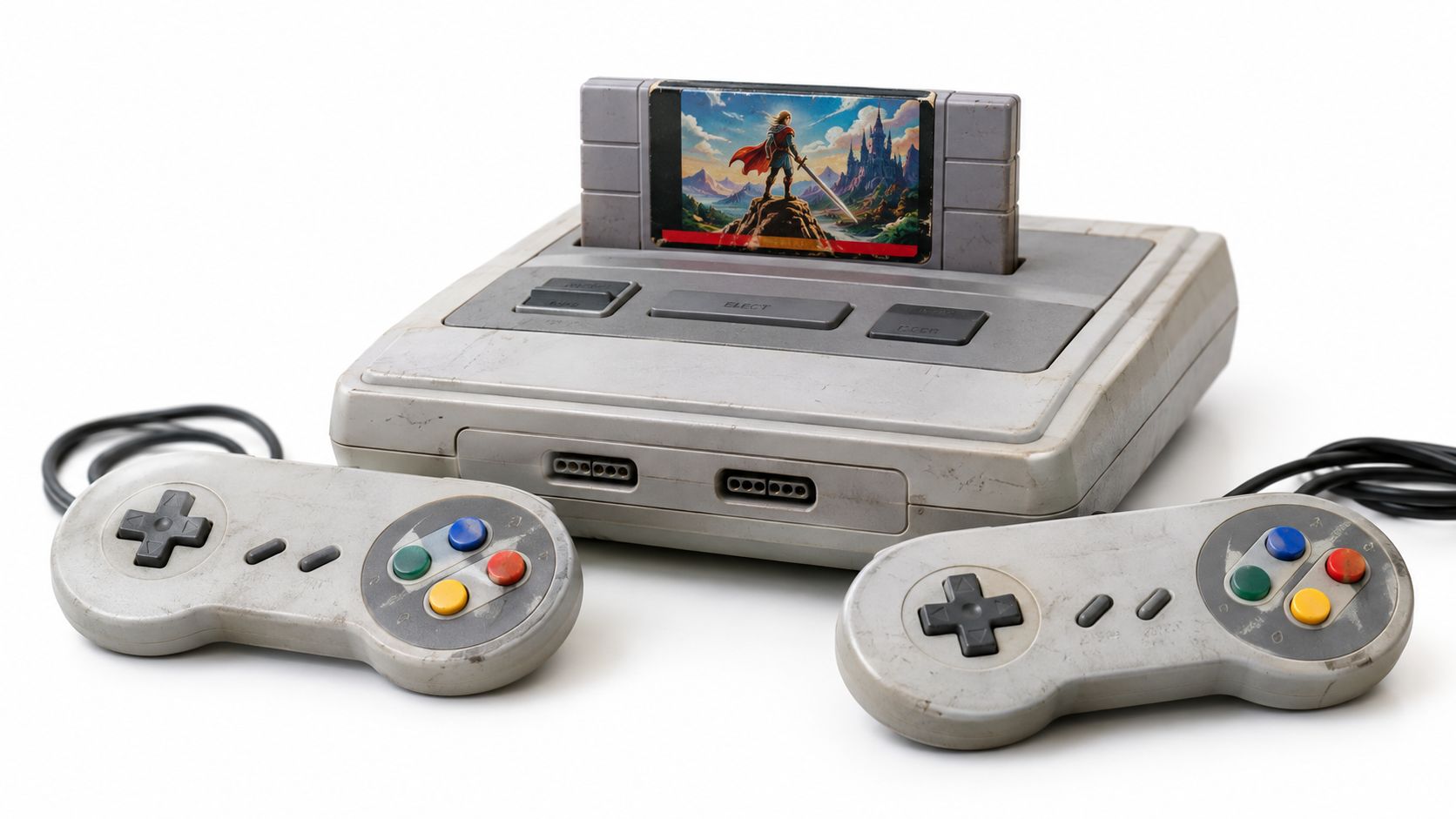
Video games can produce strong flips, but only when you know exactly what you're buying. Nintendo, Sega, PlayStation, and Game Boy items all deserve inspection, with Nintendo cartridges and systems often attracting especially dependable collector demand. A loose cartridge may look like easy money, but an untested console can turn into a repair project before you've even created a listing.
A working Nintendo NES with two controllers and AV cables, bought for $18, has supplied sold comps of $85 to $110. After a 10% Mercari fee and $15 shipping, the example leaves about $55 to $75 in net profit. A working Game Boy Color with its original box, bought for $12, has sold comps of $120 to $160 and an eBay net of about $70 to $95 after 12.9% fees and $12 shipping.
Test the whole setup
Ask the store whether you can test the console. Check that it displays properly, controllers respond, cartridges load, and the system doesn't make alarming fan or power noises. For cartridges, inspect the label, shell screws, corrosion, and contacts. Authenticity matters because popular Nintendo titles attract reproductions.
Use barcode scanning or text search for individual games and systems when you can't identify the model quickly. ScanFlip can compare sold comps across eBay and Facebook Marketplace. For a Super Mario Bros. 3 cartridge bought for $3, authentic and working, supplied sold comps range from $35 to $50, with a Mercari net of about $20 to $32.
CIB means complete in box, and collectors price it very differently from a loose cartridge. A $22 SNES bundle with a controller, cables, and Super Metroid CIB has supplied sold comps of $200 to $280, with about $120 to $160 in net profit after fees and shipping. Loose common games are a death-pile risk unless the title is rare or the buy cost is nearly nothing.
Buy completeness over clutter
Photograph serial labels, cartridge fronts and backs, cables, controllers, box damage, and screen condition. Learn the difference between loose, good, very good, near mint, and CIB before you price. Sega and Atari can still sell, but don't pay Nintendo-level money for an untested bundle just because the case looks nostalgic.
3. Vintage and Designer Handbags
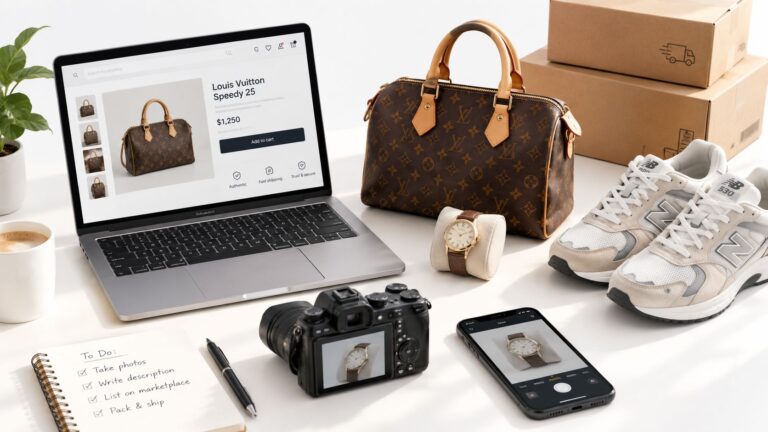
Handbags reward careful identification, but they punish shortcuts. Louis Vuitton, Gucci, Coach, Dooney & Bourke, Chanel, and Hermès can all appear in thrift stores, yet the brand name alone doesn't make a bag a buy. Counterfeits, damaged interiors, missing hardware, odors, and peeling coatings can erase the apparent margin.
A Louis Vuitton Speedy 30 in Monogram with patina, bought for $22, has supplied sold comps of $180 to $240. After a 20% Poshmark fee and $18 shipping, the example leaves about $80 to $115. A vintage Dooney & Bourke crossbody bought for $8, with brass hardware and minor wear, has sold comps of $45 to $65 and a Mercari net of about $20 to $37 after a 10% fee and $12 shipping.
Authentication comes before profit math
Examine the interior stamp, date or serial code where applicable, stitching, logo depth, hardware, lining, edge paint, and construction. Compare those details with reliable brand reference material before buying. A high-ticket bag that you can't authenticate confidently isn't a high-margin flip. It's a liability.
ScanFlip's AI photo scan can help identify the exterior and style, then pull sold comps across Poshmark and Mercari. Photograph the exterior, interior stamp, hardware, corners, handles, lining, stains, and any cracking under clear light. For expensive pieces, authentication should happen before you treat the comp as usable revenue.
A Coach Legacy bag bought for $12, with monogram canvas and light use, has supplied sold comps of $70 to $95 and a Poshmark net of about $35 to $55. At the other end, a vintage Chanel quilted caviar shoulder bag from the 1990s or 2000s, bought for $35, has sold comps of $400 to $600 and an estimated net of $250 to $380 after careful authentication.
A cheap luxury bag isn't automatically a bargain. The correct question is whether you can prove what it is and describe every flaw.
Structured classic styles such as Speedy, Neverfull, and tote silhouettes are usually easier to identify and market than obscure trendy shapes. Don't skip a bag because it has normal patina, but do pass on mold, strong odors, severe peeling, or suspicious branding.
4. Vintage and Collectible Sneakers
Sneakers are fast to recognize and easy to overpay for. Nike, Adidas, and Jordan pairs deserve attention, especially retro releases, original colorways, and collaborations. The same model can have completely different value depending on year, size, box, authenticity, sole condition, yellowing, creasing, and separation.
A deadstock Nike Air Max 90 in an original box, bought for $12, has supplied sold comps of $120 to $180. After a 10% Mercari fee and $18 shipping, the example leaves about $70 to $105. A lightly worn Air Jordan 1 Retro bought for $15 has sold comps of $150 to $220, with about $85 to $135 net after eBay fees of 12.9% and $20 shipping.
Condition decides the flip
Look at the toe box, heel counter, outsole, insole, interior tag, stitching, midsole, and glue lines. Deadstock indicators include unworn toe creasing, intact tags, original tissue paper, a clean outsole, and an undamaged box. Yellowing and sole separation can turn a promising pair into parts or disclosure-heavy inventory.
For a pair of authentic Yeezy Boost 350 V2 bought for $25 and worn once, supplied sold comps range from $200 to $350, with about $120 to $210 net after fees and shipping. A vintage Nike Cortez bought for $8 has sold comps of $60 to $90 and a Mercari net of about $35 to $60. Those examples only work when the model is authentic and the condition matches the comp.
Use ScanFlip's AI photo scan on the exterior and size tag to identify the model, colorway, and year. It can pull sold comps across Mercari, eBay, and StockX. For additional reference on older Puma styles, see this vintage Puma high-top guide.
Pass on a sneaker you can't authenticate. A popular fake is still a fake, and a bad purchase can cost more than the sticker price once returns and disputes arrive.
Prioritize recognizable colorways and common buyer sizes, but don't treat size as a guarantee of liquidity. Photograph every angle, including outsole wear, creasing, yellowing, tags, box labels, and any repairs.
5. Vintage and Collectible Trading Cards
Cards can hide in a plastic tub, a board-game box, or a garage-sale lot priced by weight. Sports cards, Pokémon, Magic: The Gathering, and Yu-Gi-Oh. all have active collector audiences, but the profitable decision depends on set, card number, edition, rarity, condition, language, and authenticity.
A Pokémon base set lot of 50 random cards bought for $8 has supplied sold comps of $35 to $55. After a 10% Mercari fee and free shipping, the example leaves about $22 to $42. A Magic Alpha or Beta card bought for $5, in lightly played condition, has sold comps of $80 to $200 or more, with about $50 to $140 net depending on the card.
Slow down for condition
Use bright, angled light to find print lines, creases, stains, whitening, dents, and edge wear. A card that looks clean in a dim estate-sale room can show substantial defects under proper inspection. Grading language matters, and the difference between a raw card and a graded card can materially change the comp.
A graded sports card in PSA 7 condition, such as a vintage Michael Jordan or Derek Jeter rookie, bought for $20 to $50, has supplied sold comps of $300 to $1,500 or more, depending on the card. A raw holographic or non-holo Charizard bought for $3 has supplied sold comps of $40 to $120, with a Mercari net of about $25 to $85.
Use text search for the card name, set, number, and condition when a photo won't identify the exact version. ScanFlip can compare sold comps across eBay and Mercari. Search the complete card identity, not just “Charizard” or “Jordan,” because broad searches mix unrelated editions and conditions.
Bulk lots are safer for beginners when the buy cost stays low and you're willing to sort. Inspect sleeves, binders, and boxes for hidden cards, but don't assume a large stack has value. A pile of common cards can take longer to separate, photograph, and ship than the margin justifies.
6. Vintage and Designer Clothing
Non-denim clothing gives you more room to find overlooked pieces, from vintage band tees to Ralph Lauren, Burberry, Theory, and vintage Levi's jackets. The challenge is that buyers can't try the item on, and clothing defects are easy to miss when a garment is folded in a crowded rack.
A 1990s Metallica concert tee bought for $6 has supplied sold comps of $50 to $120. After a 20% Poshmark fee and $10 shipping, the example leaves about $18 to $76. A Ralph Lauren linen blouse or Burberry Nova Check dress shirt bought for $4 has sold comps of $30 to $50, with a Mercari net of about $14 to $32 after a 10% fee and $8 shipping.
Measure and disclose everything
Check pits, collars, cuffs, hems, zippers, buttons, lining, pilling, fading, stains, odors, and fabric integrity. Photograph the tag, front, back, fabric texture, graphic, and defects. Include chest, length, sleeve, waist, and inseam measurements when relevant.
A vintage Levi's trucker jacket from the 1980s bought for $8 has supplied sold comps of $60 to $100 and a net of about $30 to $60. A rare Led Zeppelin or Pink Floyd 1970s-era reprint in deadstock condition, bought for $3, has supplied sold comps of $35 to $80 and a net of about $18 to $55.
Use the AI photo scan on the tag, graphic, fit, and overall garment when the label is unfamiliar. ScanFlip can compare sold comps across Poshmark and Depop. For a deeper reference on dating and valuing garments, use this vintage clothing price guide.
The graphic isn't enough. Band-tee authenticity, copyright details, shirt construction, and wear pattern often separate a real vintage piece from a common reprint.
Dress forms and model photos can help buyers understand fit, but accurate measurements matter more than a styled image. Bundle plain tees, camisoles, and slow basics with stronger pieces only when the combined price still leaves a reasonable net profit.
7. Vintage and Collectible Toys and Action Figures
Toys are often priced for nostalgia rather than collector knowledge, which creates opportunities in estate-sale rooms and mixed toy bins. Look for G.I. Joe, He-Man, Barbie, Marvel, Star Wars, and other established lines. Original packaging, card condition, accessories, date marks, and variants can matter more than the character itself.
A mint-in-box G.I. Joe figure from the 1980s bought for $8 has supplied sold comps of $80 to $200. After eBay fees of 12.9% and $18 shipping, the example leaves about $45 to $130. A vintage Barbie from the 1960s with its original box, bought for $5, has supplied sold comps of $120 to $300 and a net of about $70 to $210.
Packaging is part of the product
Inspect the front, back, sides, card, blister, box flaps, yellowing, creasing, tears, and tape. For loose figures, check paint rub, missing weapons, broken joints, hair condition, and copyright markings. A complete loose figure can outperform an incomplete boxed one, but don't assume the packaging guarantees a premium.
An unopened He-Man figure from the 1980s bought for $3 has supplied sold comps of $50 to $150, with about $25 to $110 net. A loose Star Wars lot of ten figures bought for $12 has supplied sold comps of $60 to $100 and a Mercari net of about $35 to $70.
Use an AI photo scan on the figure, packaging, date mark, and accessories. ScanFlip can compare sold comps across eBay and Facebook Marketplace, which is useful when a variant looks nearly identical to a common release. Search collector groups for paint variations, accessories, and regional versions before assigning a rare-variant price.
Loose common toys can sit for months. Buy them when the lot has a clear theme, scarce figures, complete accessories, or a very low cost of goods. Otherwise, the sorting and photography time can outweigh the sale.
8. Books, Textbooks, First Editions, and Collectible Titles
The book aisle is full of inventory that looks promising and sells for little. Focus on current academic editions, signed books, first editions, popular authors, and out-of-print titles. A decorative hardcover isn't valuable just because it looks old, and a famous title isn't necessarily collectible without the correct printing and condition.
A current-edition STEM or business textbook bought for $3 has supplied sold comps of $40 to $80 on Amazon. After FBA fees and shipping, the example leaves about $15 to $35. A first-edition Harry Potter and the Sorcerer's Stone with dust jacket, bought for $5, has supplied sold comps of $80 to $200 and an eBay net of about $40 to $120.
Scan before the cart fills
Scan the ISBN or barcode, then check the edition, format, condition, and sold comps. Use the publisher page to verify the edition and printing line. For collectible books, inspect the dust jacket, foxing, stains, smell, writing, highlighting, tears, and clipped price corners.
An out-of-print academic book or rare biography bought for $2 has supplied sold comps of $20 to $100 on AbeBooks, with an estimated net of about $8 to $60. A signed first edition bought for $10 has supplied sold comps of $150 to $500 or more, with about $80 to $350 net depending on the title and proof of signature.
ScanFlip's barcode scanner is built for this aisle. It can compare sold comps across Amazon, eBay, and AbeBooks, which is more useful than relying on an active offer that may never sell. You can also use this guide to scan books at thrift stores.
A book is only a buy after you verify the exact edition. “First edition” on a seller's description isn't enough. Check the publisher page and printing indicators yourself.
Estate-sale book lots can be efficient when you can sort quickly, but take damaged or obsolete books only when the total cost leaves room for rejects. Current textbooks deserve priority. Older editions, missing access codes, and heavily marked pages often destroy the apparent margin.
9. Textbooks and Academic Editions
Textbooks deserve their own pass because the buy decision is more technical than a general book scan. Students need the correct edition, and a small change in publisher, edition number, access code, or coursepack can turn a sellable book into outdated stock.
A current-edition college textbook in good condition, bought for $3, has supplied sold comps of $40 to $80 on Amazon. After FBA fees and shipping, the example leaves about $15 to $35. A current coursepack or supplemental text bought for $2 has supplied sold comps of $20 to $45, with about $8 to $18 net.
Verify the edition inside the book
Scan the ISBN, then open the book and check the publisher page. Confirm the edition number, copyright year, table of contents, access code status, and any included materials. The cover can look identical across editions, so never rely on a quick glance at the front.
A book with highlighting or writing may still sell, but the condition grade must reflect it. Missing access codes should be stated clearly, and bundled media should be present if the comp assumes it. FBA can support faster turnover when the margin survives fees, storage, shipping, and condition requirements.
Use a barcode scan for speed when you're working through a library donation or campus-area thrift store. Then manually verify the edition before paying. The best textbook flip is not the oldest or heaviest book. It's the correct current edition with a verified spread between buy cost and net payout.
10. Collectible and First Edition Books
Collectible books require slower inspection than textbook scanning. First editions, signed copies, rare out-of-print titles, and desirable dust jackets can command collector premiums, but condition and printing history determine whether the premium is real. Rowling, Tolkien, and King titles may attract attention, yet only specific editions and printings carry the strongest demand.
A first-edition Harry Potter and the Sorcerer's Stone with dust jacket, bought for $5, has supplied sold comps of $80 to $200 and an eBay net of about $40 to $120. A signed first edition from a popular author, bought for $10, has supplied sold comps of $150 to $500 or more, with about $80 to $350 net.
Prove scarcity before you price
Photograph the title page, copyright page, printing line, dust-jacket flaps, signature, and any provenance. Check the publisher, edition statement, number line, jacket price, and physical condition. A later printing can look almost identical to a first printing, while a clipped or damaged jacket can change the value sharply.
Use AbeBooks and specialist forums to compare bibliographic details, not just broad title searches. A signature without believable provenance may still sell, but it shouldn't be priced like a documented signed copy. Be conservative with condition language, and disclose odors, foxing, stains, writing, tears, and repaired jackets.
At an estate sale, look beyond the obvious bestseller shelf. Academic, regional, illustrated, and out-of-print titles may have fewer competing sellers, but they also require more research. The right buy is the exact edition with evidence of demand and enough margin to compensate for a slower sell-through rate.
Top 10 Thrift Store Buys Comparison
| Item | Implementation complexity | Resource requirements | Expected outcomes | Ideal use cases | Key advantages |
|---|---|---|---|---|---|
| Designer and Premium Denim | Medium, brand/fit verification and condition checks | Low–Medium, thrift sourcing, measuring, photos, heavier shipping | Moderate–High margins; common sells $40–$120; steady seasonal turnover | Poshmark/Depop sellers focusing on vintage denim and international buyers | High sell-through, visual verification, multiple price tiers |
| Vintage and Retro Video Games and Consoles | High, electronics testing and authenticity knowledge required | Medium–High, testing, careful packing, possible repairs, risk management | High potential ($80–$280+); value spikes for CIB items but failure risk from non-working units | eBay, Whatnot, Facebook Marketplace for collector audiences and local testing | Strong collector demand; CIB/bundles multiply value |
| Vintage and Designer Handbags | High, authentication-critical; requires brand expertise | Medium, authentication tools/resources, careful sourcing, secure shipping | Very high margins (often $150–$400+); returns risk if mis-authenticated | Poshmark, Vestiaire, Mercari for experienced authenticators | Brand-driven search traffic, high resale value for authentic pieces |
| Vintage and Collectible Sneakers | High, authentication and condition grading needed | Medium, detailed photos, tag checks, secure packaging, possible authentication services | High margins for deadstock/OGs ($80–$300+); size-dependent turnover | StockX/eBay/Mercari/Facebook for sneaker collectors and resellers | Large, passionate market; high premiums on rare colorways |
| Vintage and Collectible Trading Cards | Medium–High, grading knowledge and rarity identification | Medium, sorting time, potential grading fees, secure shipping | Very high upside for rares/graded cards ($100s–$1000s); bulk lots provide steady returns | eBay, Whatnot, Mercari, specialized groups for collectors and bulk flippers | Extremely high per-item returns; bulk lots move quickly |
| Vintage and Designer Clothing (Non-Denim) | Medium, sizing, condition, and authenticity checks | Low–Medium, measuring, model photos, standard shipping | Moderate margins ($30–$80+); high sell-through for sought-after items | Poshmark, Depop, Mercari for vintage apparel and designer pieces | Photo-driven sales, broad buyer base, steady demand for bands/designers |
| Vintage and Collectible Toys and Action Figures | Medium, variant ID and packaging condition assessment | Medium, careful photography, fragile packaging, protective shipping | High for MIB items ($40–$500+); loose toys are lower-margin | eBay, collector groups, estate sale sourcing for MIB collectors | Mint-in-box items command large premiums; condition is visual proof |
| Books (Textbooks, First Editions, and Collectible Titles) | Medium, edition/condition knowledge and barcode use | Low–Medium, ISBN scanning, condition notes, heavy shipping | Variable: textbooks steady ($20–$80); collectibles can reach $100s–$1000s | Amazon, AbeBooks, eBay, estate sales for mixed book inventories | Barcode clarity for textbooks; high upside for true collectibles |
| Textbooks (Academic Editions) | Low, straightforward ISBN/edition verification | Low, barcode scanner, basic listing prep, heavy but predictable shipping | Predictable seasonal demand; modest margins ($40–$80 sold comps) | Campus sellers, FBA or Amazon marketplace for semester turnover | Easy to price/scan; reliable semester-driven demand |
| Collectible and First Edition Books | High, bibliographic expertise and provenance verification | Low–Medium, detailed documentation, possible grading/provenance services | Very high per-item value; slower sales but large payouts (hundreds–thousands) | AbeBooks, rare-book dealers, auction sites for serious collectors | High upside for authenticated first editions and signed copies |
Buy the Evidence, Not the Story
A good thrift-store buy starts with an exact identity. Write down the model, variant, edition, colorway, brand, size, or set before you trust a sold comp. “Nintendo console,” “vintage bag,” and “old book” are not identities. The buyer on the other side of the transaction is paying for a specific item in a specific condition.
Next, inspect the risk that the sticker price hides. Test the console. Look for sole separation on sneakers. Check card edges under strong light. Open the handbag and study its stamp, hardware, lining, and stitching. Verify the textbook edition and access code. Inspect the dust jacket, printing line, and signature on collectible books.
Then compare recent sold comps, not active listing prices. A seller can ask anything. Sold comps show what buyers paid for a comparable item, and even those comps need filtering. A clean CIB Game Boy should not be compared with a loose, scratched, untested unit. A deadstock sneaker shouldn't anchor the price for a creased pair with yellowing.
The final calculation is simple, but you need to do it before checkout:
- Start with the expected sold price: Use comparable condition, size, edition, and marketplace data.
- Subtract cost of goods: Include the full purchase price, sales tax where applicable, and any lot allocation.
- Subtract platform fees: Apply the fee for the marketplace where the item is most likely to sell.
- Subtract shipping and packing: Oversized boxes, double boxing, protective sleeves, and specialty materials reduce the payout.
- Apply your minimum threshold: Pass if the remaining net profit doesn't justify testing, cleaning, photographing, researching, and waiting.
The best BOLO isn't automatically a buy. An untested console, counterfeit handbag, outdated textbook, damaged sneaker, fake band tee, or low-value card lot can become a death-pile item even when the category is generally strong. Oversaturation also matters. A popular product may have plenty of demand but so many competing sellers that your specific item sits longer than expected.
For in-store decisions, ScanFlip AI can provide the quick sourcing check before money leaves your pocket. Use its AI photo scan when there's no barcode, its barcode scan for books, games, and boxed goods, or its text search when the item can't be photographed clearly. The app compares sold comps across eBay, Poshmark, Mercari, Depop, Amazon, Whatnot, ThredUp, Facebook Marketplace, and TikTok Shop, then factors in fees, shipping, and buy cost to show expected net profit with a red or green flip-or-pass verdict.
Tools such as Vendoo and List Perfectly belong later in the workflow for sellers who use them to manage marketplace work. They don't replace the buy decision. First prove that the item is authentic, identifiable, sellable, and profitable. Then bring it home.
Use ScanFlip AI in the aisle to identify thrift finds with an AI photo scan, barcode scan, or text search, then compare sold comps across major marketplaces and see expected net profit after fees and shipping. Visit ScanFlip AI before your next Goodwill run, estate sale, or garage-sale sourcing trip and make each buy decision with evidence.