
Retail Arbitrage Sourcing: A Proven Playbook
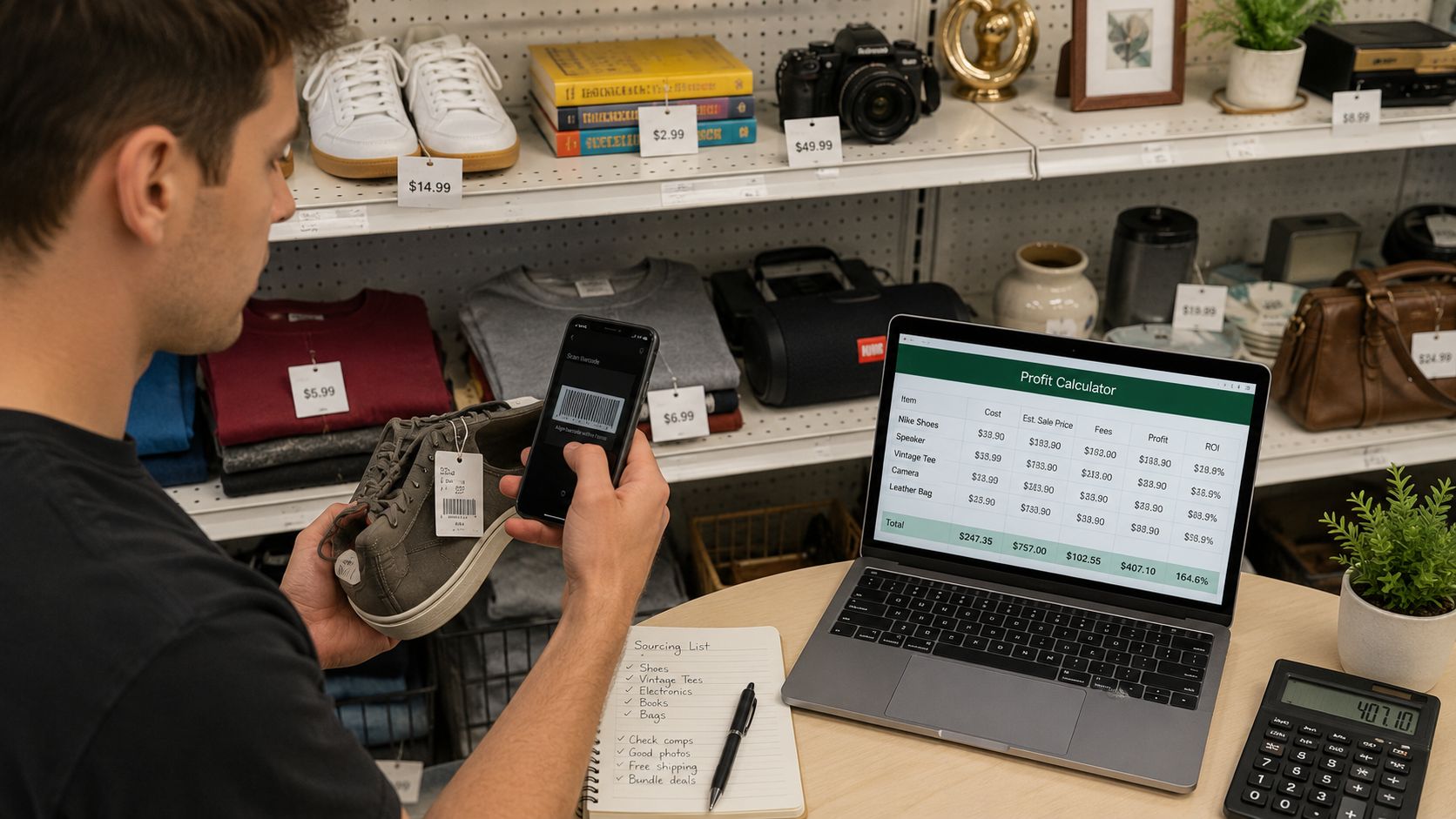
You're in the aisle with your phone open, one cart wheel squeaking, and three items in your hands that all look promising. One has a clean shelf price, one has a better-looking comps page, and one has that familiar gut feeling that says, maybe, but only if the math works. That's the real pressure point in retail arbitrage sourcing, the decision happens fast, and the item you pass on might be the one that would've paid for the trip.
The mistake most new sellers make is thinking sourcing is about spotting hidden gems. It isn't. It's about filtering fast, using sold comps, fee math, and a repeatable checklist so you can separate the flips from the shelf clutter before you waste time and money.
Table of Contents
- What Retail Arbitrage Sourcing Actually Solves
- Where to Source for the Best Spread of Finds
- The In-Aisle Evaluation Workflow
- Turning Sold Comps Into Real Net Profit
- Scanning Tools and Apps That Speed the Aisle
- Scaling With Records, Routes, and Weekly Reviews
- Sourcing Mistakes That Quietly Drain Your Profits
What Retail Arbitrage Sourcing Actually Solves
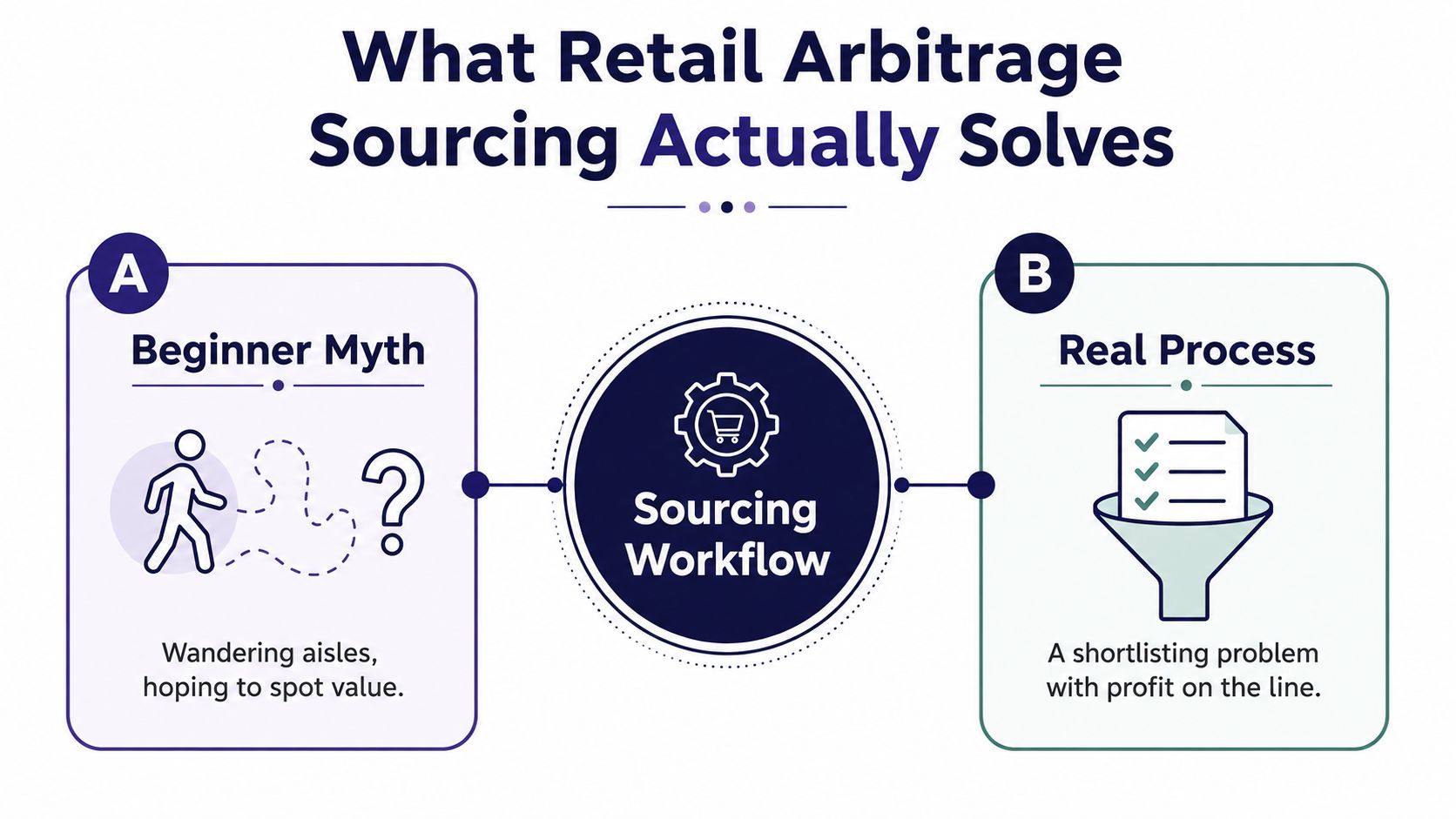
A newer reseller usually walks into a store hoping to “find something good.” A working seller walks in knowing the job is to shortlist inventory under time pressure. That difference matters, because the aisle doesn't reward curiosity, it rewards a sharp pass or fail decision on items that may only look good on the shelf.
The economics explain why. Retail arbitrage is a low-capital sourcing model, with typical startup costs of $100-$500 compared with $500-$2,000 for wholesale, and it can generate 30-100%+ ROI per item while month-to-month performance stays highly variable, according to the comparison at Catalist Group's retail arbitrage versus wholesale breakdown. That's why the source side of the business is less about building a giant catalog and more about identifying a few items that survive fee math.
Practical rule: If the item only looks strong before fees, it's not strong.
That's the reframe that changes the whole trip. The shelf price is just a clue. What matters is whether the item clears your threshold after platform fees, shipping, and the market you're selling on. If you're using a source-to-sale workflow built around that logic, the work is not hunting harder, it's cutting faster.
For a plain-language overview of the model itself, the internal guide on what retail arbitrage is fits well with this mindset. The useful takeaway isn't the definition. It's that sourcing only works when you treat each item like a shortlisting problem with money on the line.
Where to Source for the Best Spread of Finds
The best source mix depends on how you like to work. Some sellers want breadth and don't mind wading through a lot of misses. Others want a cleaner route with fewer decisions per stop. The channel choice changes how fast you can evaluate inventory, how fresh the finds feel, and how predictable the pricing is.
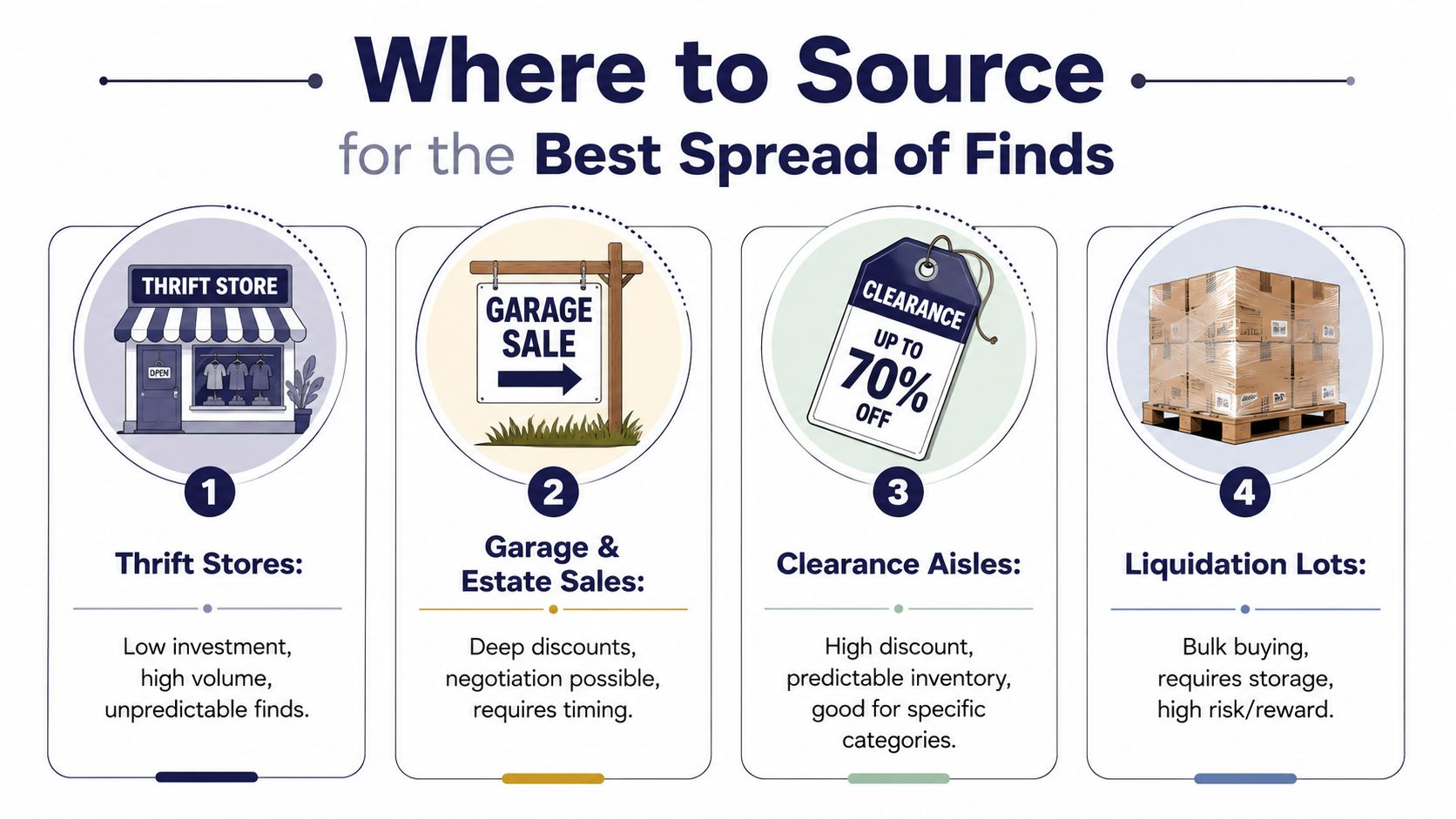
Thrift stores give you the widest randomness. You can run into branded apparel, home goods, collectibles, and oddball pieces that don't show up in a standardized retail aisle. The trade-off is speed, because broad inventory usually means more scanning and more dead ends.
Garage and estate sales tend to reward timing and negotiation. They're especially useful when items aren't neatly tagged or when the seller wants space cleared quickly. That makes them a natural fit for vintage, apparel, and mixed household lots, but the opportunity window is shorter and the inventory changes daily.
Clearance aisles offer a different advantage, they're easier to price-check because the discounting is visible and the stock is usually more structured. If you've already decided which categories you like to flip, clearance can be a cleaner way to sample those categories without wandering as much.
Off-price and liquidation channels can produce larger lots and stronger raw spreads, but the workflow gets heavier. You're dealing with storage, sorting, and a higher tolerance for risk, which means the find has to justify the extra handling.
The same chain can behave differently from city to city because regional assortment and markdown timing vary enough to change the day's results. That's why a sourcing circuit usually beats a single favorite store. In practice, the route matters more than the brand name on the front door.
| Sourcing Channel Snapshot | Typical Price | Discovery Speed | Best For |
|---|---|---|---|
| Thrift Stores | Low and variable | Medium | Broad hunting, mixed categories |
| Garage and Estate Sales | Often low, negotiable | Fast, but time-sensitive | Vintage, untagged apparel, household items |
| Clearance Aisles | Discounted and visible | Fast | Focused category buys |
| Liquidation Lots | Bulk-based | Slower | Larger buying runs, higher risk tolerance |
The In-Aisle Evaluation Workflow
The shelf decision should feel mechanical, not emotional. When I watch newer sellers hesitate, they usually aren't missing information, they're missing sequence. They check price first, then condition, then comps, then go back and redo the same work because they never had a fixed order.
Start with eligibility. If the item is gated, restricted, or obviously wrong for your sales channel, don't keep digging. A fast no saves more money than a hopeful maybe, because stranded inventory starts with things you shouldn't have bought in the first place.
Use a strict order every time
The cleanest workflow is category fit, condition, sold comps, then profit math. That order keeps you from falling in love with a gross spread before you know whether the item can move. The internal guide on item identification apps is useful here because it reflects the in-aisle problem, figuring out what the item is before you spend time pretending you know.
If you can't clear the item in under half a minute, it's usually a pass.
That time limit sounds harsh until you spend a full trip re-checking items you already knew were weak. The discipline isn't about being fast for its own sake, it's about preserving attention for the few items that deserve it. A seller who can make a clean red or green call in the aisle ends up with more usable data and less cart clutter.
A common trap is to see a decent shelf price and assume the deal is alive. A $12 thrift find with a $35 sold comp can still be a loser once fees, shipping, and returns are part of the equation. The right answer is not “looks good enough,” it's “does it survive the entire sequence.”
The screening benchmark from a practical Amazon/eBay workflow is to look for under 250,000 BSR, more than $3 profit per unit, and ROI above 50% when the channel calls for it, but the bigger lesson is the order of operations, not just the threshold. If the item fails any earlier step, there's no point calculating the rest. That's how experienced sellers keep the cart light and the returns cleaner.
Turning Sold Comps Into Real Net Profit
Gross comp is where beginners get tricked. A listing can show strong demand and still leave you with little or nothing once platform fees and shipping are applied. The shelf doesn't care what the top line looks like, only what survives at the bottom.
The simplest way to think about it is this. Sold comps tell you what people paid, but your buy decision has to be based on what you keep. That's why completed sales matter more than asking prices, because sold listings show the market, not wishful pricing.
One practical sourcing workflow recommends checking completed and sold listings on eBay, then using the median realized price and sell-through count instead of asking prices, while also reviewing Amazon price and sales rank. In the same workflow, a common screen is under 250,000 BSR, more than $3 profit per unit, and ROI above 50%. The point isn't that every item must fit that exact pattern, it's that net profitability has to beat the noise.
The clearest example is the one that forces you to do the math. Buy at $10.00, sell at $29.99, pay a 15% referral fee of $4.50, a $6.10 fulfillment fee, and $1.20 inbound shipping, and you're left with $8.19 net profit, or 81.9% ROI, according to LogPo Services' retail arbitrage data routine. That's the kind of worked example that keeps a seller honest at the shelf.
Keep a quick mental shortcut
A practical shortcut is to treat every comp as incomplete until fees and shipping have been deducted. If two marketplaces show different economics on the same item, assume the platform with the lighter fee load and better shipping fit is the stronger option until the math says otherwise. That's where the move from gross-price lookup to multi-marketplace net-profit sourcing changes the game.
The same item can be attractive on one channel and dead on another once fees, shipping, taxes, buy box competition, and stock levels are real.
That broader approach is exactly where many sourcing guides stay too thin. The gap is not finding a price, it's turning the price into take-home money before you buy.
For a focused breakdown of the math itself, the internal guide on how to calculate net profit belongs in your workflow. If you're selling across eBay, Poshmark, Mercari, or Depop, the platform you choose changes the take-home, so the buy decision has to respect the channel, not just the comp.
Scanning Tools and Apps That Speed the Aisle
Tools don't replace judgment, they compress the time between holding an item and knowing what it's worth. The useful comparison isn't brand hype, it's whether the workflow helps you identify, compare, and decide before the cart moves on. Barcode lookup, manual sold searches, and camera-based item ID each solve a different bottleneck.
Barcode scanning is fast when the item has a readable code and a clean listing trail. It gets weaker on untagged, vintage, or branded items with no usable barcode, which is where manual searches and visual ID start to matter more. A tool that can recognize an item from a photo widens the sourcing field immediately.
Compare tools by the job they do
Manual sold-search workflows are still valuable because they force you to look at real comps and verify the market yourself. That said, they're slower in a busy aisle and they usually ask the seller to jump between apps. A camera-based workflow cuts that friction by putting identification, sold comps, and profit math in one place.
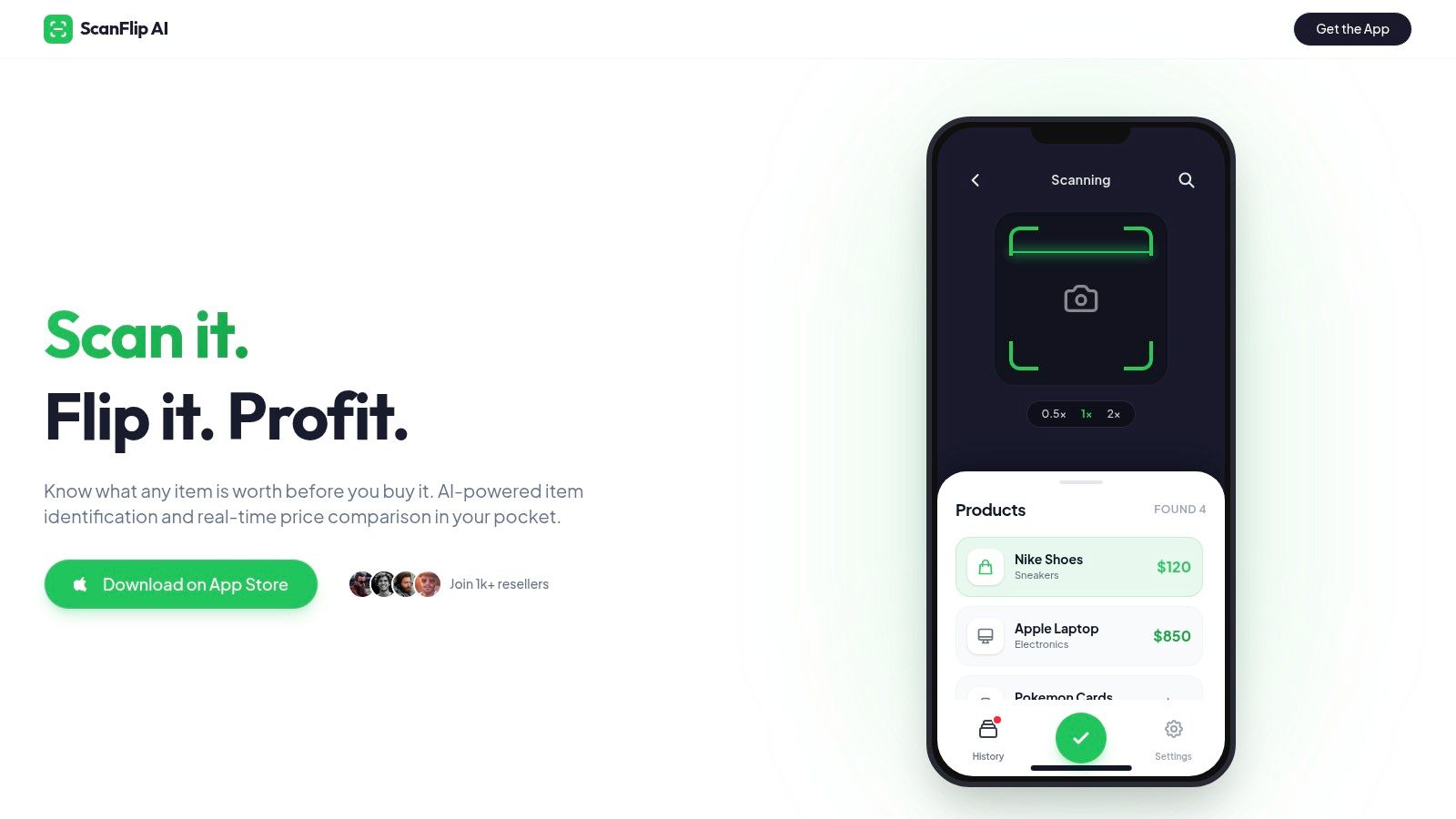
ScanFlip AI is one option in that category, since it identifies items by photo, barcode, or manual search and compares pricing across major marketplaces to estimate profit at the point of sourcing. That matters most when you're looking at shoes, apparel, collectibles, electronics, and accessories that don't always cooperate with barcodes.
The feature that often gets overlooked is history retention. A scan log with photos, location, and timestamps turns a one-off decision into something you can review later, which helps spot patterns in stores, categories, and trip timing. Without that record, every good find feels random and every miss gets forgotten too quickly.
The right tool stack is the one that helps you answer three questions in the aisle. What is it, what sold, and what would I keep after fees? If an app can't move you through that chain quickly, it's slowing you down, not helping you source.
Scaling With Records, Routes, and Weekly Reviews
Scattered wins turn into a sourcing system when you review them like a business, not like a highlight reel. The practical value of saved scans is that they show what you bought, where you bought it, and what was worth your time. Once that pattern is visible, the next trip gets easier to plan.
Route choice is the first adjustment. If one store consistently produces better buys, it deserves a place on the circuit. If another stop keeps producing weak candidates, it gets dropped or moved to a lower-priority slot.
Review the week like an operator
A useful weekly review only needs a few questions.
- Which stores produced actual buys? This tells you where your time had the highest return.
- Which categories converted? That helps narrow what you scan first next time.
- Which hours were wasted? Dead trips usually show up as bad timing, not bad luck.
- Which thresholds got violated? Every bad buy usually left a clue before the purchase.
Location-aware history matters because some stores are better at certain times, and some categories keep showing up in the same places. A saved photo with a timestamp is enough to spot that pattern after a few trips. You don't need a giant spreadsheet to notice where your attention keeps paying off.
The core scaling move is subtraction. Better route discipline, better thresholds, and less scanning in dead zones usually help more than adding more stores to the week. A lean route with good records will beat a crowded calendar full of vague maybe-stops.
Sourcing Mistakes That Quietly Drain Your Profits
The most expensive mistake is paying up because an item feels familiar. Hero items can blind you, especially when you've seen one sell well before and assume the next one deserves the same treatment. The corrective rule is simple, buy the comp, not the memory.
Another drain comes from ignoring category-specific fee reality. A strong local sale price means very little if the final channel takes too much off the top or the item costs too much to ship cleanly. If the math changes by platform, the buying rule has to change with it.
Maybe is dangerous in the aisle. It feels harmless, but it usually means you've already lost the clean decision and are now negotiating with your own threshold. The fix is to make the pass decision louder, faster, and easier to repeat.
A third mistake is confusing local shelf pricing with shipped national demand. Those aren't the same market, and treating them like they are can create fake confidence. Use sold comps from the market you plan to sell in, then apply your own cost stack before you buy.
Sourcing is a volume game, but only if the percentages stay in your favor. Small improvements in speed, fee awareness, and pass discipline compound into better monthly results because you stop buying the wrong things for the wrong reasons.
If you want a sourcing workflow that turns a quick scan into a red or green buy decision, ScanFlip AI is built for that exact aisle-level job. It identifies items, pulls sold comps across marketplaces, and calculates expected net profit so you can keep moving without guessing.