
Thrift Store Reseller Playbook: Sourcing, Pricing
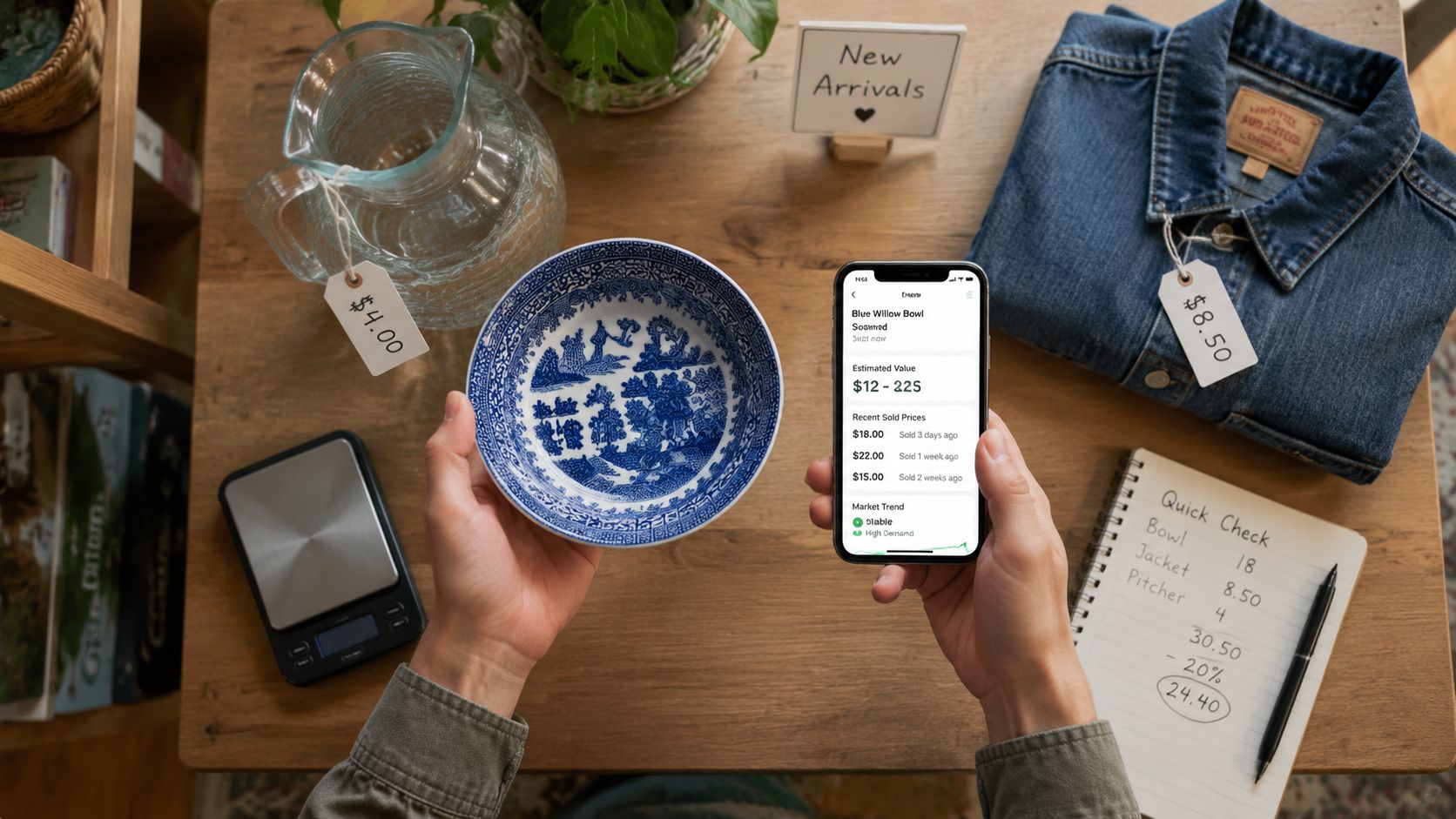
You're standing in a Goodwill glassware aisle with a $4 blue willow bowl in your hand. You find a sold comp at $26, but the main question isn't whether somebody once paid $26. It's whether this specific buy still leaves enough after fees, shipping, condition risk, and the time it takes to process and sell.
That distinction separates a working thrift store reseller from someone with a crowded death pile. The secondhand market is projected to reach $393 billion by 2030, roughly 10% of total apparel spend, and it's growing about 2x faster than the overall apparel market, according to ThredUp's 2026 Resale Report. More sellers are entering, more shoppers understand resale value, and thrift stores are pricing obvious brands more aggressively.
The edge isn't finding more inventory. It's making better buy decisions before your cost of goods leaves your wallet.
Table of Contents
- The Ten-Second Aisle Decision That Separates Profit From Death Pile
- Who a Thrift Store Reseller Actually Is in 2026
- Business Models Worth Running Side by Side
- Sourcing Strategy From Goodwill Aisle to Estate Sale Bin
- Profitability Factors That Decide Whether a Flip Pays
- How ScanFlip AI Speeds the Buy Decision
- Common Mistakes and Oversaturated Categories to Avoid
- Building a Repeatable Weekly Reseller Workflow
The Ten-Second Aisle Decision That Separates Profit From Death Pile
The bowl looks promising, but I'd run four checks before putting it in the cart.
First, I'd inspect the weight and construction. Does it feel like sturdy stoneware, or thin decorative ceramic? Then I'd check the rim, base, glaze, and maker's mark for chips, cracks, repairs, crazing, or a missing pattern detail. A clean bowl with a recognizable maker can justify the comp. A damaged bowl can turn the same sold price into a return or a long-stay item.
Next comes the sold-comps check. The $26 sale is useful only if the item, pattern, size, and condition match. Asking prices don't pay the rent. Recent sold comps do.
The math is quick:
- Sold price: $26
- 13% eBay fee: $3.38
- Shipping: $5
- Per-order fee: $0.30
- Gross after fees and shipping: $17.32
- Cost of goods: $4
- Estimated net: $13.32
The fee and shipping assumptions are a practical example, not a universal eBay rate. eBay says its final value fee is calculated on the total amount of the sale, and its help documentation lists a $0.30 per-order fee for orders of $10 or less and $0.40 for orders over $10. Check the current rate for your account and category before buying through eBay's selling-fee explanation.
Now compare a second $4 bowl that looks almost identical but has no sold comps above $12. After the same basic costs, the remaining spread is too thin for the packing, photography, storage, and breakage risk. That's a death-pile candidate, even if the shelf price feels cheap.
Practical rule: A low buy cost doesn't rescue a weak exit. Check the net before you check out.
This buy-first mindset is the foundation of evidence-based purchasing for resellers. Your time at the rack is limited, but every bad purchase creates work after the buy.
Who a Thrift Store Reseller Actually Is in 2026
A thrift store reseller isn't one specific type of seller. The same Goodwill bins can serve someone clearing a few pieces each month, a part-timer with an active closet, or a full-time operator processing hundreds of items across several marketplaces.
Four common operating profiles
Weekend hobbyist: This seller makes roughly 4 to 8 flips a month, usually on eBay, and buys only when the item is easy to identify, easy to ship, and unlikely to create customer-service work. The main skill is restraint. A hobbyist doesn't need a warehouse full of “maybe” inventory.
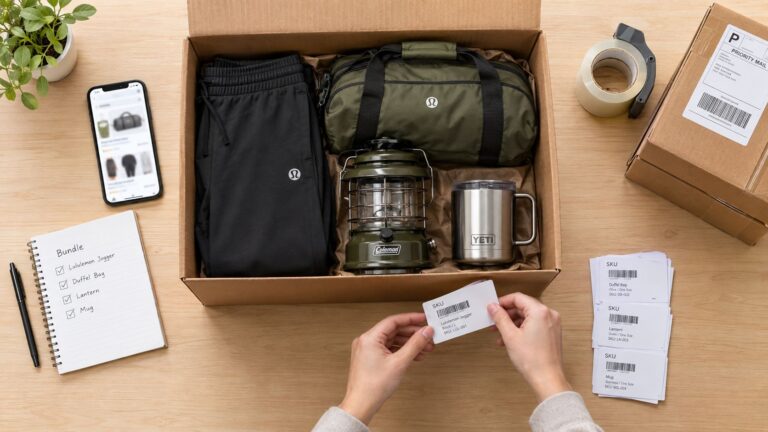
Part-time marketplace seller: With around 40 to 60 live SKUs, this reseller may use Poshmark and Mercari for clothing, eBay for broader categories, and bundles to move related pieces. The challenge is maintaining a steady listing rhythm while working another job.
Full-time operator: A larger seller may process 200 or more items monthly across eBay, Poshmark, Mercari, Depop, or local channels. At this level, sourcing is only one department. Intake, photography, measurements, storage, shipping, returns, and cash-flow tracking all matter.
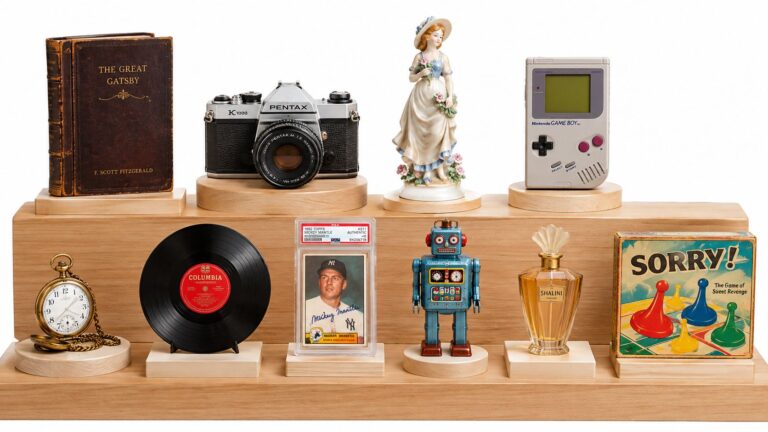
Niche specialist: This reseller might buy only vintage cameras, mid-century glass, books, sports cards, or a narrow footwear category. Fewer categories mean fewer random buys, but the seller needs deeper knowledge of model variations, condition, accessories, and authentic sold comps.
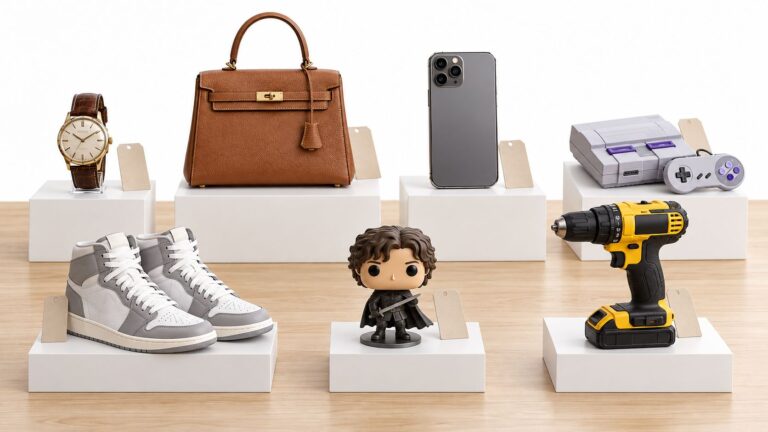
The sourcing map is broad. Goodwill bins reward speed and tolerance for condition sorting. Salvation Army, Value Village, and regional thrift stores can produce cleaner inventory but often require sharper price judgment. Estate sales concentrate antiques, tools, jewelry, signed books, and household goods in one location. Garage sales, curbside free piles, and online thrift can reduce cost of goods, but they also demand more time spent evaluating mixed lots.
This is buy-and-resell, not consignment. You own the inventory, carry the downside, and decide where to sell it. The global secondhand ecosystem now combines physical sourcing with online price research, as summarized in recommerce market data and marketplace estimates. That's why a seller can find an item at a local donation channel, validate it against online sold comps, and sell it to a buyer in another market.
Business Models Worth Running Side by Side
The right model depends less on enthusiasm than on available hours, cash, storage, and category knowledge. A fast bins operation and a curated Poshmark closet are both legitimate, but they punish different weaknesses.
| Model | Capital Needed | Weekly Hours | Monthly SKUs | Net Profit Range | Core Skill |
|---|---|---|---|---|---|
| High-volume bin flipping on eBay | Low | Flexible, but sourcing and processing intensive | 60 to 100 | Depends heavily on item mix and sell-through | Fast condition checks |
| Mid-ticket single-item flips on eBay | Moderate | Moderate | 10 to 25 | Higher per sale, but slower inventory movement | Accurate identification |
| Curated closet selling on Poshmark and Mercari | Moderate | Moderate | 30 to 50 | Driven by bundles and consistent presentation | Styling and merchandising |
| Niche specialization on one channel | Category-dependent | Deep research time | Varies | Stronger potential per item, with narrower demand | Category expertise |
The high-volume model works when the seller can move from bin to listing without building a backlog. Buying 60 to 100 items under $20 each sounds attractive until cleaning, measuring, photographing, drafting, storing, and shipping consume every available evening. This model dies without speed in the aisle and disciplined intake.
Mid-ticket eBay flipping trades quantity for research. A vintage jacket, camera lens, or collectible may need careful testing and detailed photos, but one strong sale can justify the work that several low-dollar items can't. The risk is concentration. If the item has a narrow buyer pool, the money can sit for a long time.
A curated closet model makes sense for sellers who understand color, style, sizing, and outfit context. Poshmark and Mercari can support bundle-oriented selling, but clothing still requires accurate measurements and honest condition notes. A closet full of generic mall brands won't become curated because the photos are attractive.
Niche specialization offers the clearest learning curve after the seller has chosen a category. A camera specialist knows which accessories matter. A glass specialist recognizes a pattern variation. A book scanner understands edition differences. The model fails when the seller mistakes familiarity for demand and stops checking sold comps.
The broader market supports resale, but competition has also increased. U.S. thrift-store retail is projected to reach $13.7 billion in 2026, with 4,530 businesses, according to the IBISWorld industry summary. More store traffic can create more sourcing opportunities, but it also means obvious inventory is less likely to remain mispriced.
Sourcing Strategy From Goodwill Aisle to Estate Sale Bin
Sourcing gets easier when you match the venue to the category instead of wandering every aisle hoping for a BOLO.
At Goodwill, look for the store's pricing habits. Some locations rotate colored tags, while others price desirable brands aggressively and leave obscure categories less researched. A fresh rack can reward fast scanning, but a picked-over clothing section may still hide profit in shoes, outerwear, books, housewares, or accessories.
The bins operate differently. The price is tied to weight, so a vintage Pyrex lid under chipped mugs can be worth pulling even when most of the bin is ordinary. You'll need gloves, a damage check, and a willingness to sort quickly. The low unit cost only helps if you avoid bringing home broken or incomplete pieces.
Estate sales create a different pattern. Jewelry, tools, signed books, cameras, kitchenware, and vintage décor often cluster in predictable rooms or tables. Early access can help with rare items, while later pricing can improve when the organizer wants to clear remaining goods. Either way, inspect before assuming the seller knows the item's resale value.
Run the micro-flow before buying
- Scan or identify the item. Start with the brand, model, pattern, material, or edition.
- Check recent sold comps. Use a 30-day window when enough comparable sales exist. Match size, condition, accessories, and color.
- Estimate demand. Sell-through rate matters because a high sold price doesn't help if comparable inventory rarely moves.
- Subtract every meaningful cost. Include cost of goods, marketplace fees, shipping, packing supplies, expected returns, and your minimum acceptable profit.
- Walk away when the time economics fail. A flip that produces a small net but requires testing, cleaning, and complicated packing may be worse than an easier item with a lower sale price.
A $4.50 vintage Levi's trucker jacket with sold comps around $28 to $34 and a 0.78 sell-through rate can look attractive. Using the expected sale range, shipping, and platform deductions, the practical estimate may land near $14 net, but the exact result depends on the final sale price, account fees, shipping service, and condition. Don't treat the estimate as guaranteed revenue.
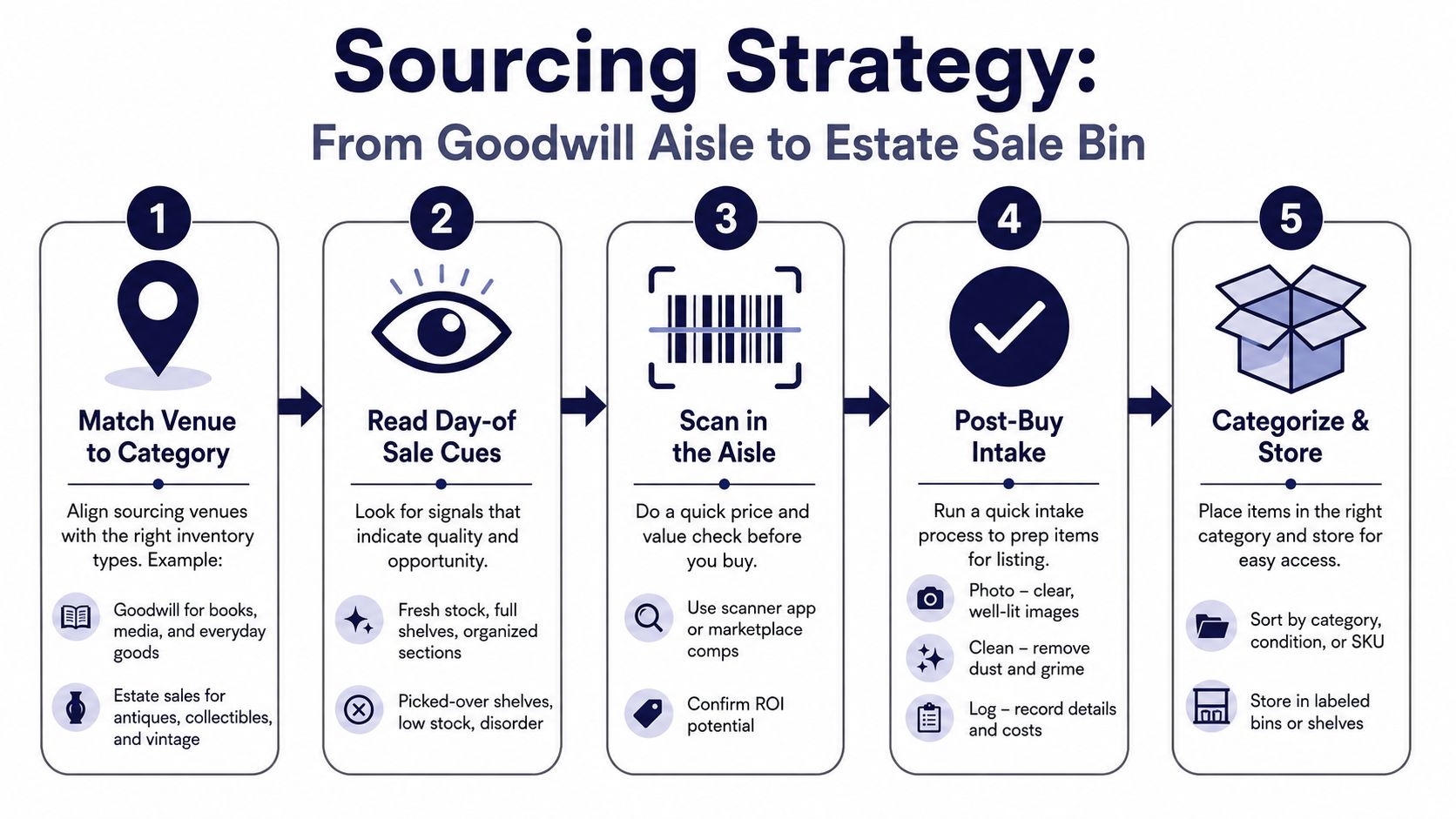
Finish the job during intake
The buy isn't complete when you pay. It's complete when the item is clean, documented, and ready for a listing session.
- Clean carefully: Use a method appropriate for the material. Don't remove patina or damage a finish while chasing a small price increase.
- Photograph consistently: A neutral background and clear condition photos reduce avoidable questions.
- Weigh before drafting: Shipping estimates based on guesswork are a common source of margin loss.
- Log cost of goods: Record the actual purchase cost, not a rounded estimate.
- Draft in the same session: Listing lag turns good sourcing into a death pile. The reseller sourcing workflow guide reinforces the value of moving items through intake promptly.
Profitability Factors That Decide Whether a Flip Pays
A flip has four financial levers: cost of goods, marketplace fees, shipping, and sell-through rate. Gross sold price is only the starting point.
Consider a small-ticket glass pitcher bought for $2.50. Comparable sold prices sit around $18, with a 0.65 sell-through probability. After a 13% eBay fee, payment processing, and a $7.50 USPS Priority box, the seller may keep roughly $3 to $5 net per unit, depending on the final transaction and actual packing cost.
That item can still work. It works when the seller can source several similar opportunities quickly, pack them efficiently, and avoid damage. If each pitcher takes a long time to clean, photograph, measure, and ship, the per-item net becomes less important than the hourly return.
Now compare a $35 vintage Pendleton wool shirt with sold comps around $120 to $145 and a 0.55 sell-through probability. Fees around $17 and a $4 poly mailer could leave approximately $35 to $55 net, depending on sale price, shipping responsibility, account fee structure, and condition. The shirt deserves slower research because the possible contribution per item is materially higher.
| Factor | Small-Ticket Flip, Glass Pitcher | Mid-Ticket Flip, Pendleton Shirt |
|---|---|---|
| Cost of goods | $2.50 | $35 |
| Sold comp range | Around $18 | $120 to $145 |
| Sell-through estimate | 0.65 | 0.55 |
| Marketplace deduction example | 13% fee plus processing | Around $17 in fees |
| Shipping example | $7.50 USPS Priority box | $4 poly mailer |
| Estimated net | Roughly $3 to $5 | Roughly $35 to $55 |
The break-even sell-through calculation is straightforward:
Expected profit per sourcing decision = estimated net profit per successful sale × sell-through probability, minus sourcing and handling costs.
If a category's expected contribution doesn't compensate for your time, storage, and risk, the item isn't profitable because it has a strong sold comp. Use a net-profit calculation workflow for resale items before you scale a category.
Also account for returns, relisting work, storage drag, packing materials, and items that take 90 days to sell. A slow mover can occupy the same shelf space as a faster flip while tying up cash. Rank categories by net profit per hour, not net profit per item.
A $50 net item that takes weeks of attention may be weaker than five clean $10 net flips processed in one short session.
How ScanFlip AI Speeds the Buy Decision
Most resellers use one of two workflows. They manually search eBay sold listings, then repeat the process on other marketplaces, or they use a barcode scanner that works well for books, media, and boxed retail products but fails on untagged vintage inventory.
Manual research gives you control, but it's slow in a crowded aisle. Barcode-only tools are fast when a UPC exists, but a vintage denim jacket, stoneware bowl, untagged shoe, or maker-marked collectible may have no barcode to scan.
Three ways to identify the item
- AI photo scan: Point the camera at apparel, shoes, vintage goods, collectibles, or electronics. The photo method doesn't require a barcode and can help identify branded or visually distinctive pieces.
- Barcode scan: Use the UPC for books, media, games, and packaged retail items where the product database can match the exact item.
- Text search: Type the brand and descriptor when the item can't be photographed clearly or has no visible identifier. “Pendleton wool shirt,” “blue willow bowl,” or a model name can start the comp search.
The point isn't to replace judgment. The point is to compress the repetitive lookup before you buy. ScanFlip AI combines sold comps across eBay, Poshmark, Mercari, Depop, Amazon, Whatnot, ThredUp, Facebook Marketplace, and TikTok Shop, then presents recent sold prices, estimated demand, and net profit after fees and shipping. A red or green flip-or-pass verdict gives you a quick decision signal based on the threshold you set.
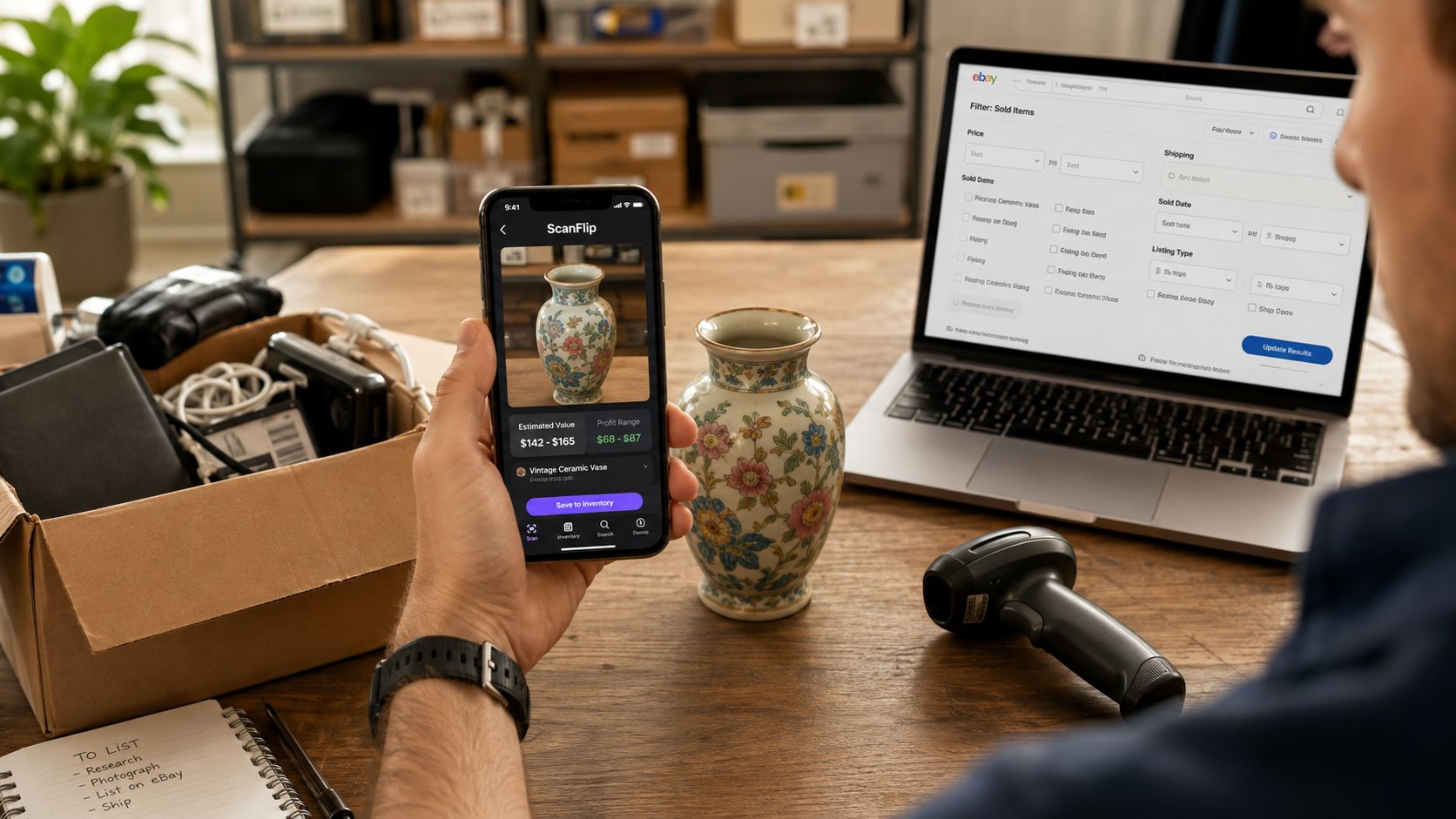
The useful comparison is not “AI versus reseller knowledge.” It's manual checking versus faster verification. You still need to confirm condition, authenticity, size, completeness, and shipping constraints. The app can help identify an item and estimate net proceeds, but it can't make a cracked bowl whole or turn an oversaturated category into a fast seller.
ScanFlip is a sourcing-phase tool. It helps answer “should I buy this?” before the cost of goods leaves your wallet. Crosslisting and inventory tools such as Vendoo and List Perfectly serve a different part of the operation.
Common Mistakes and Oversaturated Categories to Avoid
New flippers often buy what looks familiar instead of what has a workable exit. A branded fast-fashion tee with 47 listed comps can feel safer than an obscure garment, but visible competition and weak differentiation may keep it sitting. Novelty mugs, broken electronics, scratched furniture, fake vintage tees, and heavy items with poor sell-through create similar problems.
| Category | Typical Buy | Typical Sold | Sell-Through Risk | Why It Stalls |
|---|---|---|---|---|
| Branded fast-fashion tees | Low | Low to moderate | High | Many similar items compete |
| Novelty mugs | Low | Low to moderate | High | Demand is narrow and shipping is awkward |
| Broken electronics | Low | Variable | High | Testing, parts, and returns consume time |
| Scratched furniture | Moderate | Variable | High | Freight, storage, and condition reduce buyers |
| Fake vintage tees | Low | Unreliable | Very high | Buyers recognize weak authenticity |
| Heavy bin items above $12 | Above $12 | Variable | High | Unit cost leaves little room for shipping and fees |
The mistakes that show up at checkout
Buying on emotion is the first one. You like the jacket, remember seeing a high comp, and stop checking whether that comp matches the exact size and condition.
The second is trusting the wrong comparison. A rare colorway, complete set, or working electronic model may sell well, while the visually similar version doesn't. Always compare the details that create price differences.
The third is ignoring fee math. eBay's final value fee applies to the total amount of the sale, and current fee guides also describe a separate per-order charge of $0.30 for orders of $10 or less or $0.40 for orders over $10, as summarized in eBay fee calculations for sellers. Don't call a $20 sold comp a $20 result.
Most $3 to $15 flips return roughly $4 to $9 net, but that range only makes sense when the item processes quickly and doesn't generate returns or special packing work. A packed inventory room can hide a cash-flow problem, not a successful business.
Before buying, ask: Is the exact item selling, can I verify the condition, what will shipping cost, what will fees remove, and is the net worth my time? If you can't answer those questions, leave it.
Building a Repeatable Weekly Reseller Workflow
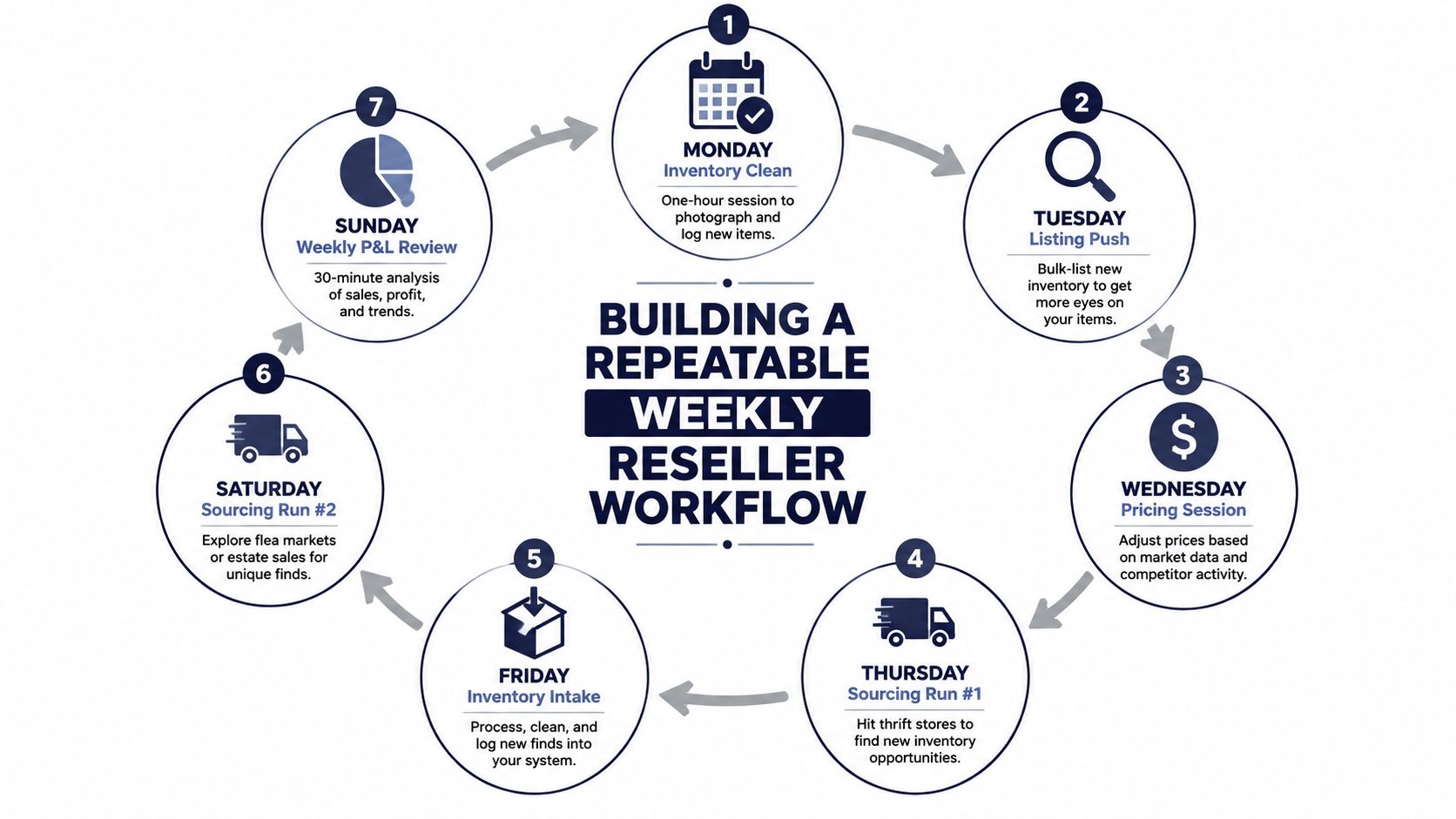
A part-time thrift store reseller needs a repeatable loop, not a heroic weekend followed by two weeks of avoidance. Defend specific blocks for sourcing, intake, listing, and financial review.
A workable weekly pattern includes:
- Two sourcing runs: Reserve about 90 minutes for each run when possible, and use the same buy filter at every venue.
- One inventory-clean session: Photograph, measure, weigh, and log new items before they disappear into storage.
- One pricing session: Spend about 30 minutes checking sold comps and adjusting stale prices.
- One listing push: Protect a 60-minute block for drafts, photos, and condition details.
- One P&L review: Review sales, fees, shipping, returns, and cost of goods before buying again.
The exact schedule can move around work and family obligations. The discipline is what matters. Last week's sold comps should change next week's sourcing decisions, while returns should be logged by category and failure type. Items that reach 90 days without meaningful interest deserve a markdown, bundle plan, local-sale test, or removal from your active storage.
The honest upside is possible but not automatic. Consistent part-timers may target $800 to $2,000 monthly net, while full-time operators may target $3,000 to $6,000, but those outcomes depend on category mix, sourcing access, processing speed, shipping discipline, and the seller's ability to stop buying weak inventory. The ceiling drops quickly when storage fills, fees go untracked, or every item requires custom handling.
ScanFlip AI gives thrift store resellers three ways to check an item before buying, photo scan without a barcode, barcode scan, and text search, with sold comps aggregated across major resale marketplaces and estimated net profit after fees and shipping. Visit ScanFlip AI to make the next aisle decision from actual sold prices and a flip-or-pass verdict instead of a guess.