
What Are the Rarest Funko Pop Figures Worth in 2026
The advice “buy anything vaulted or exclusive” will get a reseller stuck with a death pile of colorful cardboard. In 2026, the useful question isn't what are the rarest Funko Pop figures. It's which rare Pops still attract buyers, have recent sold comps, and leave enough room for condition, shipping, and marketplace fees.
The top of the market remains remarkably concentrated. The Willy Wonka and Oompa Loompa Golden Ticket 2-Pack, made in only 10 units, reached a verified resale record of $210,000 in 2023 through a golden-ticket promotion connected to Funko Fundays at San Diego Comic-Con. That sale demonstrates what documented scarcity can do, but it doesn't mean every convention sticker or vaulted label carries the same weight. (Toynk's rarity guide)
For flipping purposes, rarity has two parts: limited supply and active demand. A Pop can be difficult to find yet slow to sell if collectors have moved on, the box is damaged, or the franchise has lost heat. The sections below focus on the difference between internet-famous grails and rare figures that can still transact.
Table of Contents
- Why Most Rare Funko Pops Are Not Worth Flipping in 2026
- How Production Runs and Convention Exclusives Create Real Rarity
- The Rarest Funko Pop Figures and Their Actual Sold Prices
- How to Verify Authenticity and Grade Condition Before You Buy
- Using Sold Comps to Price Rare Pops and Make Buy Decisions
- Building a Sourcing Strategy Around Documented Scarcity
Why Most Rare Funko Pops Are Not Worth Flipping in 2026
The biggest mistake I see in estate-sale sourcing is treating “exclusive,” “vaulted,” and “limited edition” as interchangeable with profitable. They aren't. A retailer exclusive can be hard to find in one store and still have enough supply across the market to keep prices under pressure. Vaulting removes future production, but it doesn't manufacture buyers.
Independent market coverage indicates that the secondary market for non-limited, non-variant Pops is down 30–40% versus 2021 peaks, while common retail exclusives that once sold for more than $100 often trade around $40–$60 when they sell. (Market coverage on Funko resale appeal) Those figures matter because a reseller's money is made on the exit, not on a hopeful listing price.
Scarcity on the box is not scarcity in the market
There's a practical difference between manufactured scarcity and genuine rarity. A mass retailer exclusive may carry a limited sticker while still having broad distribution and a large collector base. Early convention pieces, especially those with documented runs in the low hundreds or below, have a much tighter supply profile.
That distinction changes how I read a BOLO at Goodwill. A common vaulted Marvel exclusive with no recent buyer activity is a pass, even if the box looks old. A documented early convention variant with multiple recent sales deserves a closer inspection, because the buyer pool is easier to identify.
Practical rule: A rare Pop with no active buyer pool is an illiquid collectible, not automatically a good flip.
Liquidity matters more than an impressive asking price
Rare Pops often sit in eBay archives at optimistic prices for months. Those listings can create the illusion that a piece is worth a certain amount, but sold prices show whether anyone paid it. The same problem appears on Mercari and collector marketplaces, where stale inventory can remain visible long after demand has disappeared.
Condition adds another layer. A 2026 guide notes that even minor box creases can reduce value by 30–50%, particularly when buyers are comparing a damaged example with a clean one. (Condition and demand discussion)
| Funko Pop Title | 2022 Peak Sold Price | 2026 Avg Sold Price | Change % | Liquidity Rating |
|---|---|---|---|---|
| Common retail exclusive | Over $100 | $40–$60 when sold | Not consistently documented | Low to mixed |
| Ultra-low-run convention grail | Market-specific | Market-specific | Not consistently documented | High when demand is active |
| Vaulted niche variant | Market-specific | Often stagnant | Not consistently documented | Low |
The table deliberately separates what the market can verify from what sellers merely claim. The 30–40% market decline applies to the broader non-limited and non-variant segment, not every individual Pop. For a specific item, I'd rather see two recent completed transactions than trust a high historical peak.
That's why the rest of the hunt starts with production evidence, then moves to sold history and box condition. “Rare” gets you into the conversation. Liquidity determines whether you get paid.
How Production Runs and Convention Exclusives Create Real Rarity
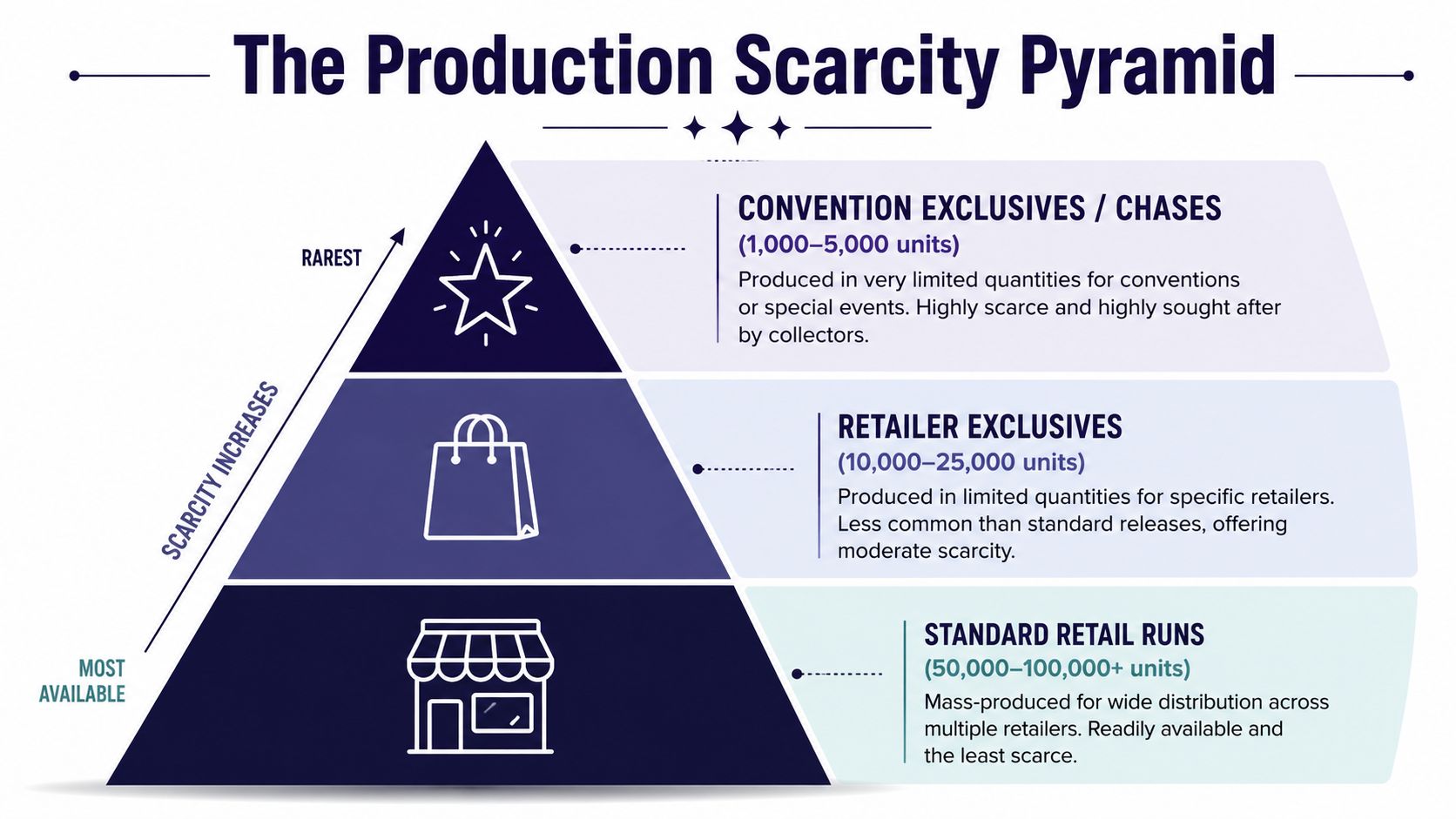
Funko rarity begins with documented supply. The strongest examples come from early SDCC and Funko Fundays releases with exceptionally small runs. Several notable figures fall within the 10-to-24-piece range, including Clockwork Orange Alex DeLarge at 12 units, Freddy Funko Metallic Gold at 12 pieces, and Red Hair Freddy Funko Boba Fett at 24 units. (Historical rarity thresholds)
Why early convention runs carry more weight
San Diego Comic-Con exclusives from 2011–2013 are tied to unusually small production quantities. Some releases from that period are cited at 48 or 144 units, giving them a far tighter supply profile than modern mainstream exclusives.
A useful rarity file records the event, year, variant, sticker, production count, and surviving sales history together. Early convention releases with documented runs in the low hundreds attract serious buyer attention. Later exclusives with broad distribution often lose that advantage once enough examples reach the secondary market.
The sticker also matters. A convention sticker supports the release story, but it does not replace condition checks or completed-sale evidence. Internet-famous pieces with weak boxes can sit while cleaner, less celebrated variants sell to collectors who are building a specific set.
Read the release mechanic, not just the word “exclusive”
A golden-ticket promotion creates more scarcity than ordinary convention-floor availability. The Willy Wonka and Oompa Loompa 2-Pack was distributed through golden tickets hidden inside Funko-branded chocolate bars at the 2016 SDCC Fundays event, and only 10 sets were produced. (Golden Ticket release details)
Collectors could not buy the set from a retailer. That access barrier, combined with the tiny run, gives each confirmed sale greater influence over pricing expectations. It still does not guarantee a quick exit. A rare piece can remain stagnant when the buyer pool is narrow.
Supply note: Once an edition falls below roughly 50 units, price discovery becomes more event-driven, bid spreads widen, and liquidity thins sharply. (Scarcity and market behavior)
Vault status requires a separate test. Funko may stop producing a figure while the existing population remains large, and collectors may have little reason to pursue it. Treat vaulting as a research prompt, then verify demand through sold comps.
Prototype and artist-series pieces attract serious collectors when provenance is documented. Their supply may be exceptionally narrow, but authenticity is harder to establish and the audience is more specialized. Without credible provenance and comparable sales, a low count does not justify a large buy.
The Rarest Funko Pop Figures and Their Actual Sold Prices
The Willy Wonka and Oompa Loompa Golden Ticket 2-Pack holds the verified resale record at $210,000 in 2023. Funko produced only 10 units for the 2016 Fundays promotion, making the set a reference point for extreme scarcity and record-level pricing. (Verified record and release background)
That headline figure needs careful interpretation. A two-piece set with only a handful of possible sellers can attract enormous attention, yet the same scarcity can make exits infrequent. For a flipper, the record establishes a ceiling and a documented transaction, not a guaranteed purchase price or quick sale.
Alex DeLarge from A Clockwork Orange offers a stronger comparison for single-figure analysis. One documented sale reached $60,000 in February 2023, while another source records earlier pricing around $48,000. The spread shows how sharply demand, timing, authenticity, and condition can affect the final result. (Alex DeLarge sale history)
The grails with the clearest scarcity story
The glow-in-the-dark Clockwork Orange chase is commonly identified as a 12-piece edition, with later verified sales reported around $60,000. (Clockwork Orange rarity and sale data) Its appeal rests on several factors working together: a tiny documented run, a recognizable release history, strong collector interest, and completed high-value transactions. That combination gives a reseller more evidence than a convention sticker or an online price guide alone.
Freddy Funko variants sit in the upper tier when their edition size, character treatment, and buyer base align. Fundays and early convention pieces receive attention, but the Freddy name alone does not create reliable demand. A variant needs collectors who know the difference, recent sold comps, and packaging that can support the asking price.
| Funko Pop Title | Release / Convention | Est. Production Count | Highest Verified Sale | Current Avg Sold Price | Liquidity |
|---|---|---|---|---|---|
| Willy Wonka and Oompa Loompa Golden Ticket 2-Pack | 2016 SDCC Fundays | 10 | $210,000 in 2023 | Varies by transaction | Very high interest, thin market |
| Alex DeLarge, Glow | Early convention-era release | 12-piece variant cited | $60,000 in February 2023 | Varies by condition | High-end, specialist |
| Freddy Funko Metallic Gold | Fundays-era variant | 12 | Not established in the verified data | Varies by transaction | Specialist |
| Red Hair Freddy Funko Boba Fett | Convention-era variant | 24 | Not established in the verified data | Varies by transaction | Specialist |
| Related limited editions | Convention-era releases | Some cited at 480 | Varies by piece | Varies by transaction | Mixed |
“Not established” belongs in the table where the available evidence does not support a defensible sale figure. Asking prices can sit far above completed transactions, so they should not drive a sourcing worksheet or a buy decision.
Why some famous pieces still don't move
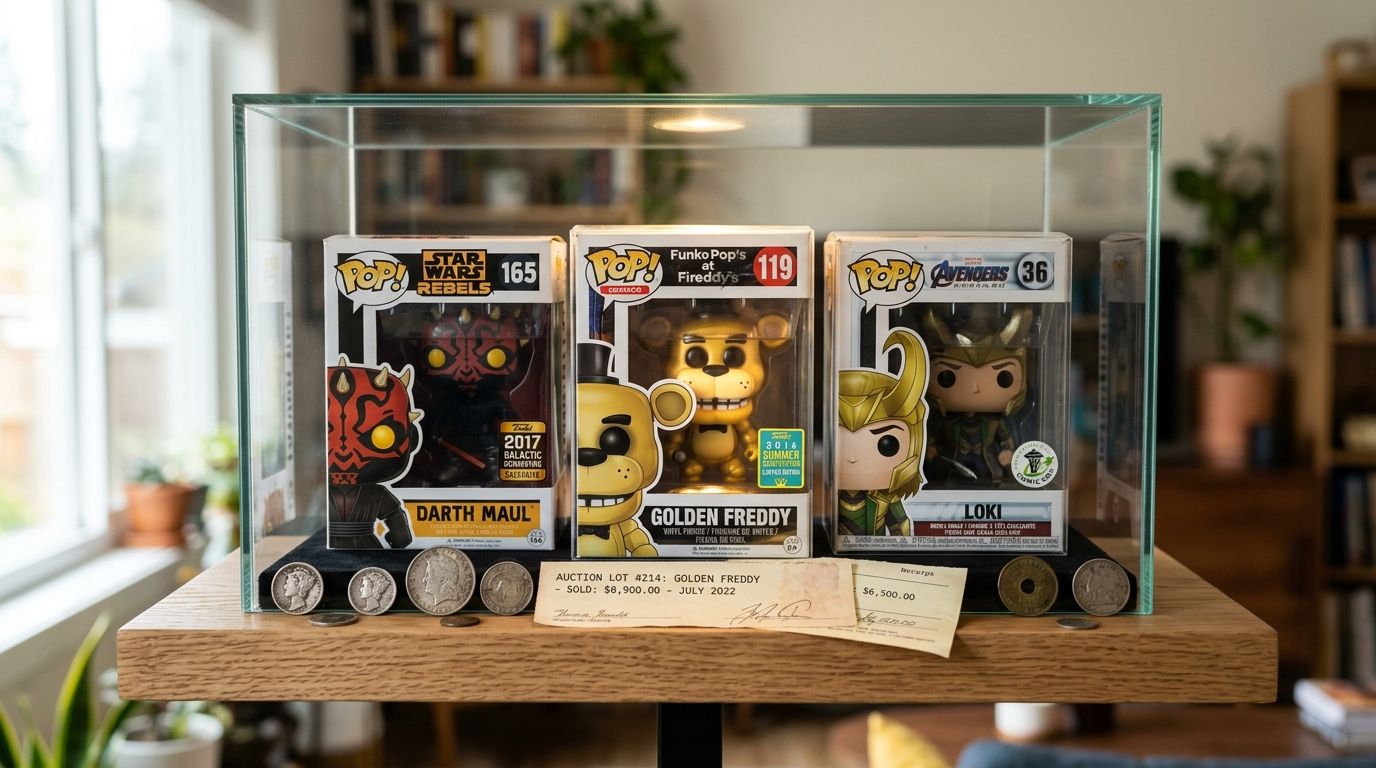
Holographic Darth Maul and metallic Venom show the gap between internet fame and practical liquidity. Both are recognizable convention variants, yet a famous character and an exclusive sticker do not create the same buyer urgency as a documented 10- or 12-piece grail. Thin recent sales call for a conservative buy target, especially when box damage will reduce the net.
At an estate sale, start with recent clean-example sales rather than the highest historical result. Then subtract the condition discount, selling fees, shipping risk, and the time required to find the right specialist buyer. That calculation separates a rarity that can move from a vault piece that merely looks impressive in a listing.
How to Verify Authenticity and Grade Condition Before You Buy
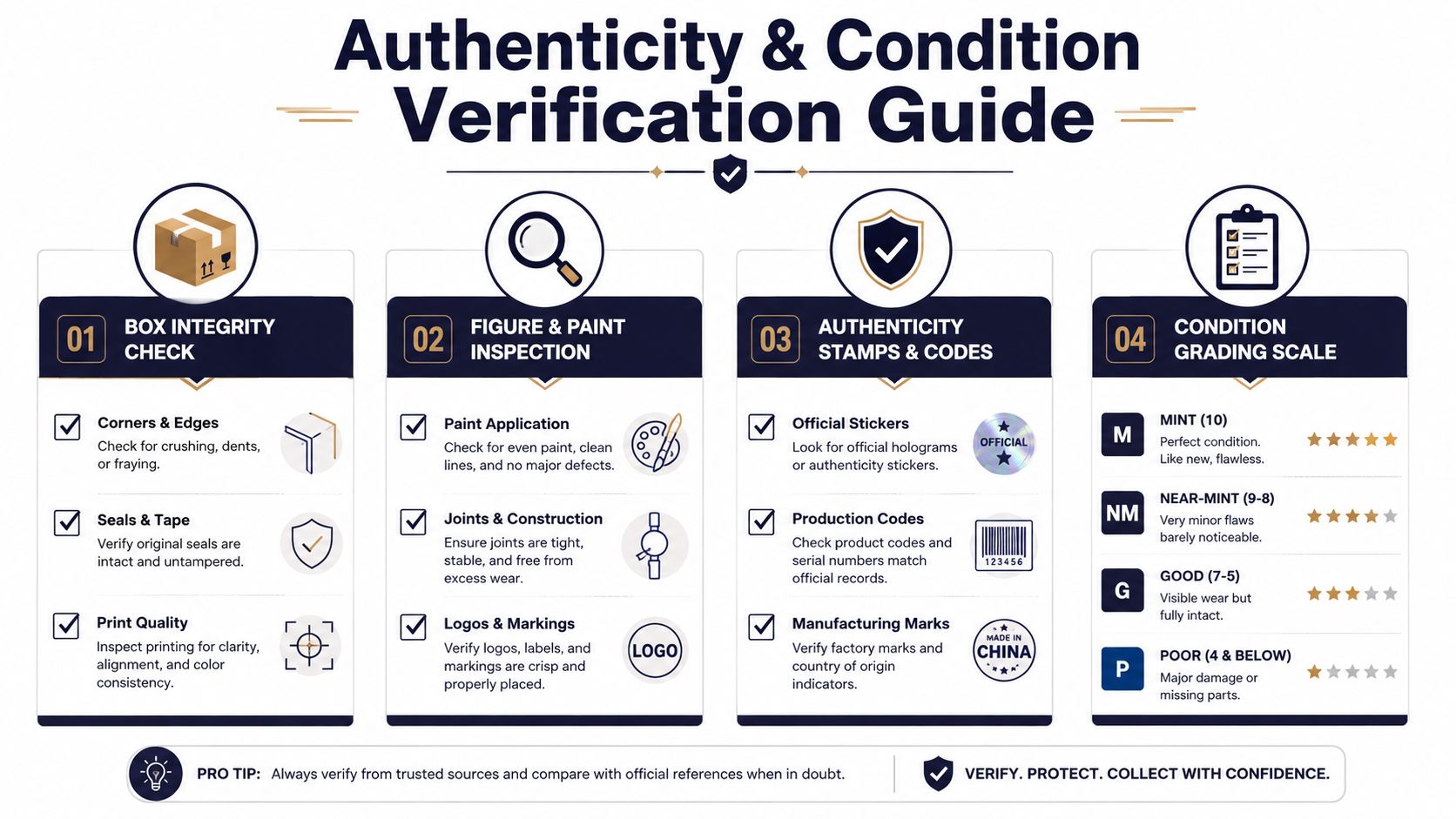
A rare sticker does not authenticate a Funko Pop. Counterfeits remain a serious risk when a figure has a high sold price and a small production run. The box, stickers, figure, and markings should support the same origin story. A convincing outer box can still contain a reproduction sticker or a figure with inconsistent paint.
Start with the packaging
Hold the box under neutral light and inspect print quality, seams, and corners. Check embossing depth, clean registration, accurate logo treatment, and the holographic sticker's position. A sticker that looks unusually glossy, sits off-center, or uses an inconsistent serial format needs closer review.
Inspect every panel, including the bottom and sides. Reproductions may show blurry small text, incorrect colors, weak cardboard, or a box that feels newer than the release context suggests. A clean front panel does not cancel out defects elsewhere.
Match the figure to the box
The vinyl should have consistent paint application, correct eyes and logos, clean joints, and the appropriate base. Use a magnifier to inspect the foot stamp and production markings, then compare them with trusted reference photos and known genuine examples.
Authentication depends on several matching features. A seller can reproduce a sticker, while a counterfeit figure may copy the silhouette but miss paint details. Treat the item as genuine only when the packaging, figure, markings, and release details align.
Condition is part of identity. A rare Pop with a damaged box is a different buying opportunity from a clean, complete example.
Record defects before calculating your offer
Write a condition note before negotiating:
- Corners: Check dents, crushed edges, whitening, and separation.
- Flaps and seals: Look for creases, lifted adhesive, tears, and resealing.
- Surface: Inspect sticker residue, scratches, fading, and UV yellowing.
- Figure: Confirm the insert, accessories, paint, base, and visible marks.
A 2026 guide indicates that minor box creases can cut value by 30–50%, so a damaged example should not be priced against a mint-box comp. (Condition discount guidance) Photograph each defect before buying, and follow this practical guide to describing item condition so the eventual listing matches what the buyer receives.
For an expensive purchase, provenance can matter as much as appearance. Ask where the seller obtained the piece, request clear photos of stickers and stamps, and question prices far below established sold comps. A bargain that fails authentication becomes cost of goods tied up in a dispute.
Using Sold Comps to Price Rare Pops and Make Buy Decisions
Asking prices are noise until a buyer completes the transaction. Sellers can leave a stagnant vault piece at an inflated number indefinitely, but that doesn't establish market value. I use sold comps to answer three questions: what clean examples sold for, how recently they sold, and whether buyers still show up.
For a known item, filter by exact variant rather than searching only the character. “Darth Maul Funko Pop” can mix commons, metallic versions, holographic releases, damaged boxes, and custom figures. Match the convention, sticker, box number, finish, and condition before using a comp.
A practical estate-sale calculation
Suppose you find a Holographic Darth Maul SDCC exclusive in a sealed, clean box. The verified sourcing plan in this guide uses a $1,200–$1,500 sold range for MISB examples, but that range must be checked against current completed transactions before money changes hands. Your buy ceiling should be based on the median of relevant comps, then reduced for platform fees, shipping, authentication risk, and the time your cash will remain tied up.
A 50–60% ceiling against the median comp can preserve room for those costs in the example framework, but it isn't a guarantee of profit. A damaged box, weak demand, or a slow platform can erase the spread.
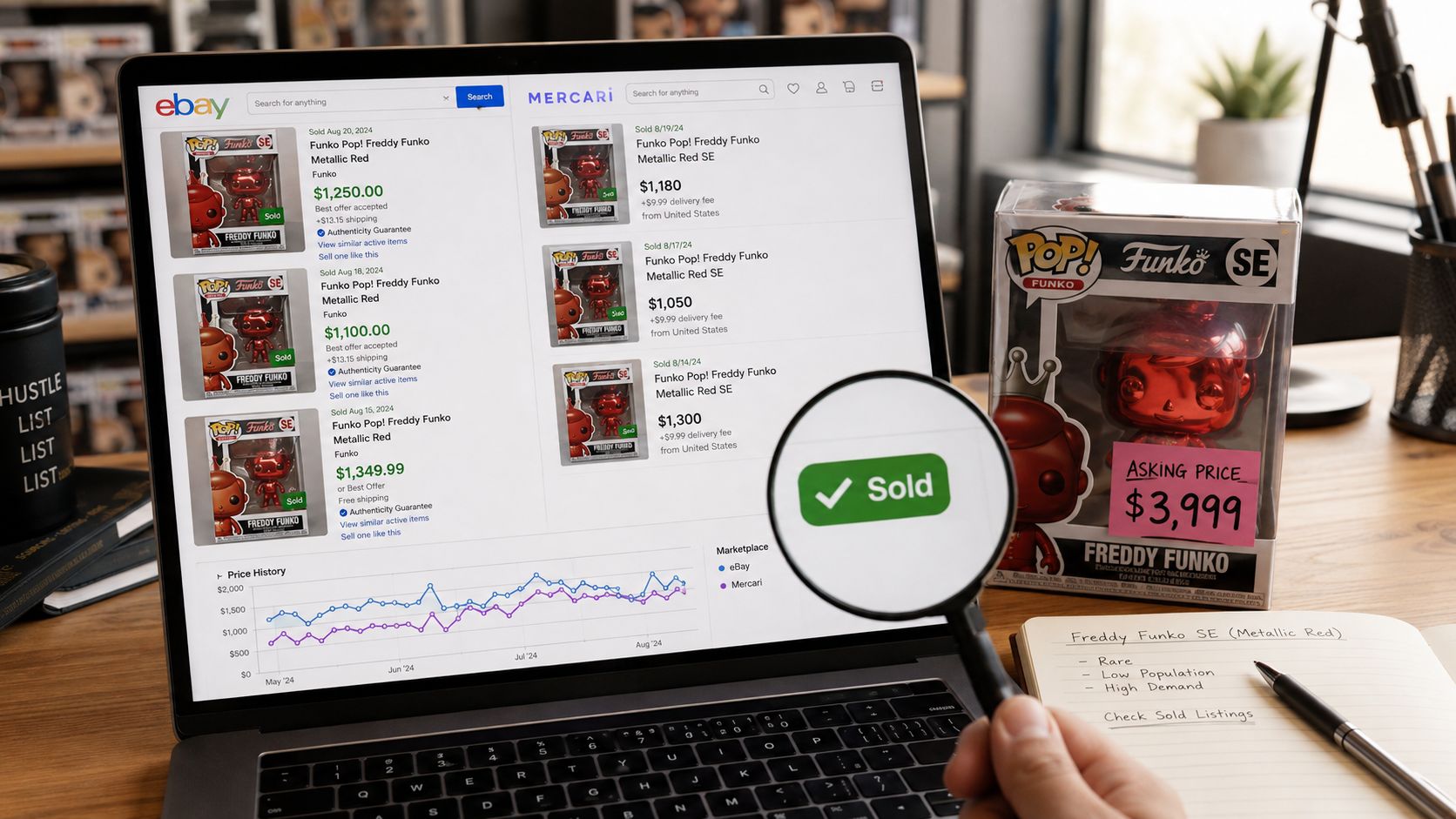
This guide to finding sold prices on eBay is useful when you want to verify individual transactions manually. For a faster sourcing check, ScanFlip AI offers three scan methods, AI photo identification with no barcode required, barcode scanning, and text search. It aggregates sold comps across eBay, Poshmark, Mercari, Depop, Amazon, Whatnot, ThredUp, Facebook Marketplace, and TikTok Shop, then factors fees and shipping into a net-profit figure with a red or green flip-or-pass verdict.
Red flags that should lower your offer
- No recent activity: If a rare-looking Pop has no verified sold history over the relevant recent period, treat the valuation as uncertain.
- Broad production: A convention piece with a production run over 6,000 units may be less scarce than the sticker suggests.
- Common-line chase: A chase variant can be harder to find than the standard release without having a deep buyer pool.
- Condition mismatch: Don't compare a sun-faded or crushed box with a mint example.
- Platform dependence: One private sale doesn't prove broad liquidity.
The right comp is exact, recent, condition-adjusted, and tied to a platform where buyers transact. If you can't establish those four points, pass or negotiate as if the item is unproven.
Building a Sourcing Strategy Around Documented Scarcity
A repeatable Funko sourcing decision needs three gates: documented scarcity, recent buyer activity, and condition-adjusted margin. Miss one, and the purchase becomes speculation rather than a controlled flip.
Gate one is documented scarcity
Verify production counts through credible hobby records, event history, or provenance. A run under 1,500 units or confirmed prototype status warrants deeper research, but scarcity alone does not create demand. The strongest historical tier includes the 10- to 12-piece examples discussed earlier. Larger runs need stronger franchise interest or clearer buyer activity to compensate.
Gate two is buyer activity
Require at least two verified sales in the past 90 days before calling a rare Pop liquid under this framework. Match the comparisons closely. Damaged boxes do not establish the value of clean examples, and old listings are not sales.
At an estate sale, I would pass on a vaulted Marvel exclusive with 10,000 or more units and no recent sales, even if the seller calls it a grail. I would investigate a damaged-box SDCC 2011 Green Lantern if the figure were intact and the asking price sat 30% below comp. The defect may already be reflected in the cost, leaving room for a buyer who accepts the packaging issue.
Gate three is condition-adjusted margin
The framework requires a minimum 40% spread between the buy price and median sold comp after platform fees. That spread is a buffer, not guaranteed profit. Shipping, returns, authentication questions, and the time needed to reach the right collector can consume it quickly.
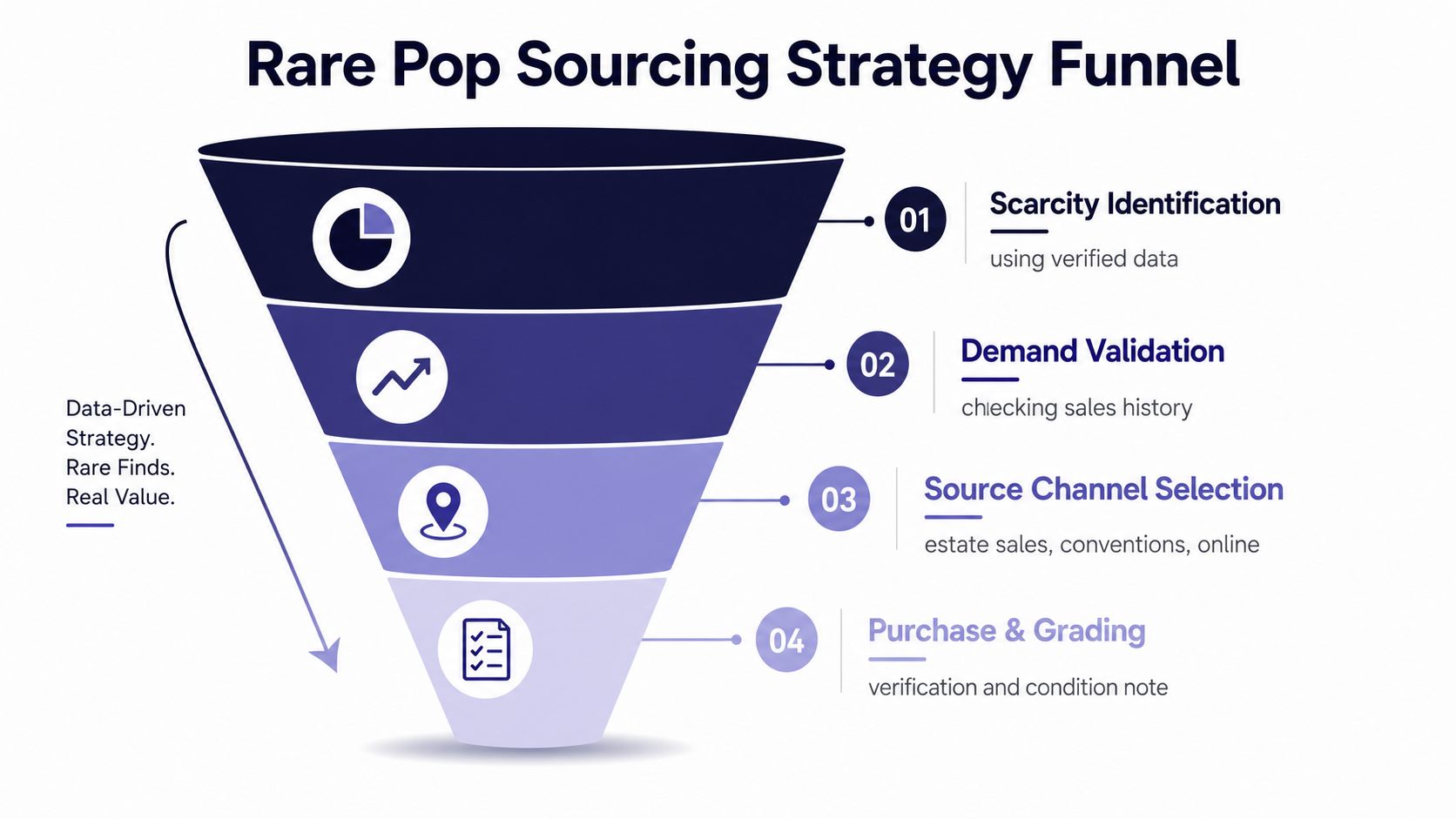
Use reseller sourcing best practices that match your sales channel, then adjust the offer for the buying venue. Estate sales often leave room for negotiation. Conventions can provide provenance and access to specialist buyers. Online auctions may expose you to stronger competition, so the same Pop can require a lower maximum bid.
Timing matters, but a market dip does not guarantee a rebound. Buy only when the evidence supports the price, protect the box, and refuse to let a famous name replace weak comps. Apply these three gates consistently, and you'll stop chasing names and start tracking liquidity.
ScanFlip AI checks a Funko Pop through an AI photo scan, barcode scan, or text search, then compares sold comps across major marketplaces and calculates net profit after fees and shipping. Visit ScanFlip AI to make a faster flip-or-pass decision at an estate sale, convention table, or thrift-store aisle.