
Estate Sale Ad Examples: 8 Templates to Sell Out Fast
You've got the house staged, the pricing stickers ready, and the signs are going up, but the turnout still feels thin. That usually means the ad did too little work. Buyers, especially resellers and collectors, decide fast whether an estate sale is worth the drive, and they do that from the listing itself, not from your setup once they arrive.
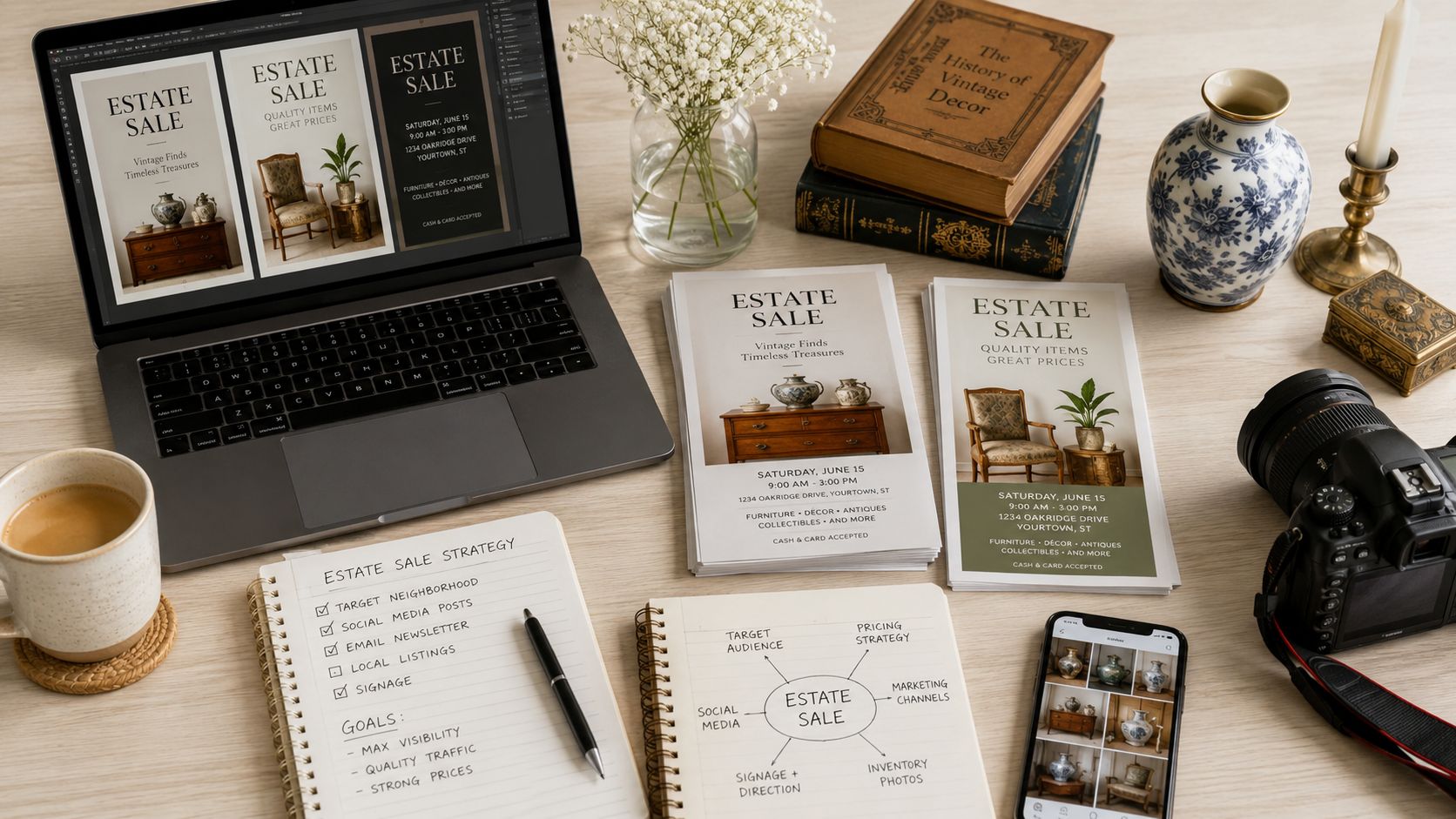
Strong estate sale ad examples don't read like a notice pinned to a bulletin board. They read like a preview of inventory, a routing guide, and a trust signal all at once. The best ones make the collection feel specific, the logistics feel easy, and the trip feel urgent. They also reflect how estate-sale advertising has changed, from print-first promotion to multi-channel digital distribution across marketplace listings, email, social media, newspaper classifieds, flyers, and street signage, because buyers now come from both online research and local walk-in traffic auctionninja.com.
If your ads aren't pulling the crowd you expected, the fix usually isn't more hype. It's sharper structure, better photos, cleaner logistics, and better platform fit. These eight templates show how to do that without wasting words.
Table of Contents
- 1. High-Resolution Photo Gallery with Item Close-ups
- 2. Detailed Item Descriptions with Condition and Measurements
- 3. Categorical Price Lists with Range Expectations
- 4. Location, Hours, and Logistics Information with Parking Details
- 5. Social Media-Optimized Ad Posts with Hashtags and Direct Links
- 6. Specialty Category Spotlights
- 7. Preview Event Announcements with Appointment-Based Viewing
- 8. Video Tour and Virtual Walkthrough Links
- 8-Point Estate Sale Ad Comparison
- Your Blueprint for a Sold-Out Estate Sale
1. High-Resolution Photo Gallery with Item Close-ups
A weak estate sale photo set shows a room. A strong one sells proof. That means full-room context plus tight shots of maker marks, signatures, labels, finishes, wear, and anything a buyer would otherwise have to guess about. If you're selling to resellers or collectors, those close-ups matter because they cut the “Is this real, and is it worth the drive?” question down to size.

How to shoot it like a pro
Use consistent light across every frame, because mixed lighting makes a sale look chaotic. Natural daylight works well, but only if it doesn't wash out labels or gilding. If you're photographing furniture, include a ruler, a tape measure, or a familiar object so buyers can judge scale without asking for extra photos later.
Practical rule: Photograph the flaw before the glamour shot. Serious buyers trust ads that show the scratch, stain, chip, or repair instead of hiding it.
For resellers using visual identification tools, the close-up is often the deciding frame. A clear maker's mark on a chair, a logo inside a handbag, or a stamp on porcelain can be the difference between a quick yes and a pass. That's why a structured photo set pairs well with the kind of item-spotting workflow described in ScanFlip AI's item identifier guide.
A good Facebook or EstateSales.net gallery usually starts wide, then narrows fast. Lead with the strongest pieces, then follow with supporting shots that prove condition and authenticity. Don't bury the valuable stuff halfway through a messy album.
2. Detailed Item Descriptions with Condition and Measurements
Photos show shape and style. Descriptions do the main selling work. They tell buyers whether the piece will fit in a truck, work in a room, and leave room for profit. Leave out dimensions, materials, or damage notes, and you force buyers to message you for basics, which slows down the sale and weakens serious interest.
Strong item copy stays plain and consistent. Use the same condition scale every time, such as Excellent, Very Good, Good, Fair, or Poor, then state the facts that affect value. Include size, material, missing parts, whether the item is assembled, and whether it is original or altered.
A practical way to write it is to start with the item name, then move straight into the details buyers use to decide. “MCM teak credenza, Danish Modern style” gives more useful information than “wood cabinet.” From there, add height, width, and depth. If the piece is bulky or awkward, include weight too. Then note scratches, water rings, scuffs, repairs, missing hardware, stains, cords, lenses, manuals, or accessories. Buyers should be able to scan one listing and know exactly what they are getting.
That level of detail cuts down on the back-and-forth that kills momentum on sale day. It also helps resellers decide fast whether an item is worth flipping before they even step into the house. For a pricing workflow that pairs well with clear descriptions, see ScanFlip AI's resale pricing guide.
Clear copy wins because it removes uncertainty. Uncertainty slows buyers down, and in estate sales, slow usually means lost money.
On EstateSales.net, long-form clarity pays off with furniture, collectibles, and vintage fashion. A category blurb with useful detail feels credible because it answers the questions serious buyers are already asking in their heads, while also helping casual shoppers avoid messages they do not need to send.
3. Categorical Price Lists with Range Expectations
Sellers often hide prices because they think it helps them negotiate later. In the room, the opposite usually happens. Buyers see vague pricing and assume the sale is either disorganized or overpriced. They want a quick read on whether they're stepping into a premium furniture sale, a basic household cleanout, or a mixed estate with a few strong pieces.
Category-based pricing works because it sets that expectation fast. Lead with ranges for broad groups like furniture, electronics, clothing, collectibles, and kitchenware, then highlight a few anchor items with individual prices. A reseller can sort the house before they arrive, and a casual buyer can ignore categories that are outside their budget.
A practical price-list format
Use a structure like this:
- Furniture: $10 to $200
- Electronics: $5 to $100
- Collectibles: individually priced
- Kitchenware: bundled or marked by piece
The ranges do not need to be dramatic. They need to be clear. If you have a higher-end piece, call it out on its own so buyers do not assume everything is lumped together. For mixed categories, bundle pricing moves volume and cuts the number of small transactions you have to handle on site.
Seller instinct to resist: Do not use price opacity to create “mystery value.” Buyers usually read that as disorganization.
Category pricing also helps on final-day posts, where you want urgency without rewriting the full ad. You can note that certain groups are reduced or bundled, while keeping the rest of the listing intact. That keeps the post easy to scan for shoppers checking it on a phone in the parking lot.
For a clean pricing framework that pairs well with category lists, review ScanFlip AI's estate sale pricing guide. Strong price structure shows intent, and buyers spend less time guessing and more time showing up.
4. Location, Hours, and Logistics Information with Parking Details
Buyers will skip a sale they cannot reach or understand quickly. That is why a solid ad puts the full address, sale dates, hours, payment methods, parking notes, and house rules up front, since missing logistics reads like a warning sign to shoppers support.estatesales.org.
The title matters too. A strong one names the collection or niche, like Mid-Century Modern Collector's Estate Sale, and the body should match that level of clarity. The same guidance recommends posting the primary ad 5 to 10 days before the first sale day, or about a week ahead across major estate-sale sites, social platforms, and local print outlets, because estate sales move fast and one missed day can materially reduce traffic support.estatesales.org.
A buyer deciding whether to leave home usually scans for a few basic answers first.
- Where is it? Full address, not a vague neighborhood reference.
- When is it open? Exact dates and hours.
- How do people park? Street, driveway, lot, loading zone, or limited access.
- Can buyers move items easily? Stairs, basement access, elevator, or narrow halls.
- What payment methods work? Cash, card, or both.
- What are the rules? Entry order, holds, and whether buyers must self-load.
For bulk buyers and resellers with trucks, parking and loading notes matter more than polished copy. A downtown sale with a loading zone should say so. A house with upstairs furniture should say that too, because buyers who cannot handle stairs will leave frustrated and may not come back.
Keep the language direct. “Limited street parking, enter on Oak Avenue, basement items must be carried up one flight” works better than a paragraph of friendly filler. Buyers skim first, then decide whether the trip makes sense.
5. Social Media-Optimized Ad Posts with Hashtags and Direct Links
An estate sale ad written for print often underperforms on social because the platform changes how people scan. On Facebook, Instagram, TikTok, or Pinterest, the post has to grab attention in the first line and survive the scroll. That means shorter captions, stronger lead images, direct links, and a structure that invites saving and sharing rather than just reading.
The mobile angle matters because estate sale discovery is increasingly feed-based. Many buyers aren't searching with intent, they're browsing between other tasks, so the ad has to work fast. That's why concise hooks, carousel posts, and local context tend to outperform generic descriptive copy in practice.
A Facebook or Instagram template that holds attention
Lead with the strongest hook first. Something like, “Vintage teak, signed collectibles, and clean mid-century furniture, Saturday and Sunday in Silver Lake,” tells people what they're looking at before they hit the second line. Then add the address, date, and a link to the full listing.
Use hashtags sparingly and only when they're relevant. A local hashtag, a category tag, and a niche tag are enough in most cases. Don't stuff the caption with noise. It makes the post look thirsty and less trustworthy.
A few platform habits help:
- Use carousel posts: Show 6 to 10 strong items, not the entire house.
- Overlay the basics on the image: Date, address neighborhood, and sale hours.
- Add a direct link: Drive people to the full listing instead of making them hunt.
- Reuse the post intelligently: Different audiences check at different times, so repeated posting can help reach them.
The goal is not likes. It's visits. A social post should give buyers just enough information to click, save, or share it with someone who sources in that category. The cleaner the creative, the less friction between interest and attendance.
6. Specialty Category Spotlights
Some estate sale ads leave money on the table because they bury the best category inside a general household list. That is a mistake. If you have vintage fashion, electronics, jewelry, watches, rare books, or collectible toys, give those categories their own spotlight and use the words buyers search for.
Specialty buyers do not shop like casual traffic. A collector will often make the drive for the right signed piece, deadstock clothing, or a complete electronics set, even if the rest of the house is ordinary. A clear specialty section tells them the sale is worth the trip before they scroll past the first image.

What to highlight for niche buyers
Use the language buyers already type into search. “Deadstock sneakers” is more useful than “shoes.” “Vintage designer section” is more useful than “clothing.” For jewelry, name the metal, gemstone, and maker when you can. For electronics, note original boxes, manuals, and accessories, because serious buyers care about those details.
A better listing also matches the platform audience. On Facebook, lead with the one category that will pull the right crowd, then back it up with a few specific examples. On EstateSales.net, spell out the terms collectors use so the listing shows up for people filtering by category. On Instagram, the caption can be shorter, but the item names still need to be precise.
Before you write the listing, check comparable sales on the platforms that category buyers already use. That does not mean copying another seller's copy. It means making sure your item names and descriptors match the terms the market understands.
If a category has real collector demand, give it its own heading. Do not let a strong piece hide inside a generic “miscellaneous” paragraph.
Signed or numbered items should always get a close-up photo and a clear mention in the text. The same goes for vintage apparel with size labels, rare books with editions, or electronics with model numbers. Buyers in those niches want fast confirmation, not flowery prose.
A short preview note can help here too. “Preview by appointment Thursday 6 to 8 PM, limited to 4 guests per slot” works because it gives serious buyers a real window without inviting a crowd. That kind of phrasing suits higher-value categories, where people want time to inspect condition and ask questions before public sale hours begin.
Good ads make more money. They reduce the number of people who skip the sale because they could not tell whether the good stuff was there.
7. Preview Event Announcements with Appointment-Based Viewing
A preview event changes how a sale feels before the doors open. Serious buyers get an early look, the rest of the audience sees that there is already demand, and the sale starts with more urgency. For estates with stronger pieces, that early access gives collectors time to inspect condition without feeling rushed.
Appointment-based previewing also helps with resellers and bulk buyers. They do not want to push through a crowd just to confirm whether a piece is worth loading. They want quiet access, a chance to compare items, and a clearer shot at first pick. The ad should say that plainly and spell out how the preview slots work.
A preview notice works best when it reads like a plan, not a sales pitch.
State the preview timing directly, usually the day or evening before the public sale. If attendance is limited, say that. If the window is short, say that too. Buyers who want first access usually value structure more than a vague invitation.
A clean format might mention:
- Preview only by appointment
- Short time windows
- Limited group size
- Early access to key rooms or collections
- Return visit encouraged during public hours
The strongest preview ads also point buyers toward the rooms or categories worth seeing first. A few strong photos, especially of the highest-value items, help people decide whether to book a slot. That matters because preview guests are often the most qualified buyers in the room, and they respond better to calm access than to hype.
Good appointment-based copy also gives organizers a cleaner day. Fewer surprise visitors, fewer repeated questions, and more serious conversations with buyers who already know what they want. That makes the preview feel orderly and gives the sale a more controlled start.
You do not need to oversell the privilege. The point is to show that the sale is organized and that serious buyers are being treated like serious buyers. That alone can raise confidence before the public opening.
8. Video Tour and Virtual Walkthrough Links
A video tour does more than entertain. It reduces uncertainty. Buyers can see room flow, item density, and condition in a way static photos can't match, which is why walkthroughs often get better engagement than a flat listing. A tighter video also helps out-of-area shoppers decide whether to make the trip.
One real estate ad carousel for a $2.4M waterfront listing in Miami generated 847 engaged users, 23 qualified leads, and 2 showings from $150 in ad spend over five days, which shows how multi-frame creative with benefit-focused captions can move people deeper into the funnel marketingin7.com. The exact market is different, but the lesson transfers cleanly, visual sequencing and clear framing help buyers act.
What a good walkthrough should include
Shoot in daylight when you can. Use a tripod or gimbal so the footage doesn't wobble. Walk the house in a logical order, starting at the entry, then through the main rooms, and finally to the garage, basement, or attic if those areas matter to buyers.
A useful tour usually includes:
- Room-by-room coverage: Buyers want context, not random clips.
- Slow pans over key items: Artwork, furniture, collectibles, and labels need time on screen.
- Text overlays: Address, dates, hours, and website link help viewers watching without sound.
- Short runtime: Long videos lose people fast, especially on social platforms.
A video should answer one question quickly, “Is this sale worth my trip?” If it doesn't, it's too long or too cluttered.
Upload the video where buyers already look, then embed or link it in the listing. Use it on EstateSales.net, share it on social, and make sure the description includes the basic sale details. Remote buyers often pre-qualify from the video, then arrive with a focused list.
8-Point Estate Sale Ad Comparison
| Item | Implementation Complexity | Resource Requirements | Expected Outcomes | Ideal Use Cases | Key Advantages |
|---|---|---|---|---|---|
| High-Resolution Photo Gallery with Item Close-ups | High, staged shoots and consistent presentation | Camera/lighting/tripod, editing, storage, time | Better remote assessment; fewer surprises; higher turnout | High-value estates; remote resellers; items needing visual ID | Enables visual ID apps; cross-platform use; increases buyer confidence |
| Detailed Item Descriptions with Condition and Measurements | High, requires accurate identification and consistent grading | Knowledgeable staff, measuring tools, time for writing | Fewer no-shows; accurate profit estimates; improved credibility | Collectibles, furniture, estates with many detailed items | Precise expectations; improves comparables; reduces returns and disputes |
| Categorical Price Lists with Range Expectations | Moderate, requires pricing strategy and clear categorization | Pricing expertise, listing platform, time to set/update prices | Faster sourcing decisions; attracts bulk buyers; less haggling | Liquidations, volume sales, resellers needing margin predictability | Predictable margins; saves staff negotiation time; attracts serious buyers |
| Location, Hours, and Logistics Information with Parking Details | Low, gather and publish accurate logistics | Map links, parking details, coordination with owners | Higher qualified attendance; smoother onsite operations | Urban/limited-parking venues; bulk buyers with trucks | Reduces no-shows; improves planning; encourages repeat visits |
| Social Media-Optimized Ad Posts with Hashtags and Direct Links | Moderate–High, platform-specific content and cadence | Content creator, platform assets, scheduling tools, analytics | Increased organic reach; drives targeted traffic and shares | Reaching reseller communities; promoting high-interest items | Low-cost amplification; reaches niche audiences; shareable content |
| Specialty Category Spotlights (Vintage Fashion, Electronics, Collectibles) | High, requires niche expertise and research | Subject-matter experts, detailed photos, provenance docs | Attracts niche buyers; higher per-item prices; targeted attendance | Designer fashion, rare collectibles, vintage electronics | Captures specialist value; filters casual buyers; boosts prices |
| Preview Event Announcements with Appointment-Based Viewing | Moderate, scheduling and attendee management required | Staff for previews, booking system, communications | Higher initial sales; attracts professional buyers; builds urgency | High-value estates; bulk buyers seeking first access | Priority access for high-intent buyers; drives higher prices and buzz |
| Video Tour and Virtual Walkthrough Links (YouTube, Embeds) | High, filming, editing, and hosting expertise needed | Camera, tripod/gimbal, lighting, editing software, upload bandwidth | Greater engagement; remote pre-qualification; extended reach | Large estates, remote/international buyers, items needing scale | Shows layout/scale; favored by algorithms; increases trust and reach |
Your Blueprint for a Sold-Out Estate Sale
An effective estate sale ad isn't just a list of items, it's a conversion tool. The best estate sale ad examples combine clear photos, honest descriptions, strong logistics, and platform-specific formatting so buyers can make a fast decision about whether the trip is worth it. That matters because estate sales are often short-duration events, and missing even one day can reduce traffic.
Start with the basics that buyers check first. Use a title that names the collection or niche. Add the full address, sale dates, payment methods, parking notes, and house rules. Then layer in the content that makes the ad perform better, like close-up photos, detailed condition notes, category pricing, specialty sections, social-ready snippets, preview access, or video walkthroughs.
Don't try to use every format at once if your team can't support it. Pick two or three templates that match your inventory and audience. If you've got furniture and collectibles, lead with photos and condition notes. If you've got a big parking challenge, put logistics front and center. If your buyers are heavily social, build the post for mobile first and link out to the full listing.
The trade-off is simple. More detail takes more prep time, but less detail costs you traffic, trust, and final sales. Buyers, especially resellers, want to know what they're walking into before they leave home. The ad does that job, or it doesn't. Track which posts bring the strongest crowds, note which categories get the most attention, and keep tightening the copy until your listings start pulling the right people through the door.
A CTA for ScanFlip AI. Use it while you source estate sales, scan items as you walk the rooms, compare sold comps across major marketplaces, and decide faster whether each find is a flip or a pass.