
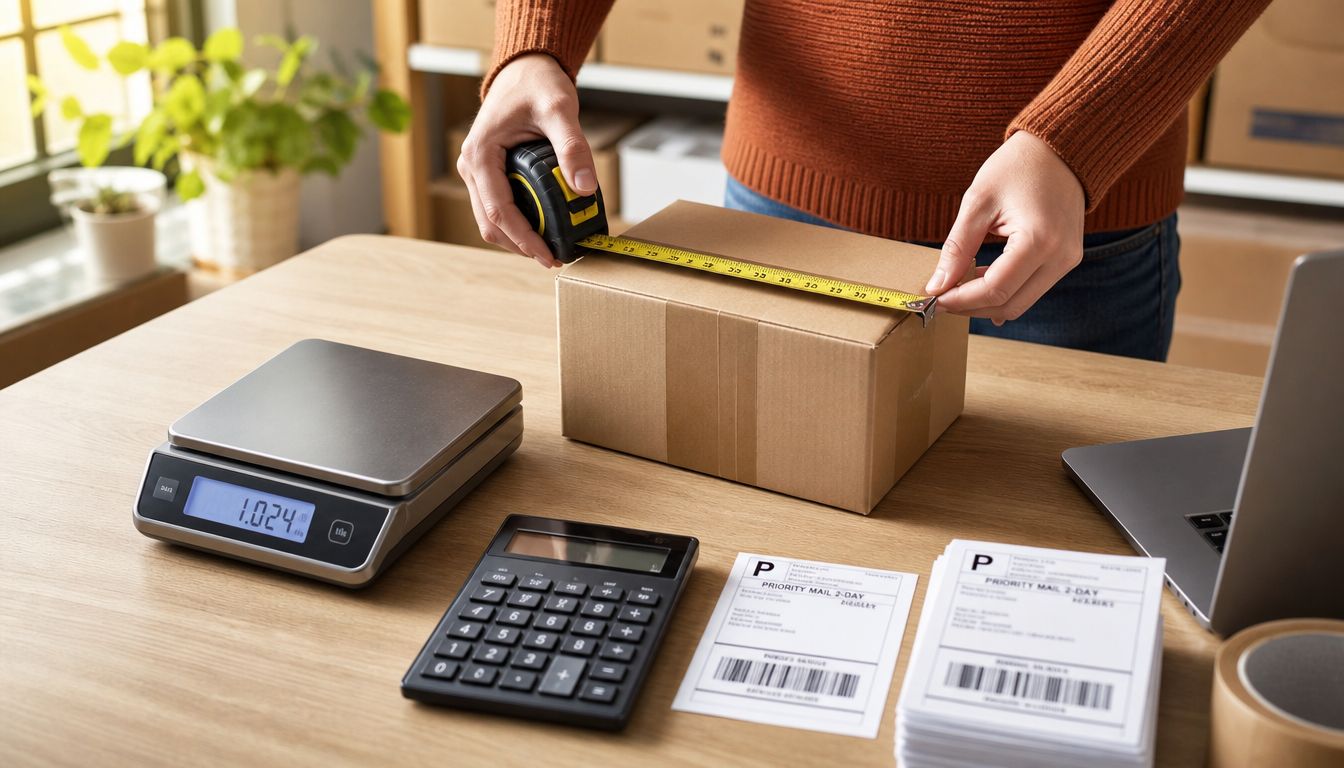

How to Estimate Shipping Costs: A Reseller’s Guide
You're standing in a thrift store holding an item that looks like easy money. The sold comps look fine. The brand is recognizable. The buy cost is low enough that your brain starts spending the profit before you even check out.
Then the item sells, you pack it, buy the label, and realize the box is bigger than you thought. The weight rounds up. The platform fee already took its bite. Tape, padding, and the mailer weren't free. What looked like a good flip turns into a skinny margin or a bad one.
That lesson hits almost every reseller early. Sale price isn't profit. Net profit starts at the sourcing stage, not when you list the item. If you want to get faster and more accurate with buy-or-pass decisions, you need to know how to estimate shipping costs before the item ever enters your cart.
Table of Contents
- Beyond the Sale Price Your First Profit Lesson
- The Two Weights That Define Your Shipping Cost
- Your Toolkit for Perfect Shipping Estimates
- From Carrier Calculators to Marketplace Profiles
- Uncovering the Hidden Costs of Shipping
- Putting It All Together for Maximum Profit
Beyond the Sale Price Your First Profit Lesson
A new reseller often learns shipping the hard way. They buy a pair of boots, a small appliance, or a bulky jacket because the sold listings look strong. The item moves quickly, which feels like validation. Then the shipping label lands higher than expected, and the margin disappears in one click.
That mistake usually starts with one bad habit. They treat shipping as something to figure out later.
The better habit is to treat shipping as part of the item's cost structure from the first moment you evaluate it. If you can't estimate the packed size, the billed weight, and the likely materials, you don't know the complete picture in front of you. You only know the gross sale price.
Practical rule: If an item's size makes you pause, don't buy first and calculate later. Calculate first and decide second.
I've seen resellers get fooled most often by items that look manageable in hand but become expensive once boxed. Shoes need room. Electronics need padding. Breakables need structure around them. Coats and plush items don't weigh much, but they take up space. That difference matters because carriers don't just care what a package weighs on a scale. They also care how much room it takes in the truck.
This is why disciplined resellers build profit math backward from the expected sale. They start with likely sale price, subtract platform fees, subtract estimated shipping, subtract packing materials, then compare what's left against their target margin. If that process feels slow, it only feels slow until you've been burned a few times.
A lot of sellers focus on pricing and ignore fulfillment math. That's backwards. A smarter approach is to combine both, especially when you're sourcing inventory in fast environments. If you already use structured pricing logic, the same mindset applies to shipping. This is the same reason a solid resale pricing process works better than instinct alone. It keeps emotion out of the decision.
The Two Weights That Define Your Shipping Cost
At a thrift store or liquidation shelf, this is the mistake that kills margin fast. An item looks light, the sale price looks strong, and the buy feels safe. Then the packed box gets billed at a higher weight than expected, and the profit you thought you had was never real.
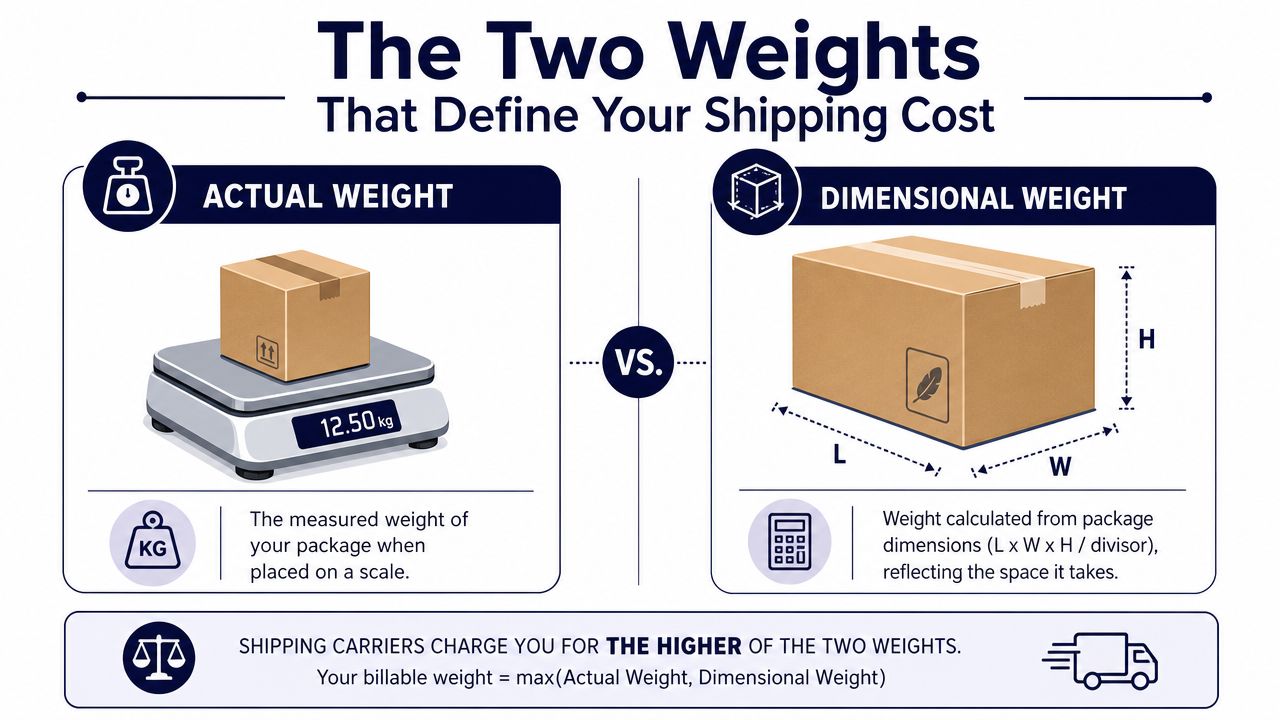
Carriers price shipments using two different weight rules. They charge by actual weight or dimensional weight, whichever is higher. If you only check the item on a scale and ignore the packed size, your estimate is incomplete at the exact moment you need it most: sourcing.
Why these two weights matter before you buy
Actual weight is the physical weight of the packed shipment.
Dimensional weight is the billed weight based on box size. Carriers use it because a large box takes up truck space even if it is light.
The standard DIM formula many sellers use is:
(Length × Width × Height) / 139
That formula is simple. The hard part is using it early enough.
A reseller who waits until listing to check DIM weight is already behind. The better move is to estimate the packed dimensions while sourcing, run a quick profit check, and decide whether the item still clears your margin target. That is the main advantage of tools that combine pricing and shipping logic in one workflow. If you use a reseller margin calculator app alongside fast pricing tools like ScanFlip AI, you can make buy-or-pass calls with shipping baked in instead of correcting bad buys later.
Bulky beats heavy more often than newer sellers expect
A hardcover book and a throw pillow prove the point.
The book usually has higher actual weight, but it ships in a compact box or mailer. The pillow weighs less, yet the package can be billed higher because the box is bigger. Carriers are pricing the space your package occupies, not just the pounds on the label.
That is why shoes, plush, coats, and some electronics cause problems. Their packed shape drives cost.
A simple DIM weight example
Say the packed item measures 10 × 7 × 4 inches.
| Measurement | Value |
|---|---|
| Length | 10 |
| Width | 7 |
| Height | 4 |
| Multiply | 280 |
| Divide by 139 | about 2.0 pounds |
If the package physically weighs 1 pound, the carrier may still bill it at roughly 2 pounds because dimensional weight is higher.
That difference looks small until you repeat it across dozens of orders.
What experienced resellers measure
Measure the shipment the carrier will see. Not the naked item in your hand.
That means the box or poly mailer, the padding, the extra room needed for protection, and any awkward shape that forces you into larger packaging. A one-inch mistake on each side can be enough to change the billed weight. For fragile or oddly shaped inventory, build that buffer into your sourcing math before you buy.
The rule is simple. If you cannot estimate both weights with reasonable confidence, you cannot estimate profit with reasonable confidence either.
Your Toolkit for Perfect Shipping Estimates
Most shipping mistakes don't come from complicated math. They come from using the wrong tools, or no tools at all.
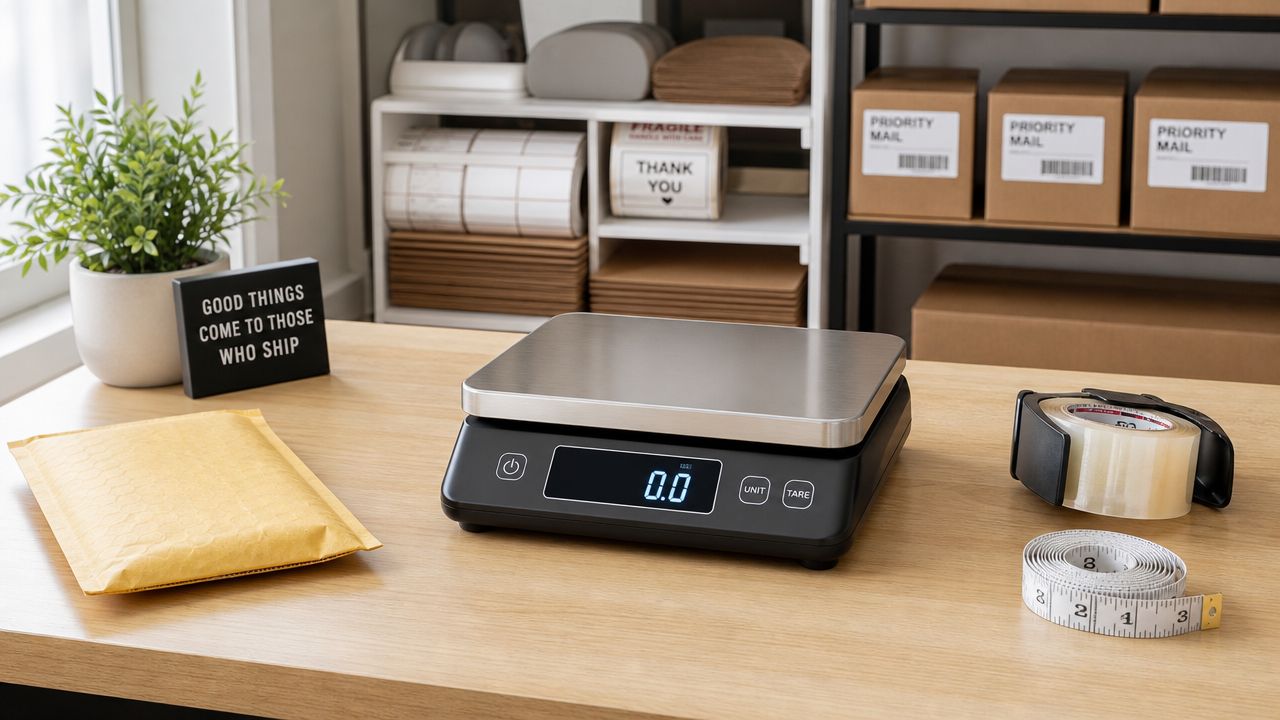
A reseller who wants clean numbers needs a shipping station, even if it's just one corner of a room. You're trying to remove guesswork before an item goes live.
The tools that actually matter
Here's the short list that earns its keep:
- A digital shipping scale: A proper shipping scale handles boxed items more reliably than a kitchen scale. You want stable readings, enough platform space, and a setup that works for awkward packages.
- A measuring tape: Not optional. Dimensional mistakes happen when sellers eyeball size or measure the item before packaging.
- A box assortment: Keep a small range of common boxes on hand. If every shipment starts with whatever random box is nearby, your estimates drift.
- Poly mailers in a few sizes: Apparel, soft goods, and some accessories don't need a box. Choosing the right mailer can lower the packed size and reduce waste.
- Void fill and protection materials: Bubble wrap, kraft paper, packing paper, or air pillows all change final dimensions. If you don't account for them, your estimate isn't real.
- Tape and label supplies: These seem minor until you realize they affect repeatability. Standard materials help you produce similar packed outcomes for similar items.
A lot of sellers use “close enough” methods. They hold the item, guess the final size, and use memory from a previous shipment. That works until it doesn't. The more categories you sell, the less reliable memory becomes.
Why test packing beats guessing
The cleanest estimate comes from a test pack. Put the item in the actual box or mailer you'd use. Add the protection it needs. Seal it if necessary. Then weigh and measure that finished package.
That process gives you something much more useful than theory. It gives you a repeatable shipping profile.
Field habit: If you sell in recurring categories, save your best packaging combinations. One proven setup for sneakers or small electronics can eliminate a lot of future guesswork.
This is also where a profit calculator becomes practical instead of abstract. Once you know your real packed specs, you can combine shipping with fees and buy cost to judge the flip properly. A simple reseller margin calculator helps turn those inputs into a fast yes-or-no decision.
Perfect estimates don't require a warehouse. They require consistency. The seller with a scale, tape, and standard packaging usually beats the seller with “good instincts.”
From Carrier Calculators to Marketplace Profiles
A reseller standing in a thrift store has a different problem than a reseller sitting at a desk. At the desk, you can afford to check rates one shipment at a time. While sourcing, speed matters. You need a shipping estimate that is good enough to protect margin before you buy, not after the item is listed.

Use carrier calculators for the baseline
Carrier calculators are still the right starting point for anything unusual. Odd dimensions, fragile items, oversized boxes, and awkward shapes can break your normal assumptions fast. In those cases, checking the carrier rate directly keeps the estimate tied to reality.
That matters most for one-off inventory. Framed art, bulky electronics, or anything that may trigger dimensional pricing deserves a manual check. A calculator forces you to price the shipment you will send, with the service level and package size it requires.
The trade-off is time. Repeating that process for every candidate item slows sourcing down, and slow sourcing leads to weaker buy decisions.
Build repeatable profiles for common items
The fix is to stop treating every item like a blank slate. Common categories usually settle into patterns. Running shoes often land in the same box range. Small kitchen goods tend to need similar protection. Foldable apparel behaves differently from hard goods, so it should have its own profile.
Marketplace shipping profiles help once you are listing, but the stronger move is to build those profiles early enough to use them while sourcing. If you know your standard packed specs for sneakers, plush, mugs, or game consoles, you can plug shipping into profit before you buy. That is where faster tools help. ScanFlip AI, for example, is useful because it lets you stack likely sale price, fees, and shipping assumptions into a buy-or-pass decision while the item is still in your hand.
According to Cleverence on shipping estimate accuracy, reliable operations track estimate-to-invoice variance and keep that gap tight. The same source also notes that high-volume sellers usually measure their highest-volume SKUs with more precision and use category-based proxies for the rest. That is the practical model for small resellers too. Dial in the categories you buy all the time. Do not waste the same level of effort on the item you may never see again.
Track estimate accuracy like an operator
Good profiles need maintenance. Carrier rates change. Your packaging habits change. A box that used to work for a category may start costing more if dimensional weight kicks in or if your packing method gets bulkier.
Review estimated shipping against the final label cost and look for patterns.
- Shoes keep missing high: Your saved box size may be too large, or your profile may ignore dimensional pricing.
- Electronics miss more than expected: Protective packaging is probably heavier or bulkier than the profile assumes.
- Soft goods drift upward: Your default mailer size may no longer match how you pack those items.
Those reviews pay off because they tighten your sourcing math. A bad profile does more than create a listing error. It can turn a buy into a loser before the item even gets photographed.
For marketplace-specific selling, fold those shipping assumptions into the full margin check instead of treating postage as a separate task. A Poshmark profit calculator for resale margins is useful for that reason. Fees, shipping, and buy cost only make sense when they are calculated together.
Uncovering the Hidden Costs of Shipping
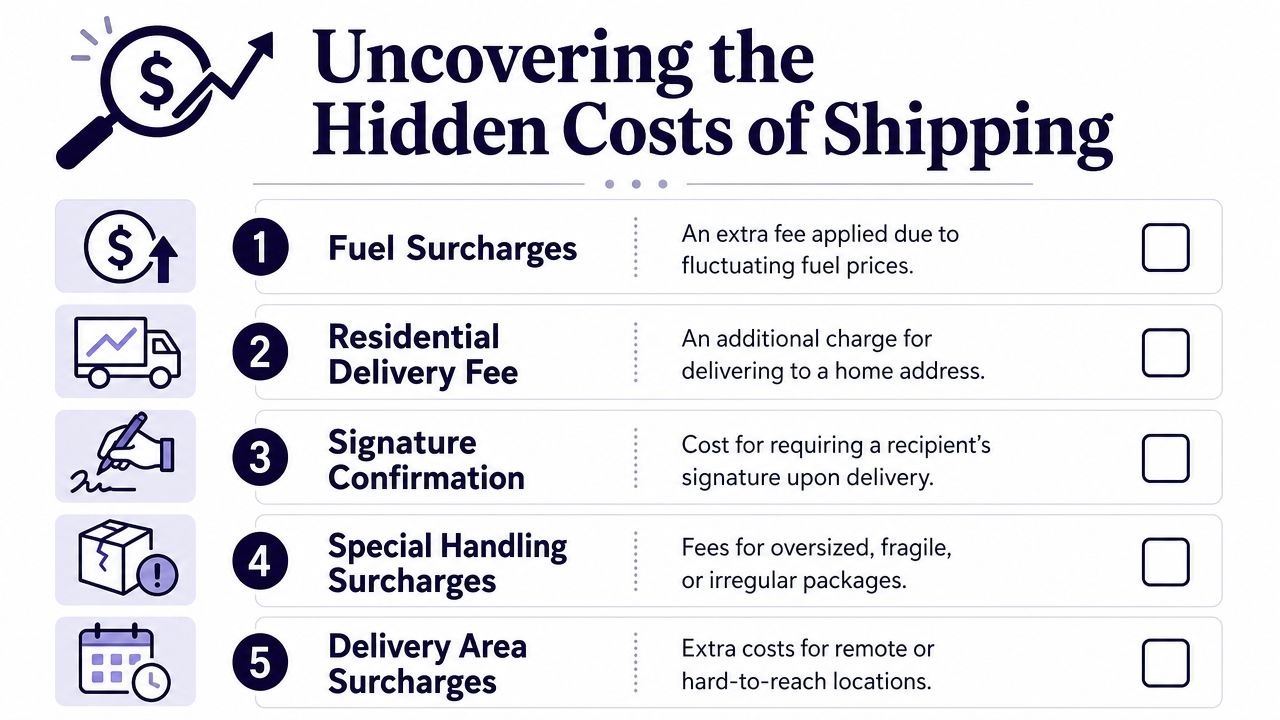
The label price gets all the attention because it's the biggest visible number at the moment you buy postage. But it isn't the whole shipping cost.
A reseller can estimate the label correctly and still miss the actual expense because the supporting materials and service add-ons never made it into the math.
The label price is only the start
Here's the checklist I'd use for every shipment that needs a true profit read:
- Outer packaging: Box, poly mailer, padded mailer, tube, or specialty packaging.
- Protection materials: Bubble wrap, kraft paper, packing paper, air pillows, corner protection.
- Closure supplies: Packing tape, fragile stickers, labels, sealing materials.
- Print materials: Label paper, printer ink, or thermal label stock.
- Labor friction: Not as a formal line item for every seller, but as a real drain on categories that take too long to pack safely.
Some sellers ignore these because each single item seems minor. That's the trap. Minor costs become routine costs, and routine costs belong in the estimate.
If you need special packaging to ship an item safely, that packaging is part of the item's cost basis, not an afterthought.
International shipments need more caution. The item may still be profitable, but the estimate gets less forgiving. Packed dimensions matter more, forms add complexity, and cross-border surcharges can run higher than domestic rates. If you're not confident in the final package profile, international shipping is one of the fastest ways to underprice your offer.
When extra services make sense
Not every shipment needs add-ons. Some do.
A few situations where I'd think harder about them:
| Situation | What to consider |
|---|---|
| Fragile item | Better protection, possibly special handling |
| Higher-value item | Insurance |
| Risky delivery location | Signature confirmation |
| Odd shape or oversized package | Surcharge exposure |
| Remote destination | Delivery-area fees |
The mistake isn't paying for protection when it's needed. The mistake is pretending those services don't exist while calculating profit.
This also matters at sourcing. A vintage stereo component, collectible glassware, or premium handbag may look like a good flip based on sold comps alone. But if the item requires stronger packaging, insurance, or extra handling, the margin is thinner than it first appears.
Putting It All Together for Maximum Profit
The cleanest shipping estimate comes from a repeatable workflow, not from memory.
At sourcing, your job isn't to know the exact final postage down to the last cent. Your job is to know the likely all-in shipping cost well enough to make a smart buy-or-pass call. That means combining package logic, rate logic, and materials logic in one decision.
The sourcing workflow that protects margin
Use this order every time:
- Estimate the packed form. Don't think about the naked item. Think about the item after boxing or bagging and protection.
- Assign the likely packaging. Box or poly mailer. Standard size if you have one.
- Estimate billed weight. Use the packed profile, not the product tag or manufacturer spec.
- Check the likely label cost. Use your preferred shipping tool or saved category profile.
- Add support costs. Packaging materials and any likely service add-ons.
- Run net profit. Sale price minus fees, minus shipping, minus buy cost.
That sequence matters because each step sharpens the next one. Skip the packed form and the rest gets fuzzy fast.
Good resellers don't just ask, “What does this sell for?” They ask, “What does this cost me to move?”
A practical profit check before you buy
Here's a simple worked example without pretending every number is universal.
You find a pair of men's leather boots. Sold comps suggest a workable resale price. Before buying, you ask a better set of questions. Will they go in a box or a poly mailer? Do they need stuffing or paper support? Will the final box size push the billed weight up? Are they sturdy enough for basic packing, or do they need more protection because the buyer will expect clean presentation?
Now your profit equation looks like this:
| Step | What you enter |
|---|---|
| Expected sale | Your realistic sold-comp estimate |
| Buy cost | What the store is charging |
| Marketplace fees | The platform's fee structure |
| Shipping label | Your estimated carrier cost |
| Packing materials | Box, paper, tape, label stock |
| Net profit | What remains after all deductions |
That's how to estimate shipping costs in the way that helps a reseller. Not as a late-stage listing chore. As a sourcing filter.
When you build that habit, your bad buys drop. Your pricing gets cleaner. Your cash turns faster because you stop bringing home inventory that only looked profitable before shipping entered the conversation.
If you want faster buy-or-pass decisions while sourcing, ScanFlip AI helps connect sold comps, marketplace fees, and shipping estimates into one net-profit view. That makes it easier to judge items in the aisle instead of waiting until listing time to find out whether the flip works.