
Thrift Store Pricing Guide: Tips for Resale Profits
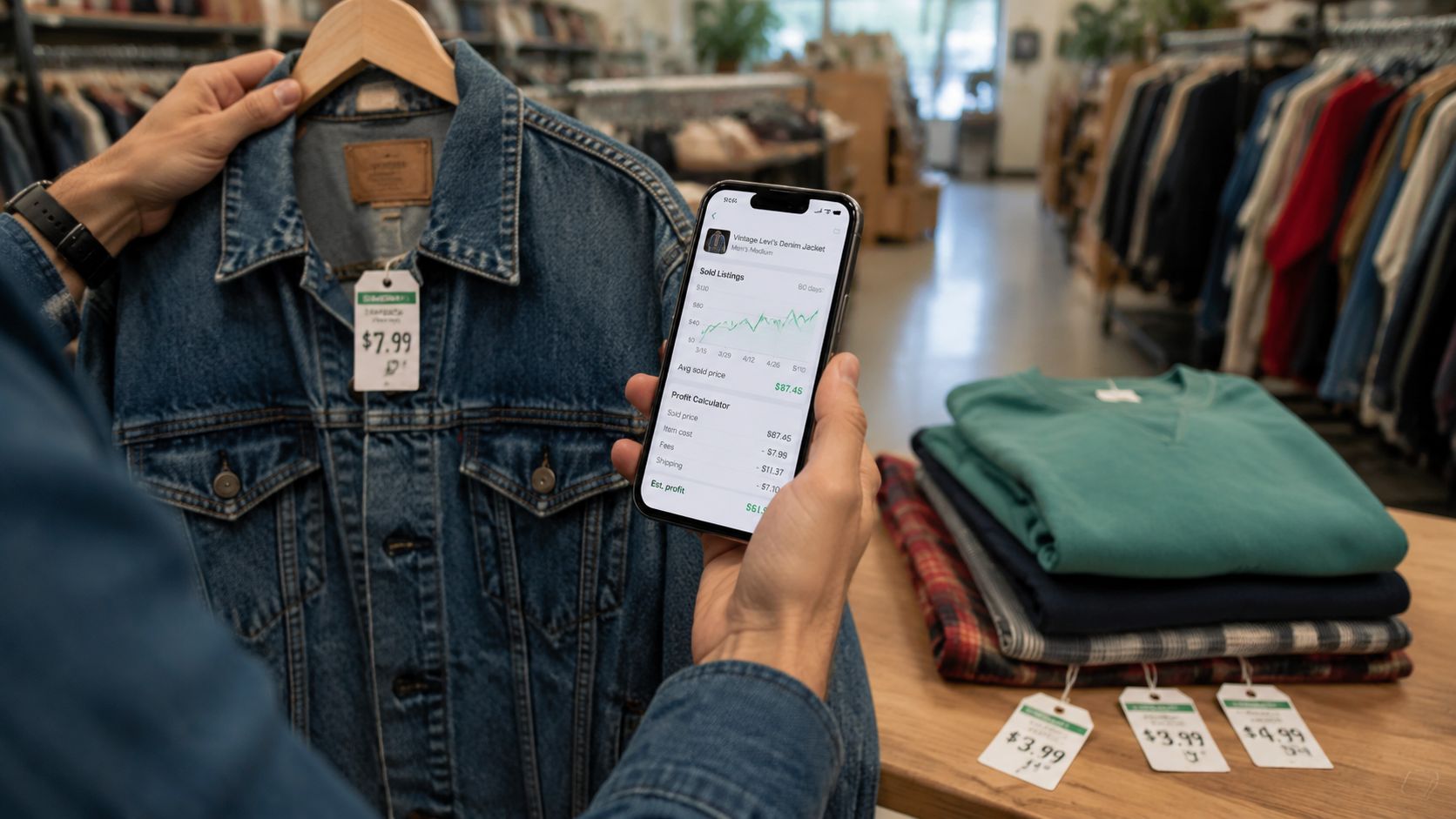
You're in the aisle with a cart half-full, one hand on a jacket, the other on your phone, and the clock is ticking. The tag looks cheap, the brand looks familiar, and your brain is already doing the fast flip math. That's where most resellers lose money, because the sticker price is only the first layer, and the true decision is whether the item still works after fees, shipping, and condition adjustments eat into the spread.
A solid thrift store pricing guide doesn't just tell you what an item might sell for. It gives you a way to decide, in seconds, whether that item is worth buying at all. The best pricing workflow starts with sold comps, then strips out marketplace costs, then adjusts for condition and sell-through speed so you're judging net profit, not fantasy revenue.
Table of Contents
- The In-Aisle Pricing Problem Every Reseller Faces
- Foundational Pricing Rules for Thrift Store Finds
- Finding and Interpreting Sold Comps Across Marketplaces
- Calculating Net Profit After Platform Fees and Shipping
- Category-Specific Pricing Strategies for Different Item Types
- Using Mobile Scan Tools to Accelerate Sourcing Decisions
- Your Quick Decision Workflow for Buy or Pass Verdicts
The In-Aisle Pricing Problem Every Reseller Faces
A reseller picks up a vintage jacket, sees a familiar logo, and has about ten seconds before someone else reaches the rack. The active listings on their phone look encouraging, but every listing is asking price, not sale price. If they buy on instinct, they can end up with a shelf-sitter that looked strong in the aisle and weak in the spreadsheet.
Why the aisle punishes slow thinking
The problem isn't that thrift items are hard to value, it's that the decision window is tiny. You're trying to reconcile retail history, condition, demand, and resale costs while people are moving around you and the cart is still getting heavier. That's why gut feel and active listings cause so many bad buys.
A better thrift store pricing guide treats sourcing like a quick valuation process, not a treasure hunt. You're not asking, “What could this sell for someday?” You're asking, “What would I clear after fees, shipping, and time if I listed this today?”
The simple mental shift that saves money
That shift changes everything in the aisle. An item can look profitable at a glance and still fail once you price it for the platform you use. A heavy item with strong demand might be a pass if shipping wipes out the margin, while a smaller item with a modest sale price can be a solid buy because it turns fast and costs little to move.
Practical rule: if you can't estimate the exit price and the take-home in under a minute, you're not ready to buy yet.
The workflow that solves this is straightforward. Identify the item, check sold comps, adjust for condition, subtract fees and shipping, then compare the result to your minimum acceptable profit. That's the difference between a repeatable business and a cart full of lessons.
Foundational Pricing Rules for Thrift Store Finds
Thrift pricing starts with a baseline that's more structured than is commonly assumed. A common rule in thrift retail is to price donated or consigned items at roughly 25% to 40% of original retail value, which keeps items affordable while still covering storage, staff time, and operating costs, as outlined in thrift-store pricing guidance. For resellers, the useful part is not the thrift store's markup, it's the discipline behind it.
What the baseline really tells you
That same guidance points to a stricter buying standard for resellers, where the item should usually resell for at least 3x what you paid because the multiple is meant to absorb marketplace fees, shipping, and your time. That's a buy-side rule, not a retail fantasy. It's designed to keep you from mistaking gross sale price for real profit.
Condition changes the band in a meaningful way. “Like new” items often command a 30% to 50% premium, while “acceptable” condition can require pricing 20% to 40% below average as described in thrift pricing guidance. A jacket with clean seams and no fading belongs in a different lane than the same jacket with pilling, wear, and missing hardware.
How the rules interact in practice
The safest way to think about it is layered. Start with original retail, check what the market has paid, then move the price up or down based on condition and completeness. If the item is a complete set, accessories or packaging can add value, but only when buyers care about those extras.
Don't price from a feeling. Price from a band, then let condition decide where inside that band the item belongs.
Once you internalize that thrift pricing is a structured conversion from retail value to sellable value, the tag stops feeling arbitrary. It becomes a starting point for analysis instead of a guessing game.
Finding and Interpreting Sold Comps Across Marketplaces
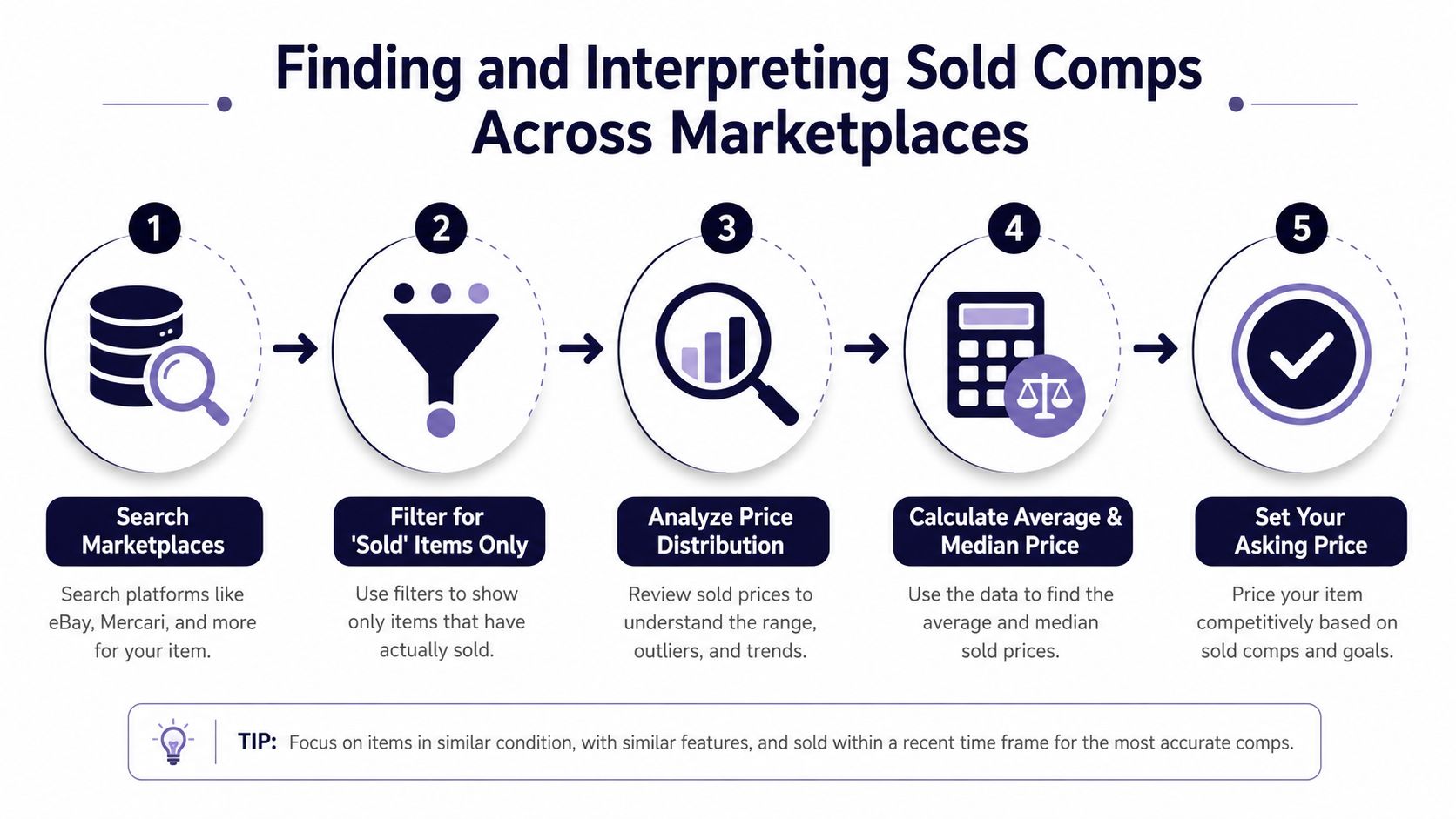
Active listings tell you what sellers hope to get. Sold comps tell you what buyers paid, and that's the number that matters. eBay's sold filter is the cleanest starting point because it shows realized market clearing prices, not wishful thinking.
How to read the market instead of the listing count
If you want a practical method, start with recent sales, then ignore outliers until you understand why they're different. An unusually low sale might have been missing accessories, while a high sale may have been new old stock, sealed, or better photographed. The point is to compare like with like, not average everything into mush.
Use the last handful of comparable sales, then center your view on the middle of the range instead of the highest number you can find. The source of truth here is the sold listing, not the active listing, which is why a pricing workflow built on comps beats one built on seller hopes. A useful walkthrough for this process is laid out in how to find sold prices on eBay.
What to adjust before you trust the number
Condition is the first adjustment, and it's the one that trips up most new resellers. Like-new condition can justify a 30% to 50% premium, while acceptable condition can push the expected price 20% to 40% below average per resale pricing guidance. Completeness matters too, since a complete set can command more than a partial one when the accessory, box, or missing piece changes buyer confidence.
Seasonality matters in a quieter way. A category that sold well in one month may slow later, and a single hot sale doesn't prove current demand. Look for a small cluster of recent sales, then ask whether the item still has a buyer base that matches your listing platform.
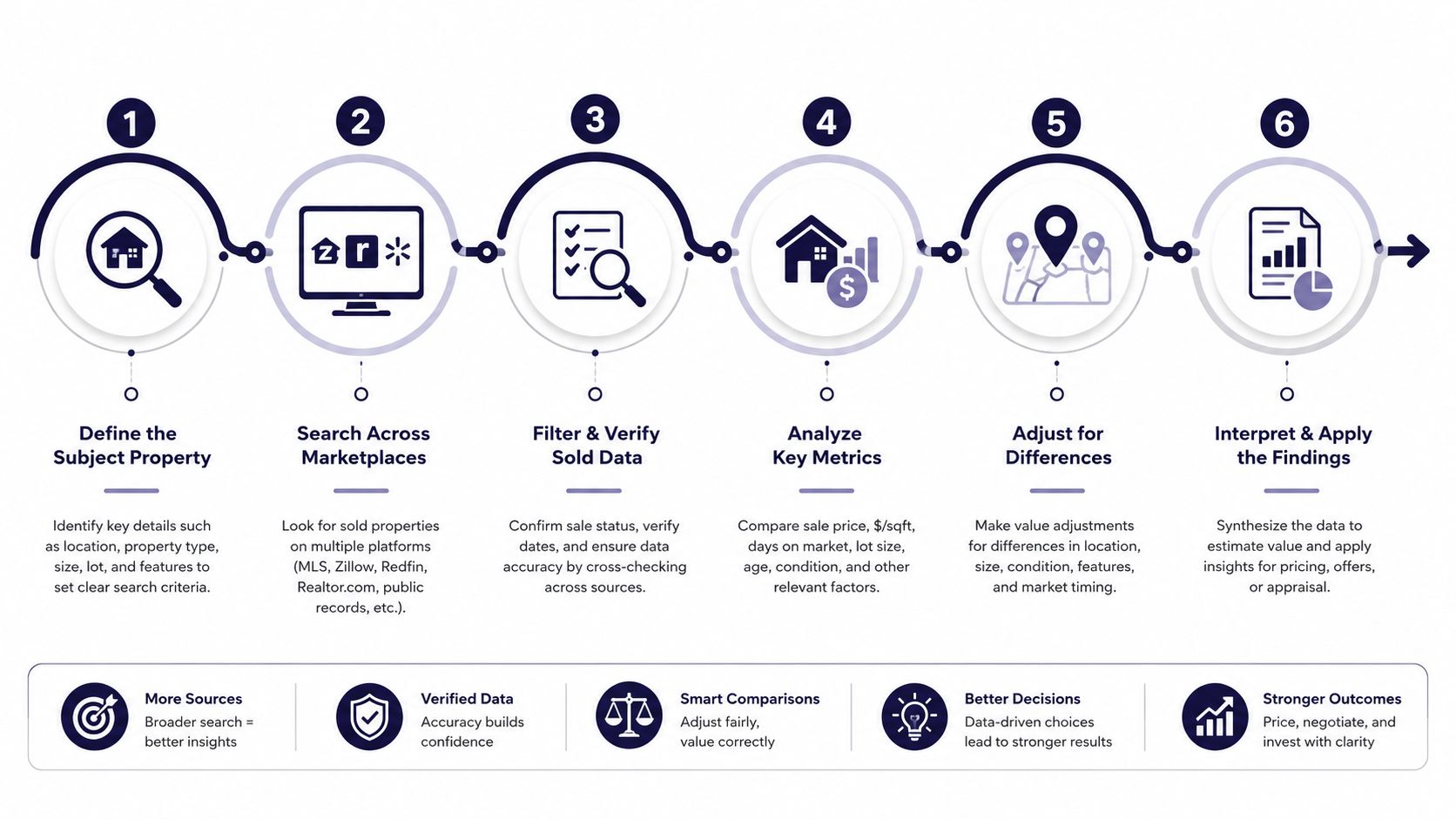
The median of recent comps is usually more useful than the highest comp in the set, because one clean sale can distort your sense of what's normal.
Once you train yourself to read sold comps as a range, not a single magic number, you stop overpaying for mediocre inventory. That's the edge in the aisle.
Calculating Net Profit After Platform Fees and Shipping
A tag price can look fantastic until the marketplace takes its cut and the box gets weighed. That's where a lot of “profitable” thrift finds turn into break-even sales. The buying question is never just “what can I sell it for,” it's “what lands in my pocket after the platform, shipping, and time are done with it?”
Why gross sale price lies to you
The hidden economics are simple. Marketplace fees, shipping, and the time spent listing, messaging, and packing all reduce what you keep. Even the VERIFIED DATA warns that the same thrift item can be profitable on one platform and unprofitable on another once those costs are applied, which is exactly why buy decisions need a net view.
The easiest mental model is to start with sold price, subtract marketplace fees, subtract shipping, and then compare what's left against your source cost. If the remainder doesn't leave enough room for your margin, the item is a pass even if the sale price looks strong.
Here's a practical way to think about a sale around $30. If shipping costs $8, you're already down to $22 before fees, packaging, or any other expense. Once platform fees hit, the amount you keep can shrink fast, which is why resellers are often told to avoid buying unless the expected resale can reach 3x the purchase price as resale pricing guidance notes.
Platform differences change the buy decision
Different platforms take different bites, and that changes what you can safely pay. The biggest mistake is using one platform's economics to justify buying for another. A source that works on a fee-light channel can fail on a higher-cost one.
| Platform | Fee Structure | Total Fees | Net After $8 Shipping | Max Buy Price (3x Rule) |
|---|---|---|---|---|
| eBay | Final value fee plus order fee | N/A, platform-specific fee structure varies | N/A | N/A |
| Poshmark | Flat commission | N/A | N/A | N/A |
| Mercari | Selling fee | N/A | N/A | N/A |
The table keeps one point front and center, platform choice changes the math. That's why a thrift store pricing guide for resellers has to include the exit channel, not just the sticker price.
If you want a more detailed breakdown of the mechanics, the clearest companion read is how to calculate net profit. The goal is the same every time, know your take-home before you walk to the register.
Category-Specific Pricing Strategies for Different Item Types
Not every category should be priced the same way. Clothing moves differently from kitchenware, electronics demand more testing, and collectibles need completeness checks that can change the number fast. Modern thrift-store pricing is increasingly category-specific and tied to turnover speed, not just item type as shown in 2025 pricing guidance.
Clothing moves by time, not just brand
Fast fashion is often priced to move within 7 days at about 50% to 60% below retail, while mid-tier brands are targeted for 10 to 15 day sell-through at 30% to 50% below retail per a 2025 thrift-store pricing guide. That logic matters because clothing can stale quickly if the size, season, or style is wrong for your audience.
For apparel, the best pricing question is whether the item is liquid enough to justify the time it'll take to photograph, list, and ship. A clean Nike fleece can be worth more than a no-name jacket, but only if the size, condition, and demand line up. If it's a fringe size or a style that has already cooled, a lower starting price can be smarter than holding out.
Kitchenware, collectibles, and markdown cycles
Category bands can be narrow and very practical. One valuation guide gives kitchenware a working band of $2 to $8 depending on brand and condition, then recommends markdown cycles like 25% off after two weeks and 50% off after four weeks to keep old stock from clogging the floor as noted in thrift pricing strategy guidance. That's not glamorous, but it's how stores keep cash moving.
Collectibles are different because completeness and authenticity drive the result. Electronics need function checks, collectibles need condition verification, and furniture has to account for pickup logistics. A vintage Pyrex bowl with the right pattern can be worth the research time, while a generic mug might deserve a quick pass.
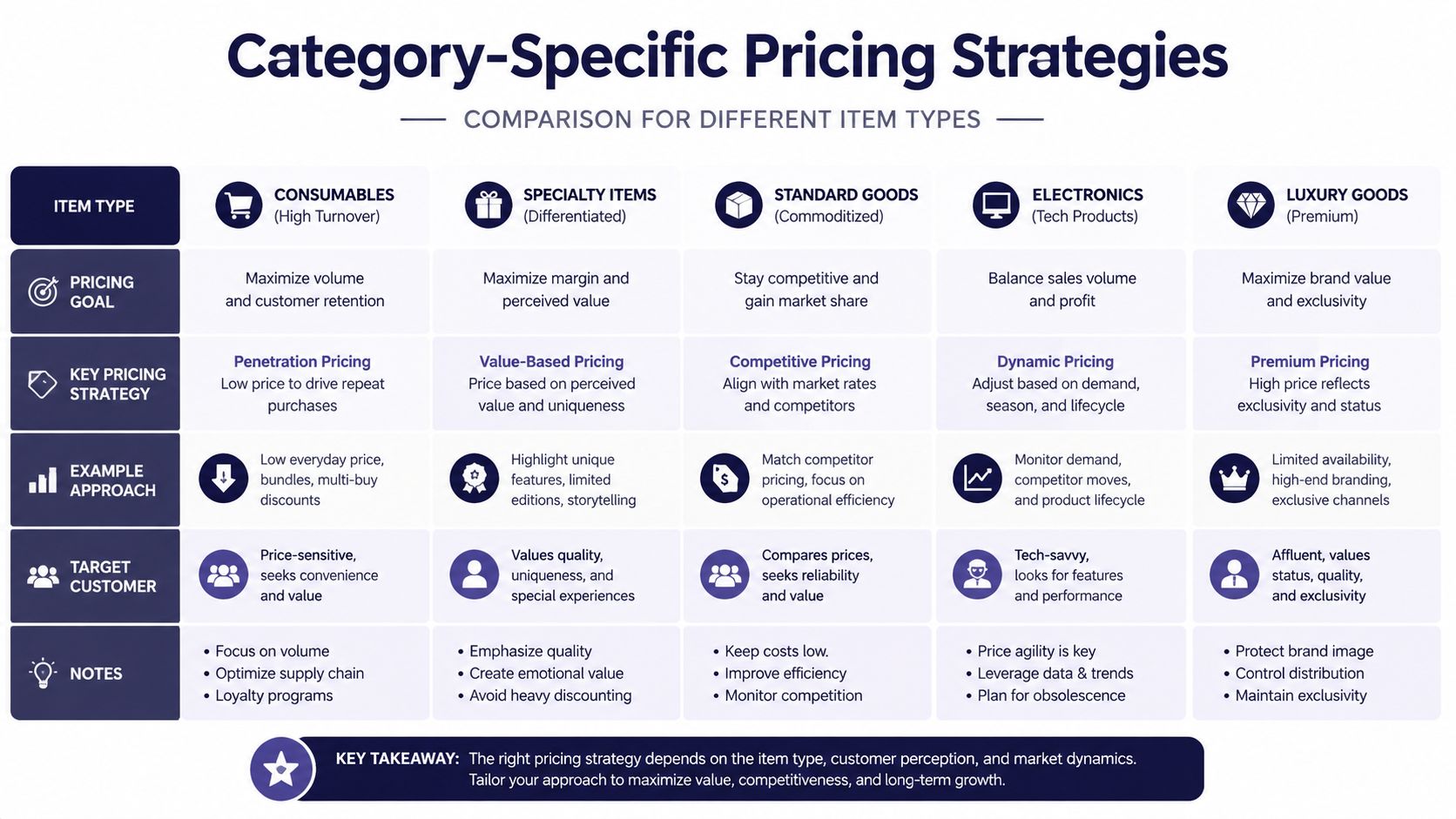
Price by category behavior, not by habit. The item type tells you how fast the cash should come back.
Once you stop forcing every item into one pricing system, the aisle gets much easier to read. That's where category expertise turns into faster buy decisions.
Using Mobile Scan Tools to Accelerate Sourcing Decisions
The biggest advantage at sourcing time isn't knowing more, it's deciding faster without guessing. Mobile scan tools shrink the gap between “What is this?” and “Should I buy it?” by combining item identification, sold comps, and net-profit math in one pass. For a reseller standing in a thrift aisle, that speed is the difference between confidence and hesitation.
Why scan-to-decision beats app hopping
Traditional lookup usually means jumping between marketplace apps, typing descriptions, filtering sold listings, and then mentally adjusting for fees and shipping. That process works, but it burns time. A scan-based workflow is stronger because it handles untagged items, vintage pieces, and products without barcodes, which is exactly where thrift-store sourcing gets messy.
That's also where a tool built for sourcing differs from a tool built for listing. The useful features are the ones that help you answer buy or pass in the moment, not later at your desk. The right interface shows average price, recent sales, and expected net, then lets you set a threshold that matches your business model.
The practical advantage is less toggling and fewer missed finds. If you're scanning a jacket, pair of shoes, or small electronic and the tool can pull cross-platform sold comparables from places like eBay, Poshmark, Mercari, Depop, Amazon, and Whatnot, you're making a better decision with less friction. That's the core appeal of the best scanning app for retail arbitrage.
What a useful scan history actually gives you
Saved scans do more than store old research. They let you review what you passed on, what you overpaid for, and what categories you keep misreading. Over time, that history becomes a sourcing memory bank.
A good scan workflow also keeps context attached to the item. Photos, location, timestamps, and comp data help you spot patterns in your own sourcing, which matters more than people think. You're not just checking price, you're building a repeatable decision archive.
The point of scanning isn't to replace judgment. It's to make good judgment fast enough to use in the aisle.
Once the tool fits the speed of the environment, the whole pricing process gets lighter. The win isn't automation for its own sake, it's fewer bad buys.
Your Quick Decision Workflow for Buy or Pass Verdicts
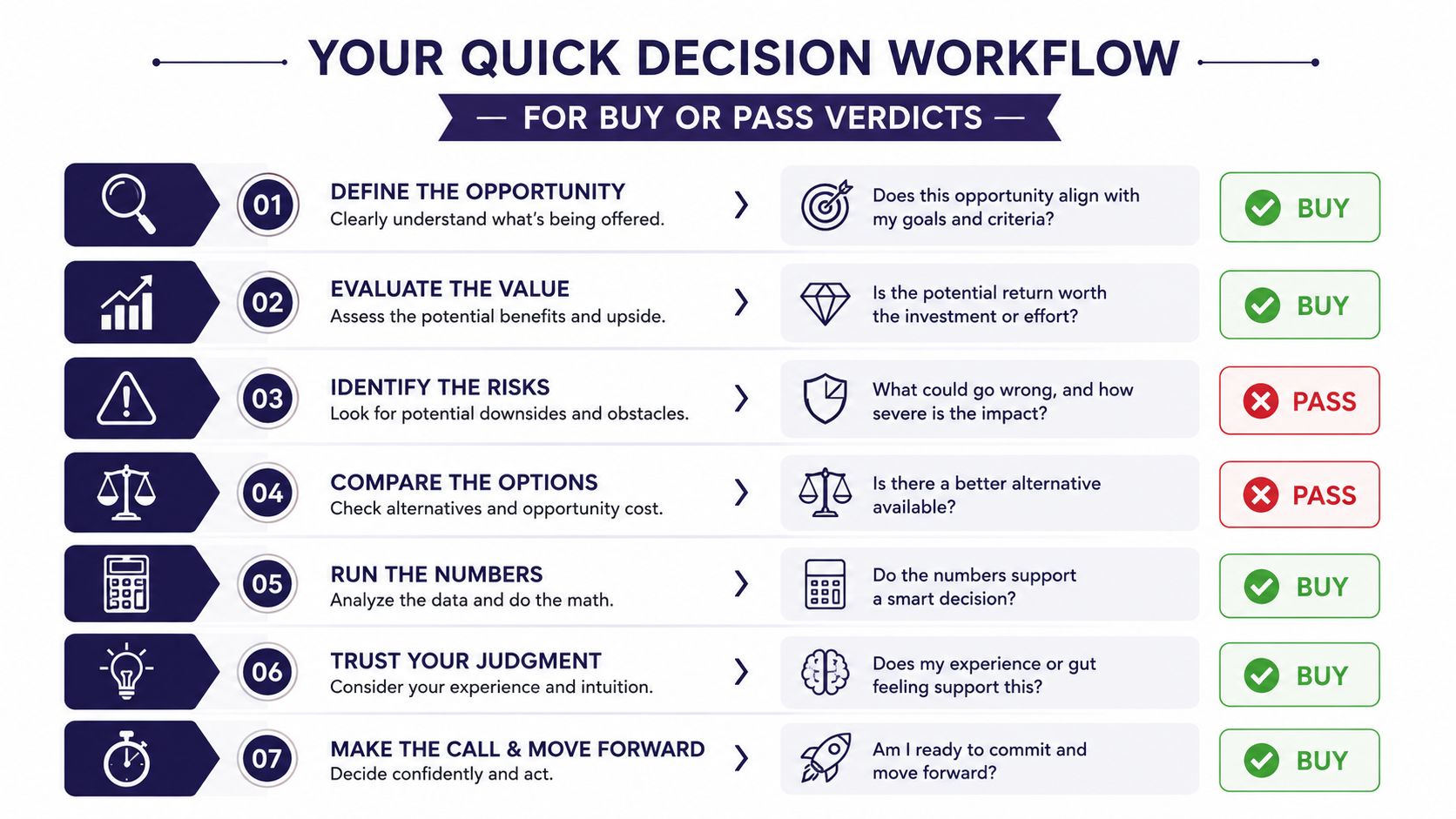
A strong buy/pass system keeps emotions out of sourcing. The point is to move from first glance to verdict with enough structure that you're not improvising every time. A thrift store pricing guide only becomes useful when it turns into a routine you can repeat under pressure.
The decision tree that works in real stores
Start with condition. If the item is heavily damaged, missing key pieces, or obviously incomplete, the best move is usually to keep walking unless the price is absurdly low and you've already validated the market.
Then check sold comps, not active listings. Use the most relevant recent sales, adjust for condition, and estimate your net after fees and shipping. If the item doesn't clear your minimum profit after those deductions, pass.
A simple buy/pass workflow usually looks like this.
- Assess condition fast. Look for stains, cracks, wear, missing parts, and anything that changes buyer confidence.
- Identify the item. Use brand, model, style, or visual cues to narrow the search.
- Check sold comps. Focus on realized sales, not asking prices.
- Estimate net. Subtract fees, shipping, and source cost.
- Compare to your threshold. Buy only if the margin fits your model.
- Decide immediately. Don't keep researching while someone else stands at the rack.
How to handle borderline items
Borderline items need a rule before you get emotional about them. If you're a high-volume seller, you may accept thinner margins because fast turnover matters more. If you sell slower, higher-ticket items, you can tolerate longer holds, but only when the net justifies it.
The traps are predictable. People overestimate condition, forget shipping on bulky items, and rationalize buys because the brand feels good in hand. A quick, consistent rule beats that every time.
If you want a sourcing routine that turns aisle guesses into faster, cleaner decisions, use ScanFlip AI to identify items, pull sold comps, and see expected net profit before you buy. It's built for the exact buy-or-pass moment this guide is about, so you can shop faster and stop paying for avoidable mistakes.