

Where to Sell Used Books Online in 2026: 10 Sites Compared
You're at a library book sale with a box of 40 paperbacks, a $1 hardcover that looks promising, and a $6 trade paperback with a $12 sold comp. The paperback looks sellable. That does not make it worth buying.
Most used books fail on math before they fail on demand. Take the $12 sale, subtract $6 cost of goods and $4.50 shipping, and you have $1.50 left before marketplace fees, packaging, or your time. A $40 textbook can absorb those costs. A signed first edition can justify slower listing work. A reading copy usually cannot.
Match the ISBN and check sold comps first. Pick the channel second.
A book can have buyers and still be a bad flip.
Run the better example too: buy at $6, sell at $42, pay $5.60 in fees and $4.50 shipping, and $25.90 remains before packaging, returns, and taxes.
ScanFlip AI is built for that shelf-side decision: barcode scan, AI photo scan without a barcode, or text search can surface real-time sold comps from eBay, Amazon, Poshmark, Mercari, Depop, and Whatnot, with estimated net profit and a red/green flip-or-pass verdict. AbeBooks, Alibris, and buyback offers still need a manual check.
Table of Contents
- 1. Amazon
- 2. eBay
- 3. AbeBooks
- 4. Alibris
- 5. Biblio
- 6. BooksRun Marketplace
- 7. BooksRun Buyback
- 8. World of Books Sell Your Books
- 9. TextbookRush
- 10. Powell's Books Online Buyback
- Model, Fees, and Best Fit for Each Book Seller
- Pick One Channel per Book and Test Before You Scale
1. Amazon
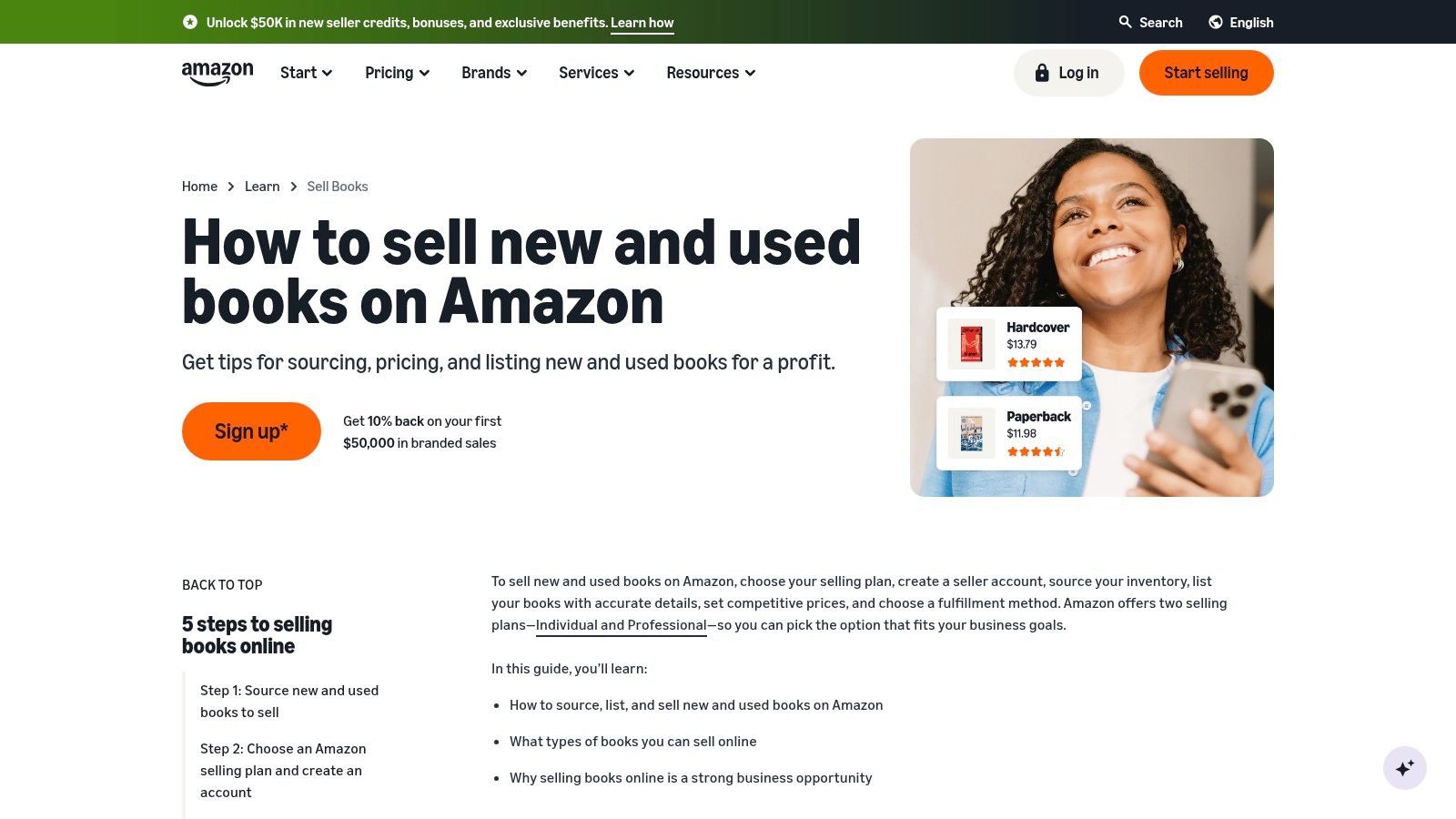
Amazon is my first check for ISBN-matched textbooks, professional references, and repeatable book inventory. A buyer searching an exact edition wants the right copy, graded accurately, at a competitive delivered price. That makes Amazon strong for a $40 textbook with clean demand and weak for a $6 paperback whose margin can be eaten by postage, packaging, and listing time.
The Amazon book-selling guide lists an Individual plan at $0.99 per item sold and a Professional plan at $39.99 per month, before other applicable fees. Treat either charge as the entry fee; keep looking for the rest.
Where the margin disappears
Seller fulfillment keeps packing and postage under your control, which is where cheap books usually fail. FBA is available for eligible inventory, but fulfillment and storage need their own calculation; a warehouse does not turn a bad buy into a good one.
- Best fit: exact ISBN matches with established demand and enough spread after every cost.
- Main friction: approval restrictions, edition mismatches, condition disputes, and fulfillment expenses.
- Pass signal: the deal only works if you ignore shipping or price like the cleanest copy.
Check restrictions at the cart. A strong comp is useless if your account cannot offer that title, and a signed first edition needs proof photos rather than an ISBN-only listing. For account setup and Seller Central context, a seller's guide to MCP connections stays background reading for terminology, while book-by-book demand still has to come from comps.
Use the retail arbitrage books guide to tighten the sourcing calculation before you commit listing time.
2. eBay
A signed hardcover with a torn jacket needs photographs, not just a barcode match. eBay is the strongest general-purpose option here for showing buyers the actual copy, including the signature, copyright page, binding, and flaws.
It also gives you room to sell coherent bundles. A complete reading sequence makes more sense than an unrelated pile assembled just to escape the death pile.
Use sold evidence, not optimistic pricing
A Hostinger book-selling guide includes an example in which a $40 book with $6 shipping incurs about $7.44 in marketplace fees, before packaging, acquisition cost, and labor. That's why buyer-paid shipping isn't money you can automatically treat as untouched postage reimbursement.
Use eBay sold listings search to separate comparable sales from different editions, signed copies, and bundled results. Assess sell-through rate alongside sold prices; a valuable title with thin demand needs patience and storage.
Auction rule: Use bidding when there's evidence of competing buyers, not because you don't know the book's value.
Fixed-price listings give you more control when demand is narrow. Auctions can disappoint when the right collector isn't watching.
You're responsible for packing and dispatch, too. The Sendaparcel integration for eBay sellers is relevant to shipping workflow, but no shipping integration can rescue an overpriced acquisition.
3. AbeBooks
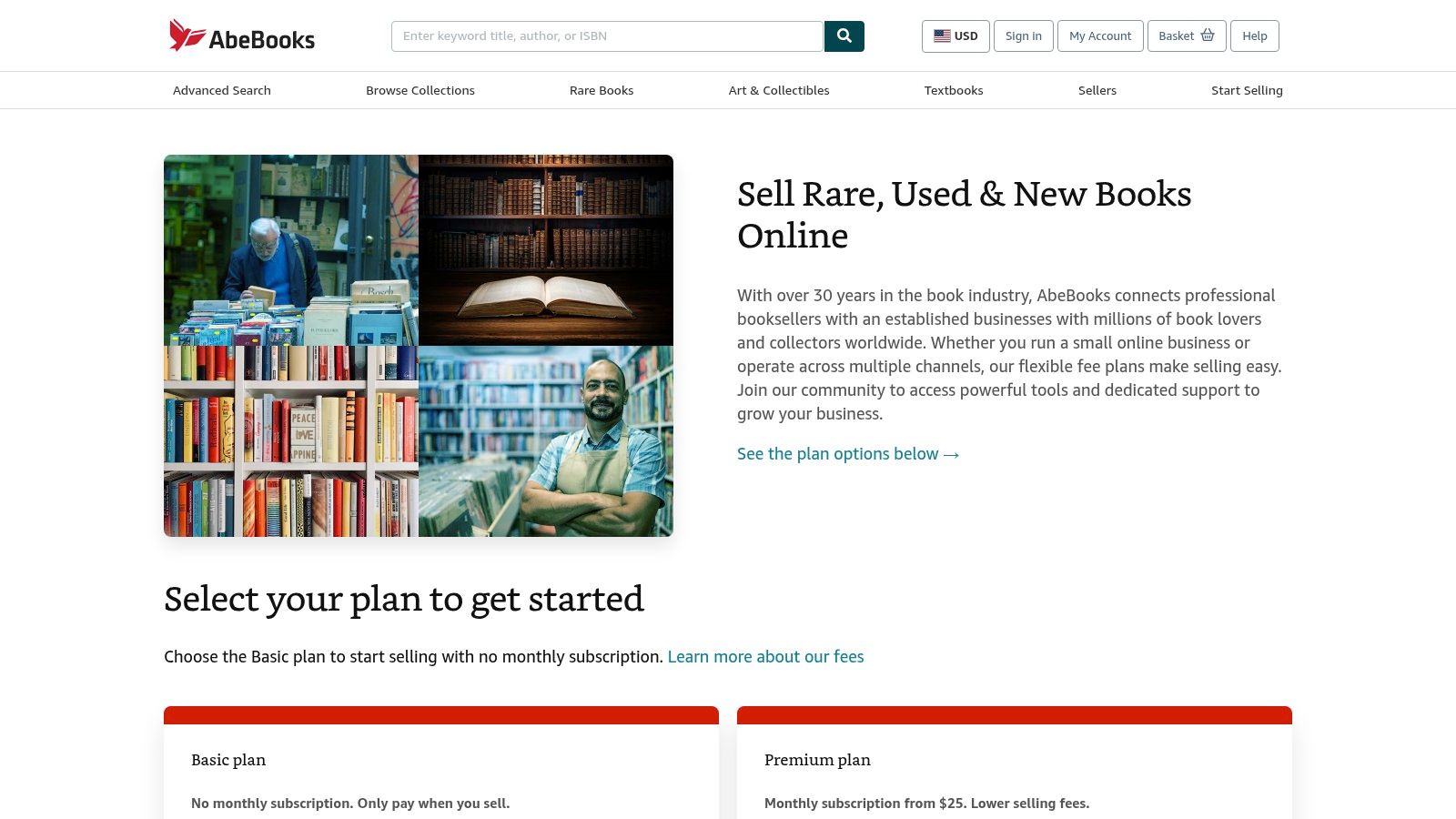
Pull the scarce academic hardcover out of the paperback box before considering bulk disposal. AbeBooks deserves a manual check for collectible, out-of-print, and specialist books, especially when bibliographic details explain the value.
The AbeBooks seller page describes a no-subscription option charging $1 per item plus a 15% commission on the first $500, with 10% on the amount above that. Under that structure, a $40 sale leaves $33 before shipping and acquisition cost.
Bibliographic detail is part of the work
A title match isn't enough for collectible inventory. Record the publisher, publication year, printing, binding, jacket status, inscriptions, annotations, and any missing material.
- Worth testing: Scarce editions, scholarly titles, and books collectors distinguish by printing or condition.
- Usually poor use of time: Common reading copies with little room after fixed charges and postage.
- Operational requirement: Keep availability accurate and describe the copy conservatively.
A signed first edition needs more than “good condition” in the description. Photograph the signature and edition evidence, and distinguish an author inscription from a previous owner's name.
I'd rather spend the listing time documenting a scarce book than building specialist listings for ordinary paperbacks. A specialist audience makes precise descriptions useful; it doesn't make common stock scarce. Also remember that competing copies show availability, not proof of completed sales.
4. Alibris
Alibris is an additional bookselling channel, not my default destination for a casual thrift haul. Its book-and-media focus makes more sense when you already maintain organized stock and can handle ongoing fulfillment.
The service offers Basic and Gold seller programs, pricing tools, and inventory tools. Seller ratings reflect fulfillment and customer feedback, so opening an account means taking on another service obligation, not merely another place to upload titles.
The setup needs a reason
Say an estate sale turns up an organized collection of specialist history books. After checking edition-specific sold comps, Alibris may deserve a controlled test alongside other book-focused venues.
That's different from opening an account to sell an ordinary paperback. Setup and selling costs can consume the small amount you were trying to earn, and payment timing depends on location and payment method.
- Useful feature: Pricing tools help inspect competing marketplace offers.
- Important limit: Competing offers aren't sold comps and don't establish STR.
- Practical trade-off: Another specialist audience comes with another inventory feed to keep accurate.
Before committing stock, examine the current seller program terms and work through an actual order's expected deductions. Don't assume the smaller-seller program is automatically the cheapest choice for your mix.
My recommendation is to test Alibris after your core process works. If you're still losing books between storage boxes or forgetting to remove sold stock, adding another marketplace creates more opportunities for cancellations.
5. Biblio
Biblio belongs on the shortlist when the book needs a bookseller's description. Used, rare, and out-of-print stock fits its independent-bookseller focus. A $6 paperback from a library sale does not.
A garage-sale box of local history, privately printed material, or unusual editions warrants careful identification before you route it anywhere. With that inventory, provenance, completeness, binding, and condition matter more than whether the cover has a scannable barcode.
Choose the billing structure around your stock
Biblio gives sellers a choice between billing arrangements, and the decision comes down to how much stock you move. A plan carrying recurring monthly costs only makes sense when enough orders flow through the account to spread that charge across sales. With a small, slow catalog, the monthly amount keeps accruing while nothing sells. With steady turnover, what you pay per order stops being the deciding factor.
One thing is already handled either way: Biblio processes payments through its own checkout, so you are not maintaining a separate payment arrangement.
Match the option to the inventory you can realistically maintain, not the collection you hope to acquire eventually.
Better buyer fit doesn't remove the cost of waiting for that buyer.
Keep photographs and descriptions tied to the actual copy. Note detached maps, missing plates, library markings, repairs, and jacket damage before a buyer has to ask.
You gain a book-focused setting but keep the fulfillment work and holding risk. I'd test Biblio with properly researched specialist stock, and skip it entirely for books that already failed to move elsewhere.
If you can't explain why your copy differs from the ordinary edition, finish the identification work before creating the listing.
6. BooksRun Marketplace
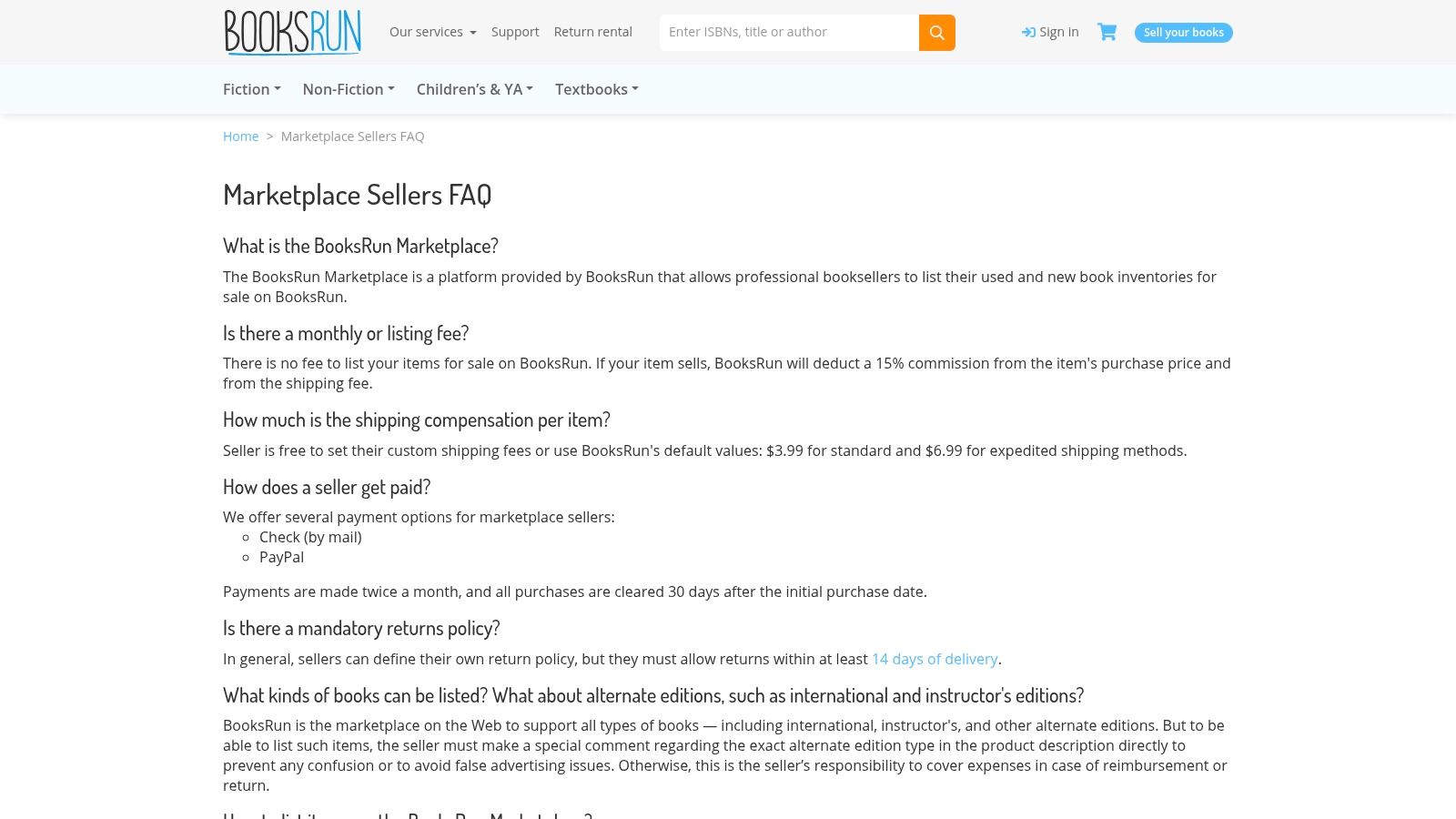
BooksRun Marketplace and BooksRun Buyback are different selling decisions. In the marketplace, professional sellers set prices for new and used inventory and fulfill the resulting orders themselves.
The BooksRun marketplace seller FAQ states that there's no listing fee, but a 15% commission applies to both the purchase price and shipping compensation. Free listing isn't free selling.
Watch the shipping deduction
Charging the buyer for delivery doesn't mean you keep that entire amount for postage. Enter the full transaction into your profit calculation, then deduct commission, actual shipping, packaging, and cost of goods.
BooksRun lets sellers set shipping charges or use its defaults. Weigh the packed book rather than assuming the default matches a heavy textbook or oversized art title.
- Good reason to test: You have organized book inventory and want another book-focused marketplace.
- Work you retain: Order handling, packing, tracking, and condition accuracy.
- Cash-flow concern: Payment follows a schedule rather than immediate release after every order.
The same FAQ says marketplace purchases clear 30 days after the initial purchase date, with payments available by check or PayPal. That timing matters if you rely on proceeds to fund the next sourcing trip.
I'd treat this as a channel experiment, not an automatic alternative to Amazon. Compare actual completed-order net and payment timing before moving substantial inventory into the workflow.
7. BooksRun Buyback
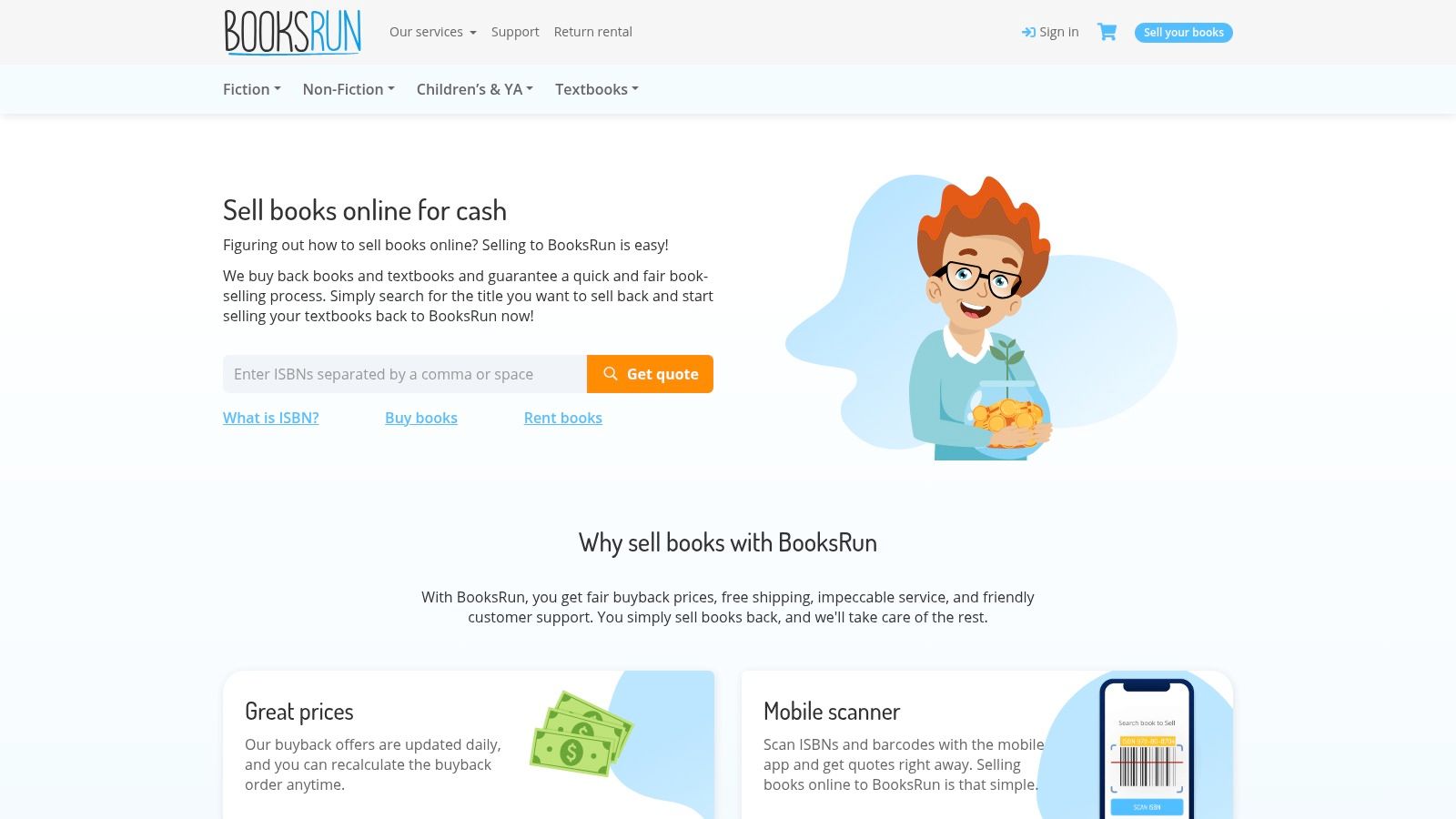
Sometimes the best book sale is the one that never requires a listing. BooksRun Buyback gives you ISBN-based offers for eligible books, with free shipping for accepted buyback orders and payment options including PayPal or check.
You give up control of the retail sale price. In exchange, you avoid photographing every copy, writing descriptions, answering retail buyer questions, and fulfilling separate orders.
Compare the offer with your actual alternative
At an estate sale, a box of ISBN-bearing books might contain both marketplace candidates and ordinary bulk. Don't let the convenience of a batch quote push a desirable textbook into the same shipment without checking its sold comps.
The useful comparison is buyback proceeds versus expected marketplace net, not buyback proceeds versus gross sold price. Include your handling time and the chance that the marketplace book remains unsold.
- Check the edition: Match the ISBN on the book itself.
- Inspect before acceptance: Look for missing pages, water damage, highlighting, and binding problems.
- Keep the record: Save the accepted order details and shipping information.
Books are inspected after arrival, so a quote isn't permission to overlook condition. Pack the shipment to prevent transit damage from changing the outcome.
A book-scanning app workflow helps separate books worth researching from books ready for a direct quote. Buyback is useful for eligible bulk, not a reason to stop checking value.
8. World of Books Sell Your Books
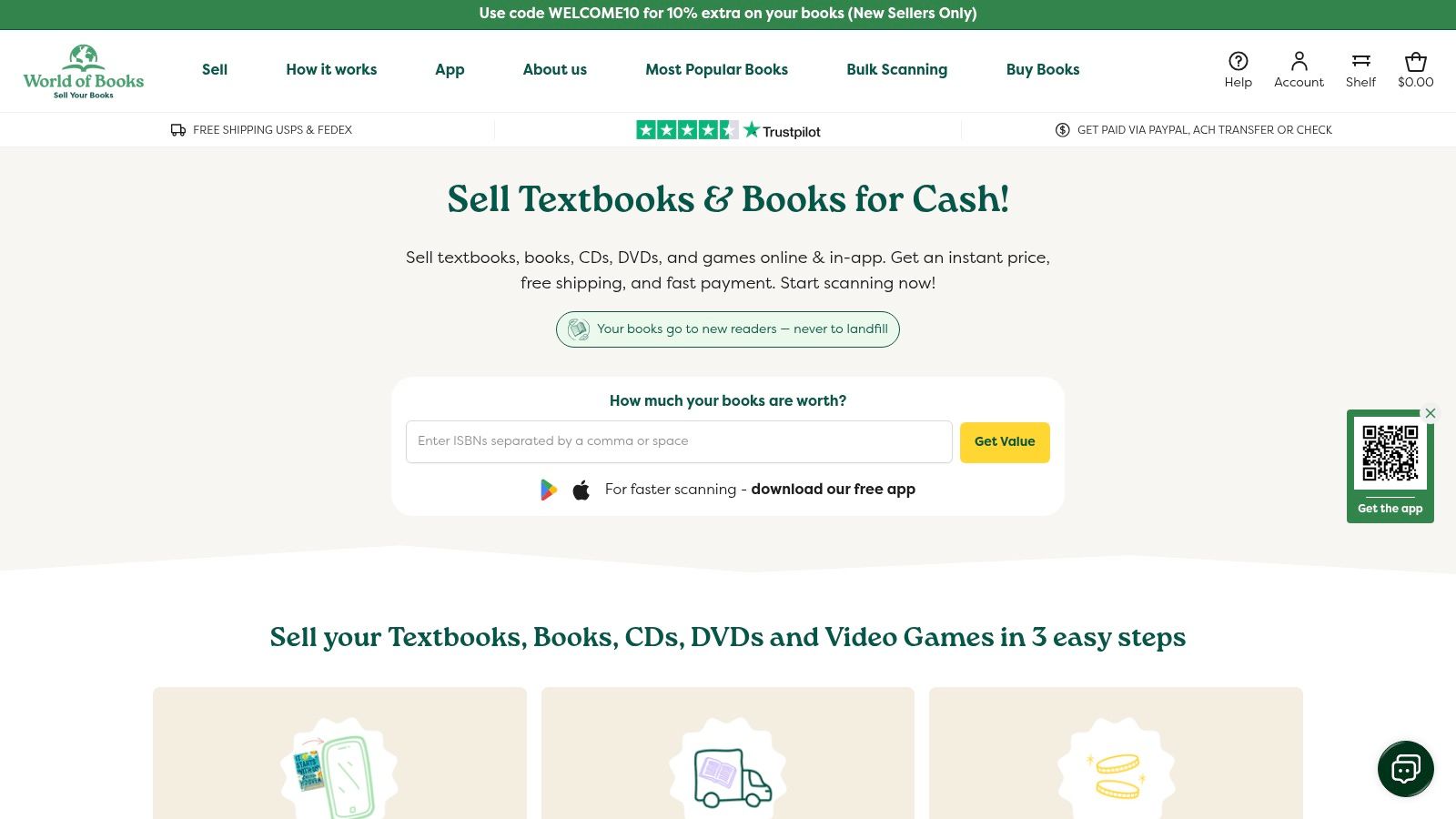
A death pile of ordinary reading copies doesn't need another elaborate listing strategy. World of Books' U.S. sell-back service is a quote-and-ship option for eligible ISBN-matched books, rather than a marketplace where you control retail prices.
Enter the ISBN and see whether the service wants that edition. It accepts eligible books across multiple genres, but acceptance is title-specific, not a promise to purchase everything in the box.
Use it to price the exit
This is most useful after you've removed collectible and stronger marketplace candidates. You're deciding what the remaining stock can return without creating individual retail orders.
Compare available offers against other buyback services. Keep each accepted batch separate so you don't accidentally ship a book to the wrong buyer or confuse edition requirements.
- Best fit: Eligible reading copies you don't want to photograph individually.
- Weak fit: Unbarcoded vintage books and copies whose value depends on signatures or unusual attributes.
- Main trade-off: Less retail selling work, but no control over the offered payout.
A rejected ISBN doesn't establish that the book is worthless. It means this buyer isn't offering to purchase that edition under its current requirements.
Don't buy a garage-sale box solely because a buyback service exists. Check eligibility and offers while the acquisition decision is still reversible. Otherwise, you're paying to create another sorting project.
9. TextbookRush

Edition accuracy comes before the apparent value of the subject. A medical or engineering textbook isn't a BOLO just because it originally cost someone a lot of money.
TextbookRush provides ISBN-based buyback quotes and requires accepted buyback orders to total at least $15. Accepted orders receive a prepaid, trackable shipping label, with payment options including PayPal, check, or store credit.
Check the book, not just the cover
Similar covers can conceal different editions, instructor versions, or other variations. Match the ISBN and review eligibility before accepting the quote, then inspect the copy for condition problems.
Quotes can be adjusted when the received edition or condition differs. Save yourself the return headache by catching those differences at the sourcing table.
- Strong use case: Comparing a direct offer against the work and uncertainty of retail textbook selling.
- Important distinction: Store credit and cash aren't interchangeable when you're measuring flipping proceeds.
- Poor sourcing logic: Buying unwanted filler just to reach an order minimum.
TextbookRush is a direct buyer, not a place to build a retail listing and wait for a student. That can make it practical when an eligible offer meets your target and you want the book out of storage.
I'd compare the quote before committing to marketplace fulfillment, especially for heavy textbooks. Higher gross revenue doesn't automatically mean more take-home.
10. Powell's Books Online Buyback
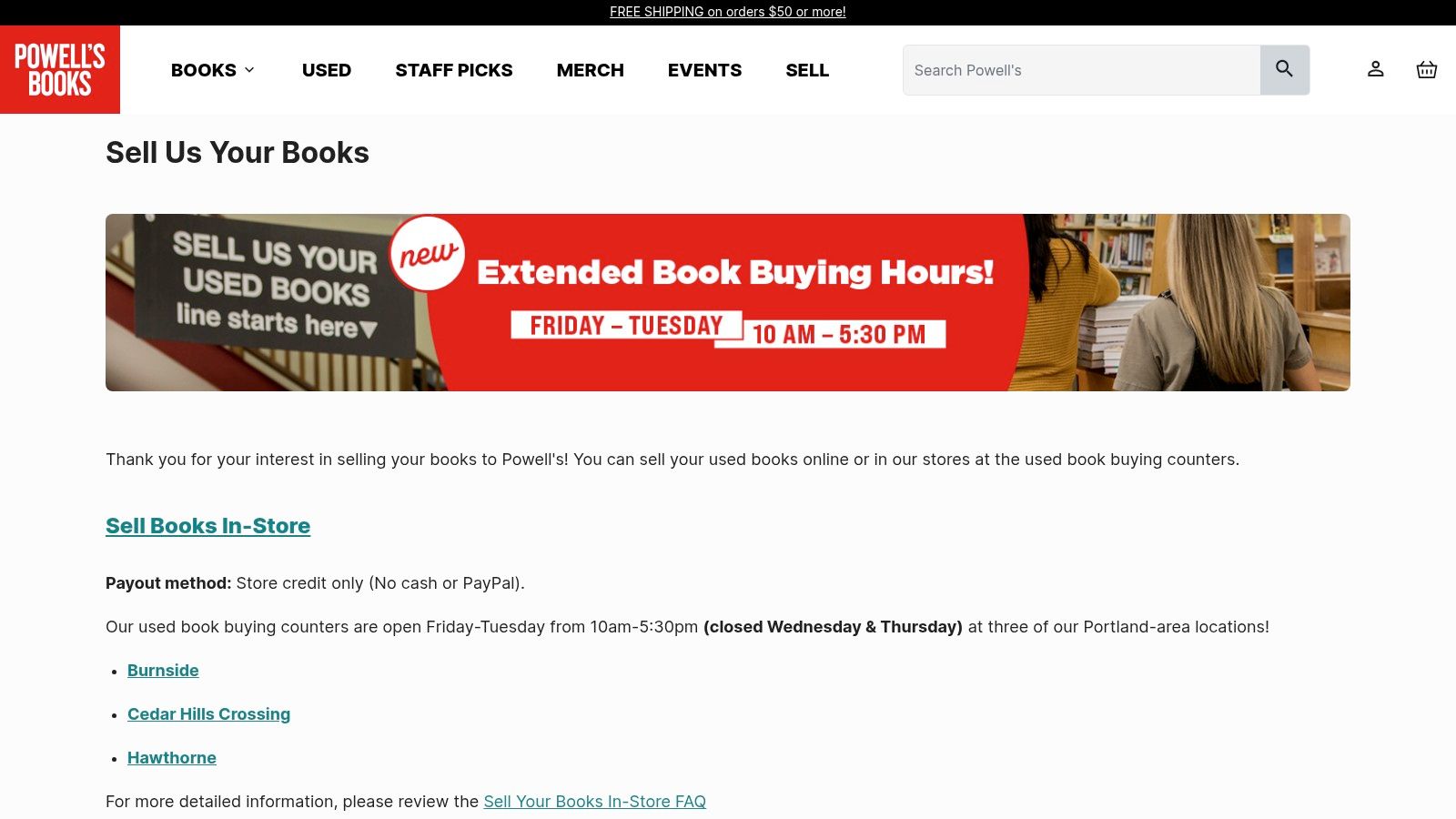
Powell's Books online buyback is another offer to compare, not a marketplace where you set the sale price. Its online service gives sellers outside the Portland area an alternative to visiting a physical book-buying counter.
Don't assume an in-store buying decision applies online. The offers and buying decisions can differ, so use the online quote and terms for the shipment you intend to send.
Separate sentimental value from resale value
An inherited library can contain cherished books that don't justify individual listings. Powell's offers a route to evaluate eligible stock without turning every book into a retail photography project.
Pull out signed copies, unusual editions, and specialist material first. Then compare the remaining books against other buyback offers and your own willingness to store and fulfill them.
- Useful role: An additional direct-buying option for books you've already identified.
- Work avoided: Creating individual marketplace listings and serving separate retail buyers.
- Limit: Not every title will receive an offer worth accepting.
Read the condition guidance before packing. A clean cover doesn't cancel out loose pages, odor, or damage elsewhere in the book.
I wouldn't build a sourcing plan around assumed Powell's acceptance. Get an actual offer, assess the current terms, and decide whether the payout justifies the acquisition and handling. A recognizable bookstore name isn't a substitute for a profitable transaction.
Model, Fees, and Best Fit for Each Book Seller
Ten options, two jobs. The first six are marketplaces that let you set the price and take their cut at the sale; the last four are buyback services that pay a fixed quote for a shipment. Match the book in your hand to the right job before you list or ship anything.
| Item | Model | Fees to Watch | Best For |
|---|---|---|---|
| Amazon | Marketplace with self-fulfillment or FBA | Selling and fulfillment fees; some books may require approval | ISBN-matched books and repeatable inventory |
| eBay | Fixed-price or auction marketplace | Selling fees and shipping costs | Collectible, unusual, signed, or condition-sensitive books |
| AbeBooks | Specialist book marketplace | Per-item fees and commissions; Basic plan has no monthly subscription | Rare, out-of-print, and ongoing book inventory |
| Alibris | Books-and-media marketplace | Setup and selling fees | Used and hard-to-find books; smaller sellers using the Basic program |
| Biblio | Marketplace for independent booksellers | Monthly listing fees may apply; billing options vary | Organized, ongoing inventory of used, rare, or out-of-print books |
| BooksRun Marketplace | Seller marketplace with self-fulfillment | 15% commission on purchase price and shipping compensation | Sellers seeking another book-focused channel who can fulfill orders |
| BooksRun Buyback | Direct ISBN-based buyback | Payout is set by the buyer's quote; check the quote terms for any deductions before shipping; offers vary by book and demand | Clearing eligible books in one shipment |
| World of Books, Sell Your Books | Direct quote-and-ship buyback | Payout is set by the buyer's quote; check the quote terms for any deductions before shipping; offers depend on title and edition | Selling a batch of eligible ISBN-bearing books |
| TextbookRush | ISBN-based textbook buyback | $15 minimum order; eligibility and quote adjustments may apply | Selling eligible textbooks without individual listings |
| Powell's Books Online Buyback | Direct buyback service | Payout is set by the buyer's quote; check the quote terms for any deductions before shipping; acceptance and offers vary | Getting an online buyback quote to compare |
The Fees to Watch column is where cheap books live or die. On BooksRun Marketplace, 15% commission on the purchase price plus shipping compensation leaves $5.10 on a $6 paperback before postage and packing, so low-value stock needs a stronger comp or a different channel. TextbookRush requires a $15 minimum order, which means a single low-quote textbook won't ship on its own; batch it with other eligible ISBNs.
For anything signed, unusual, or condition-sensitive, I'd go where the table points: eBay or AbeBooks. A buyback quote pays one number for the whole shipment and ignores the premium a collector would add for the right copy.
Pick One Channel per Book and Test Before You Scale
The answer to where to sell used books online starts with the copy in your hand, not the platform you already use. An ISBN-matched textbook needs a different decision from a signed first edition, and neither should be processed like ordinary bulk fiction.
I'd sort incoming books into these buckets before creating listings:
- Marketplace: Sold-comp-backed inventory that can clear your chosen profit threshold. My suggested starting target is about $15 net per order, an editorial operating rule, not an industry benchmark.
- Buyback: ISBN-matched bulk with an acceptable direct offer that you don't want to photograph and fulfill individually.
- Pass: Anything that can't clear your threshold after acquisition, fees, postage, packaging, and a sensible allowance for problems.
Test the workflow with real orders
Start with five or six books on a new channel before committing a full box. That's a practical test size, not a promise of representative results; the point is to experience account setup, order handling, deductions, and payout.
Track the purchase cost, shipping collected, fees charged, actual postage, packaging, and final proceeds. Record handling time and returns separately so an apparently strong ROI doesn't hide an order that consumed too much work.
For qualifying shipments, LitCommerce's eBay book-selling guide reports USPS Media Mail rates starting at $4.39, with typical delivery of 2–8 business days. Confirm current postage and eligibility before buying, and weigh the packed book rather than borrowing a shipping estimate from a thinner title.
Keep the standard: A cheap acquisition isn't automatically profitable inventory.
Evaluate sell-through as well as margin. A book can meet your projected net threshold and still be wrong for your available shelf space or cash cycle.
At the shelf, make the buy decision from matched sold comps and expected net. At home, make the channel decision from the actual copy, the fulfillment work, and any direct offers available.
Before your next library sale, take a book from your current death pile and run that process all the way through. Get the matched comps, obtain eligible buyback quotes, weigh the package, and choose a route before buying more.
ScanFlip AI offers AI photo scanning without a barcode, barcode scanning, and text search to compare sold comps and estimate profit after fees, shipping, and buy cost. Visit ScanFlip AI and use the red/green flip-or-pass verdict to check your next book before it goes into the cart.