
10 Best Discontinued Makeup Sites for 2026
You're staring at a discontinued palette, a favorite foundation shade, or a lip color you've worn for years, and the brand says it's gone. The problem isn't finding a product page, it's finding a site that still understands old shade names, retired SKUs, and the messy reality of leftover inventory. Good discontinued makeup sites do more than list random closeouts. They help you separate real stock from dead ends, which matters whether you're shopping for yourself or trying to buy inventory you can flip.
This space also behaves differently from regular beauty retail. Legacy communities can live a long time, then disappear, as MakeupAlley did after 26 years, which is a useful reminder that archived product memory still matters even when official storefronts move on Beauty Independent's report on MakeupAlley's shutdown. Once a product is retired, shoppers often end up in resale and clearance channels, with Beautylish pointing people toward discount clearing houses, eBay, and limited brand inventory programs for discontinued items Beautylish's discontinued product guidance. For resellers, that means the best sourcing isn't a single site, it's a workflow that checks official outlets, niche retailers, and secondary marketplaces together.
A smart search usually starts with the item name, shade name, and old packaging details. A smarter one adds sold-comps vetting, fee math, and condition checks before you spend. That's where a tool like ScanFlip AI fits into the process, especially when you're deciding whether a discontinued lipstick is a personal grail or a bad flip.
Table of Contents
- 1. BuyMeBeauty
- 2. Discontinued Beauty
- 3. Beauty Encounter
- 4. Direct Cosmetics UK ships widely
- 5. The Cosmetics Company Store
- 6. Estée Lauder Gone But Not Forgotten
- 7. Shiseido Last Chance
- 8. USA Beauty Plus
- 9. On Sale Beauty
- 10. Sublime Cosmetics and Fragrances
- Comparison of 10 Discontinued Makeup Sites
- Final Thoughts
1. BuyMeBeauty
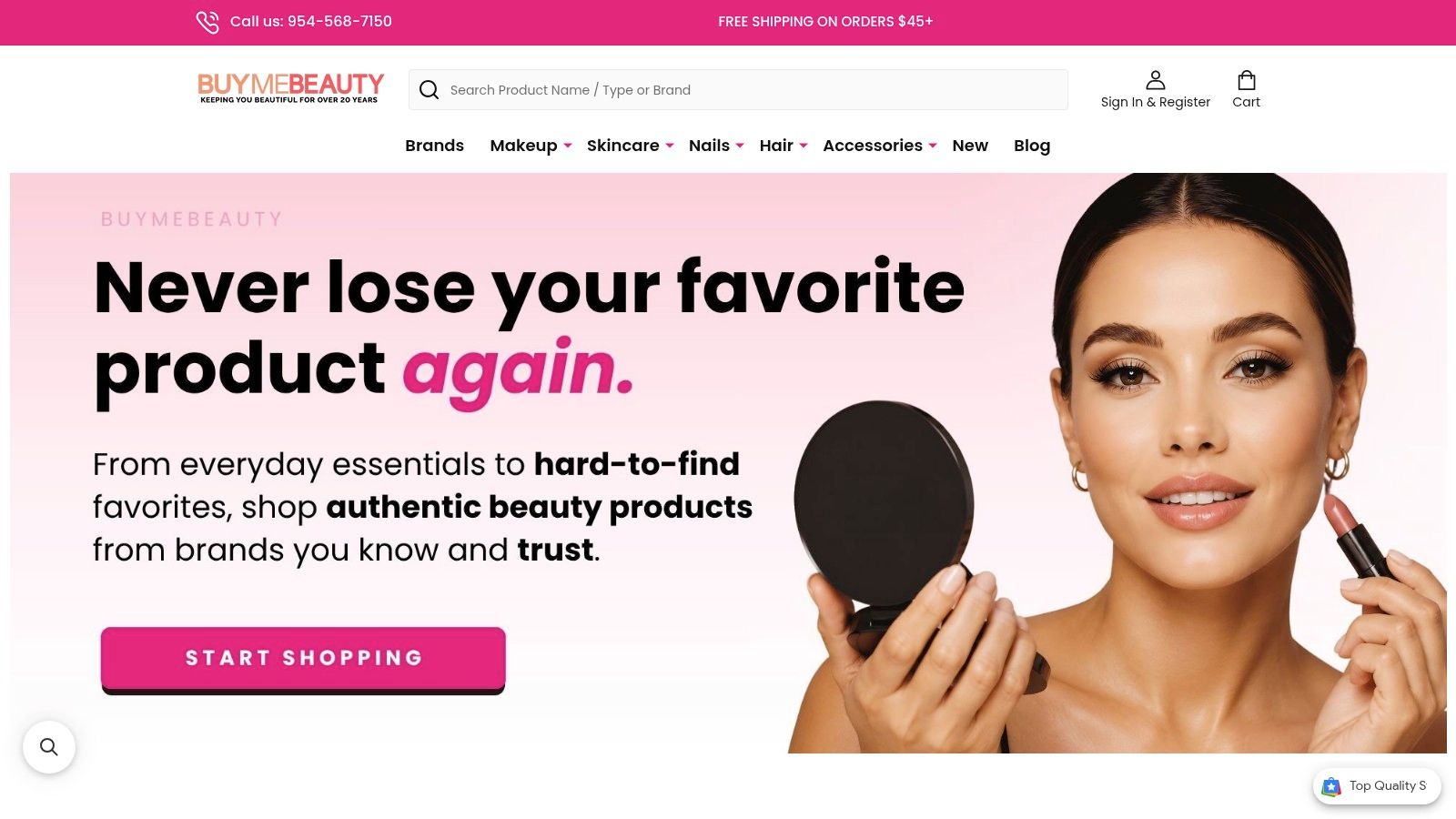
BuyMeBeauty is the kind of site you open when you need a retired drugstore shade, not a general beauty browse. Its strength is focus. You can move through past-season and discontinued SKUs without wading through a broad marketplace that treats old stock like an afterthought.
The practical value is in the product-page structure. When a brand retires a foundation or lipstick, the shade name and shade number matter more than broad color family descriptions, and BuyMeBeauty tends to make that exact-match hunt easier. For personal shoppers, that reduces the chance of buying the wrong beige because the listing copy was vague. For resellers, it means you can source legacy drugstore lines with more confidence when the listing still maps to a specific product identity.
What works here
- Brand and category filters make it easier to narrow to Revlon, L'Oréal, Maybelline, or Almay.
- Out-of-stock and restock guidance helps you avoid guessing whether an item is gone for good.
- Blog coverage can help track product retirements and replacements.
- Inventory labels are useful when you're trying to distinguish active lines from older packaging.
Practical rule: If a shade match only exists in old packaging, verify the exact product name first, then compare the shade number second. That order saves time and cuts down on false matches.
The trade-off is obvious. Popular shades can sell through quickly, and restocks are never guaranteed. Older packaging also confuses first-time buyers, especially if you remember a product by how it looked on a shelf ten years ago instead of its exact listing name. BuyMeBeauty works best when you already know what you're hunting and you want a cleaner path than a giant marketplace search.
2. Discontinued Beauty
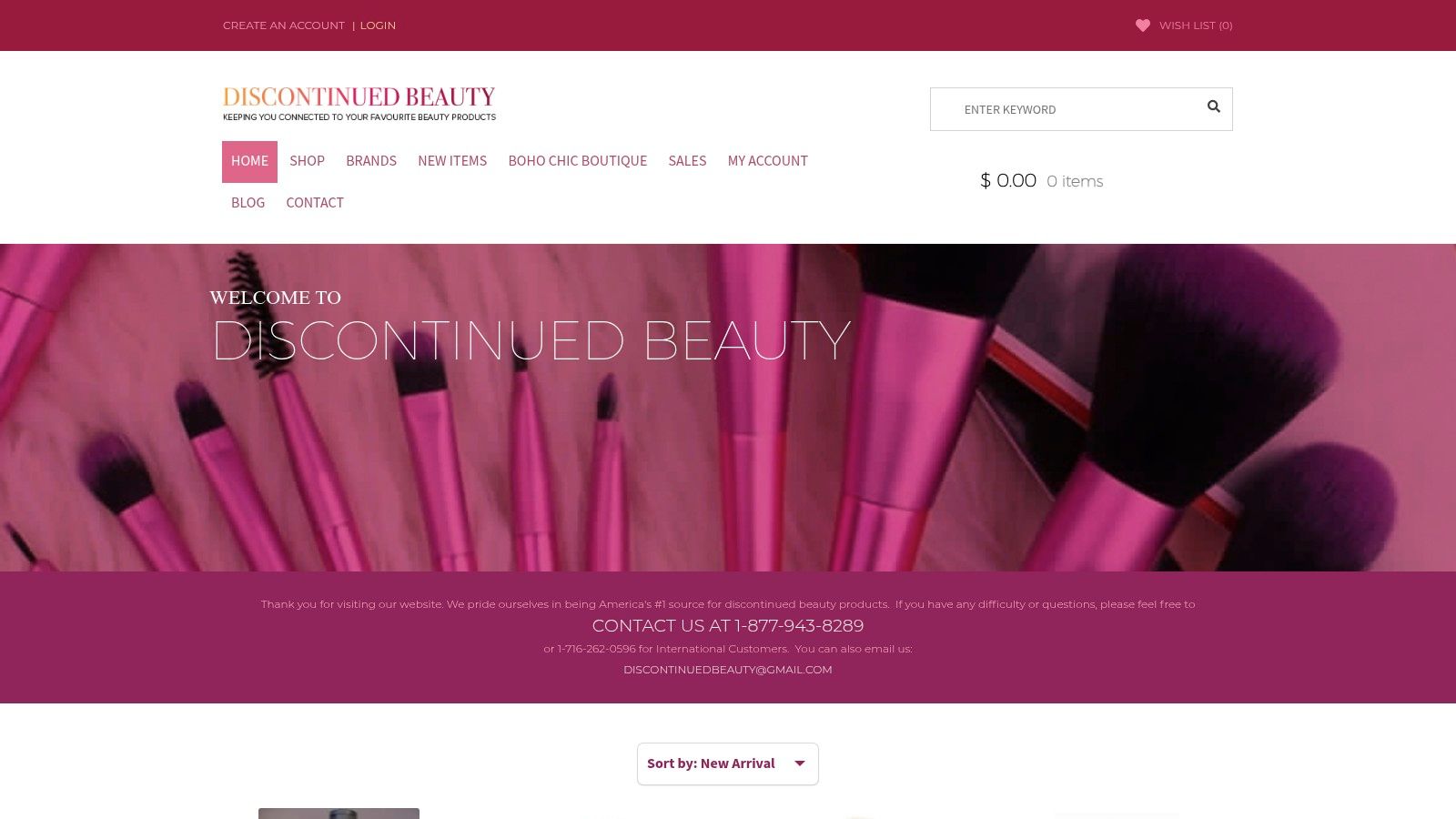
Discontinued Beauty leans into the one thing many generic beauty stores avoid, it tells you outright that retired stock is the point. That makes it useful for older product names, especially when a shopper remembers a mascara or gloss but can't recall the exact current replacement. The site's taxonomy is built around discontinued and hard-to-find inventory, which saves time when the product you want no longer has an easy retail path.
That focus extends beyond makeup. Haircare and accessories show up too, which is helpful if you're matching a whole routine rather than one hero item. A shopper searching for a retired liner might find the related brush or hair product that went out of circulation at the same time, which isn't common on broader sites.
The main caution is inventory inconsistency. Brand depth and shade depth can swing a lot, so this is not a site where you assume continuity from one week to the next. Treat it like a specialist stock room, not a stable catalog.
You should also vet the retailer the way you would any independent seller. Search for recent site trust signals, read the product page carefully, and compare packaging photos against what you remember. The more specific your memory is, the easier it becomes to spot a mismatch.
For a sourcing-first workflow, pair this kind of retailer with a comp-check step before you buy. The guide on discontinued makeup for sale is a useful companion when you're trying to decide whether a listing is a true find or just old stock with weak demand.
3. Beauty Encounter
Beauty Encounter sits in an interesting middle zone. It's known for fragrance, but it also carries makeup, including harder-to-find and sometimes discontinued items across prestige and mass brands. That makes it less specialized than a pure discontinued-makeup shop, but broader if you're willing to search.
The upside is deal flow. If you're already browsing fragrance or skin care, makeup closeouts can surface in the same trip, which is efficient for both personal shoppers and resellers. Regular promotions also matter here because closeout pricing only helps if you catch the item before it disappears.
Why it can work
- Search filters help when you're trying to isolate older lines from the larger catalog.
- Customer reviews can add a layer of validation before checkout.
- Promotional cadence can create better buying windows for value shoppers.
- Cross-category inventory sometimes exposes legacy shades that a makeup-only site won't carry.
The downside is selection depth. Discontinued makeup is less consistent than the fragrance side of the business, so you'll see more near-closeouts than archived beauty relics. That's fine if you're shopping opportunistically. It's less useful if you need a very specific retired foundation in a precise shade and quantity.
Buy if you find it, not because it might come back. In discontinued beauty, hesitation usually costs the match.
Beauty Encounter is strongest when you already know what you want and you're comfortable checking quickly. If you're reselling, use it as a supplementary source rather than a primary one, then run your flip decision through a tool that compares real sold comps before you commit. The companion guide on discontinued products websites fits that exact workflow.
4. Direct Cosmetics UK ships widely
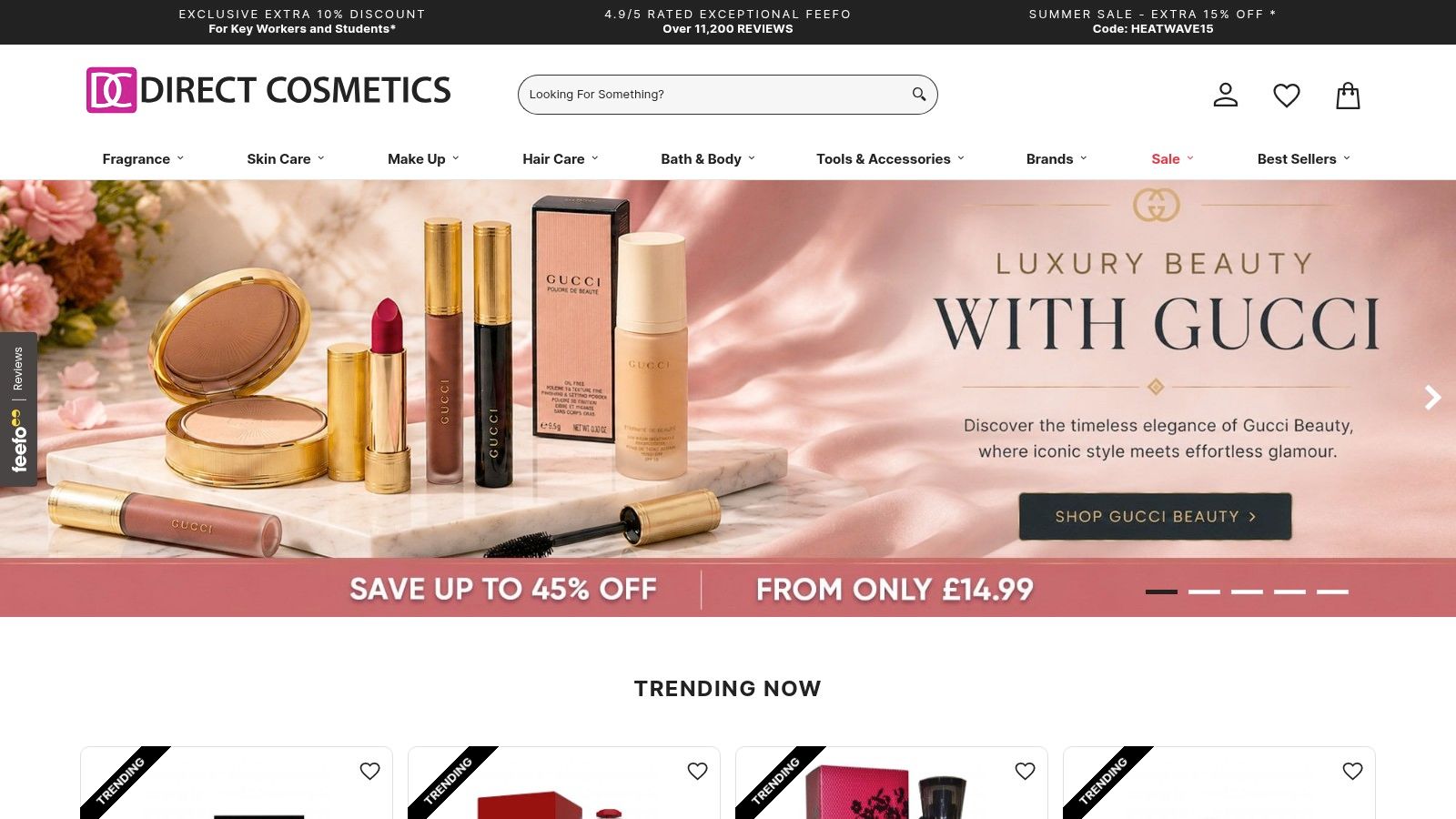
Direct Cosmetics is a strong option when the item you want was never easy to find in the U.S. to begin with. Its long operating history and regular discounting make it useful for shoppers chasing European or UK-only shades, especially when a product was phased out in one market but lingered in another. That's a real advantage for people who know the exact formula they want and can tolerate a little shipping friction.
The catalog spans makeup, skincare, haircare, and fragrance, so you're not boxed into one category. Fast inventory turnover is both the benefit and the problem. It keeps the site fresh, but it also means a discontinued shade can vanish before you've finished comparing options.
For U.S. buyers, the core trade-off is simple, shipping time and cost versus access. If a lipstick is common in the UK and scarce elsewhere, this retailer can be a smart route. If you need speed, it's less appealing. Resellers should also factor in that international fulfillment adds another layer of delay and can thin margins on low-ticket items.
What to check before you buy
- Exact shade naming to confirm the UK version matches your memory.
- Checkout shipping rates before you assume the deal is still profitable.
- Inventory timing if you're sourcing for resale, since rotators sell out fast.
- Packaging condition because older stock can vary in presentation.
Direct Cosmetics is one of the better reminders that discontinued makeup sites are not all U.S.-centric. Sometimes the best match is sitting in another market entirely. If you're buying to flip, the margin has to survive international costs, but the sourcing opportunity is real.
5. The Cosmetics Company Store
The Cosmetics Company Store is the safest outlet-style option in this list for Estée Lauder Companies brands. Because it's directly tied to the portfolio, it's one of the most reliable places to check for discontinued or overstock shades from Estée Lauder, MAC, Clinique, Bobbi Brown, Too Faced, and Tom Ford Beauty.
That direct brand relationship matters. Counterfeit anxiety drops sharply when you're shopping an official outlet, and that alone makes this site worth bookmarking. Shoppers hunting for a retired MAC lipstick or a Clinique foundation replacement can often do better here than on a marketplace listing with vague photos and no clear provenance.
The site is still an outlet, not a permanent archive. Stock rotates, discount events come and go, and one week's clear-out might be gone the next. That makes patience part of the process. If you are looking for a specific shade, you need to check consistently rather than expecting a predictable restock calendar.
For resellers, brand trust and outlet pricing intersect. If you can source a legitimate overstock item at a strong discount, you have a cleaner path to resale than you would with uncertain secondary-market inventory. The limitation is obvious, though. You only get access to the Estée Lauder Companies universe.
A lot of shoppers use this store as a confirmation stop. If a product appears here, the brand is effectively validating the item as authentic and current enough to sell through an outlet channel. That's a different experience from hunting random discontinued listings elsewhere, and it's one reason this site belongs near the top of any serious list.
6. Estée Lauder Gone But Not Forgotten
Estée Lauder's Gone But Not Forgotten program is the closest thing on this list to an official rescue lane for retired brand products. It exists because some customers still want a particular item long after it disappears from the main assortment, and the program gives them a brand-run path to ask about it. That matters for shoppers who care more about authenticity than convenience.
The strongest point here is trust. If an item is made available through an official channel, you're not guessing about provenance, and that's a big deal for premium makeup. It's especially useful for collectors and for people who have already been burned by marketplace listings that looked right but weren't.
There are real limits, though. Availability is time-limited and not guaranteed, and the program only covers Estée Lauder Companies brands. That means it's a specialized solution rather than a broad search engine for all discontinued makeup.
Best use cases
- Official authenticity for retired ELC products.
- Archived or vault stock when the brand chooses to release it.
- Customer service guidance for shoppers who need help finding a replacement.
- Brand-specific hunting rather than broad marketplace shopping.
The practical value is not just that it exists, but that it shows how a brand should handle discontinued demand. If a shopper can't get the original formula, a brand-run channel at least gives them a clean next step. For resellers, the lesson is different. Official availability compresses speculation, so you should be careful about overestimating flip value on items that still have a direct brand path.
If you're tracking this kind of stock across the broader ELC ecosystem, the companion article on discontinued cosmetic products is worth keeping open while you source.
7. Shiseido Last Chance
Shiseido's Last Chance section is straightforward, which is exactly why it works. It flags items that are in their final run or close to disappearing, including select makeup SKUs, and it does so in a brand-direct environment. For shoppers, that lowers the guesswork. For resellers, it offers a cleaner signal that a product may soon become harder to source.
The useful part here is timing. When a brand labels stock this way, you're not trying to decode marketplace jargon or third-party leftovers. You're looking at a direct indicator that the item is on the way out. That is especially helpful if you prefer to buy before the product turns into a secondary-market scramble.
The catalog is limited and changes fast. You should expect a narrow assortment, not a deep archive. That means this is better for recently retired Shiseido items than for a broad search across the whole discontinued makeup universe.
A brand-direct label also changes how you think about quality. There's no need to wonder whether the item was stored correctly by a third party or whether the packaging is authentic. The remaining question is whether the shade or formula is still there.
If you're shopping for yourself, check this section before you settle for a replacement. If you're flipping, pay attention to how quickly the stock moves and whether the item has a real external demand story. Brand-direct closeouts can still be profitable, but only if you understand how narrow the window is.
8. USA Beauty Plus
USA Beauty Plus is built for bargain hunters who don't want to overthink the label. The site focuses on discontinued makeup and value-priced stock, with a mix that can include drugstore staples and occasional prestige finds. That makes it appealing when you need a workable replacement or a low-cost flip candidate rather than a pristine collector piece.
The catalog style suits quick searches. You can look through older lines, shade runs, and accessories without getting buried in a giant marketplace interface. That is especially useful when you already know the brand family and just need to see whether a retired product is still circulating.
It also serves a different shopper psychology. Some people want the exact old favorite, others want something close enough and affordable. USA Beauty Plus tends to work better for the second group, because its stock profile leans practical and budget-friendly.
Strengths to keep in mind
- Discontinued focus instead of broad mainstream beauty.
- Budget pricing that can help value shoppers and small-scale resellers.
- U.S.-based fulfillment for domestic buyers who want simpler shipping.
- Mixed assortment that can surface both beauty basics and niche finds.
The trade-off is consistency. Inventory depth varies by brand, and the selection can lean toward drugstore tier more than prestige. That's not a flaw if you're sourcing around common legacy lines. It is a limitation if you're hunting rare luxury shade variants.
For resellers, the key is discipline. Low prices are attractive, but the buy only works if the item still has demand after fees and shipping. That's where a comping tool is more valuable than gut feeling.
9. On Sale Beauty
On Sale Beauty is one of the more transparent sourcing sites in this category because it openly leans into shelf-pulls, overstock, and discontinued cosmetics. That matters. A lot of stores hint at closeouts without saying how they got them. This one is much clearer about the supply type, which helps both shoppers and resellers make faster decisions.
The catalog often includes past-season palettes, lip products, and kits across mass and indie brands. That gives bargain hunters a decent chance at finding a usable backup or a reseller-friendly bundle item. It also makes the site better for opportunistic buying than for a precise one-item hunt.
The sourcing model has a downside, though. Shelf-pulls and overstock can bring condition variation, so packaging may not be pristine. That is normal in this segment, but it still needs to be checked. If you're buying for personal use, inspect the listing photos closely. If you're buying for resale, make sure your price can survive minor box wear.
The best closeout buys are the ones you can explain in one sentence, brand, shade, condition, and resale path.
The site's value is strongest when you already know what category you want and you're moving quickly. It isn't the best place for endless browsing, but it is a solid stop for clearance-minded sourcing. For a reseller, that clarity is useful because you can compare what you pay against what the item has sold for elsewhere before you decide to list it.
10. Sublime Cosmetics and Fragrances
Sublime Cosmetics and Fragrances is a lean, fast-moving source for discontinued and overstock beauty. The catalog is smaller than the big outlets, but that can be an advantage when you want to get in, check the stock, and get out without a lot of noise. It's the kind of site you bookmark for occasional finds rather than daily browsing.
The appeal is value. The site emphasizes below-MSRP pricing, which can make retired shades and smaller-brand items attractive for both personal use and arbitrage. If you're hunting a discontinued lip color that no longer shows up in mainstream retail, a narrow inventory like this can still surprise you.
The challenge is obvious. Limited quantities and fast turnover mean you can't treat the site like a dependable back catalog. The brand list is narrower too, so it won't replace the larger outlet-style destinations.
Where it fits best
- Quick-value buys when price matters more than color abundance.
- Small-brand discovery for older stock that never moved through big-box channels.
- Flip testing for resellers who want lower entry costs.
- Warehouse-shipped orders for U.S. buyers who prefer domestic fulfillment.
Because the catalog changes quickly, this is a site where speed beats overthinking. If you know the item and the price is right, act. If you're uncertain about demand, verify the market before you buy. That's especially true for resellers, since a low acquisition cost still doesn't guarantee a good flip once platform fees and shipping are added.
Comparison of 10 Discontinued Makeup Sites
| Retailer | Inventory focus | Ideal reseller use-case | Pricing & deals | USP for resellers | Main limitation |
|---|---|---|---|---|---|
| BuyMeBeauty | Past‑season / discontinued drugstore makeup & shades | Exact‑shade sourcing; legacy drugstore flips | Generally competitive vs marketplaces | Deep legacy shade selection; clear inventory & shade IDs | Popular shades sell out quickly; restocks not guaranteed |
| Discontinued Beauty | Discontinued makeup, haircare & accessories | Rare item hunts; searches for older product names | Variable; niche pricing | Site taxonomy centered on "discontinued" items | Inconsistent depth by brand; mixed trust signals |
| Beauty Encounter | Large multi‑category catalog (fragrance, makeup) | Deal-seeking resellers; diverse brand sourcing | Frequent coupons & promotions | Wide brand coverage; customer reviews aid validation | Truly discontinued makeup selection varies; stronger in fragrance |
| Direct Cosmetics (UK) | Discounted cosmetics, UK/EU‑only shades, end‑of‑line | Source European/UK shades for arbitrage | Consistent discounting; fast turnover | Long‑running trusted retailer; EU/UK shade access | Intl shipping cost/time for US buyers; stock rotates fast |
| The Cosmetics Company Store | Estée Lauder Companies outlet (ELC brands) | Reliable source for ELC-brand discontinued items | Outlet pricing with markdown events | Brand-direct authenticity for ELC portfolio | Limited to ELC brands; inventory changes frequently |
| Estée Lauder "Gone But Not Forgotten" | Brand-operated discontinued/archived ELC items | High-authenticity sourcing of retired ELC products | Time-limited events; may require access codes | Direct brand vault/archived stock access | Availability sporadic and time-limited; brand-limited |
| Shiseido "Last Chance" | Brand-direct last-run Shiseido SKUs | Sourcing recently retired Shiseido items | Clearance pricing; limited quantities | Clear "last chance" listings; brand authenticity | Very limited, fast‑rotating selection; brand-limited |
| USA Beauty Plus | Discontinued makeup (drugstore + some prestige) | Budget flips and value arbitrage | Value pricing for resellers | U.S. fulfillment; targets discontinued lines | Inventory consistency varies; leans drugstore tier |
| On Sale Beauty | Shelf‑pulls, overstock, discontinued cosmetics | Bulk buys and closeout resellers | Deal-oriented pricing; bulk/multi‑packs available | Explicit overstock/closeout sourcing model | Condition/box variations possible; assortment changes often |
| Sublime Cosmetics & Fragrances | Overstock & discontinued cosmetics and fragrance | Sporadic finds for flips; below‑MSRP sourcing | Often priced under MSRP when available | Lean, fast-changing catalog with below-market pricing | Limited quantities; narrower brand list and rapid turnover |
Final Thoughts
Wrapping up discontinued makeup sites means accepting a simple truth, there isn't one best source for every product. Brand-direct channels like The Cosmetics Company Store, Estée Lauder's Gone But Not Forgotten, and Shiseido Last Chance are the safest bets when authenticity matters most. Specialist retailers like BuyMeBeauty, Discontinued Beauty, USA Beauty Plus, On Sale Beauty, and Sublime Cosmetics can be better when you need a retired shade that's already vanished from mainstream shelves. Broader marketplaces and outlet-style shops like Beauty Encounter and Direct Cosmetics can fill gaps when you're willing to trade consistency for reach.
That's the personal-shopper view. The reseller view is stricter. A listing only matters if the product has real demand after fees, shipping, and condition risks. The best sourcing habits look the same whether you flip or buy for yourself, check the exact shade name, confirm packaging, compare inventory across more than one site, and don't assume a discontinued item is valuable just because it's old.
The strongest pattern across these sites is that discontinued beauty survives in fragments. Some items remain in official outlet channels. Others show up in clearance stock. Others are held alive by community memory, which is why legacy product pages and old shade references still matter. That's also why modern vetting tools are useful. When a product turns up on a shelf-pull site or a niche outlet, a quick comp check can tell you whether you've found a personal replacement or an inventory trap.
For shoppers, the goal is simple, get the right shade before it disappears again. For resellers, the goal is sharper, source only what has proof of demand. If you want that process to be faster and less guessy, use ScanFlip AI while you source, compare recent sold comps, calculate fees, and decide whether each discontinued find is a buy or pass before you check out.